

How to Locate Faith Based Counselors Near Me: Core Qualifications and Criteria
To locate reputable faith based counselors near you, start by searching state licensing board databases, reviewing Christian mental health directories, or asking for trusted church referrals. Next, verify clinical credentials (such as LPC, LMFT, or LCSW) to ensure licensed competence alongside biblical alignment. Finally, conduct an initial screening consultation to discuss clinical modalities and faith integration before booking.
When you begin searching for professional guidance, finding someone who shares your worldview is vital, but clinical competency must always come first. Mental health challenges involve complex neurobiology, emotional conditioning, and relational dynamics. You deserve care from a practitioner who respects your spiritual convictions while utilizing evidence-based clinical practices.
Navigating the landscape of faith-informed mental health care requires understanding the difference between licensed mental health professionals and non-licensed pastoral caregivers. Both provide value, yet their training, legal accountability, and scopes of practice differ significantly.
| Criteria | Licensed Professional Counselors (LPC / LMFT / LCSW) | Pastoral Counselors & Ministry Leaders |
|---|---|---|
| Education Level | Master’s or Doctoral Degree in Psychology or Counseling | Varied (Seminary, Ministry Degrees, or Certificates) |
| State Licensure | Regulated by State Licensing Boards (e.g., Louisiana LPC Board) | Non-licensed or ordained through local church bodies |
| Clinical Modalities | Evidence-based (CBT, EMDR, Gottman Method, EFT, Exposure) | Scriptural advice, discipleship models, prayer ministry |
| Ethical Oversight | Strict state codes of ethics, legal confidentiality (HIPAA) | Church-governed accountability and ecclesiastical rules |
| Diagnosis & Treatment | Trained to assess and treat clinical mental health disorders | Focus on spiritual counsel, moral guidance, and life challenges |
| Faith Integration | Clinically integrated upon client consent and comfort | Explicitly rooted in denominational doctrines |
Choosing a licensed therapist ensures that your counselor adheres to rigorous professional standards, maintains mandatory continuing education, and provides legal confidentiality protections.
Key Questions to Ask Faith Based Counselors Near Me Before Booking
Before scheduling your initial intake, prepare a few targeted questions. A reputable clinician will gladly clarify their theological perspective and therapeutic style. As outlined in our faith-based therapy guide, asking thoughtful questions upfront protects your time, resources, and emotional well-being.
Consider asking these practical questions:
- What is your specific clinical training, and are you fully licensed by the state?
- How do you describe your theological background, and how does it inform your practice?
- Which clinical modalities do you use to treat my specific symptoms (such as anxiety, depression, or marital distress)?
- How do you incorporate prayer, scripture, or sacramental reflection into sessions, and is that guided by my comfort level?
- What are your policies regarding confidentiality, intake consultations, and session boundaries?
Navigating Credentials, Fees, and Insurance Coverage
Understanding the administrative side of counseling reduces stress so you can focus on healing. Licensed practitioners typically display credentials such as LPC (Licensed Professional Counselor), LMFT (Licensed Marriage and Family Therapist), or LCSW (Licensed Clinical Social Worker). You can cross-reference practitioner listings through state licensing databases or a licensed mental health provider directory.
When assessing session investments:
- Health Insurance & Out-of-Network Benefits: Many specialized faith-based practices operate as out-of-network providers to protect client privacy and avoid diagnostic limitations imposed by third-party payers. Most can provide a detailed billing receipt (Superbill) for you to submit to your insurance company for potential reimbursement.
- Sliding-Scale & Flexible Options: Inquire whether the office offers sliding-scale adjustments, student intern rates, or community-tier programs to keep care accessible.
- Ethical Accountability: Verify that your counselor holds active malpractice insurance and adheres to state-mandated ethics boards.
Clinical Approaches Integrated with Christian Values

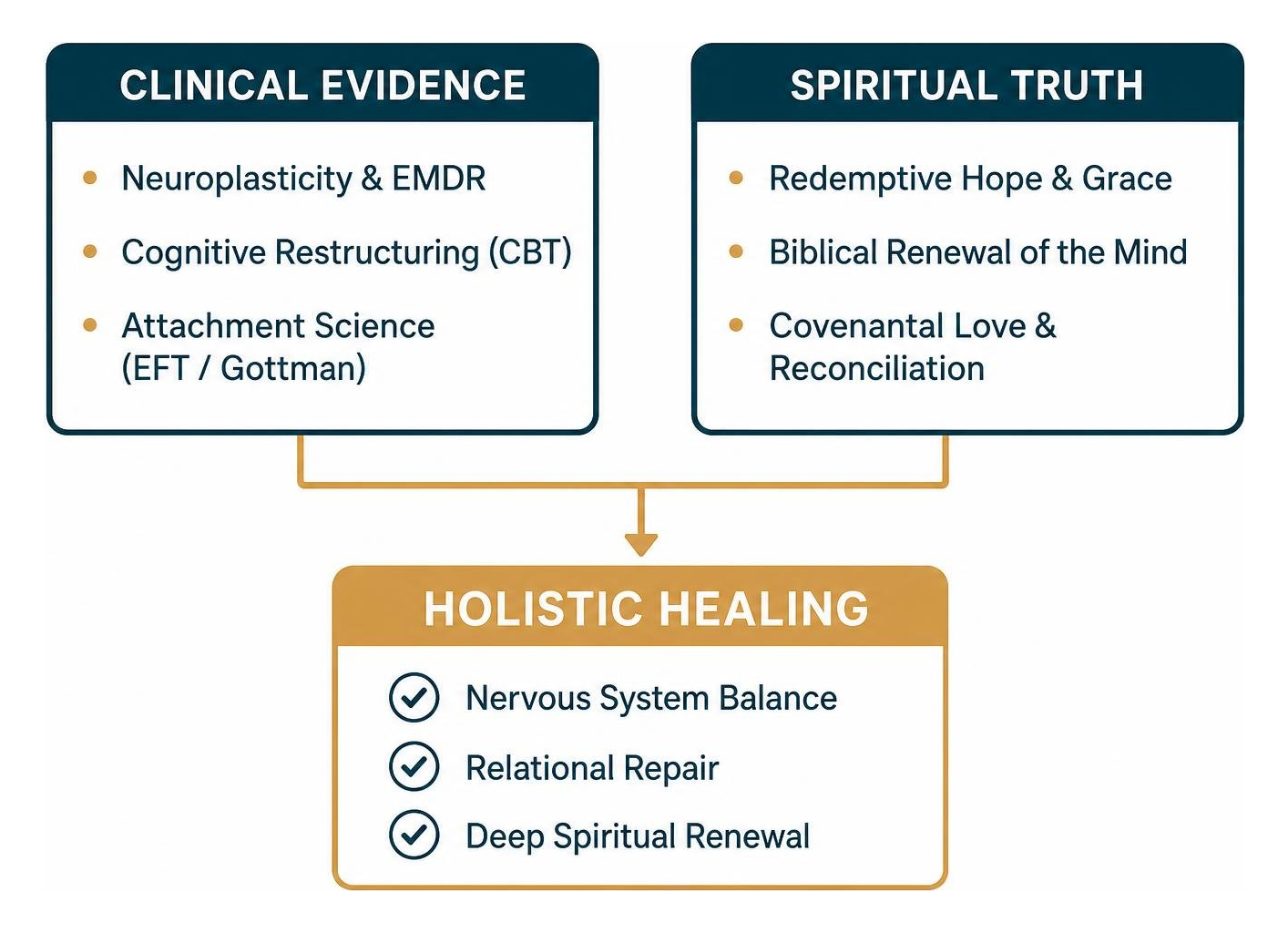
True healing occurs when we honor the complex interplay between the human brain, heart, and spirit. We believe that God created our neurological and relational systems with inherent capacities to recover, rewire, and grow.
Exploring Spirit & Science: How Christian Therapy Can Transform Your Mental Health demonstrates that clinical psychology and Christian theology are complementary rather than conflicting. While science illuminates the mechanics of how our minds process pain, our faith reveals the purpose, dignity, and restorative hope grounding every human life.
Evidence-Based Modalities for Anxiety, Depression, and Trauma
When addressing debilitating mental health symptoms, good intentions and generic advice are not enough. We rely on proven clinical interventions adapted to respect your Christian worldview:
- Faith-Informed Cognitive Behavioral Therapy: Faith-based cognitive behavioral therapy helps identify distorted, self-defeating thought patterns and replaces them with objective truth and biblical perspectives on grace, identity, and personal peace.
- Trauma Processing with EMDR: For individuals experiencing PTSD or deep emotional wounds, utilizing specialized faith-based EMDR protocols allows the brain to reprocess painful memories without feeling flooded. As desensitization occurs, clients can connect distressing memories to God’s presence, safety, and comfort.
- Nervous System Regulation: Finding peace through faith-based trauma therapy combines somatic grounding exercises with contemplative prayer, calming fight-or-flight responses and establishing lasting emotional stability.
Marriage, Family, and Relationship Restoration
Marriages face intense cultural, financial, and emotional pressures. When communication breaks down, resentment builds, or infidelity shatters trust, couples need a clear path forward.

Applying Catholic marriage help integrates evidence-based Emotionally Focused Therapy (EFT) and the Gottman Method with the sacred understanding of marital covenant. Rather than assigning blame, therapy targets the negative interactive cycles driving spouses apart.
Couples learn to identify underlying emotional injuries, communicate their needs vulnerability, and foster emotional safety. For households navigating broader relational conflict, engaging in family counseling and spiritual harmony helps parents establish healthy boundaries, resolve generational tensions, and nurture mutual respect at home.
Specialized Care for Children, Teens, and Grief
Young people today experience unprecedented rates of anxiety, digital isolation, and social stress. Providing faith-based therapy programs for teens offers adolescents a confidential, objective space to navigate identity questions, peer pressure, and academic overwhelm while reinforcing their God-given dignity. For younger children, play therapy modalities allow them to process complex emotions through age-appropriate developmental tools.
When facing the death of a loved one or profound life transitions, finding comfort in faith-based grief therapy and spiritual guidance allows individuals to mourn openly without toxic positivity or spiritual bypassing, making space for lament while anchoring the heart in eternal hope.
In-Person vs. Virtual Care Formats
Modern mental health care offers multiple avenues to receive high-caliber clinical support. Whether meeting in person at a clinical office in Lafayette or connecting virtually across Louisiana, both formats provide transformative clinical outcomes.
Choosing Virtual or In-Person Faith Based Counselors Near Me
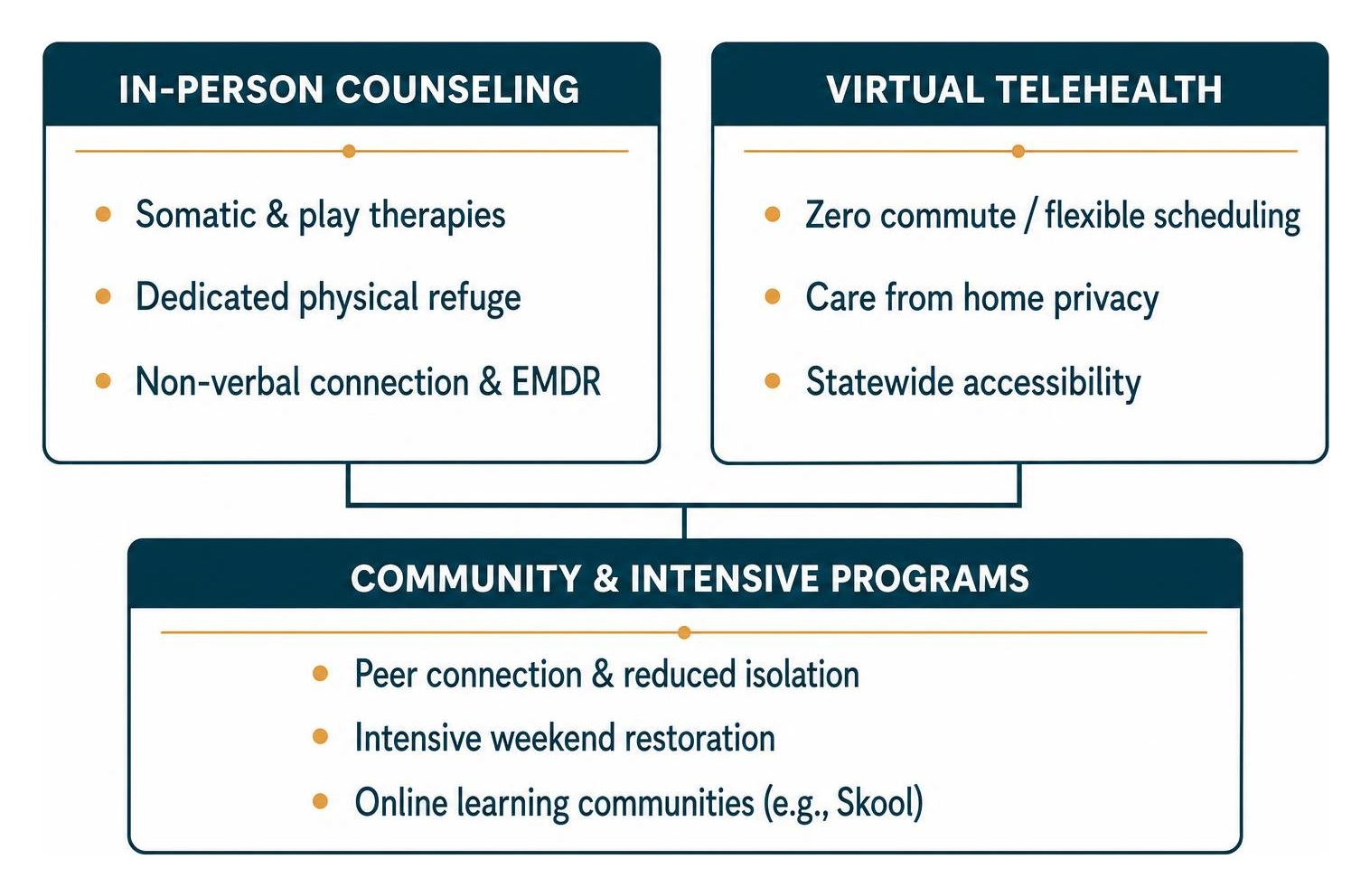
Both in-office counseling and secure telehealth provide distinct advantages depending on your schedule, lifestyle, and clinical needs:
- In-Person Counseling: Meeting in an office offers an intentional physical sanctuary away from domestic and workplace demands. It is well-suited for young children, complex trauma requiring hands-on somatic grounding, and couples who benefit from sharing a neutral room with a clinician.
- Telehealth Counseling: Accessing online faith-based therapy services allows clients anywhere in Louisiana to meet with specialized clinicians through encrypted, HIPAA-compliant video platforms. Telehealth eliminates travel time, simplifies child-care coordination, and allows individuals to receive support in the comfort of their own homes.
If you live outside our immediate geographic region or travel frequently, utilizing regional registries or verified Christian provider directories can help you locate qualified practitioners licensed in your state.
Group Therapy and Community Support Options
One-on-one therapy is not the only avenue for personal growth. Group therapy programs, marriage intensives, and peer-supported learning cohorts offer cost-effective paths to restoration.
Participating in structured groups provides:
- Reduced Isolation: Realizing that other individuals and couples face similar challenges removes shame.
- Weekly Accountability: Group frameworks offer regular encouragement to practice new relational and emotional habits.
- Affordable Learning Communities: Joining an interactive online group—such as our specialized marriage community on the Skool platform—provides expert-led relationship training, weekly coaching calls, and mutual encouragement at an accessible investment.
Frequently Asked Questions About Faith-Based Therapy
What is Christian counseling and how does it differ from secular therapy?
Christian counseling combines licensed, evidence-based psychological modalities with a biblical worldview. In secular therapy, the client’s values and goals are explored from humanistic or behavioral frameworks without reference to transcendent spiritual reality.
In faith-based counseling, the clinician acknowledges the client’s spiritual life as an essential pillar of health. Scriptural wisdom, prayer, and discernment are welcomed into the clinical setting, offering a deeper foundation for hope, moral discernment, and emotional renewal.
Is faith-based therapy only for devout believers or can anyone attend?
Faith-based therapy is open to everyone. You do not need to attend church regularly, hold specific doctrinal views, or have an active spiritual life to seek care.
Many people enter counseling during seasons of spiritual doubt, church hurt, or deconstruction. A skilled counselor meets you exactly where you are with unconditional empathy and warmth, without judgment, spiritual pressure, or proselytizing.
What should I expect during my first Christian counseling session?
Your initial intake session is primarily an opportunity for assessment and connection. Your therapist will review your history, clarify the specific challenges bringing you to therapy, and discuss your goals.
You will also talk about your spiritual preferences, establishing clear boundaries around how much—or how little—prayer, Scripture, or faith discussions you would like included. This collaborative conversation ensures you feel safe, heard, and supported from day one.
Conclusion
Finding the right counselor is one of the most important investments you can make in your life, your marriage, and your family. When psychological expertise and spiritual convictions work together, true transformation takes root—freeing you from anxiety, healing relational rifts, and renewing your sense of purpose.
At Pax Renewal Center, Dan Jurek and our dedicated clinical team are committed to walking alongside you with compassion, professional excellence, and grounded faith. Whether you are seeking marriage restoration, individual recovery from trauma, or support for your teen, we are here to help you move from survival to peace.
To explore your options, learn more about our team, or take our discernment quiz to assess your relationship’s health, visit our services page or contact our Lafayette office today to schedule your consultation.