

Why Faith-Based Cognitive Behavioral Therapy Is Changing Mental Health Care
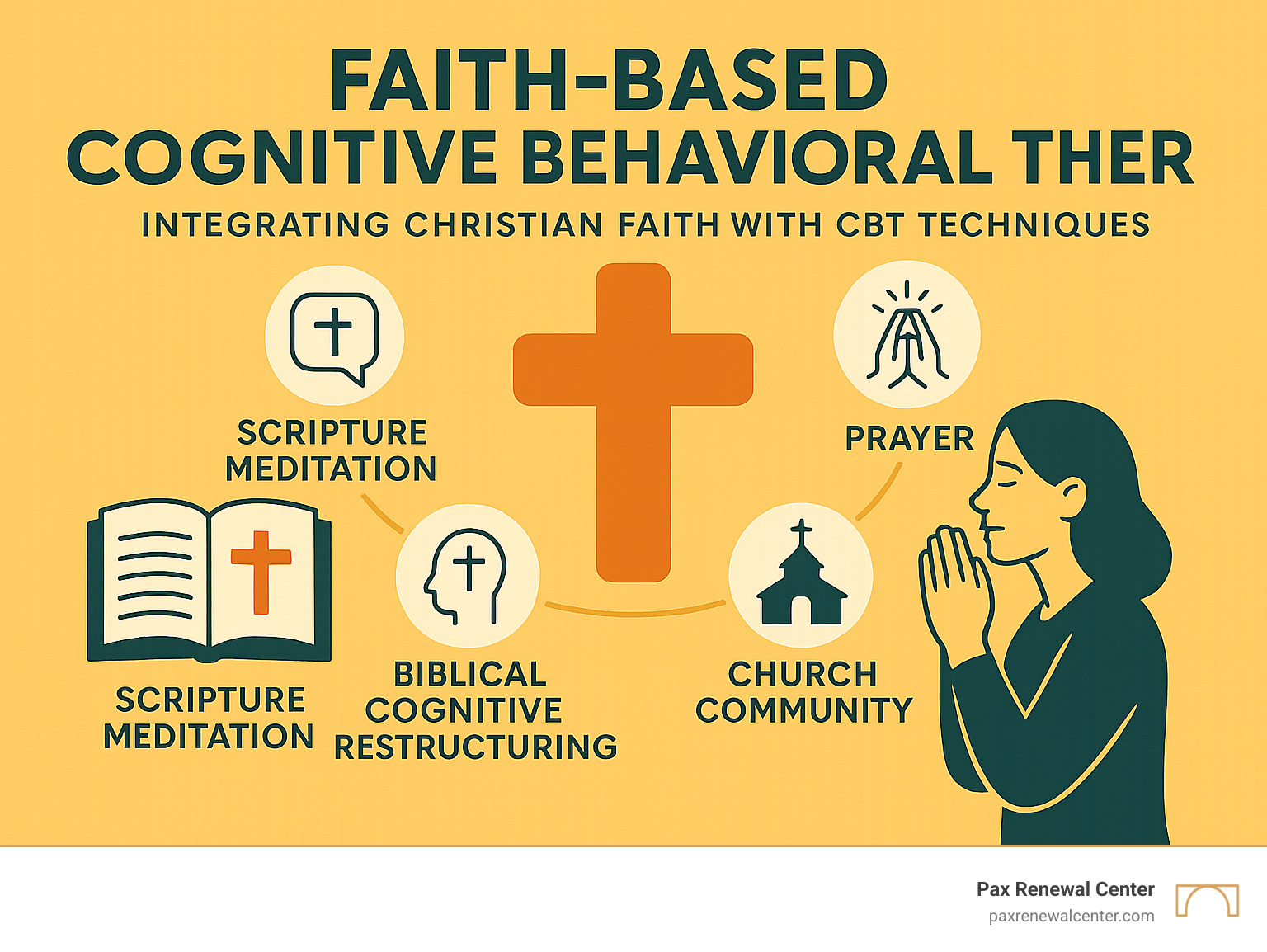
Faith based cognitive behavioral therapy combines proven psychological techniques with your spiritual beliefs for powerful healing. This approach integrates scripture, prayer, and Christian principles with evidence-based CBT methods to address depression, anxiety, trauma, and relationship issues.
Key Elements of Faith-Based CBT:
- Scripture Integration: Using Bible verses to challenge negative thought patterns
- Prayer & Meditation: Incorporating spiritual practices into coping strategies
- Religious Community: Leveraging church support and fellowship for healing
- Values Alignment: Ensuring therapy honors your Christian worldview
- Proven Effectiveness: Research shows 77-83% of patients over 55 want faith integrated into therapy
The research is compelling: studies show that patients with spiritual beliefs often experience greater improvement in spiritually integrated therapies than in secular ones. When medication helps only 60% of people with depression, this approach offers a different path to hope.
This matters because many Christians feel torn between seeking professional help and staying true to their faith. You don’t have to choose. Faith based cognitive behavioral therapy honors both your need for healing and your relationship with God.
As a Licensed Professional Counselor with over 35 years of experience, I’m Dan Jurek, and I’ve witnessed how faith based cognitive behavioral therapy transforms lives by combining clinical excellence with spiritual wisdom. At Pax Renewal Center, we’ve helped hundreds of individuals and couples find healing through this integrated approach that respects both science and scripture.
What Is Faith-Based Cognitive Behavioral Therapy?
Faith based cognitive behavioral therapy brings together modern psychology with the truths of your spiritual journey. It’s built on research showing how your beliefs shape your mental well-being. This approach, also known as Religiously Integrated Cognitive Behavioral Therapy (RCBT), is about you. We guide you to use your own religious beliefs, scripture, and spiritual practices as tools to overcome challenges like depression and anxiety.
Traditional CBT provides tools to manage thoughts, feelings, and actions. Faith based cognitive behavioral therapy adds a profound spiritual dimension to this effective toolkit. We can weave in scripture, prayer, and other spiritual disciplines, making your healing journey effective, personal, and holistic, especially for those who hold their faith close.
We often use an adapted CBT model called ABCDE+R. We look at an Activating event, your Beliefs about it, and the Consequences (your feelings and actions). Then, we Dispute unhelpful beliefs not just with logic, but also with your Religious resources. This guides you toward Effective new beliefs and healthier emotional outcomes, using both logic and the truths of your faith.
Here’s a quick comparison to highlight the synergy:
| Feature | Traditional CBT | Faith-Based CBT |
|---|---|---|
| Core Focus | Thoughts, emotions, behaviors, and their interplay | Thoughts, emotions, behaviors, and their interplay, viewed through a spiritual lens |
| Cognitive Resources | Logic, evidence, rational thought, personal experience | Logic, evidence, rational thought, personal experience, plus scripture, spiritual teachings, religious values |
| Behavioral Strategies | Activity scheduling, exposure, problem-solving, relaxation | Activity scheduling, exposure, problem-solving, relaxation, plus prayer, meditation, community engagement, acts of service |
| Therapist Role | Guide, educator, facilitator | Guide, educator, facilitator, sensitive to and integrating spiritual perspectives |
| Goal | Symptom reduction, improved functioning | Symptom reduction, improved functioning, spiritual growth, alignment with faith values |

Core Principles Rooted in Scripture and Science
At the heart of faith based cognitive behavioral therapy is the principle of “renewing the mind,” from Romans 12:2. This biblical wisdom echoes modern psychology’s cognitive model, which teaches that our thoughts shape our feelings and actions. Traditional CBT helps spot “thinking traps” like “all-or-nothing thinking” or “catastrophizing.” We learn to question these thoughts by looking for facts and alternative perspectives.
Faith based cognitive behavioral therapy takes this a step further by inviting God’s Word into the conversation. If you’re wrestling with feelings of inadequacy, we can ground your sense of self in biblical truths, like being “fearfully and wonderfully made” (Psalm 139:14). This approach understands that a healthy mind and strong faith strengthen each other. It’s about taking “every thought captive” (2 Corinthians 10:5) to find freedom from destructive patterns. Lasting change begins when our inner narratives align with God’s truths.
Faith-Based CBT vs Traditional CBT in Daily Practice
Both traditional and faith based cognitive behavioral therapy aim to shift unhelpful thought patterns. The daily practice differs, especially when faith is a central part of your life. While traditional CBT uses logic to challenge negative thoughts, faith based cognitive behavioral therapy adds spiritual nourishment. We ask, “What does scripture say?” or “How would your faith guide you?” The evidence used to challenge thoughts is rooted in both logic and theology.
“Belief-behaviors”—actions from your spiritual convictions—become part of your healing. For anxiety, we might incorporate contemplative prayer or scripture memorization alongside secular techniques. These practices become paths for spiritual growth and psychological healing.
At Pax Renewal Center, our therapists are trained to respectfully weave these spiritual elements into your sessions, shaping the experience to fit your unique path. This might include therapist-guided prayer, exploring biblical figures’ struggles, or leveraging your religious community for support. While RCBT is adapted for many faiths, our expertise at Pax Renewal Center is rooted in Christian and Catholic values, ensuring our approach resonates with our clients in Lafayette, LA, and online.
How Faith-Based CBT Works in Real Life
Faith based cognitive behavioral therapy transforms spiritual truths into practical steps for healing. It’s about actively engaging your faith and using your spiritual beliefs as a resource for lasting change.
- Behavioral Activation: A core CBT technique is encouraging re-engagement in meaningful activities. In a faith-based context, this aligns with “doing what God’s Word commands” (James 1:22), such as community outreach or acts of service. These actions become expressions of faith, not just mood boosters.
- Gratitude Journaling: This becomes a spiritual discipline, aligning with Philippians 4:8 to focus on what is good. Your journal becomes a testament to God’s blessings.
- Forgiveness Exercises: We integrate forgiveness exercises, rooted in biblical teachings, to help you process hurts, release bitterness, and find peace.
- Mindfulness-Prayer: This practice blends presence and spirituality. Unlike secular mindfulness, it can involve contemplative prayer or scripture meditation to quiet the mind, deepen your connection with God, and foster inner calm.
- Community Support: Connecting with your religious community provides encouragement and accountability, reinforcing lessons from therapy and reminding you that you’re not alone.

Applying faith based cognitive behavioral therapy to Anxiety & Trauma
Anxiety and trauma can be overwhelming. Faith based cognitive behavioral therapy offers a framework to manage these challenges by anchoring your mind in spiritual truth and providing practical coping strategies. For anxiety, we identify and challenge worrisome thoughts using both logic and the peace found in scripture, like Matthew 6:25-34 or Philippians 4:6-7. This deep “Psalm-anchored calm” can be a powerful antidote to anxious rumination.
For trauma, exposure therapy can be strengthened by your faith. As you confront painful memories, your faith can provide strength and a framework for surrendering pain to a higher power. At Pax Renewal Center, we also specialize in EMDR therapy for trauma. Pairing EMDR with faith based cognitive behavioral therapy creates a holistic healing experience. EMDR helps reprocess traumatic memories, while faith integration provides a spiritual context for healing, helping restore your relationship with God. This dual approach addresses both psychological and spiritual wounds.
Applying faith based cognitive behavioral therapy in Marriage Counseling
At Pax Renewal Center, our marriage counseling is rooted in clinical best practices and Christian values. Faith based cognitive behavioral therapy provides a compassionate framework for couples to steer conflict, improve communication, and restore intimacy. We help couples identify and challenge negative thought patterns about each other using both evidence and biblical principles of love, patience, and grace.
Our work integrates approaches like the Gottman Method for practical communication skills with a focus on the spiritual dimensions of marriage. We teach couples to communicate respectfully and resolve conflict, grounding these skills in the understanding of marriage as a sacred covenant. Exploring biblical teachings on forgiveness and humility can transform relational dynamics, helping couples build a strong, faith-infused marriage.
Evidence & Outcomes: What the Research Shows
The effectiveness of faith based cognitive behavioral therapy is backed by a growing body of scientific research. Data now clearly shows the benefit of integrating clinical psychology and spiritual care, especially for people of faith. The research reveals why this approach is so impactful:
- Limitations of Medication: Medications for depression are effective for only about 60% of individuals, highlighting the need for effective psychotherapeutic alternatives.
- Greater Improvement: A review of 46 spiritual intervention studies found that patients with spiritual beliefs showed greater improvement in spiritually integrated psychotherapies compared to secular ones. These interventions can be more effective in reducing depression for religious clients.
- Patient Preference: It’s also what people want. A significant majority—77% to 83% of patients over age 55—prefer to have their religious beliefs integrated into their therapy.
- Chronic Illness: The benefits extend to those with chronic health challenges, where depression is common. Faith based cognitive behavioral therapy is a promising method for these patients, using their religious beliefs as resources for resilience.
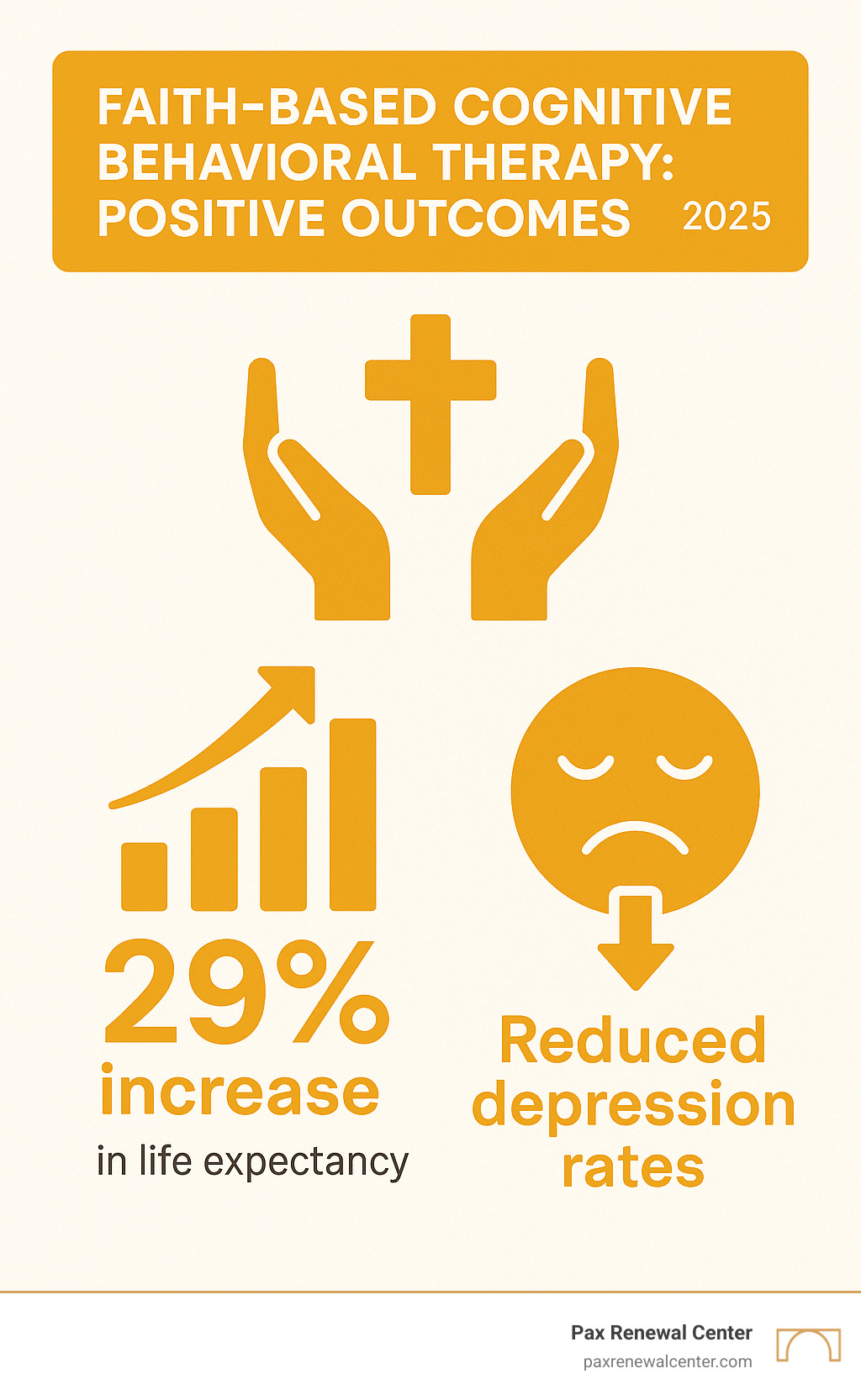
- Long-Term Impact: The long-term impact of faith is also profound. A meta-analysis of 126,000 people found that religious involvement can increase life expectancy by 29%. Conversely, non-participation was linked to a nearly 400% increase in suicide risk.
- Holistic Flourishing: Compared to secular therapy, the integrated approach shows similar psychological improvement but greater improvement on spiritual outcomes. This helps individuals experience true flourishing across mental, emotional, and spiritual health.
For more in-depth understanding, you can explore the Scientific research on religiously integrated CBT.
Who Can Benefit & How to Begin Your Journey
Faith based cognitive behavioral therapy is a versatile approach offering hope to many individuals and families. While our focus at Pax Renewal Center is Christian and Catholic integration, the core principles are broadly applicable.
Who can benefit?
- Those with Chronic Illness: If you’re navigating a chronic illness and related depression, this therapy can be a lifeline, using your faith to help you cope.
- Teens and Adolescents: Teens facing peer pressure or identity questions can find strength, and our specialized counseling provides a safe space for them.
- Couples: Couples can strengthen their relationship through marriage counseling grounded in shared spiritual values.
- Seniors: Seniors also benefit greatly, with research showing a strong preference for faith-integrated therapy among those over 55.
If you want your mental health journey to align with your spiritual journey, faith based cognitive behavioral therapy is an excellent choice for holistic healing. At Pax Renewal Center, we believe in accessible counseling. Beyond in-person sessions in Lafayette, LA, we offer online individual, couples, and affordable group therapy through our online community. You can begin your healing journey from anywhere with expert support.
For more insights into just how much patients desire spiritual integration in their care, you can refer to this Scientific research on patient spiritual preferences.
First Steps to Start Faith-CBT
Starting faith based cognitive behavioral therapy is a collaborative and supportive process.
- Initial Assessment: Your journey begins with an assessment to understand your challenges, goals, and spiritual background. This allows us to tailor therapy specifically to you.
- Collaborative Goal-Setting: Together, we’ll establish clear goals for your therapy that encompass both psychological well-being and spiritual growth.
- Finding the Right Therapist-Fit: Finding the right fit is key. At Pax Renewal Center, our qualified, faith-based therapists are skilled in clinical best practices and respect Christian and Catholic values. Finding a therapist who understands your worldview can make therapy more effective.
Finding a Qualified Therapist Near You
When seeking a therapist for faith based cognitive behavioral therapy, it’s important to find someone who is both clinically competent and spiritually sensitive. Here’s what to look for:
- Licensure and Clinical Expertise: Ensure your therapist has the necessary license (e.g., LPC, LMFT) and a strong foundation in evidence-based modalities like CBT, and potentially specialized training in EMDR or the Gottman Method.
- Faith-Based Training: Prioritize therapists who focus on faith-based counseling. Ask about their approach to integrating faith into sessions to see if they’re a good fit.
- Church Referrals: Your church or spiritual community can be a trusted resource for referrals to Christian counselors in your area.
- Telehealth Options: Don’t overlook telehealth. Secure online counseling can be a fantastic solution if in-person sessions aren’t feasible. Pax Renewal Center offers telehealth, making our specialized therapy accessible across Louisiana and beyond.
Frequently Asked Questions about Faith-Based CBT
It’s natural to have questions when considering faith based cognitive behavioral therapy. Here are answers to some common inquiries:
Is faith based cognitive behavioral therapy only for Christians?
While Pax Renewal Center specializes in Christian and Catholic integration, the broader concept of religiously integrated CBT (RCBT) is not limited to one faith. It has been adapted for many world religions, including Judaism, Islam, Buddhism, and Hinduism. The core idea is to use your own spiritual resources within the CBT framework. A faith-integrated approach can be customized to your specific spiritual path.
How long does faith-CBT usually take?
The duration of faith based cognitive behavioral therapy is similar to traditional CBT. It depends on your unique needs, the complexity of the issues, and your engagement in the process. CBT is a structured, relatively short-term therapy. You may feel relief after a few sessions, but lasting change often takes more than 10 sessions. Our goal is to provide you with enduring skills for the future.
Can I combine faith-CBT with medication?
Yes. For many, combining faith based cognitive behavioral therapy with medication is the most effective approach, especially for moderate to severe depression or anxiety. Medication can help manage biological symptoms, creating a stable foundation for therapy to be more effective. Therapy addresses underlying thought patterns, behaviors, and spiritual struggles that medication alone can’t resolve. We work with your medical providers to ensure an integrated treatment plan for your mind, body, and spirit.
Conclusion
When struggling with mental health, you don’t have to choose between professional help and your faith. Faith based cognitive behavioral therapy offers a path to healing and renewal that honors both clinical excellence and your spiritual convictions.
This approach recognizes your faith as a powerful resource for change, working with evidence-based techniques. By aligning your healing journey with your beliefs, you can experience genuine renewal of mind, heart, and spirit, not just symptom management.
At Pax Renewal Center, we’ve seen individuals and couples find hope. We’ve seen marriages restored by combining methods like the Gottman approach with biblical principles, and people break free from anxiety and depression using practical CBT skills alongside their faith. This is what happens when clinical excellence meets spiritual wisdom.
Our team understands that faith is foundational. We’re committed to providing therapy that is authentic to your Christian worldview and delivers professional, compassionate care. We are here to walk alongside you with clinical expertise and spiritual understanding, whatever your struggle.
You don’t have to take the journey toward healing alone. At Pax Renewal Center, we believe true restoration engages the mind, heart, and spirit. We invite you to experience the difference faith based cognitive behavioral therapy can make.
To take your first step toward healing and find how we can support your unique journey, visit our More info about individual therapy page to learn more about our services and how we can help you find the peace and renewal you’re seeking.