

Why Life Transitions Challenge Even the Strongest People
Counseling for life transitions helps people steer major life changes with professional support, evidence-based techniques, and personalized coping strategies to reduce stress and promote healthy adjustment.
What is counseling for life transitions?
- Professional therapy that helps individuals adapt to major life changes
- Uses evidence-based approaches like CBT, mindfulness, and solution-focused therapy
- Provides emotional support and practical coping strategies
- Addresses both positive transitions (marriage, new job) and difficult ones (divorce, loss)
Who benefits from this type of counseling?
- Adults facing career changes, retirement, or job loss
- Individuals experiencing relationship transitions like marriage or divorce
- People adjusting to health challenges or caring for aging parents
- Anyone feeling overwhelmed by major life changes
Life is full of transitions. Some we choose, others happen to us without warning. Research shows that about 27% of American adults are too stressed to function properly on most days, with major life changes being a primary source of this overwhelming stress.
Whether you’re facing retirement, divorce, job loss, or even positive changes like marriage or a new baby, transitions shake up everything familiar. Your daily routine disappears. Your sense of identity shifts. The future feels uncertain.
“Life transitions can bring both excitement and stress,” but you don’t have to steer them alone. Professional counseling provides the tools, support, and clarity you need to move from chaos to confidence during these pivotal moments.
Understanding Life Transitions and Their Impact
Life transitions are those pivotal moments when one chapter of your life ends and another begins. Some transitions you can see coming from miles away – like retirement after decades of work or your youngest child heading off to college. Others blindside you completely, like an unexpected job loss or a sudden health crisis that changes everything overnight.
What makes counseling for life transitions so valuable is understanding that these changes affect you on multiple levels simultaneously. You’re not just adjusting to new circumstances; you’re grieving the loss of familiar routines, questioning your identity, and often feeling like you’ve lost control over your own life story.
Even positive transitions can trigger unexpected grief. Getting married is wonderful, but you might find yourself mourning your single independence. Having a baby brings joy, but also the loss of spontaneity and couple time. Your brain doesn’t always distinguish between “good” and “bad” change – it just knows that everything familiar has shifted.
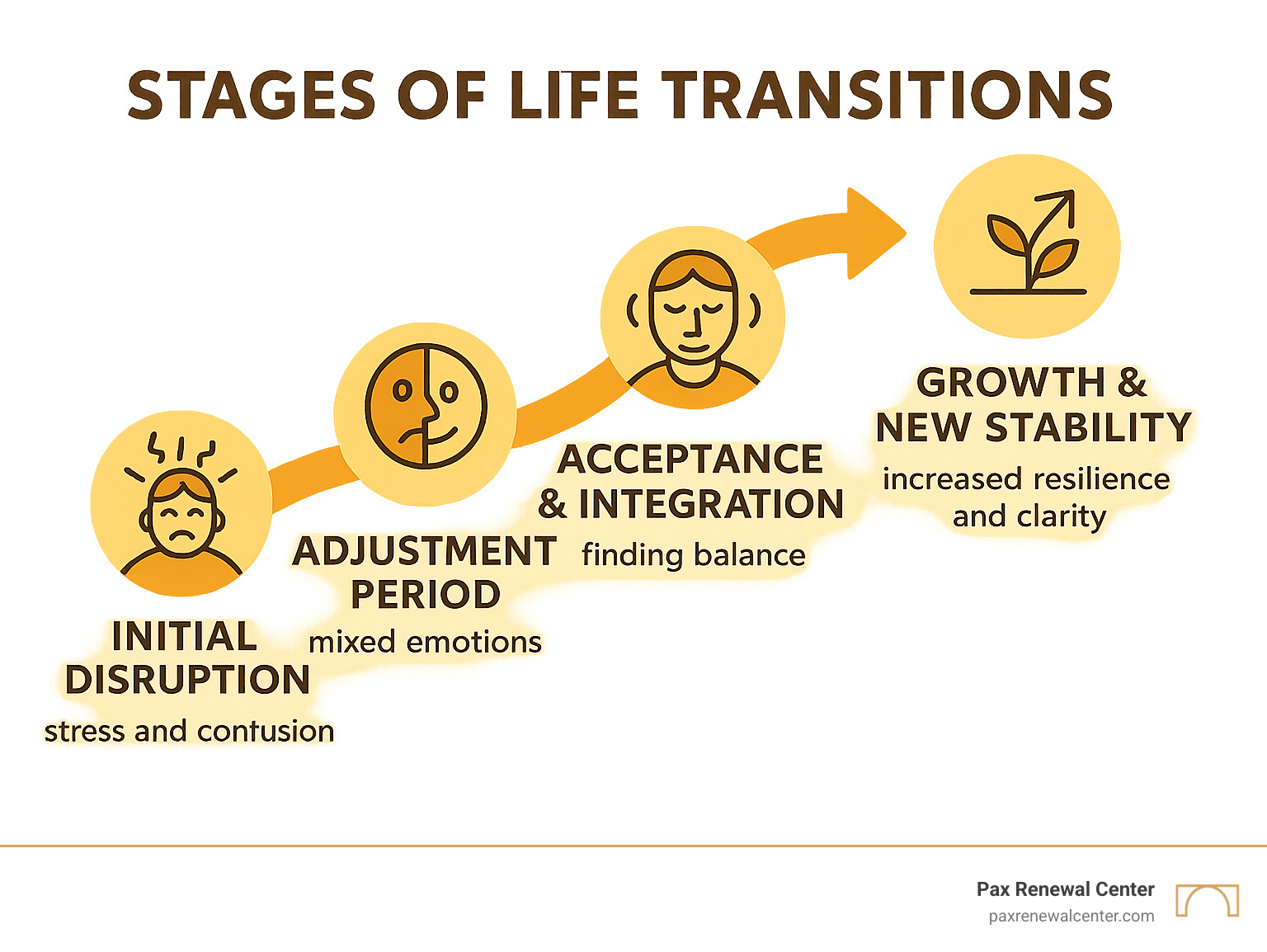
The emotional journey through transitions follows predictable stages, though everyone moves through them at their own pace. Initially, you might feel shocked, excited, or in denial about what’s happening. Then comes the messy middle – confusion, anxiety, and sometimes deep sadness as reality sets in. Eventually, with proper support and healthy coping strategies, acceptance emerges and you begin building your new normal.
Here’s what’s happening in your brain during major life changes: your threat-detection system goes into overdrive. Research from the American Psychological Association shows that 27% of adults report being too stressed to function on most days, with life transitions being a major contributor. Your body floods with stress hormones, which explains why even happy changes can leave you feeling exhausted and emotionally overwhelmed.
Common Examples You Might Face
At Pax Renewal Center, we walk alongside clients through many different types of life transitions. Career changes and job loss shake your professional identity and financial security to the core. Retirement can feel like stepping off a cliff after decades of structured work life. Many of our clients struggle with the sudden lack of purpose and routine.
Divorce and relationship changes ripple through every area of life. Your living situation changes, finances get complicated, and if children are involved, co-parenting adds another layer of adjustment.
Parenthood brings incredible joy alongside overwhelming responsibility. New parents often feel guilty for missing their old life while simultaneously loving their baby deeply. The empty nest phase hits differently – suddenly the house feels too quiet and your primary role as hands-on parent shifts dramatically.
Relocation disrupts more than just your address. You lose your familiar coffee shop, your trusted mechanic, and most importantly, your community connections. Building a new life somewhere else takes time and intentional effort.
Health changes and caregiving responsibilities force you to confront mortality and limitations you never expected. Whether you’re facing your own diagnosis or caring for aging parents, these transitions challenge your assumptions about control and independence.
Why Transitions Are So Stressful
Your brain is wired to perceive uncertainty as danger, which explains why even positive changes can trigger anxiety. When your familiar routines disappear, your nervous system sounds the alarm. The predictable patterns that once provided security are gone, leaving you feeling unmoored and vulnerable.
Social roles that defined your identity may no longer fit. The executive becomes unemployed. The busy parent becomes empty-nester. The spouse becomes single. These role changes create confusion about who you are and where you belong in the world.
Loneliness often accompanies major transitions as relationships shift or end. You might feel isolated right when you most need support, which compounds the stress of adapting to new circumstances.
Scientific research on stress and health confirms that prolonged transition stress impacts both mental and physical health. Sleep problems, digestive issues, weakened immune function, and increased risk of anxiety and depression are all common responses to major life changes.
The good news? These reactions are completely normal, and with proper support, you can steer transitions successfully while actually growing stronger through the process.
Counseling for Life Transitions: How Professional Support Works
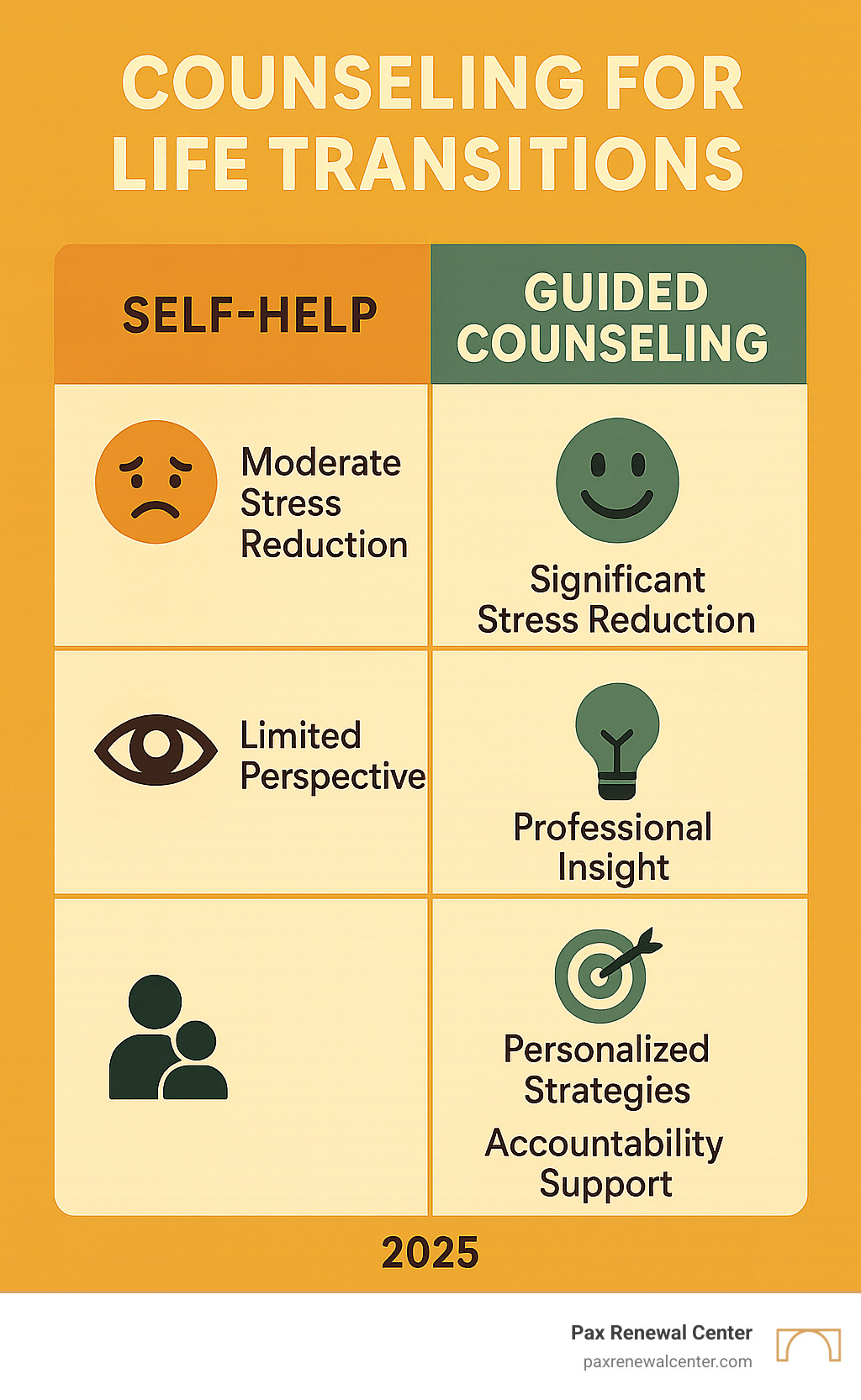
When life throws you a curveball, an offers something that well-meaning friends and family simply can’t provide: professional expertise combined with objective perspective. Think of it as having a skilled guide when you’re hiking unfamiliar terrain – someone who knows the path and can help you avoid the pitfalls.
Your journey begins with a comprehensive assessment where we take time to really understand your unique situation. What specific changes are you facing? What strengths and resources do you already have? This isn’t a one-size-fits-all approach – we create a personalized roadmap based on your individual needs and circumstances.
The heart of counseling lies in creating a safe, judgment-free space where you can express those difficult emotions you might not feel comfortable sharing elsewhere. Maybe you’re feeling guilty about being relieved your elderly parent passed away. Perhaps you’re terrified about retirement even though everyone expects you to be excited. These complex feelings are normal, and having a place to voice them without fear of criticism is incredibly healing.
We integrate evidence-based therapeutic approaches like Cognitive Behavioral Therapy (CBT), Emotionally Focused Therapy (EFT), narrative therapy, and solution-focused techniques. But we don’t just throw therapeutic jargon at you – we translate these approaches into practical tools you can use in your daily life. Goal-setting becomes a collaborative process where we help you identify realistic next steps that feel manageable rather than overwhelming.
Many of our clients appreciate the flexibility of teletherapy during transition periods. When your schedule is chaotic or you’re dealing with major disruptions, virtual sessions ensure you can maintain consistent support without the added stress of commuting to appointments.
Who Can Benefit from Counseling
Life transitions don’t discriminate by age or circumstance. Students often struggle with the pressure of choosing a career path or adjusting to college life. Adults in midlife frequently find themselves juggling multiple transitions simultaneously – caring for aging parents while supporting their own children, or questioning their career choices after decades in the same field.
Seniors face unique challenges that younger people might not fully understand. Retirement isn’t just about having more free time – it’s about redefining your entire sense of purpose and identity. Health changes can feel like betrayals by your own body, and financial concerns add another layer of stress.
Caregivers often forget to care for themselves while focusing on others’ needs. The emotional toll of watching a loved one struggle, combined with the practical demands of caregiving, can lead to burnout and resentment – feelings that then trigger guilt.
Couples sometimes find that major life changes affect each partner differently. One spouse might be excited about retirement while the other feels anxious. These different reactions can create distance and misunderstanding in relationships that were previously strong.
For faith-seekers, transitions often raise spiritual questions alongside practical concerns. You might wonder where God is in your struggle, or how your beliefs should guide your decisions during uncertain times.
Signs You May Need Help
Some stress during major life changes is completely normal – you’d be unusual if you weren’t feeling some anxiety or sadness. But certain warning signs suggest it’s time to seek professional support.
Sleep problems that persist for weeks can indicate your nervous system is stuck in high alert mode. Overwhelming anxiety that interferes with your ability to work, maintain relationships, or make necessary decisions needs attention before it becomes more entrenched.
Social withdrawal is particularly concerning because isolation makes everything harder. If you’re avoiding friends, skipping activities you used to enjoy, or feeling like no one understands what you’re going through, counseling can help you reconnect.
Physical symptoms like persistent headaches, digestive issues, or chronic fatigue often signal that emotional stress is taking a toll on your body. Difficulty concentrating or making even simple decisions can leave you feeling stuck and frustrated.
When these symptoms cluster together and persist for several weeks, you might be experiencing adjustment disorder – a recognized condition that responds well to professional treatment. The good news is that with appropriate support, most people successfully steer their transitions and often emerge stronger than before.
More information about what to expect in your first counseling sessions can help you understand how professional support works and what the process looks like at Pax Renewal Center.
Therapeutic Approaches & Practical Coping Strategies
When you’re struggling through a major life change, having the right therapeutic tools makes all the difference. At Pax Renewal Center, we don’t believe in one-size-fits-all approaches. Instead, we carefully select from proven therapeutic methods based on your unique situation, personality, and the specific transition you’re facing.
Cognitive Behavioral Therapy (CBT) forms the foundation of much of our work because it directly addresses the anxious thoughts that often spiral during transitions. When you’re facing retirement and thinking “I’ll never find purpose again,” CBT helps you examine that thought and develop a more balanced perspective like “This adjustment will take time, but I have skills and interests I can explore.” It’s amazing how shifting these thought patterns can reduce your stress levels.
Mindfulness techniques offer another powerful tool for staying grounded when everything feels chaotic. Instead of getting lost in worries about the future or regrets about the past, mindfulness teaches you to focus on the present moment. Simple practices like deep breathing and body awareness can significantly calm your nervous system during turbulent times.
For clients whose transitions involve trauma or significant loss, EMDR (Eye Movement Desensitization and Reprocessing) helps process difficult emotions and memories that might be complicating your adjustment. Sometimes past experiences create emotional blocks that make current changes feel even more overwhelming than they need to be.
Emotion-Focused Therapy provides a safe space to understand and express feelings that might seem too big or confusing during major changes. Many people struggle to even name what they’re feeling during transitions – anger, grief, excitement, and fear can all jumble together. This approach helps you sort through these complex emotions.
Solution-focused therapy takes a different angle by emphasizing your existing strengths and resources. Rather than dwelling on what’s going wrong, we help you identify what’s already working in your life and build on those successes. This strengths-based planning approach often surprises clients with how capable they actually are.
We also recognize the power of support groups and journaling as part of your healing journey. Sometimes connecting with others who understand your experience provides comfort that individual therapy alone cannot offer.
Evidence-Based Modalities We Use in Counseling
Our approach to counseling for life transitions combines several research-backed therapeutic methods that have proven effective for people navigating major changes.
Cognitive Behavioral Therapy (CBT) has extensive research support for treating anxiety and depression associated with life changes. Scientific research on CBT demonstrates its effectiveness in helping people develop healthier thought patterns and coping strategies. We use CBT to help you identify and challenge the negative thoughts that often make transitions feel more overwhelming than necessary.
EMDR becomes particularly valuable when transitions involve trauma, loss, or other distressing experiences that seem “stuck” in your emotional system. This therapy helps your brain process these difficult memories so they don’t continue disrupting your ability to move forward.
Emotionally Focused Therapy (EFT) helps both individuals and couples understand their emotional responses to change. It teaches you healthier ways of connecting with others during stressful periods when relationships often feel strained.
Gottman Method techniques support couples navigating transitions together. Major life changes can either strengthen or strain relationships, and these evidence-based approaches help couples maintain their bond while adapting to new circumstances.
Everyday Tools to Build Resilience

Beyond our therapy sessions, we teach practical tools you can use every day to build resilience and manage stress. These aren’t complicated techniques – they’re simple practices that fit into your daily routine.
Deep breathing exercises work because they activate your body’s natural relaxation response. When you’re feeling overwhelmed by change, just five minutes of focused breathing can reduce the physical symptoms of stress and anxiety. We teach you specific techniques that you can use anywhere, anytime.
Gratitude journaling helps shift your focus from what you’re losing to what remains positive in your life. Even during difficult transitions, this practice helps you maintain perspective and notice small moments of joy or connection that might otherwise get overlooked.
Body scan meditation increases your awareness of physical tension and teaches you how to consciously release stress stored in your muscles. Many people don’t realize how much physical tension they carry during stressful periods until they learn to tune in to their body’s signals.
SMART goals break overwhelming changes into manageable steps. Instead of feeling paralyzed by the enormity of your transition, this approach helps you set Specific, Measurable, Achievable, Relevant, Time-bound objectives that give you a sense of progress and control.
We also encourage clients to focus on healthy habits during transitions. Regular sleep, nutritious meals, and gentle exercise provide the physical foundation your body needs to handle emotional stress. More information about personal development explores additional strategies for building emotional resilience and personal growth.
Special Considerations: Seniors, Children, and Faith-Based Perspectives
Life transitions affect people differently depending on their age, life stage, and personal beliefs. At Pax Renewal Center, we understand that counseling for life transitions must be custom to meet the unique needs of each person who walks through our doors.
Seniors face particularly complex challenges during major life changes. The statistics tell a sobering story – 80% of people aged 60 and older lack the financial resources to cover long-term care services or withstand a financial shock. This financial vulnerability makes every transition more stressful, whether it’s dealing with health changes, adjusting to retirement, or accepting help with daily activities.
But money isn’t the only concern. When familiar routines disappear or mobility becomes limited, loneliness can creep in quickly. The bridge club you attended for twenty years might become impossible to reach. The job that gave you purpose and social connection ends with retirement. These losses compound during transitions, making professional support especially valuable.
We also see the stress that affects entire families when adult children become caregivers for aging parents. This role reversal creates emotional challenges for everyone involved. Seniors struggle with losing their independence, while adult children juggle their own responsibilities with caring for their parents.
Children and adolescents experience transitions through a completely different lens than adults. Their developing brains and limited life experience make them particularly vulnerable when family changes occur – whether it’s divorce, moving to a new city, or a parent losing their job.
Play therapy helps younger children express emotions they don’t yet have words for. A seven-year-old might not be able to say “I’m anxious about Mom and Dad’s divorce,” but they can show those feelings through their play. Teen counseling addresses the identity questions that become even more complex when family stability shifts during these crucial developmental years.
Faith plays a central role in how many people understand and cope with major life changes. Your spiritual beliefs can be both a source of deep comfort and, sometimes, confusion during difficult transitions. Some people find their faith grows stronger through adversity, while others wrestle with questions about God’s plan or wonder why they’re facing such challenges.
Faith-Integrated Counseling for Life Transitions
Our faith-integrated approach to counseling recognizes that your spiritual life and emotional healing work together. We don’t separate your relationship with God from your mental health – instead, we help you draw on both professional therapeutic techniques and your faith traditions for strength and guidance.
Prayer and scripture reflection often provide comfort when everything else feels uncertain. We help clients explore how their faith offers wisdom for navigating change and finding meaning even in difficult circumstances. Sometimes a familiar psalm or prayer becomes an anchor during the storm of transition.
Sacramental support through your parish community can provide additional layers of healing and connection. We encourage clients to maintain their worship practices and consider seeking spiritual direction alongside their counseling work. Your faith community often becomes even more important during times of change.
Catholic values emphasize the dignity of every person, the importance of family relationships, and our call to serve others. These principles can guide your decision-making during transitions and help you find purpose even when circumstances feel overwhelming. More information about our services explains how we integrate these values into our therapeutic approach.

Frequently Asked Questions about Counseling for Life Transitions
How many sessions will I need?
There’s no universal timeline, but most clients fall into three broad ranges:
- 6–8 sessions – short-term, focused work for a single transition such as a move or job change.
- 8–16 sessions – moderate support for layered changes like divorce, retirement, or empty-nest.
- Ongoing or periodic check-ins – longer care when grief, trauma, or several simultaneous transitions are involved.
We review progress every few sessions so you receive just the right amount of help—no more, no less.
Can counseling help with positive transitions like promotions or marriage?
Absolutely. Even joyful milestones bring new roles, routines, and hidden losses. Premarital sessions, new-parent coaching, or support after a big promotion let you process mixed emotions, strengthen relationships, and step into your next season with confidence.
What if I prefer virtual sessions?
Our secure teletherapy platform delivers the same clinical quality you’d receive in the office, minus the commute. Virtual care is ideal when your schedule is unpredictable, you’re relocating, or you simply feel safer sharing from home. We’ll walk you through the simple tech setup before your first appointment.
Conclusion & Next Steps
Change is inevitable, but suffering through it alone is not. Professional, faith-integrated counseling turns confusion into clarity by combining evidence-based therapy with the hope of Christian spirituality.
If you’re ready to move from merely surviving your transition to truly thriving, Pax Renewal Center is here to help—whether in person in Lafayette, LA, or through convenient virtual sessions. Visit our services page to schedule your first conversation.
Seeking help isn’t a sign of weakness—it’s a step of wisdom toward the peace and purpose God intends for you.