

Why Building Relationships Online Matters More Than Ever
Online relationship building is the process of creating meaningful, trust-based connections through digital platforms. From remote work to long-distance friendships and virtual therapy, the ability to build genuine relationships online has become essential.
Key elements of successful online relationship building include:
- Authenticity – Being genuine and showing your real personality.
- Consistency – Maintaining regular, reliable communication.
- Active Listening – Truly hearing and validating others.
- Intentionality – Making time for personal connection.
- Video Communication – Using cameras to convey non-verbal cues.
- Shared Experiences – Creating memories through virtual activities.
Research shows online conversations can boost closeness, but it requires more intentionality than in-person interactions, where connection can happen more organically. Studies also show a lack of intimate relationships leads to more health problems. While technology can’t fully replace face-to-face connection, it can support meaningful relationships when used thoughtfully.
I’m Dan Jurek, a Licensed Professional Counselor and Marriage and Family Therapist with over 35 years of experience. Through my work at Pax Renewal Center and our online Mastermind Program for Couples, I’ve seen how online relationship building can transform lives when people learn to connect authentically across digital platforms.
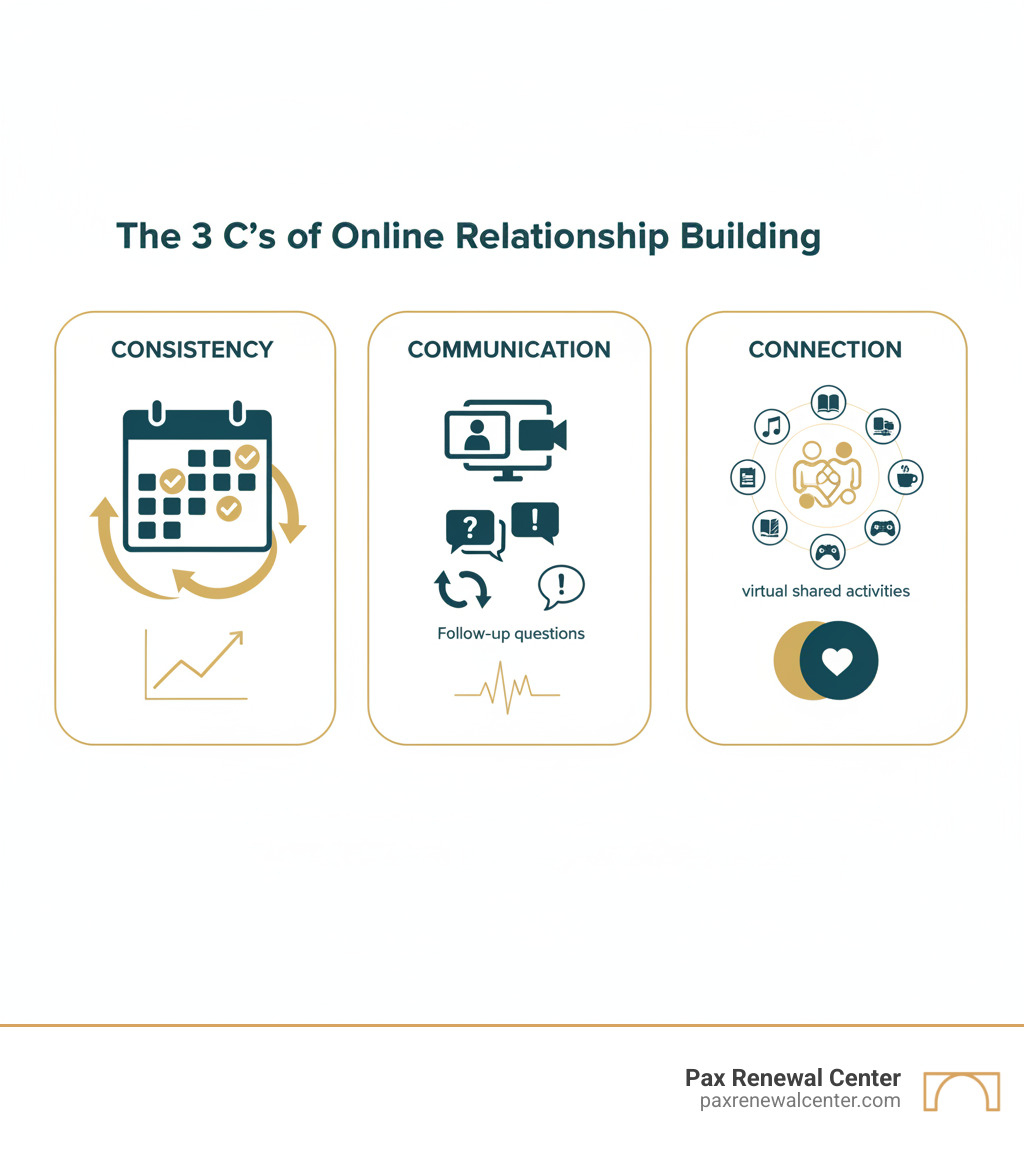
Online relationship building terms simplified:
The Foundations: Core Principles of Virtual Connection

Building strong relationships relies on the same principles whether you’re face-to-face or screen-to-screen. Empathy, authenticity, and trust are the bedrock of every meaningful connection. In a virtual environment, these principles simply require more intentional effort.
At Pax Renewal Center, our approach to relationships recognizes that human connection is a core need. Scientific studies on interpersonal closeness show that even brief, pleasant online chats can boost feelings of connection, especially when both people value the interaction.
Why Online Bonds Are Different (and the Same)
Online relationships feel different because you miss spontaneous moments and some non-verbal cues. But our fundamental human needs for connection, validation, and belonging remain the same. The real difference lies in the intentionality required to meet these needs digitally.
Research on long-distance relationships shows a challenge: purely digital connections can struggle with trust compared to those with some in-person contact. However, other studies show that commitment, not distance, is the key factor. How we bridge the gap is what matters.
Digital communication barriers like misinterpreted tone and distractions can hinder connection. A simple text like “Fine.” can be easily misinterpreted without social cues. However, by being deliberate, asking clarifying questions and expressing empathy explicitly, we can overcome these barriers.
| Aspect | In-Person Relationship Dynamics | Online Relationship Dynamics |
|---|---|---|
| Non-Verbal Cues | Abundant—body language, facial expressions, tone, touch all convey meaning | Limited to facial expressions and tone on video, emojis and text cues in chat; feelings often need explicit verbalization |
| Spontaneity | High—chance encounters and organic conversations happen naturally | Lower—requires scheduled calls and deliberate initiation of conversations |
| Trust Building | Often develops organically through shared experiences and physical proximity | Requires explicit effort, transparency, consistency, and vulnerability; research shows less trust in relationships without face-to-face interaction |
| Empathy | Conveyed through subtle cues, shared space, and immediate feedback | Needs active demonstration through verbal validation, thoughtful questions, and focused attention |
| Misunderstanding | Can be quickly resolved with immediate clarification and non-verbal cues | Higher risk as tone and intent can be misconstrued in text; requires explicit checking in with clarifying questions |
| Shared Experiences | Natural—eating together, activities, physical presence create memories | Must be intentionally created through virtual games, watching shows together, or collaborative online projects |
| Proximity | Physical closeness is a given | Technology bridges distance, but romantic relationships benefit from a shared vision for future physical proximity |
| Idealization | Less likely as reality is constantly present | More common due to limited exposure, potentially leading to unrealistic expectations |
| Intentionality | Often subconscious; relationships develop naturally through regular contact | Essential for every interaction; requires conscious effort to maintain connection and rapport |
| Communication | Rich, multi-sensory, often informal and flowing | Often text-based and can feel transactional; requires deliberate strategies to foster warmth and connection |
The Power of Presence and Authenticity
Being fully present is crucial for online relationship building. This means closing other tabs, silencing your phone, and giving your complete attention. Your focused presence creates genuine connection, even through a screen.
Authenticity means showing up as your real self. When you’re genuine, others are more receptive and open. This includes practicing unconditional positive regard—accepting others without judgment. This creates the safety needed for trust to grow.
One practical way to demonstrate this is to avoid making assumptions. Things get lost in translation easily online. Instead of assuming, ask clarifying questions like, “Can you help me understand what you mean?” This prevents misunderstandings that erode trust. This same commitment to authentic connection is what we help couples develop to achieve emotional satisfaction in their relationships.
Seven Practical Techniques for Authentic Online Relationship Building

Putting principles into practice requires intentionality and a few strategic approaches to make digital interactions feel personal. Think of these seven techniques as your toolkit for turning virtual exchanges into authentic connections.
1. Turn On Your Camera and Be Seen
Your face matters. Choosing video over audio opens a window into your humanity. The Mere-Exposure Effect shows that seeing someone’s face makes them more familiar and likeable. Video calls allow for the subtle dance of facial expressions and body language that convey warmth and empathy. Even if others keep their cameras off, turning yours on projects authenticity. It’s an invitation to connect that shows vulnerability and can deepen online relationship building.
2. Master the Art of Virtual Active Listening
In virtual settings, active listening requires more effort. You can stand out by truly hearing others.
- Paraphrase what you hear to confirm understanding (e.g., “So what I’m hearing is…”). This shows you’re processing their words, not just waiting to talk.
- Ask thoughtful follow-up questions like “How did that make you feel?” to show you value their perspective.
- Show you’re listening with verbal affirmations (“I see,” “That makes sense”), nodding, and eye contact with the camera. These cues need to be more pronounced in virtual spaces.
- Validation is gold. Acknowledge their feelings or ideas (“That’s an insightful point”). Validation isn’t about agreement; it’s about respecting their experience. This empathetic listening is central to personal development and building trust.
3. Share Personal Anecdotes to Build Trust

Sharing something personal is a fast way to move beyond surface-level interaction. Your hobbies, interests, or a funny story humanize you and signal that you’re a whole person beyond the screen. For example, a project manager shared a photo of their new kitten, which changed the team dynamic as others began sharing personal photos, creating a foundation of warmth. Find natural moments to share. Mentioning a hobby can transform a transactional chat into a genuine connection, the heart of online relationship building.
4. Use Questions to Go Deeper Than Small Talk
To foster real connection, ask questions that invite authentic sharing. Use open-ended questions that can’t be answered with a simple ‘yes’ or ‘no’.
Consider questions like:
- “What’s something positive that’s happened in your life recently?”
- “What’s one thing you’re looking forward to this week?”
- “What’s a hobby or interest you’ve picked up lately?”
This approach is similar to the famous 36 Questions That Lead to Love exercise, which uses structured curiosity to accelerate intimacy. Thoughtful questions show you see the other person as a full human being.
5. Be Consistent and Intentional with Your Time
Consistency, not grand gestures, builds lasting relationships. Regular, reliable communication shows you care. Schedule dedicated time for connection, like a weekly video call or daily check-in text. Reliability matters more than frequency; when people know they can count on you, trust deepens. This prevents “relational drift” and buffers against outside stress. Consistency communicates value and builds lasting bonds.
6. Create Shared Virtual Experiences
Technology offers remarkable opportunities to do things together across distances. Shared experiences build common history and deepen intimacy.
- Play online games together or hold virtual co-working sessions.
- Watch shows together using sync apps.
- Take on collaborative projects, like planning a future trip.
- Take virtual classes together, like partner yoga sessions, to strengthen your bond.
These shared activities are relationship investments that create the “remember when” moments that become part of your shared story.
7. Practice Asynchronous Thoughtfulness
Meaningful interaction doesn’t have to be in real time. Small, thoughtful gestures that don’t require an immediate response can be powerful. This includes sending a relevant article, acknowledging important dates, leaving positive comments on social media, or sending a quick check-in message. The key is giving without expecting an immediate return. These small acts of care accumulate over time, building goodwill and reinforcing the relationship organically.
Behind every screen is a real person with real needs for connection. These seven techniques can help make online relationship building feel natural and nourishing.
Navigating the Pitfalls of Virtual Relationships

Online relationship building has challenges. Being aware of potential pitfalls helps us avoid them and build stronger, more resilient connections.
Overcoming Distance and Misunderstanding
When we can’t be physically present, our minds fill in the blanks—sometimes for the better, sometimes for the worse. Both can be problematic.
Research shows people in long-distance relationships often idealize their partners. This creates a fragile foundation, as the gap between expectation and reality can be crushing. One study found a third of long-distance couples broke up within three months of moving to the same location, highlighting the danger of unrealistic expectations.
A study on trust in long-distance relationships found that relationships without any face-to-face interaction struggle more with trust. This means we must work harder to build and maintain it through digital interactions.
For romantic relationships, uncertainty about the future is a major stressor. A vague ‘someday’ plan to close the distance isn’t enough; a concrete ‘how and when’ is needed for the relationship to thrive.
To overcome these challenges, set clear expectations and challenge your own idealization by seeking to understand the full, imperfect reality of the other person. Communicate ‘optionally,’ not out of obligation. Reach out when you genuinely want to connect; this authenticity creates healthier patterns. If these dynamics feel complex, professional guidance through discernment counseling can provide clarity.
Creating a Culture of Strong Online Relationship Building
Creating an environment where online relationships thrive makes everything easier. For teams, this starts with leadership. When leaders model and prioritize relationship building, for example, by allocating time for connection in virtual meetings, it gives everyone permission to do the same. This also means providing the right tools and creating an atmosphere where personal sharing is seen as essential maintenance, not wasted time.
For families and friends, rituals are an anchor. A weekly video call or online game night creates security and shows the relationship is a priority. At the same time, be thoughtful about maintaining healthy boundaries in our digital lives. Just because we’re always accessible doesn’t mean we should be. Healthy virtual relationships respect our need for time away from screens.
Frequently Asked Questions about Building Relationships Online
How can I build trust with someone I’ve never met in person?
Building trust online requires consistency and authenticity. Here’s how:
- Be reliable: If you say you’ll call, call. Following through on small promises builds a foundation of safety.
- Be authentic: Resist presenting a perfect version of yourself. People connect with realness.
- Listen actively: Paraphrase what you hear and ask follow-up questions to show you value their perspective.
- Share appropriately: Selective vulnerability, like sharing a personal story, invites the other person to do the same, deepening intimacy.
- Use video: Seeing facial expressions and body language accelerates trust-building far more than text or audio alone.
- Be patient: Genuine trust develops through repeated positive interactions over time.
How do I make virtual interactions feel less transactional?
To make virtual interactions less transactional, focus on the person, not just the task.
- Start with a personal check-in. Ask about their weekend or something they’re excited about before diving into business.
- Share personal anecdotes. A brief, funny story about your pet or a new hobby humanizes you and finds common ground.
- Use open-ended questions. Instead of “Did you finish the report?” try “What was most challenging about that project?” to honor their experience.
- Validate their contributions. A simple “That’s a great point” makes people feel seen and valued.
- Follow up thoughtfully. A quick message referencing a personal detail from a prior conversation shows you were listening.
What are some red flags to watch for in online relationships?
While online relationship building can be wonderful, trust your instincts and watch for these red flags:
- Inconsistent stories: If their background or personal details change, they may be untruthful.
- Refusal to video chat: While some are camera-shy, a persistent refusal may mean they are hiding their identity.
- One-sided sharing: If you’re the only one initiating contact and sharing personal details, the relationship is unbalanced.
- Disrespect for boundaries: Be wary of anyone who ignores your stated availability or pushes for information you’re not ready to share.
- Pressure for money or sensitive info: Never send money or share financial details, passwords, or social security numbers.
- Love bombing: Be cautious of someone who declares intense feelings immediately or overwhelms you with excessive attention.
- Vagueness: If they consistently avoid direct questions about their life, proceed with caution.
If you encounter these red flags, trust your instincts. Our counseling services can help you steer complex relational dynamics, whether through faith-based therapy or support during life transitions.
Conclusion: From Connection to Lasting Partnership
The landscape of online relationship building shows us one core truth: connection is a fundamental human need. The digital world hasn’t changed that, it’s simply changed how we meet that need.
The principles of empathy, authenticity, and trust have always been the building blocks of relationships. What’s new is the intentionality required to express them digitally. By using the techniques we’ve discussed, turning on our cameras, listening actively, and sharing experiences, we can use technology to bridge distance and build real connections. While pitfalls like misunderstanding and idealization exist, awareness and the right techniques make these challenges manageable.
At Pax Renewal Center, we’ve witnessed how powerful online relationships can be through our virtual counseling and online programs. We’ve seen marriages restored and individuals find healing, all through screens. The value of intentional effort in fostering connection cannot be overstated.
If you’re feeling disconnected or struggling to maintain meaningful relationships in our digital age, you don’t have to steer this alone. Our team of compassionate, faith-based therapists integrates clinical expertise with spiritual guidance to help you build stronger connections. We offer both in-person services in Lafayette, Louisiana, and accessible online options.
We invite you to explore our counseling services and find how we can support your journey toward deeper connection, emotional healing, and lasting partnership, both online and in every corner of your life.