
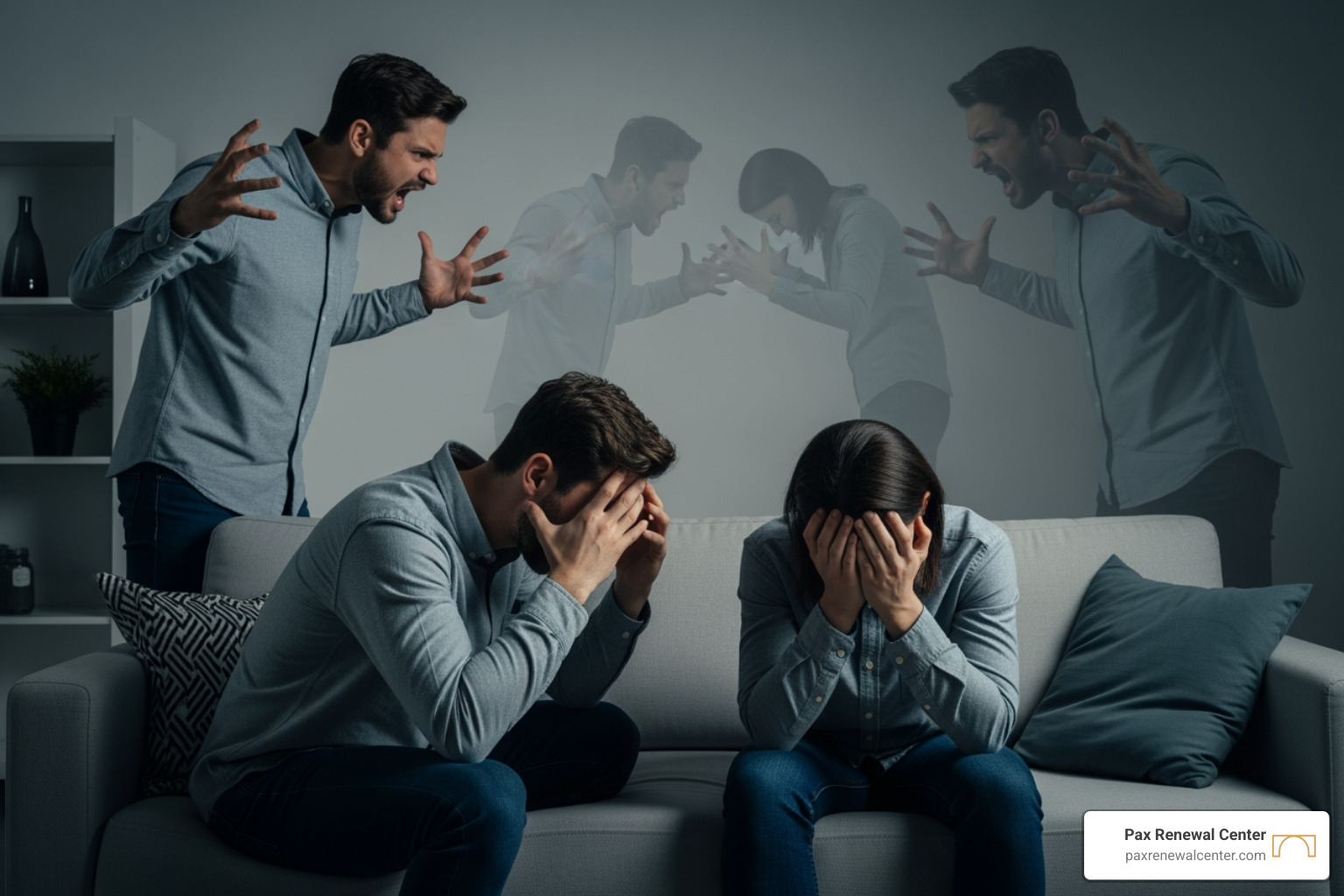
Why Couples Repeat the Same Argument — And What It Really Means
Why couples repeat the same argument is one of the most common and frustrating experiences in any long-term relationship. If you’ve ever felt like you’re watching a rerun of the same fight — same topic, same tone, same painful outcome — you’re not alone, and you’re not broken.
Here’s the short answer:
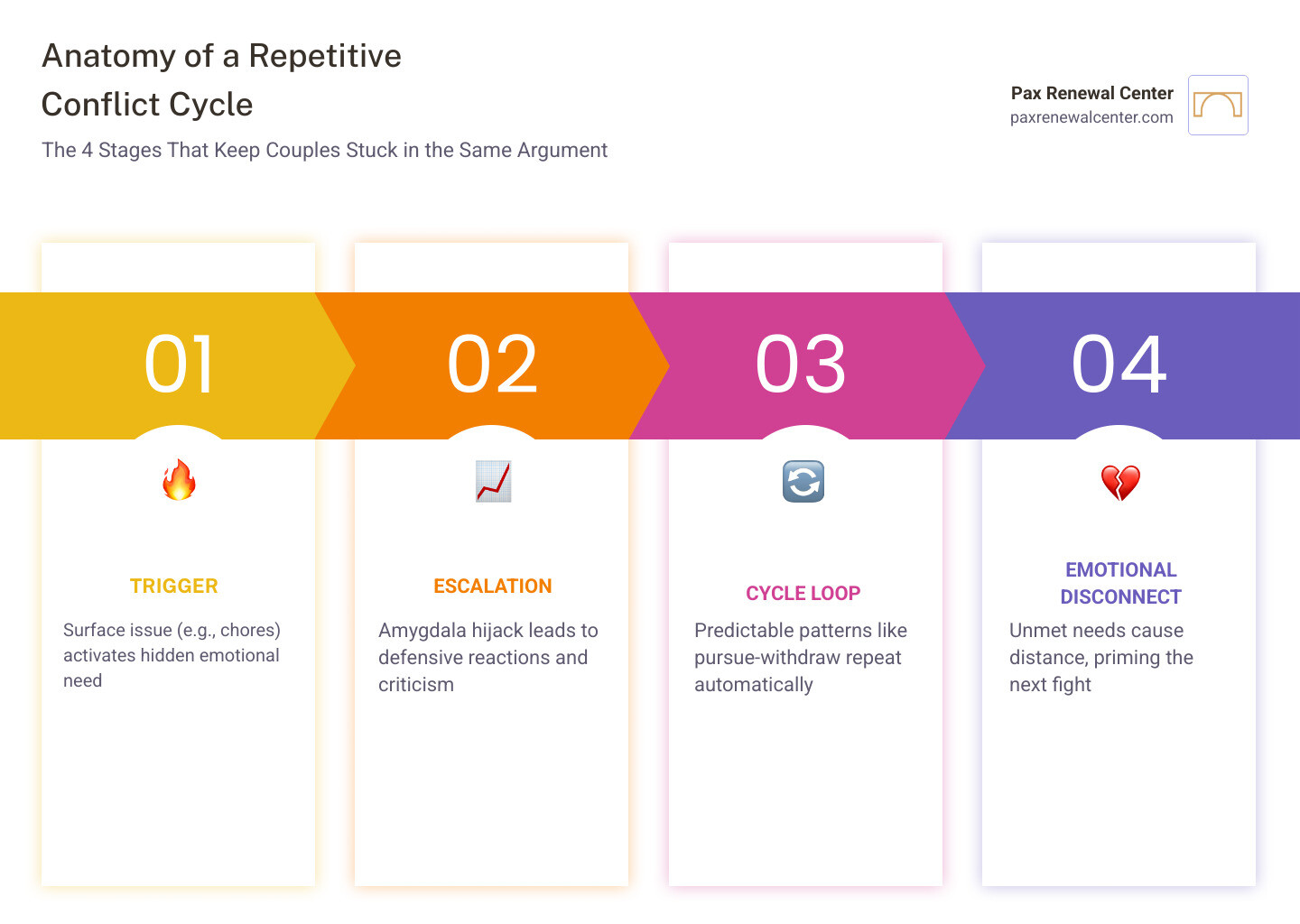
Couples repeat the same arguments because the real issue is almost never what the argument is actually about. Beneath the surface fight (chores, money, screen time) lives an unmet emotional need — for reassurance, respect, or connection. Until that deeper need is addressed, the surface argument keeps coming back.
The most common reasons couples get stuck in the same fight:
- Unmet emotional needs — one or both partners feel unseen, unloved, or disrespected
- Attachment patterns — childhood experiences shape how we react under stress
- Conflict cycles — predictable loops like pursue-withdraw or blame-defend that repeat automatically
- Perpetual problems — about 69% of relationship conflicts are rooted in personality or values differences that can’t simply be “solved”
- Surface-level fixes — apologies or quick resolutions that never touch the real wound
The argument isn’t the problem. The cycle underneath it is.
This isn’t a sign your relationship is doomed. It’s a sign there’s something deeper worth understanding — and that’s exactly what this guide is here to help you do.
I’m Dan Jurek, M.A., LPC-S, LMFT-S, founder and clinical director of Pax Renewal Center in Lafayette, Louisiana, and with over 35 years of experience helping couples break repetitive conflict cycles using evidence-based approaches like EFT and the Gottman Method, I’ve seen why couples repeat the same argument — and more importantly, how they can stop. In the sections ahead, we’ll walk through the psychology behind these cycles, how to recognize your own patterns, and the practical steps that actually create lasting change.
The Psychological Roots of Why Couples Repeat the Same Argument
When we find ourselves in the middle of a “déjà vu” fight in May 2026, it often feels like we’ve lost control of the steering wheel. That’s because, from a psychological perspective, we often have. To understand why couples repeat the same argument, we have to look at what is happening inside the brain and the heart when tension rises.
The Amygdala Hijack and Survival Instincts
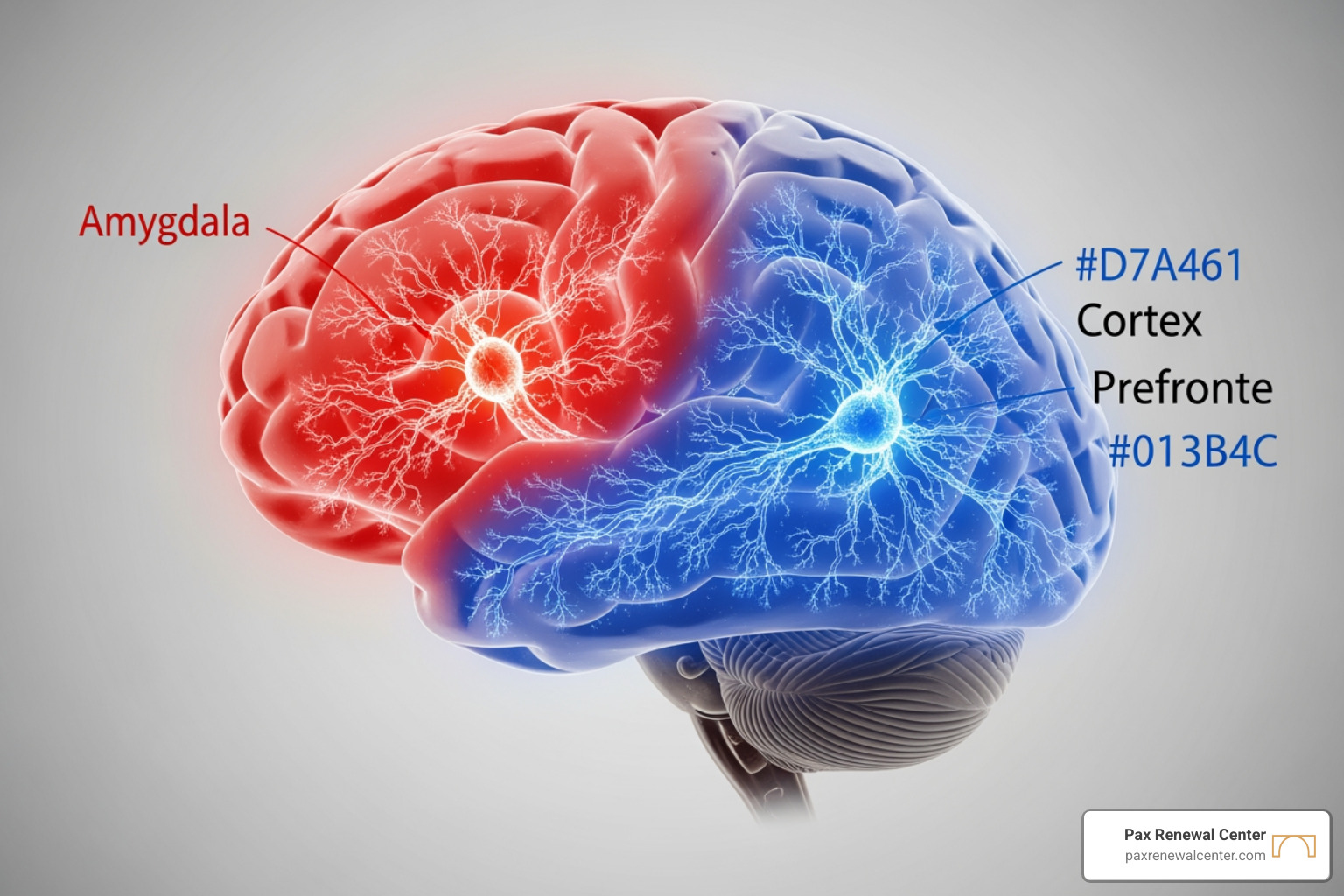
Inside each of us is a tiny, almond-shaped part of the brain called the amygdala. Its job is to keep us safe. When your partner uses “that tone” or brings up that “one thing” again, your amygdala doesn’t see a laundry dispute; it sees a threat to your emotional safety. This triggers an “amygdala hijack,” sending you straight into fight, flight, or freeze mode.
In this state, the logical part of your brain (the prefrontal cortex) essentially goes offline. You aren’t arguing about the dishes anymore; you are fighting for your life—or at least, that’s what your nervous system believes. This is a primary reason Why Do We Argue About the Same Things Over and Over? is such a universal struggle. We react with survival instincts to emotional wounds.
Core Vulnerabilities and Unmet Needs
Arguments repeat because they are usually symptoms of “core vulnerabilities.” These are deep-seated fears of being rejected, controlled, or found inadequate. When these vulnerabilities are poked, we react defensively. Over time, if these wounds aren’t healed, couples experience what we call Marital Drift, where the emotional distance grows so wide that even small disagreements feel like monumental betrayals.
Attachment Styles: Why Couples Repeat the Same Argument Based on Childhood
Our early years act as a blueprint for our adult relationships. The way we bonded with our primary caregivers creates our “attachment style,” which dictates how we handle intimacy and conflict today.
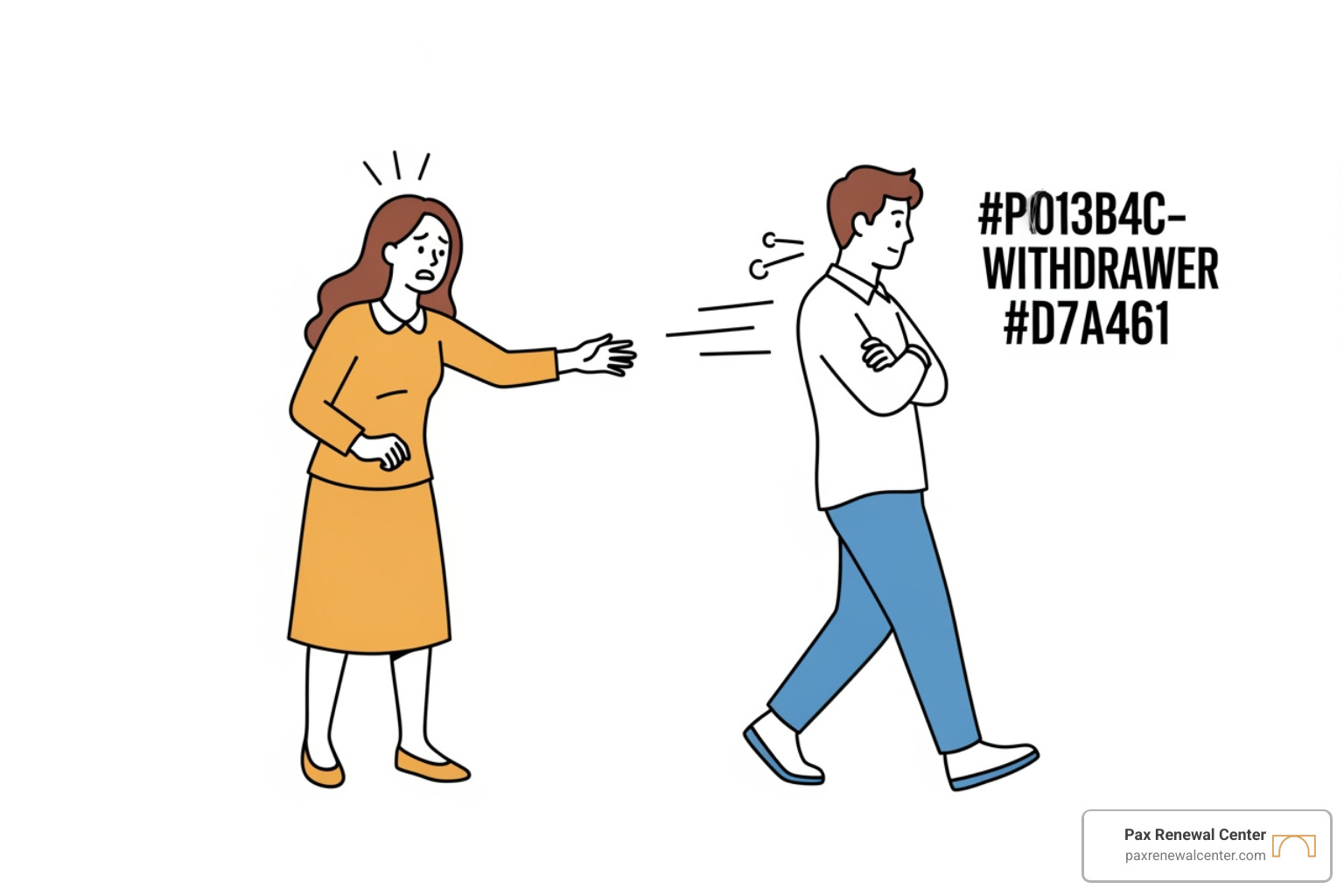
- Anxious Attachment: If you often worry your partner doesn’t love you as much as you love them, you might “pursue” during an argument. You want to talk it out now to regain a sense of safety.
- Avoidant Attachment: If you find emotional intensity overwhelming, you might “withdraw.” You go silent or leave the room to protect yourself from the “noise” of the conflict.
This is often referred to as “repetition compulsion.” We subconsciously seek out dynamics that feel familiar from our childhood, hoping that this time, we can “fix” the outcome. Recognizing these styles is a major step in It Ain’t Easy But It’s Worth It Finding Greater Satisfaction in Your Marriage. When an anxious partner meets an avoidant partner, the stage is set for a perpetual loop of chasing and running.
Communication Limits: Why Couples Repeat the Same Argument Despite “I Statements”
You’ve probably heard the advice to use “I statements”—for example, “I feel frustrated when the trash isn’t taken out.” While good in theory, these tools often fail in the heat of the moment. Why? Because communication is only 7% words. The rest is tone, body language, and perceived intent.
If you say an “I statement” with a sarcastic tone or rolling eyes, your partner’s brain registers a threat, not a request. Cognitive distortions also play a role; we start to believe our partner is “always” doing something wrong or “never” cares. Learning to move past these distortions is one of the 3 Secrets to Achieving Emotional Satisfaction in Marriage. Logic cannot fix an emotional wound; only emotional responsiveness can.
Common Negative Cycles and Conflict Patterns
Most repetitive arguments fall into a few predictable “dances.” Once you name the dance, you can stop stepping on each other’s toes.
The Pursuer-Withdrawer Dynamic
This is the most common cycle we see at Pax Renewal Center. One partner (the Pursuer) feels a loss of connection and tries to bridge the gap by talking, questioning, or even criticizing. The other partner (the Withdrawer) feels overwhelmed by the “attack” and pulls away to keep the peace. The more the Pursuer presses, the more the Withdrawer retreats. It’s a self-reinforcing loop that leaves both people feeling lonely and exhausted.
The Blame-Defend Pattern
In this cycle, the conversation starts with a critique: “You’re so selfish.” The response is naturally defensive: “I work 50 hours a week for this family; how can you say that?” This is often exacerbated by external pressures. We’ve found that there are 5 Ways Outside Stress Can Impact Your Marriage and How to Manage It, and when we are stressed from work or parenting, our ability to stay out of the blame game drops significantly.
Escalation-Explosion and Parallel Lives
Some couples escalate until someone “blows up,” leading to a period of icy silence. Others simply stop fighting altogether and begin living “parallel lives”—sharing a mortgage and kids but no emotional intimacy. Both are signs that the relationship’s “internal thermostat” is broken.
Identifying the Underlying Triggers
To break these cycles, we must look at the “symbolic meaning” of the argument.
- The Surface Issue: “You didn’t do the dishes.”
- The Symbolic Meaning: “I am doing all the heavy lifting, and you don’t value my time or effort.”
- The Underlying Trigger: A fear of being invisible or unappreciated.
As noted in research on Why Couples Keep Having the Same Argument (And How to Break … , the argument is a bid for connection that has gone off the rails. When we understand that our partner is actually asking, “Are you there for me?” we can respond to the need rather than the complaint.
Perpetual vs. Solvable Problems in Relationships
One of the most liberating realizations for couples is that not every problem needs to be “solved.” Dr. John Gottman’s research shows that 69% of relationship conflicts are perpetual problems.
What is a Perpetual Problem?
These are disagreements rooted in fundamental differences in personality, lifestyle, or values. For example, one partner is a “spender” while the other is a “saver.” Or one is an extrovert who needs social time, and the other is an introvert who needs solitude. These issues don’t go away because the people don’t change their core personalities.
The Anatomy of Gridlock
When we try to “fix” a perpetual problem, we end up in “gridlock.” We feel like we’re banging our heads against a brick wall. The goal isn’t to solve the issue but to move from gridlock to dialogue. This is a core focus of Gottman Marriage Counseling Complete Guide.
| Feature | Solvable Problems | Perpetual Problems |
|---|---|---|
| Source | Situational (e.g., a specific chore) | Personality or Value differences |
| Frequency | Can be resolved once and for all | Reoccurs throughout the relationship |
| Goal | Finding a compromise/solution | Managing the issue with humor and grace |
| Feelings | Less intense emotional charge | Can lead to feeling “stuck” or rejected |
As discussed in Having the Same Argument Over and Over – Bogott Counseling , thriving couples don’t have fewer perpetual problems; they just handle them better. They reach “emotional closure” by agreeing to disagree and honoring each other’s perspectives.
Practical Exercises to Break the Cycle
Breaking the cycle of why couples repeat the same argument requires intentionality and practice. Here are some exercises we often recommend at Pax Renewal Center.
1. Name the Cycle
The next time you feel the tension rising, stop and say, “We’re doing that thing again. You’re starting to withdraw, and I’m starting to press. Let’s pause.” By naming the cycle, you make the pattern the enemy instead of your partner.
2. The Repair Pause (The 20-Minute Rule)
When you are “flooded” (heart rate over 100 bpm), your brain cannot process logic. You need a “repair pause.” Agree to take a 20-to-30-minute break. During this time, do not dwell on the argument. Listen to music, go for a walk, or pray. This allows your nervous system to reset so you can return to the conversation in “relational mode” rather than “survival mode.”
3. Validation Techniques
Validation doesn’t mean you agree with your partner’s point of view; it means you understand their feelings. Use phrases like:
- “It makes sense to me that you would feel overwhelmed right now.”
- “I can see why that would be hurtful.”
This simple shift can de-escalate a fight instantly because it meets the underlying need to be heard. We dive deep into these skills at our Creating Connection Marriage Retreat.
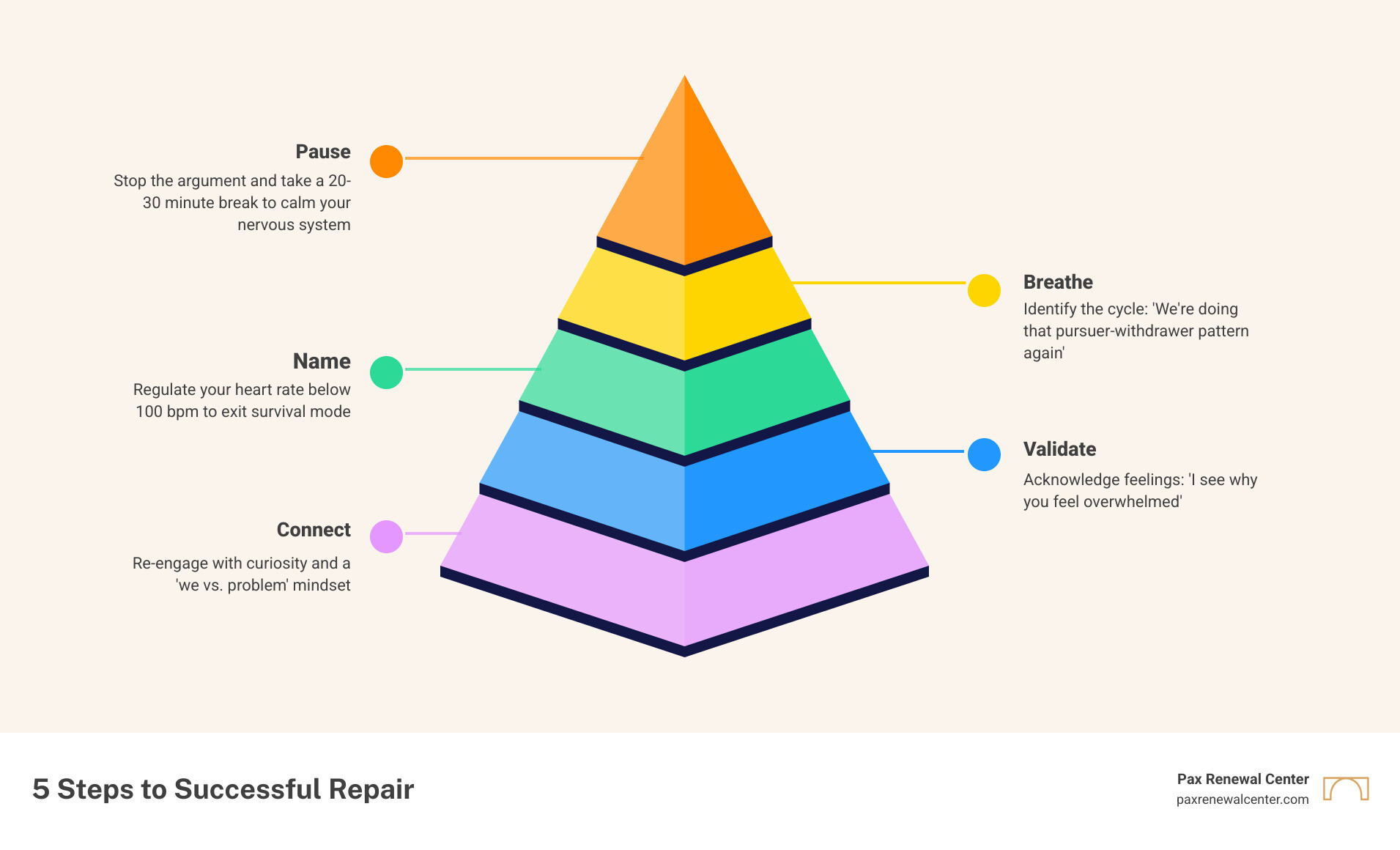
Shifting from Blame to Curiosity
Instead of asking “Why are you doing this to me?”, try asking “What is happening for you right now?” This shift to curiosity invites your partner to share their internal world.
- The “We” Mindset: Move from “Me vs. You” to “Us vs. The Problem.”
- Daily Check-ins: Spend 10 minutes a day sharing “low-stakes” feelings. This builds the emotional bank account so that when a “high-stakes” argument happens, you have a cushion of goodwill.
- Appreciation Resets: For every one critique, try to offer five appreciations. It sounds simple, but it changes the entire atmosphere of the home. These are the foundations of Marriage Counseling Lafayette LA Guide.
Evidence-Based Therapy for Lasting Change
Sometimes, the cycles are too deep to break alone. That is where professional, faith-based counseling comes in. At Pax Renewal Center, we specialize in several research-backed methods.
Emotionally Focused Therapy (EFT)
EFT is based on attachment theory. We help couples identify their “negative cycle” and learn how to reach for each other in ways that create safety rather than defensiveness. A randomized controlled study (Wittenborn et al., 2019) showed that EFT significantly improves relationship functioning and even helps with depression outcomes.
The Gottman Method
This approach is based on 40 years of research with thousands of couples. It focuses on building “Love Maps,” fostering fondness, and managing conflict through practical tools. It is highly effective for improving marital adjustment and intimacy.
Specialized Care in Lafayette, LA
We offer a range of services tailored to your specific needs:
- Marriage Intensives: For couples in crisis or those who want to make a year’s worth of progress in a weekend.
- Trauma-Informed Care: Using EMDR to help partners heal from past wounds that are being triggered in the present.
- Couples Counseling Lafayette LA: Compassionate, faith-aligned support for every stage of your relationship.
Frequently Asked Questions about Repetitive Arguments
Is it normal to have the same fight over and over?
Absolutely. As we’ve discussed, 69% of conflicts are perpetual. The goal isn’t to stop having the disagreement but to change how you have it. If you can move from contempt to humor, you are winning.
Can a relationship survive constant unresolved arguing?
Yes, but it takes a toll. Constant conflict increases cortisol levels and can lead to physical health issues and emotional burnout. However, if both partners are willing to look at the cycle rather than blaming each other, even long-standing patterns can be transformed.
How do we know when it is time for professional help?
If you feel like you are “walking on eggshells,” if repair attempts always fail, or if you’ve started to feel indifferent toward your partner, it’s time to reach out. You don’t have to wait for a crisis to seek Marriage Counseling Lafayette LA Guide. Many couples come to us proactively to strengthen their bond.
Conclusion
Understanding why couples repeat the same argument is the first step toward freedom. It’s not because you are incompatible, and it’s not because the love has died. It’s because you are human, and you are trying to protect yourself while longing for connection.
At Pax Renewal Center, we are dedicated to helping couples in Lafayette, LA, and beyond find their way back to each other. Whether through our in-person sessions, our virtual programs, or our community-led support on Skool, our goal is relational restoration. You don’t have to stay stuck in the loop. There is a way out, and it starts with a single step toward understanding.
Ready to see where your relationship stands? Take the first step with our Discernment Quiz to help you gain clarity on your next steps toward healing and renewal.