
Why Marriage Counseling Makes All the Difference
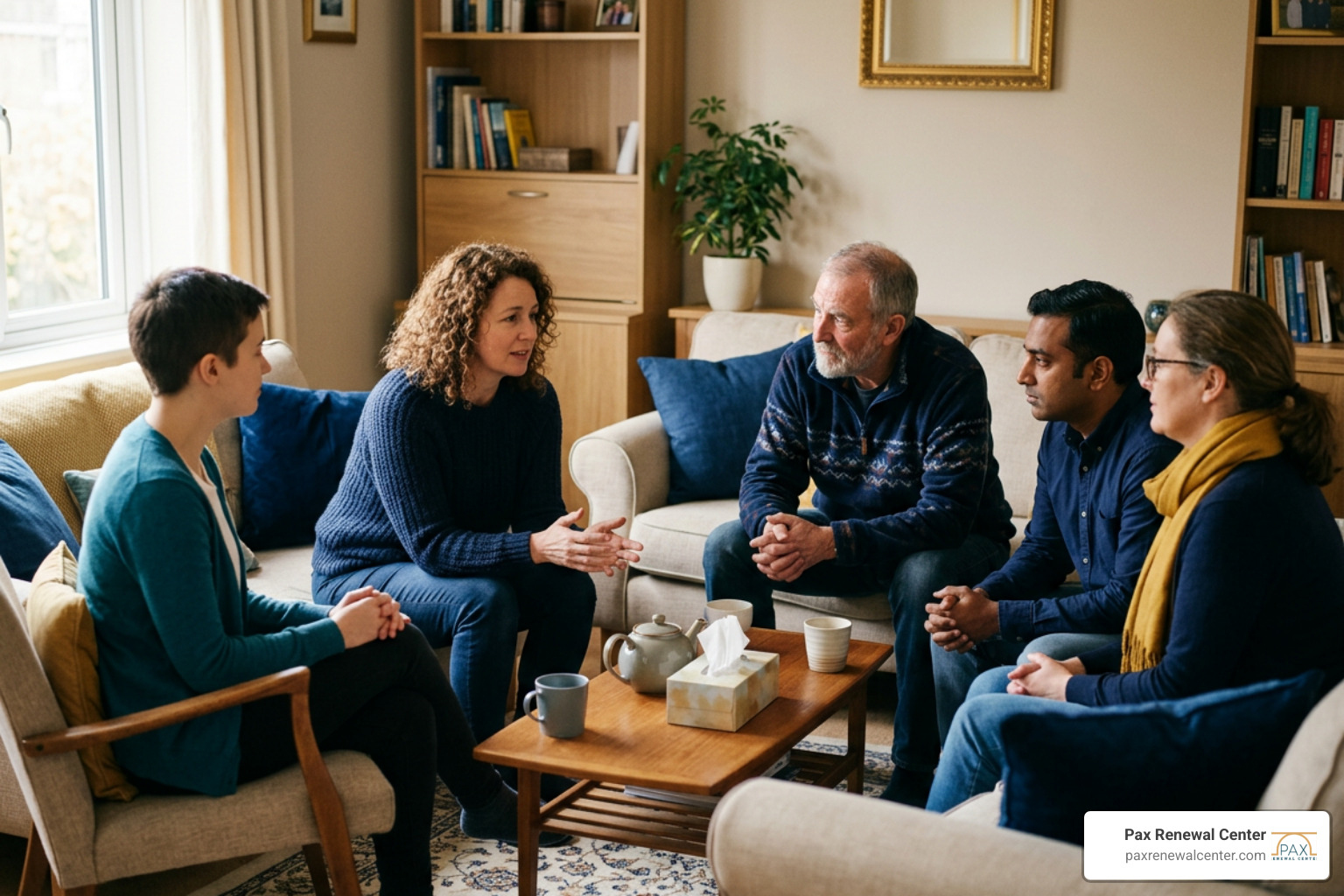
Pax Renewal Center offers couples struggling with communication, trust, or connection issues access to professional help right in their community. Whether you’re facing everyday relationship challenges or more serious problems like infidelity, local marriage counselors provide the tools and support needed to rebuild stronger relationships.
Top Marriage Counseling Options:
- Faith-Based Counseling – Christian and Catholic-aligned therapy combining spiritual guidance with proven clinical methods
- Evidence-Based Approaches – Gottman Method, Emotionally Focused Therapy (EFT), and EMDR trauma therapy
- Flexible Formats – In-person sessions, telehealth options, weekend intensives, and online community support
- Specialized Services – Affair recovery, premarital counseling, blended family support, and discernment counseling
- Accessible Care – Sliding scale fees, insurance acceptance, after-hours appointments, and nonprofit options
Research shows that marriage counseling typically lasts between four and eight sessions, with many couples developing better communication skills and conflict resolution strategies. Lafayette’s counseling community includes over 200 qualified therapists offering everything from traditional office visits to innovative online programs.
The beauty of seeking help locally means you’re working with professionals who understand the unique cultural and community dynamics of Acadiana. Many Lafayette marriage counselors integrate faith-based perspectives with clinical expertise, creating a healing environment that honors both spiritual values and psychological wellness.
Why a Product Roundup Matters
When you’re searching for marriage counseling, you’re not just looking for any therapist, you’re seeking the right fit for your unique relationship needs. This roundup helps you understand the different service categories available so you can make an informed decision about your marriage’s future.
The difference between short-term marriage counseling and longer-term couples therapy can be significant. Marriage counseling typically focuses on immediate skill-building and crisis intervention, while couples therapy may involve deeper exploration of relationship patterns over 12 weeks or longer.
Telehealth growth has revolutionized how couples access help. Many Lafayette practices now offer online sessions, making it easier for busy couples to prioritize their relationship without scheduling stress.
Marriage Counseling: Top Service Categories & Stand-Out Features
When you’re looking for marriage counseling, you’ll find a rich landscape of options designed to meet couples exactly where they are in their relationship journey. What makes Lafayette’s counseling community special is how therapists blend proven clinical methods with the faith-centered values that many Acadiana families hold dear.
The most effective marriage counseling programs here share something important: they don’t use a one-size-fits-all approach. Instead, skilled therapists with advanced training offer flexible scheduling that includes after-hours and weekend appointments, integration of individual and couples work, and ongoing support that extends beyond traditional weekly sessions.
Faith-Integrated Counseling Services
There’s something powerful about working with a therapist who understands that your faith isn’t separate from your relationship—it’s woven into who you are as a couple. Faith-based marriage counseling offers this unique blend, combining Catholic and Christian values with proven methods like Emotionally Focused Therapy (EFT), EMDR, and Gottman Method techniques.
At Pax Renewal Center, we’ve seen how couples find deeper healing when their spiritual beliefs support their relationship work. This isn’t about preaching or judgment—it’s about honoring the whole person and relationship. When couples can draw on both practical communication skills and their spiritual foundation, they often experience more lasting change.
The Gottman Method research shows that couples maintain improvements for at least two years after completing therapy. When we add faith integration to these evidence-based approaches, we often see even stronger results because couples have multiple resources to draw upon during challenging times.
Holistic Mind-Body Approaches
Your relationship doesn’t exist in a vacuum—it’s connected to your overall health and well-being. That’s why some Lafayette counselors are taking a broader approach that addresses how stress, nutrition, and physical health impact your marriage.
Nutrition-plus-therapy approaches recognize that blood sugar fluctuations, hormonal changes, and nutritional deficiencies can significantly affect mood and relationship dynamics. Breathwork and mindfulness practices help couples manage those physiological responses that can turn a simple disagreement into a major conflict.
Trauma-informed care is essential because past experiences often show up in current relationship patterns. EMDR therapy can be particularly helpful for individuals whose relationship struggles stem from childhood trauma or previous relationship wounds.
Community-Focused Resources
Pax’s marriage counseling community understands that healthy relationships strengthen entire families and neighborhoods. Many practices offer sliding-scale fees to ensure financial constraints don’t prevent couples from getting help when they need it most.
Community education programs provide preventive support, teaching relationship skills before problems become overwhelming. Parenting classes often complement marriage counseling because raising children together requires teamwork.
Donate to support local family programs – Supporting community-based family programs helps ensure that all couples have access to relationship education and support, regardless of their financial situation.
Flexible Private Practice Options
Life is busy, and the best marriage counseling practices understand that couples need flexibility to make therapy work with demanding schedules. After-hours appointments, including evening and weekend sessions, accommodate couples who can’t take time off work for traditional daytime appointments.
Telehealth options have become increasingly popular, especially for couples dealing with sensitive issues like infidelity recovery. Some couples feel more comfortable starting their healing journey from the privacy of their own home before transitioning to in-person sessions.
Infidelity recovery requires specialized skills and often longer-term support than general marriage counseling. Lafayette therapists trained in affair recovery understand the complex emotions and practical challenges of rebuilding trust after betrayal.
Telehealth & Online Counseling
HIPAA-compliant video counseling has opened new possibilities for couples throughout Louisiana. Statewide Louisiana access means that couples in rural areas can work with specialized marriage counselors in Lafayette without the burden of long drives or time away from work.
At Pax Renewal Center, we’ve developed an innovative online community through our Skool platform that provides expert-led support at a reduced cost. This approach allows couples to access ongoing support between sessions and connect with others working on similar relationship goals.
Weekend or Retreat-Style Intensives
Sometimes couples need to step completely away from daily distractions to focus on their relationship. Weekend intensives offer this opportunity through 2-3 day deep dives that can create breakthroughs that might take months to achieve in weekly sessions.
Couples workshops in intensive formats combine individual sessions, couples work, and hands-on skills-building exercises. Homework follow-ups ensure that couples continue practicing new skills after the intensive ends.
How Marriage Counseling Works at Pax Renewal Center
When you first step into marriage counseling at Pax you’re beginning a journey that’s both hopeful and practical. The process starts with understanding where you are now and where you want to go together.
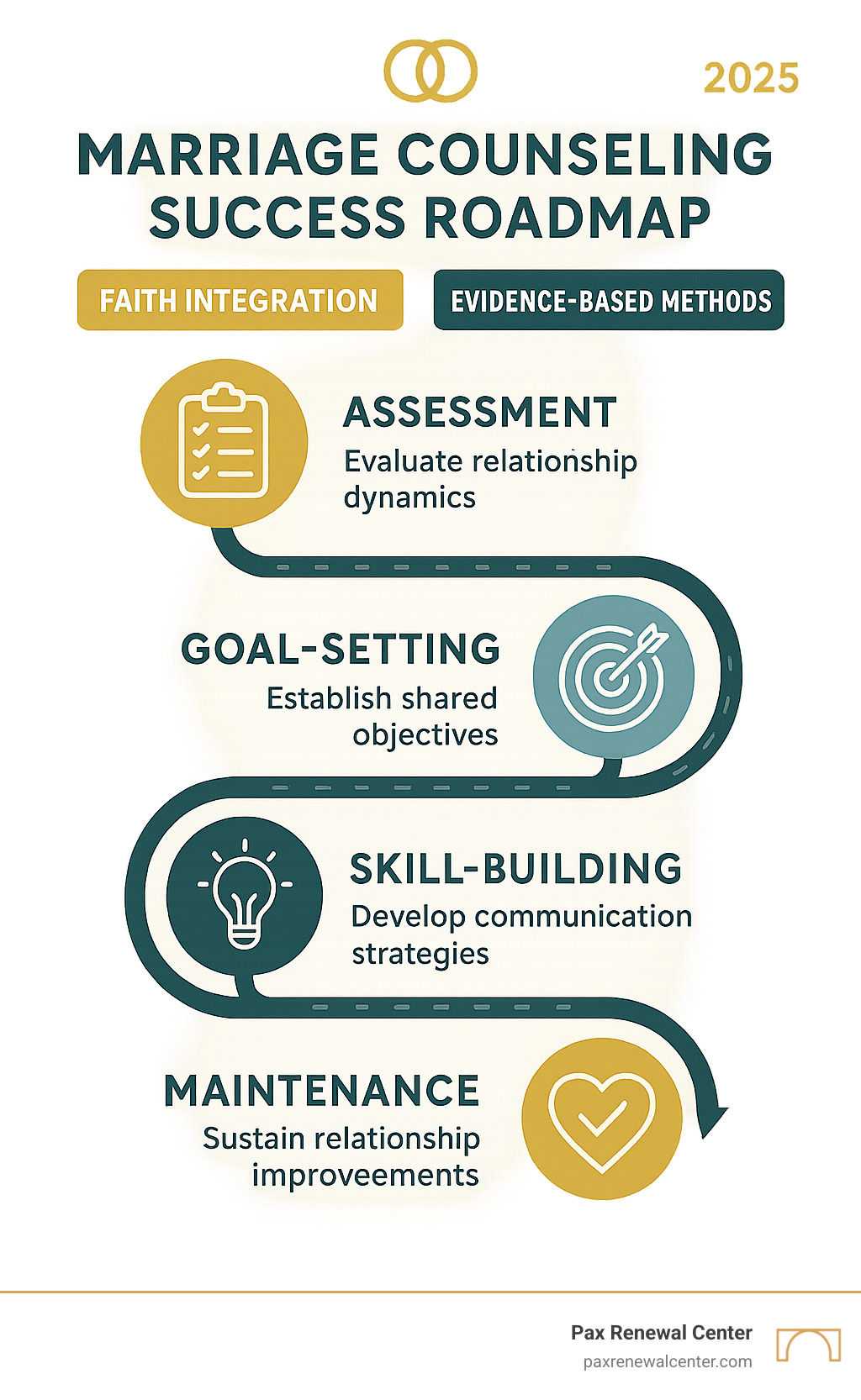
Your counselor will spend time getting to know your story—how you met, what brought you together, and what’s creating challenges now. This isn’t just casual conversation; it’s a careful assessment that helps create a roadmap for your healing. We explore your relationship history, current struggles, and most importantly, what you’re hoping to achieve through counseling.
Goal-setting becomes a team effort where both partners have a voice in shaping what success looks like. Some couples want to communicate without yelling. Others need to rebuild trust after betrayal. Many simply want to feel connected again instead of like roommates. Your goals guide every session and help measure progress along the way.
The heart of effective marriage counseling lies in skill practice. Think of it like learning to dance together—you need more than just talking about the steps. You practice new ways to share feelings, listen without getting defensive, and work through disagreements without damaging each other. These aren’t just theory sessions; they’re hands-on workshops for your relationship.
Most couples see meaningful progress within 4-8 sessions, though every relationship moves at its own pace. Some need more time, others less. The key is building skills that last long after counseling ends.
Scientific research on Gottman Method shows that couples who learn research-based relationship skills experience lasting improvements in both satisfaction and stability. That’s why we focus on proven techniques rather than just hoping things get better.
| Aspect | Marriage Counseling | Couples Therapy |
|---|---|---|
| Duration | 4-8 sessions | 12+ weeks |
| Focus | Skill-building, crisis intervention | Deep pattern exploration |
| Cost | Generally lower | Higher investment |
| Insurance | Often covered | Coverage varies |
Marriage Counseling Session Timeline
The intake process typically includes both individual and joint sessions. This gives each partner a chance to share their perspective privately while also working together on shared goals. It’s like getting a 360-degree view of your relationship—understanding both the individual experiences and the couple dynamic.
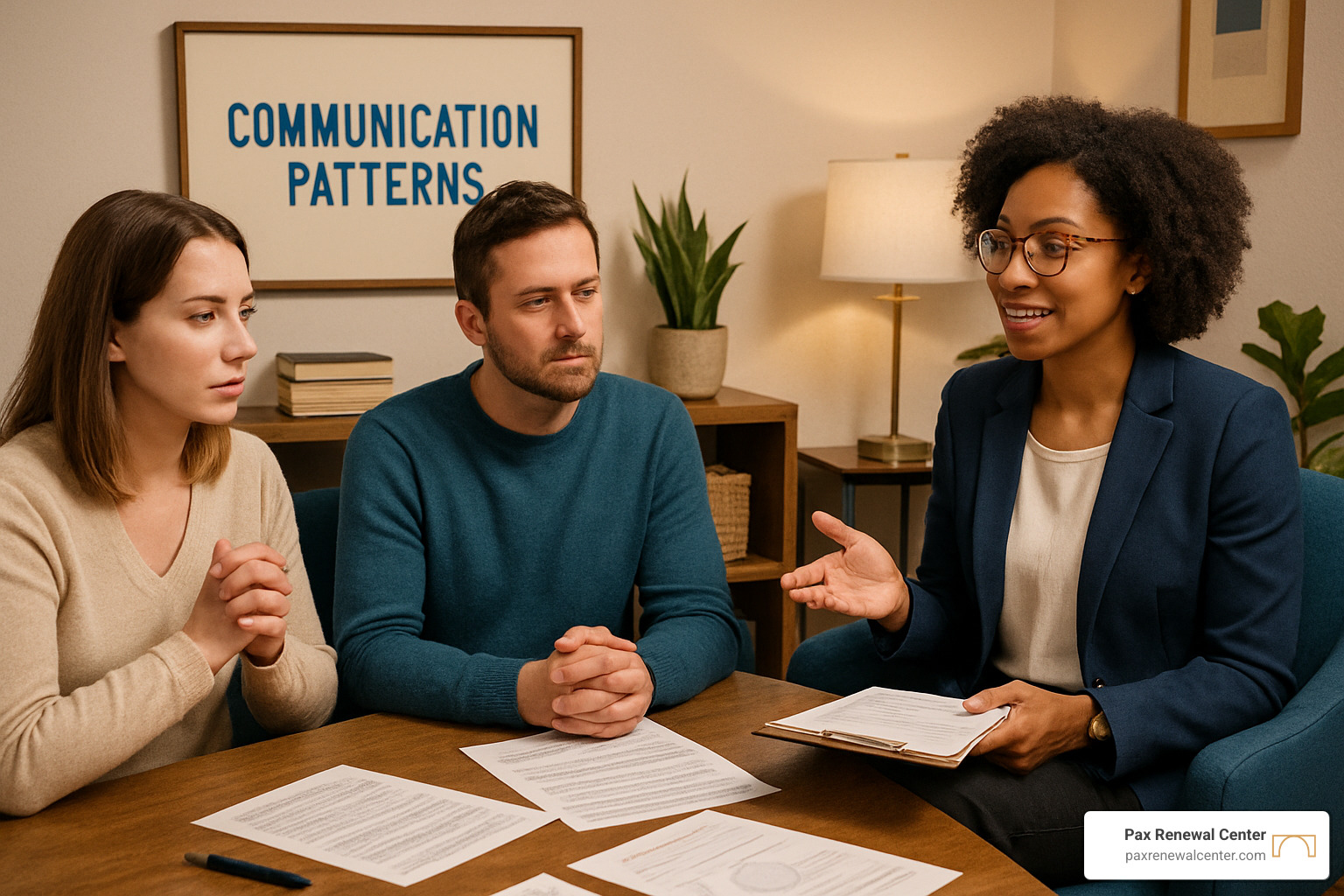
Communication drills might feel a bit awkward at first—kind of like learning to drive a stick shift after years of automatic transmission. But these exercises build new habits for expressing yourself clearly and listening with genuine curiosity instead of preparing your rebuttal. Most couples are amazed at how much better they understand each other once they learn these skills.
Conflict mapping reveals the predictable patterns in your arguments. Every couple has their own dance of disagreement, and once you can see the steps, you can choose different moves. We help you identify the moments where you can pause, breathe, and respond differently instead of getting caught in the same old cycle.
The maintenance plan ensures your progress continues after formal counseling ends. Like any skill, good relationship habits need ongoing practice. We provide tools, exercises, and check-in schedules to keep you growing together long after your last session.
Choosing the Right Marriage Counselor: Credentials, Costs & Insurance
Finding the right marriage counselor can feel overwhelming when you’re already dealing with relationship stress. The good news is that Lafayette has many qualified professionals, and knowing what to look for makes the selection process much clearer.
Professional credentials provide your first layer of confidence. Look for therapists with proper state licensing – Licensed Professional Counselors (LPC), Licensed Marriage and Family Therapists (LMFT), or Licensed Clinical Social Workers (LCSW) who specialize in couples work. These licenses ensure your counselor has completed graduate-level education and supervised clinical training.
Beyond basic licensing, advanced certifications tell you about specialized training. Therapists certified in the Gottman Method, Emotionally Focused Therapy (EFT), or EMDR have invested significant time and money to master specific approaches that research shows work well for couples. At Pax Renewal Center, our team maintains certifications in these evidence-based methods because we’ve seen how effective they are for marriage counseling clients.
Board certifications add another layer of expertise. These credentials show that a therapist has met rigorous standards and continues their education to stay current with best practices. When you’re investing in your marriage’s future, working with a board-certified professional gives you confidence that you’re receiving quality care.
The financial side of counseling deserves a clear explanation upfront. Insurance networks vary significantly among counselors – some accept most major carriers while others operate entirely on private-pay. Don’t hesitate to ask about insurance coverage during your initial phone call.
The Good Faith Estimate requirement helps protect uninsured clients. Federal law now requires counselors to provide cost estimates before treatment begins, so you won’t face surprise bills. Many practices also offer sliding-scale fees based on income, making professional help more accessible.
More info about emotional satisfaction in marriage – Understanding what creates lasting satisfaction helps couples set realistic goals for their counseling journey.
Red Flags & Green Lights for Marriage Counseling
License verification should be your starting point. The Louisiana State Board maintains public records of all licensed therapists. If a counselor hesitates to provide their license number or you can’t verify their credentials, that’s a serious red flag.
Clear treatment plans indicate professional competence. Within the first few sessions, your counselor should explain their approach, set measurable goals with you, and outline what you can expect from the process. Vague promises or reluctance to discuss treatment plans suggest inadequate training or experience.
Faith alignment matters if spirituality is important to you. Some couples want marriage counseling services that integrate their Christian or Catholic values, while others prefer secular approaches. Either choice is valid – what matters is finding a counselor who respects your preferences and doesn’t push their personal agenda.
Transparent fees and policies build trust from the beginning. Professional counselors clearly explain their rates, cancellation policies, and payment options. They provide written information about confidentiality, emergency procedures, and what to expect from treatment.
The therapeutic relationship should feel safe and collaborative immediately. Both partners should feel heard and respected, even when the counselor challenges unhelpful patterns or behaviors. If you feel judged, dismissed, or uncomfortable after the first session, trust your instincts and consider finding someone else.
Green lights include counselors who demonstrate genuine warmth while maintaining professional boundaries. They ask thoughtful questions, remember details from previous sessions, and show flexibility in their approach based on your unique needs and circumstances.
Specialized Services for Every Stage of the Relationship
Every relationship has its seasons, and marriage counseling recognizes that couples need different types of support depending on where they are in their journey together. Whether you’re planning your wedding, recovering from betrayal, or figuring out how to blend two families into one, specialized counseling approaches can make all the difference.
Premarital counseling sets couples up for success before they say “I do.” These sessions aren’t about finding problems—they’re about building a strong foundation. We help engaged couples develop communication skills, learn healthy conflict resolution, discuss financial goals, and explore important life decisions like children and career priorities. Think of it as relationship insurance that pays dividends for decades.
Affair recovery requires a completely different approach than general marriage counseling. The path back from infidelity is complex and emotional, typically involving both individual sessions and couples work. While the healing process takes time and commitment from both partners, we’ve seen marriages not only survive infidelity but emerge stronger than before. It’s possible, but it requires the right support and specialized expertise.
Blended family counseling addresses the unique puzzle of combining households. Children may struggle with loyalty conflicts, parents might disagree on discipline approaches, and everyone needs time to adjust to new family structures. We help families steer these challenges with patience and practical strategies.
More info about discernment counseling offers hope for couples standing at the crossroads of divorce. This specialized approach helps partners explore whether their marriage can be saved or if healthy separation might be the most loving choice for everyone involved.
Navigating Major Transitions Together
Life has a way of throwing curveballs just when couples think they’ve got everything figured out. Major transitions like welcoming a new baby, relocating for work, grieving a loss, or adjusting to an empty nest can either bring couples closer together or create unexpected distance. The key is learning how to support each other through change rather than letting stress drive you apart.
New parent counseling acknowledges that babies don’t just change your sleep schedule—they transform your entire relationship dynamic. Between sleepless nights, role adjustments, and the challenge of maintaining your couple connection while caring for a tiny human, many new parents feel overwhelmed. We help couples prepare for these changes and steer them with grace and humor.
Relocation stress affects more couples than you might expect. Moving for career opportunities, family needs, or life changes can create unexpected tension. One partner might be excited while the other feels anxious about leaving familiar surroundings. Counseling helps couples process these different reactions and make transitions smoother.
Grief counseling for couples recognizes that partners often grieve differently, whether they’re dealing with the loss of a loved one, a miscarriage, or other significant losses. Understanding each other’s grief process while maintaining your relationship bond requires special attention and support.
Empty nest syndrome catches many couples off guard. After years of focusing on children, partners sometimes feel like strangers when it’s just the two of them again. This transition can actually be an opportunity to refind each other and create a new chapter in your relationship.
When Only One Partner Will Attend
Sometimes one spouse is ready for counseling while the other isn’t quite there yet. This doesn’t mean your relationship is doomed—in fact, individual sessions can be surprisingly effective even when only one partner participates initially.
The willing partner learns new communication skills and relationship strategies that often create positive changes in the relationship dynamic. When your spouse sees these improvements, they frequently become more open to joining the process themselves.
We use motivational interviewing techniques to help the participating partner understand their reluctant spouse’s perspective. Instead of demanding participation, we help you find ways to invite your partner into the healing process. This approach respects everyone’s timeline while still creating positive momentum.
Skill carry-over is real and powerful. When one person changes how they communicate, listen, or respond to conflict, it naturally influences the entire relationship dynamic. Your partner may start responding differently even before they set foot in a counseling office. Sometimes the best way to help your marriage is to start with your own growth and let that positive change ripple outward.
Frequently Asked Questions about Marriage Counseling
When couples are considering therapy, they often have practical questions about what to expect. These are the three most common questions we hear from couples exploring marriage counseling options.
How long does marriage counseling Lafayette LA typically last?
Most marriage counseling programs run between four and eight sessions, though every couple’s journey is unique. This focused approach emphasizes immediate skill-building and crisis intervention rather than lengthy exploration of past issues.
The beauty of this shorter timeframe is that couples often see meaningful changes quickly. When you’re learning practical communication tools and conflict resolution strategies, you can start applying them right away. Many couples notice improvements in their daily interactions within the first few sessions.
That said, some situations require more time. Couples dealing with infidelity, major trust issues, or complex family dynamics might benefit from extended support. The key is starting with realistic expectations and being open to adjusting as needed.
This differs from traditional couples therapy, which typically runs 12 weeks or longer and digs deeper into relationship patterns and individual histories. Marriage counseling keeps the focus on what you can do differently starting today.
Is marriage counseling effective if only one partner attends?
Absolutely. Marriage counseling can create positive changes even when only one partner participates initially. It might seem counterintuitive, but relationships are systems—when one person changes their approach, the entire dynamic shifts.
The participating partner learns new communication skills, conflict management strategies, and ways to respond differently to familiar relationship challenges. These changes often reduce tension and create more positive interactions, which frequently motivates the reluctant partner to become curious about therapy.
Individual sessions also help the willing partner understand their own contributions to relationship patterns. Instead of focusing solely on what their spouse needs to change, they develop insight into how their own responses might be escalating conflicts or creating distance.
Many couples end up in therapy together after one partner experiences positive changes through individual work. The key is approaching this without pressure or ultimatums—let the positive changes speak for themselves.
What’s the difference between marriage counseling and couples therapy?
While these terms are often used interchangeably, there are some practical differences that matter when choosing the right support for your relationship.
Marriage counseling typically focuses on immediate skill-building and runs shorter-term, usually four to eight sessions. The emphasis is on learning practical tools you can use right away—better communication techniques, conflict resolution strategies, and ways to rebuild connection. It’s often more structured and goal-oriented.
Couples therapy tends to be longer-term, often 12 weeks or more, and explores deeper relationship patterns. This approach might examine how childhood experiences affect your relationship, explore attachment styles, or work through complex emotional patterns that have developed over years.
Both approaches can be incredibly helpful. Marriage counseling works well for couples who want to learn specific skills quickly or address immediate crises. Couples therapy might be better for relationships with deeper, long-standing issues that require more extensive exploration and healing.
At Pax Renewal Center, we tailor our approach to what each couple needs most, whether that’s focused skill-building or deeper therapeutic work.
Conclusion
Your marriage deserves the , support that can help you move from struggle to strength. Throughout this guide, we’ve explored the rich variety of options available right here in our community—from faith-integrated approaches that honor your spiritual values to evidence-based methods with proven results, flexible scheduling that fits your busy life to intensive formats that create breakthrough moments.
At Pax Renewal Center, we believe deeply in offering hope, healing, and joy for couples at every stage of their relationship journey. Whether you’re preparing for marriage, navigating a difficult season, or simply wanting to deepen your connection, you don’t have to face these challenges alone.
What makes our approach unique is how we blend clinical expertise with faith-based wisdom. This creates a healing environment where couples can work on practical relationship skills while also nurturing their spiritual connection. Our integration of proven methods like EFT, Gottman Method, EMDR, and CBT with Catholic and Christian values means we’re supporting the whole person and the whole relationship—not just surface-level problems.
Taking that first step toward counseling shows incredible strength and wisdom. Every relationship faces challenges—that’s simply part of being human. The difference lies in whether couples grow through those difficulties together or let them create distance. Professional guidance can make all the difference in helping you choose growth over separation.
We’ve seen countless couples refind their love, rebuild their trust, and develop the communication skills that create lasting happiness. Some come to us in crisis, others before problems become overwhelming. All leave with better tools for navigating life’s inevitable ups and downs together.
More info about our services – We invite you to explore how our comprehensive approach to marriage counseling can support your relationship goals and help you build the strong, lasting connection you both deserve.
Your marriage is worth investing in. Pax’s caring counseling community stands ready to support you every step of the way. That first phone call might feel scary, but it’s also the beginning of hope for your relationship’s future.