

Why Coparenting Counseling Can Transform Your Family Dynamic
When you’re searching for coparenting counseling, you’re looking for professional help to steer one of parenting’s toughest challenges – raising children together after separation or divorce. Here’s what you need to know:
Quick Local Options:
- Licensed therapists (LMFT, LPC-S) specializing in family systems
- Community mental health centers with sliding-scale fees
- Faith-based counseling centers offering Christian perspectives
- Online platforms for flexible scheduling and virtual sessions
- Court-approved counselors for mandated therapy situations
Coparenting after separation feels overwhelming. You’re dealing with your own emotions while trying to protect your children from conflict. The good news? Professional coparenting counseling helps families learn to communicate respectfully, reduce harmful conflict, and put children’s needs first.
Research shows that parents who participate in coparenting counseling report more positive feelings toward their ex-partners and better cooperation in raising their children. As one expert noted: “Co-parenting is not a competition between two homes. It’s a collaboration of parents doing what is best for the kids.”
Finding the right support matters. Whether you’re dealing with high-conflict situations, creating parenting plans, or simply learning to communicate better, professional guidance can help your family heal and thrive.
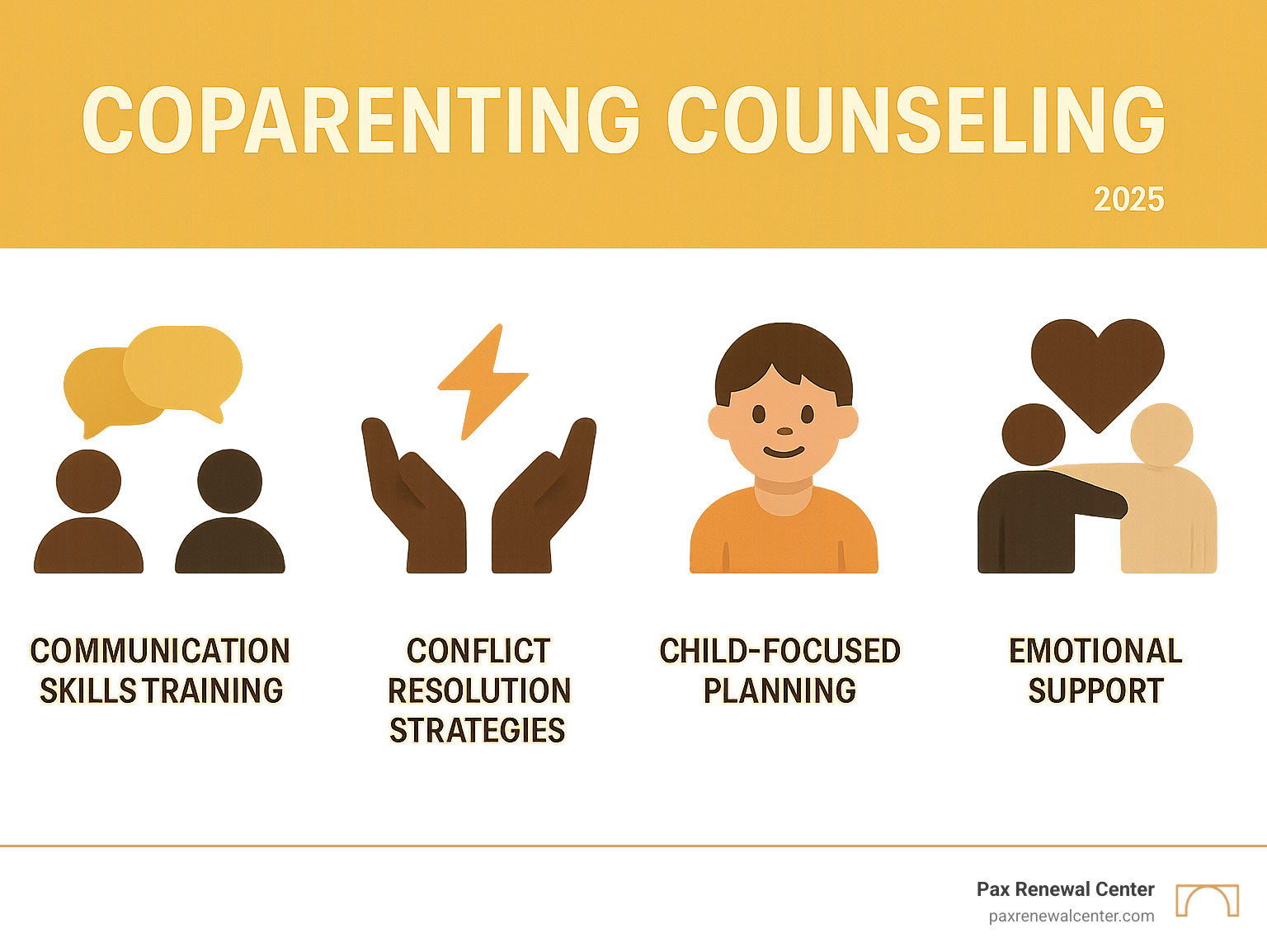
What You’ll Learn
In this extensive guide, we will explore the profound benefits of coparenting counseling, guiding you through the process of choosing the right support for your family. We will provide a roadmap to local resources and online tools, offer insights into typical costs, and explain the crucial therapist credentials to look for. Our aim is to equip you with the knowledge and confidence to make informed decisions that will foster a healthier, more peaceful environment for your children and for yourselves.
Why Coparenting Counseling Matters for Your Family
When parents separate or divorce, it’s a huge shift for everyone. While the structure of your family changes, the deep need for effective, loving parenting remains as strong as ever. If you’re searching for coparenting counseling, you’re likely looking for a path to create a functional, respectful partnership with your child’s other parent, all focused on what’s truly best for your children. We believe every child deserves the gift of parents who can work together peacefully, and that’s precisely where professional guidance becomes an invaluable guide.
One of the most beautiful outcomes of coparenting counseling is cultivating a child-first mindset. It’s natural for parents to carry their own emotions through separation, but counseling helps you gently shift focus from past hurts to future solutions. We help you prioritize your children’s needs above personal differences, ensuring they continue to feel secure, deeply loved, and fully supported by both parents, even across two homes.
This focus naturally leads to reduced conflict. We understand that constant arguing, blame, or defensiveness between parents can be incredibly tough on children, often leading to anxiety, behavioral challenges, or emotional distress. Through counseling, we equip you with practical communication skills. Imagine learning to truly listen, to express your needs using “I” statements, and to steer disagreements without escalating into arguments. This creates a much more peaceful home environment for your children, fostering cooperation and often leading to less need for legal involvement, which saves everyone time, money, and emotional strain.
Furthermore, coparenting counseling can bring much-needed legal clarity. In many situations, especially those with high conflict, courts might even recommend or mandate coparenting counseling. This is designed to help parents develop a clear, workable parenting plan, address custody questions, or resolve visitation issues. Our counselors can guide you in crafting a detailed coparenting agreement that outlines schedules, decision-making processes, and communication protocols. This kind of clarity is incredibly valuable for minimizing future disagreements and providing consistent stability for your children.
We also approach coparenting with a deep understanding of trauma-informed care. We know that separation and divorce can be genuinely challenging, even traumatic, for both parents and children. Counseling offers a safe space for parents to process their own emotions, manage stress, and truly grasp how conflict impacts their children. By addressing these underlying feelings and providing tools for managing strong emotions, we help ensure that your children can preserve their vital relationships with all safe adults in their lives, and that important information about their well-being can be exchanged smoothly and respectfully.
For more insights into the powerful, positive impact that healthy coparenting can have on children’s development, we encourage you to explore scientific research on coparenting benefits. And if your family is navigating the complexities of separation and struggling with these kinds of challenges, please know it might be the right time to look for family counselors who specialize in offering this kind of compassionate, targeted support. You can find more information about how professional guidance can help when your family is dealing with these challenges on our site.
How to Choose Coparenting Counseling
Finding the right support when you’re searching for coparenting counseling is a crucial step toward creating a healthier family dynamic. It’s not just about finding someone close by; it’s about connecting with a therapist whose approach, credentials, and values truly align with your family’s unique needs.

When you’re making this important decision, take a moment to consider factors like the therapist’s experience, their specialization in understanding family relationships, and how well they grasp the unique challenges faced by separated or divorced parents. You want someone who truly gets it.
Credentials to Look For:
When you’re entrusting your family’s well-being to a professional, knowing their qualifications can bring immense peace of mind. Here are some key credentials to keep an eye out for:
- Licensed Marriage and Family Therapist (LMFT): These wonderful professionals have specialized training in how families work and interact. They’re experts in relational dynamics, making them incredibly well-suited for coparenting work. They understand how what one person does affects everyone else and can help you re-shape communication patterns for the better.
- Registered Marriage & Family Therapist (RMFT): While our practice is right here in Lafayette, Louisiana, it’s good to know that in places like Canada, the RMFT designation shows a therapist has undergone rigorous education and supervised training. It’s a hallmark of expertise in couple and family therapy, and it gives you an idea of the high level of skill to look for.
- Licensed Professional Counselor (LPC) or Licensed Clinical Social Worker (LCSW): Many LPCs and LCSWs are also fantastic at family therapy and can provide really effective coparenting counseling. Just make sure they have extra certifications or solid experience in this specific area.
Insurance vs. Private Pay:
We know the cost of counseling is often a big consideration, and it’s completely understandable to wonder about it. Counseling rates can vary quite a bit depending on the therapist’s qualifications, experience, and where they’re located. It’s always a good idea to check with your health insurance provider to see if they might cover a portion of your counseling costs. However, it’s worth noting that if your coparenting counseling is court-mandated, insurance often doesn’t cover it, and the court might even specify who is responsible for payment. At Pax Renewal Center, we’re dedicated to making quality counseling accessible. We strive to offer options like lower-cost programs or group sessions to help ease the financial burden for families.
Virtual vs. In-Person Sessions:
The world of telehealth has really opened up new possibilities for accessing counseling. When you’re searching for coparenting counseling, you might find that virtual sessions offer incredible flexibility. Imagine connecting with a therapist from the comfort of your own home or office! This can be a huge help, especially if co-parents live in different areas or have super busy schedules. Here at Pax Renewal Center, we’re happy to offer both warm, in-person sessions at our Lafayette, LA center and secure online counseling options. Our goal is to make sure you can get the support you need, no matter where you are.
Faith-Based Options:
For many families, integrating spiritual guidance with the very best clinical practices is incredibly important. As a leading provider of Christian counseling right here in Lafayette, LA, we specialize in offering support that aligns with your faith. Our therapists are skilled at weaving together effective therapeutic approaches like EFT (Emotionally Focused Therapy), the Gottman Method, EMDR, and CBT with spiritual guidance rooted in Catholic and Christian values. We truly believe this holistic approach leads to deeper healing, stronger relationships, and a renewed spirit. If you’re looking for a counseling experience that honors your faith journey, we invite you to consider a practice that explicitly offers faith-based coparenting counseling.
Checklist for Selecting coparenting counseling near me
To help you narrow down your choices and pick the very best fit for your family, here’s a handy checklist:
- Experience Years: Look for a therapist who has several years of experience specifically in family therapy and coparenting dynamics. Seasoned professionals often have a deeper understanding of those complex family systems.
- Family-Systems Training: Make sure the counselor has specific training in family systems theory. This approach sees the family as an interconnected unit, recognizing that when one person changes, it affects everyone else.
- Court-Approved: If your counseling is court-mandated, confirm that the therapist is approved by the court or has solid experience working within the legal system. They should be familiar with legal requirements and how to handle reporting.
- Bilingual Services: If English, French (or any other language) is preferred or necessary for clear communication between co-parents or with the children, definitely ask about bilingual services. Many organizations are now able to offer counseling in multiple languages.
- Sliding Scale or Reduced Fees: If cost is a concern, don’t hesitate to ask if the practice offers a sliding scale or reduced fee options to make counseling more accessible. This shows a real commitment to helping families from all walks of life.
Red Flags When Searching for coparenting counseling near me
While taking the brave step to seek support is truly commendable, it’s just as important to be aware of potential red flags that might signal an unsuitable or unprofessional therapist.
- No License: Always, always verify that the therapist is licensed by your state. A license is your assurance that they’ve met professional standards, education requirements, and ethical guidelines.
- Promises Quick Fix: Effective therapy is a journey, a process of growth and understanding – it’s definitely not a magic wand. Be very cautious of any therapist who promises immediate or unrealistic solutions. This often indicates they don’t fully grasp the complexities of human relationships.
- Ignores Child Voice: While coparenting counseling mainly involves the parents, a truly good therapist will always keep the child’s best interests front and center. They might even suggest appropriate ways to bring the child’s perspective into the conversation. If a therapist dismisses the child’s experience, that’s a serious concern.
- Confidentiality Risks: In voluntary counseling, confidentiality is absolutely paramount. However, it’s crucial to understand that in court-ordered situations, confidentiality might be limited. This means the therapist could be required to submit reports on your participation and progress. A trustworthy therapist will explain these limitations clearly and upfront. If they’re vague or dismissive about confidentiality, proceed with caution.
- Bias Warnings: A neutral therapist is essential for successful coparenting counseling. If you start to feel that the therapist is taking sides, blaming one parent, or showing clear bias, it can completely undermine the collaborative effort needed to make coparenting work.
Local & Online Counseling Pathways (Product Roundup)
When you’re searching for coparenting counseling, you’ll find a variety of pathways to support, ranging from local community resources to flexible online platforms. Each option offers unique benefits, and understanding them can help you find the best fit for your family’s specific situation.

Community & Faith-Based Clinics
Many communities, including our home in Lafayette, LA, offer invaluable resources through local clinics and faith-based organizations. These centers often provide accessible and affordable options for families seeking support.
- Low-Cost Sessions: Non-profit organizations and community mental health centers frequently offer free or low-cost counseling services, sometimes on a sliding scale based on income. This helps ensure that financial constraints don’t prevent families from getting the help they need.
- Group Workshops: Beyond individual sessions, many clinics offer structured workshops focused on parenting skills, communication, and conflict resolution. These can be a great way to learn new strategies and connect with other parents facing similar challenges.
- Bilingual Clergy Counselors: In diverse communities, some faith-based centers may offer counseling services from clergy or counselors who are fluent in multiple languages, ensuring that language is not a barrier to receiving support.
- Parenting Classes: These classes, often available through community centers, can complement individual counseling by providing practical tools and strategies for managing children’s behavior and promoting their emotional well-being.
Non-Profit Family Agencies
Across the country, numerous non-profit family agencies are dedicated to supporting families through separation and beyond. These organizations often provide comprehensive services custom to the unique needs of co-parents.
- Sliding-Scale Services: Many non-profits operate on a sliding-scale model, making professional counseling accessible to a wider range of families regardless of their financial situation.
- Caregiver Support Lines: Some agencies offer 24/7 helplines specifically for caregivers who are feeling overwhelmed, providing immediate support and referrals to ongoing services. This can be a lifeline during moments of crisis or intense stress.
- Specialized Workshops: Beyond general counseling, non-profits may offer workshops focused on specific aspects of coparenting, such as managing caregiver stress, navigating holidays, or supporting children through difficult transitions.
- Peer Groups: Attending a support group specific to family members of someone with mental illness or those navigating separation can provide a sense of community, shared experience, and practical advice from others who understand.
Online & Hybrid Platforms
The digital age has revolutionized access to mental health support, making online and hybrid counseling platforms a popular and convenient option for coparenting counseling, no matter where “near me” happens to be.
- Secure Video Sessions: Telehealth platforms allow co-parents to engage in counseling sessions from separate locations, ensuring convenience and minimizing travel time. These platforms use secure, encrypted video conferencing to protect your privacy.
- App-Based Scheduling: Many online platforms offer user-friendly apps for easy scheduling, rescheduling, and communication with your therapist, streamlining the administrative aspects of counseling.
- Co-Parenting Plan Templates: Some platforms and therapists provide digital tools and templates to help parents collaboratively create and refine their co-parenting plans, covering everything from schedules to financial agreements.
- Digital Expense Tracking: For transparent financial management, some apps allow co-parents to track shared expenses and payments, reducing potential disputes over financial contributions.
At Pax Renewal Center, we accept these advancements by offering comprehensive online couples counseling and individual therapy. Our online community, accessible through the Skool platform, provides expert-led support at a reduced cost, ensuring that quality counseling is accessible to more families. This flexibility is particularly beneficial for co-parents who may have demanding schedules or live far apart.
For more information on the effectiveness and convenience of virtual therapy, you can explore resources on online therapy effectiveness. Our virtual services are designed to provide the same compassionate and professional care as our in-person sessions.
Court-Linked & High-Conflict Solutions
In situations of high conflict or legal involvement, specialized approaches to coparenting counseling become necessary. These pathways are often distinct from traditional therapy and may involve specific legal considerations.
- Parenting Coordination: For high-conflict situations, parenting coordination (PC) is often recommended over standard coparenting counseling. A parenting coordinator is typically a neutral third party, often a mental health professional or attorney, who helps parents implement court orders, resolve disputes, and develop conflict-management strategies. Unlike counseling, PC often has decision-making authority within certain parameters.
- Mandated Reports: In court-ordered therapy, confidentiality may be limited. The therapist may be required to submit reports to the court on participation, progress, and compliance with court directives. This is an important distinction to understand before engaging in court-mandated counseling.
- Parallel-Parenting Models: For parents in extreme conflict where direct cooperation is impossible, parallel parenting may be advised. This model minimizes direct interaction between parents, with each parent making decisions independently during their parenting time. Coparenting therapy in this context focuses on establishing clear boundaries and minimizing communication to only essential information, often through a third party or a communication app. It’s a construct based on various theories, adapted to families where conflict is too high for traditional co-parenting.
- Confidentiality Limits: As previously noted, if counseling is court-ordered, the therapist’s ability to keep information confidential may be restricted. Always clarify these limitations with your therapist at the outset. They will explain what information, if any, will be shared with the court or other legal parties.

Frequently Asked Questions about Coparenting Counseling
It’s completely natural to have questions when you’re considering coparenting counseling. You’re taking a brave step for your family, and we want to make sure you feel informed and comfortable. Here are some of the most common questions families ask us, along with our warm and honest insights.
How many sessions will we need?
This is one of the most common questions, and the honest answer is: it truly varies for every family! Think of coparenting counseling as a very focused, goal-oriented journey. It’s not about endless therapy, but about equipping you with the specific tools and strategies you need to steer your unique situation.
For some families, just a few sessions might be enough to set clearer communication guidelines or iron out a basic parenting plan. They might just need a little nudge to get on the right track. For others, especially those facing deeper conflicts, complex issues like parental alienation, or learning completely new ways to interact, it might take more consistent engagement over several months.
Our goal at Pax Renewal Center is always to empower you. We want to help you build the skills to steer your coparenting relationship effectively and independently. This means reducing the need for ongoing therapeutic intervention once your goals are achieved. We’re here to guide you, not to create dependency.
Will insurance cover the cost?
Understanding the financial side of counseling is so important. The coverage for coparenting counseling can really depend on your specific health insurance policy and the nature of the sessions.
While many health insurance plans do offer coverage for mental health services, coparenting counseling, especially if it’s court-mandated, isn’t always covered. This is sometimes because it’s viewed as a psycho-educational service aimed at improving communication skills, rather than a medical necessity for a diagnosed condition.
We always recommend reaching out directly to your insurance provider to understand your specific benefits for family or couples counseling. Our compassionate team at Pax Renewal Center is also here to help you understand payment options and can provide the necessary documentation for reimbursement if your plan allows. We strive to make quality, faith-aligned counseling accessible to as many families as possible.
Can my child attend some sessions?
This is a really thoughtful question, and it shows you’re prioritizing your child’s well-being. Generally, coparenting counseling primarily focuses on helping the parents develop effective communication and conflict resolution skills. The sessions are a safe, private space for you as parents to discuss sensitive issues and learn new strategies without putting your child in the middle.
Our aim is to create a more peaceful environment for your child, by empowering you to work together better. Therefore, children typically do not attend the majority of coparenting sessions.
However, there are exceptions. In some cases, a therapist might suggest a session where your child is present. This could be beneficial for gathering information about their experiences directly, or for the therapist to observe family dynamics in a controlled setting. Any decision about your child’s involvement is always made in careful consultation with your therapist, and always, always with your child’s best interests and emotional safety at heart.
Conclusion
Taking the step to find coparenting counseling isn’t just about managing conflict—it’s about choosing hope and healing for your entire family. When you’re in the thick of separation or divorce, it can feel like you’re drowning in emotions, legal complications, and worry about your children’s wellbeing. But here’s what we’ve learned after decades of helping families: things can get better.

The path forward starts with small, practical steps. You’ve already taken the most important one by researching your options and reading this guide. Your next steps might include reaching out to a few therapists from your research, scheduling initial consultations, or exploring whether virtual sessions might work better for your schedule.
You don’t need to have all the answers right now. Professional counselors are trained to help you figure out what your family needs most. Whether that’s learning to communicate without triggering old wounds, creating a parenting plan that actually works, or simply finding ways to reduce the stress your children are experiencing.
At Pax Renewal Center, we understand that every family’s story is different. Some parents come to us in crisis, barely able to be in the same room together. Others arrive ready to collaborate but needing guidance on the practical details. What unites all our families is the desire to do right by their children—and that’s exactly where healing begins.
Our trusted faith-aligned support combines professional expertise with spiritual wisdom. We’ve seen how powerful it can be when clinical tools like EFT and the Gottman Method are paired with prayer, forgiveness, and the hope that comes from faith. This doesn’t mean we have all the answers or that change happens overnight. But it does mean you’re not walking this journey alone.
The families we work with often tell us that counseling gave them something they didn’t expect: peace. Not the absence of all problems, but the confidence that they can handle whatever comes next. They learn to put their children first without losing themselves in the process. They find that it’s possible to respect their co-parent even when they don’t like them very much.
If you’re ready to explore how coparenting counseling can help your family, we’d be honored to walk alongside you. Whether you visit us in Lafayette, LA, or connect through our secure online platform, we’re committed to helping you create the stable, loving environment your children deserve.
Your story doesn’t end with separation or divorce. In many ways, it’s just beginning a new chapter—one where you get to show your children what resilience, forgiveness, and love look like in action. More info about scheduling counseling is just a click away, and we’re here whenever you’re ready to take that next step.