

Why Counseling for Childhood Trauma Can Transform Your Life
Counseling for childhood trauma offers evidence-based pathways to healing, helping to break cycles of pain. For those who have experienced abuse, neglect, or other adverse childhood experiences (ACEs), specialized therapy can rewire the brain’s response patterns and build lasting resilience.
Key approaches for childhood trauma counseling include:
- Trauma-Focused Cognitive Behavioral Therapy (TF-CBT)
- Eye Movement Desensitization and Reprocessing (EMDR)
- Cognitive Processing Therapy (CPT)
- Play and Art Therapies
- Narrative Exposure Therapy (NET)
Research on ACEs shows that childhood trauma affects 1 in 4 children, with impacts extending into adulthood, increasing risks for depression, anxiety, and relationship difficulties.
The good news? Your brain has a remarkable capacity for healing at any age. Trauma-informed counseling creates new neural pathways that support emotional regulation and post-traumatic growth.
I’m Dan Jurek, M.A., LPC-S, LMFT-S, founder of Pax Renewal Center. With over 35 years of experience, my work in counseling for childhood trauma combines proven methods like EMDR and CBT with faith-integrated support to address the whole person—mind, body, and spirit.
Understanding Childhood Trauma: Facts, Myths & Impact
Childhood trauma, often referred to as Adverse Childhood Experiences (ACEs), includes serious events like abuse, neglect, or household dysfunction. These experiences are common, with research showing that 1 in 4 children experience at least one ACE.
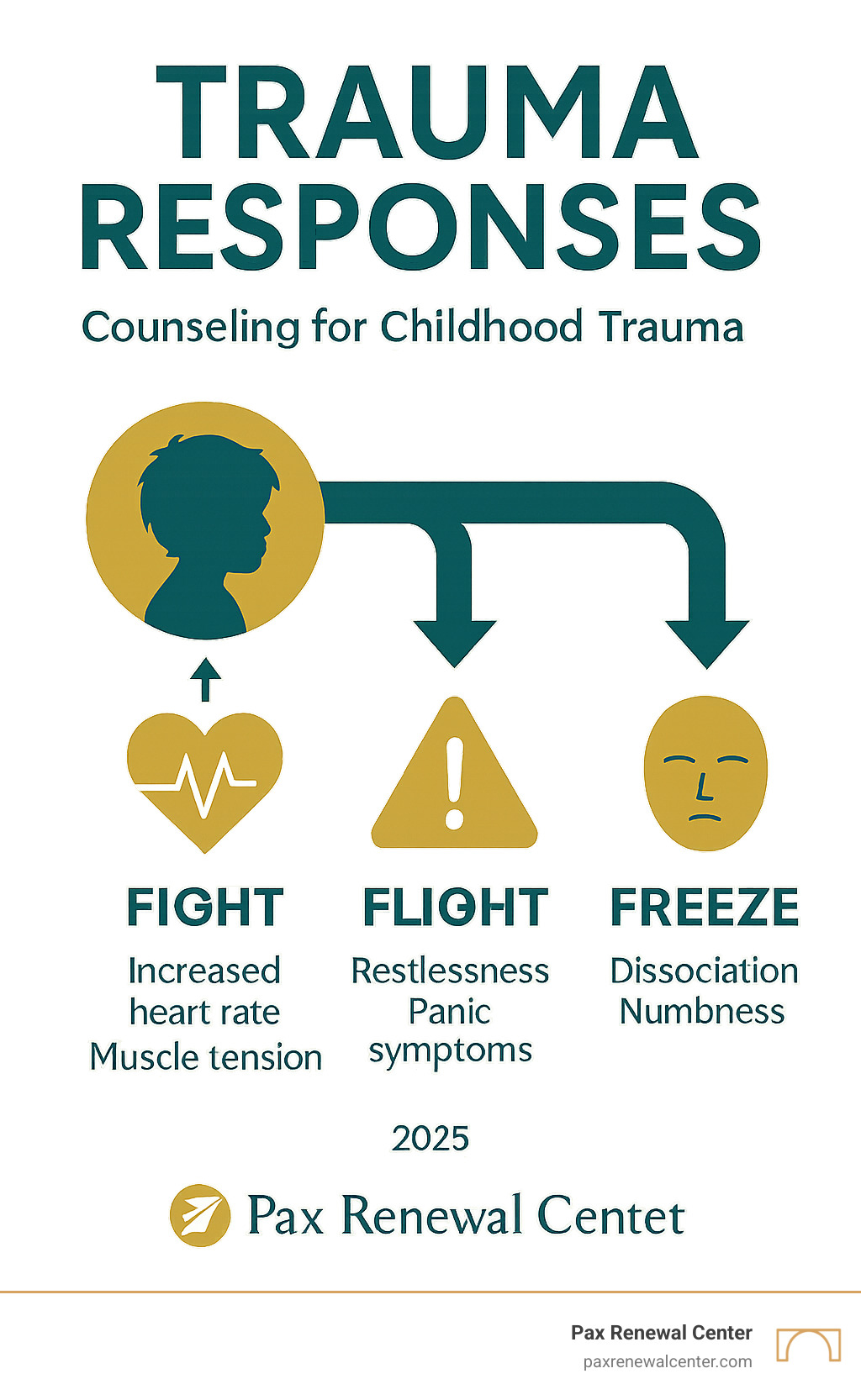
When children face ongoing trauma, their bodies can get stuck in “toxic stress,” which alters the developing brain, particularly in areas responsible for emotion regulation, memory, and impulse control. The scientific research on childhood trauma links early adversity to lifelong health challenges, including heart disease, and mental health issues like PTSD, depression, and anxiety disorders. Trauma often plants seeds of shame, leading children to blame themselves, which can affect self-worth for decades.
Symptoms vary by age. Younger children might have nightmares or regress in learned skills. School-age children may struggle with concentration and friendships, often appearing hypervigilant or withdrawn. Teenagers might turn to substance use or self-harm to cope with overwhelming emotions.
In adulthood, unhealed trauma can manifest as a distorted self-image, chronic pain, anxiety, depression, and difficulty in relationships. Trust can feel impossible, and unhealthy relationship patterns may be repeated. Counseling for childhood trauma helps adults understand these connections and begin to heal, proving that recovery is possible at any stage of life.
Counseling for Childhood Trauma: Why Early Intervention Changes Everything
Your brain has an incredible ability to heal and grow, a quality called brain plasticity. This means that no matter when trauma occurred, recovery is within reach. Counseling for childhood trauma harnesses this capacity, and early intervention is particularly powerful.
Addressing trauma early in a child’s developing brain can prevent unhealthy coping patterns from becoming ingrained and helps build a foundation of resilience and secure attachment. Untreated trauma often leads to chronic health problems, depression, anxiety, and relationship challenges. With treatment, however, individuals can see improved physical and mental health, develop strong emotional regulation skills, build trusting relationships, and break generational cycles of trauma. At Pax Renewal Center, our approach combines proven therapeutic methods with faith-based support. You can learn more about our counseling services on our website.
How Counseling for Childhood Trauma Works
The healing process is structured to ensure effective care. It begins with a thorough assessment to create a custom treatment plan. The first priority is safety and stabilization, where you learn grounding skills and emotional regulation strategies. Through psychoeducation, you’ll understand how trauma affects the brain and body, which is empowering and reduces self-blame. The therapeutic relationship itself is a key part of healing, providing a safe, non-judgmental space. Once you feel secure, trauma processing begins, using evidence-based techniques to help your brain integrate difficult memories in a healthy way.
Role of Caregivers in Counseling for Childhood Trauma
When a child has experienced trauma, caregiver involvement is essential. In treatments like Trauma-Focused Cognitive Behavioral Therapy (TF-CBT), parents and guardians are active participants. Caregivers learn about trauma’s impact, which helps them respond with compassion instead of frustration. We focus on building parenting skills that support healing, such as managing challenging behaviors and communicating safely. Caregivers learn to validate their child’s feelings, creating emotional safety that accelerates healing. By establishing consistent routines and becoming agents of healing, parents create a home environment where a child feels safe, loved, and understood.
Choosing the Right Therapy: Evidence-Based Approaches That Heal
The journey to healing from childhood trauma is not one-size-fits-all. Effective counseling for childhood trauma uses a phase-based approach: first stabilization and safety, then trauma processing, and finally integration and growth. At Pax Renewal Center, we select from several powerful, evidence-based therapies to fit your needs.
Trauma-Focused CBT (TF-CBT)
TF-CBT is a highly researched and effective treatment for children and adolescents. It follows a structured model, often using the PRACTICE acronym, to guide families through healing. It begins with psychoeducation and teaching relaxation skills. The therapy then helps children with emotion regulation and addresses distorted thoughts through cognitive processing. The core of the work involves creating a trauma narrative to process memories safely. Finally, it focuses on enhancing safety and future growth. Caregiver involvement is a key component. You can explore the Scientific research on TF-CBT to learn more.
Eye Movement Desensitization & Reprocessing (EMDR)
EMDR therapy helps the brain’s natural healing process restart when it has been interrupted by trauma. It uses an eight-phase approach to reprocess “stuck” memories. After preparation and assessment, the therapist uses bilateral stimulation (like eye movements) while you focus on a distressing memory. This helps decrease the memory’s emotional charge. The therapy then works to install positive beliefs, ensuring you feel calm and grounded after each session. EMDR’s memory re-consolidation process helps file away traumatic memories properly so they no longer haunt the present. The Scientific research on EMDR supports its effectiveness.
Play & Art Therapies for Younger Children
Young children often express trauma non-verbally, making Play and Art Therapies powerful healing tools. Expressive play with dolls, puppets, or a sandtray allows children to safely re-enact or process their experiences, giving them a sense of control. Art therapy, through drawings, paintings, or sculpture, provides another channel to externalize feelings that have no words. These creative approaches meet children where they are developmentally and provide a bridge for communication and healing.

Integrating Faith and Counseling for Childhood Trauma
At Pax Renewal Center, we understand that faith can be a foundational source of strength. Our faith-integrated approach blends evidence-based treatments like EMDR and TF-CBT with spiritual resources. This can involve spiritual coping through prayer and scripture reflection. We also provide a safe space for meaning-making and wrestling with difficult spiritual questions. We believe that integrating your faith can deepen your healing journey by addressing your mind, body, and spirit.
A Step-by-Step Healing Plan
Starting on the journey of healing is a courageous step. While unique to each person, a structured approach can make a significant difference.
A typical healing plan begins by building a strong foundation. This involves learning grounding skills to stay in the present moment and mastering emotion regulation to tolerate intense feelings. As you feel more stable, the process moves to gradual exposure, carefully confronting trauma-related memories and situations to reduce their power. A key part of the journey is narrative work, weaving fragmented memories into a coherent story to integrate the past and move forward. Throughout this process, self-care practices like mindfulness, journaling, physical activity, and creative expression are vital for nurturing your mind, body, and spirit.

Finding a Qualified Therapist
Choosing the right therapist is critical. Look for licensure and credentials (like LPC or LMFT) and professionals who are trauma-informed. For specific methods, look for specialized certifications. You can often find trained professionals by searching the EMDR International Association (EMDRIA) database or seeking out directories for certified TF-CBT therapists. It’s also important to consider the cultural and spiritual fit. If faith is important to you, a therapist who can integrate your values can be enriching. Use the initial consultation to ask questions and see if the therapist’s style resonates with you.
What to Expect in Sessions
Individual therapy sessions are typically 50 minutes long in a confidential and safe space. Sessions often begin with a goal review and progress check-in. A significant portion of time is dedicated to coping skill practice. When you are ready, sessions will involve trauma processing using evidence-based techniques at a pace that feels safe for you. Your therapist may provide between-session assignments, like journaling, to support your progress. It is a collaborative approach where you are an active participant in your healing.
Continuing the Journey Beyond Counseling for Childhood Trauma
Healing is an ongoing journey. As formal therapy concludes, you’ll work on a relapse prevention plan to manage potential triggers. Occasional booster sessions can also be helpful. Connecting with peer support groups or online communities can reduce isolation, while engaging in service projects can foster a sense of purpose. Healing isn’t about erasing the past, but integrating it so you can live fully in the present.
Frequently Asked Questions about Counseling for Childhood Trauma
It’s natural to have questions when considering counseling for childhood trauma. Here are some brief answers to common questions we hear at our Lafayette, Louisiana, practice.
How long does counseling for childhood trauma take?
The timeline is unique to each person and depends on the complexity of the trauma, your personal resilience, and your engagement in therapy. Evidence-based models like Trauma-Focused CBT often last 12-25 sessions, while EMDR therapy can also bring relief more quickly than traditional talk therapy. More complex trauma may take longer, but you will likely develop helpful coping skills early in the process.
Can counseling for childhood trauma help with depression and anxiety?
Yes. Depression and anxiety are often symptoms of unresolved childhood trauma. A child’s brain learns to stay on high alert, which can manifest as anxiety years later. The shame and negative beliefs from trauma can fuel depression. By addressing the root cause of the trauma with therapies like TF-CBT or EMDR, the symptoms of depression and anxiety often improve significantly as the trauma’s grip loosens.
Is counseling for childhood trauma covered by insurance?
Most insurance plans provide mental health benefits that can cover trauma therapy, but coverage varies. It’s best to call your insurance company to understand your specific benefits, including your deductible, copayment, and whether you need prior authorization. At Pax Renewal Center, we can help you steer the insurance process and provide the necessary documentation for reimbursement if we are not in-network with your plan. We believe quality care should be accessible.
Conclusion
The echoes of childhood trauma can cast a long shadow, but that shadow does not have to define you. The journey of healing, while requiring courage, opens the door to a renewed identity filled with resilience, self-compassion, and strength.
We hope this guide has sparked a sense of hope and shown that reclaiming your life from past wounds is a reality we witness every day at Pax Renewal Center. Our dedicated team of highly qualified, faith-based therapists in Lafayette, Louisiana, is committed to providing trauma-informed care that addresses your whole being—mind, body, and spirit.
If you are ready to move from surviving to thriving, we are here to walk alongside you. Learn more about our specialized counseling for childhood trauma and how our compassionate, professional, and spiritually-grounded approach can help you find renewal.