

Why Faith-Based Therapy Programs Are Changing Teen Mental Health
Faith-based therapy programs for teens combine clinical excellence with spiritual guidance to address the growing mental health crisis among adolescents. These programs offer a holistic approach by integrating evidence-based treatments like CBT and EMDR with Christian values, scripture, and prayer. They come in various formats, from outpatient counseling and online groups to more intensive options, all designed to meet a family’s unique needs.
The teenage years bring unique challenges, from social media pressure to anxiety and depression. Research shows that 1 in 6 teens experiences a mental health disorder. Many families want treatment that aligns with their Christian values while providing professional clinical care.
Faith-based programs don’t require teens to be religious to participate, but they offer a framework that many families find meaningful, creating space for both emotional healing and spiritual growth.
I’m Dan Jurek, M.A., LPC-S, LMFT-S, founder of Pax Renewal Center in Lafayette, Louisiana. With over 35 years of experience, I’ve seen how faith-based therapy programs for teens provide the comprehensive support young people need during these crucial years.
The Modern Adolescent Battlefield
Today’s teenagers face a battlefield of modern pressures. Social media creates a 24/7 performance culture, leading to unprecedented anxiety spikes. They face deep identity confusion from conflicting cultural messages, while peer conflict follows them home through their phones. Many turn to substance use to cope, and family breakdown can remove their primary support system.
These factors create a resilience gap, where teens lack the tools to bounce back from setbacks. This is where faith-based therapy programs for teens can make a difference—they address not just the symptoms but help build that missing resilience from the ground up.

Stats You Should Know
The numbers behind the teen mental health crisis are stark. 1 in 6 teens experiences a mental health disorder annually. Depression rates have risen by 23% in recent years, reflecting more than just moodiness—it’s a condition that significantly impairs daily life.
Meanwhile, quality care is often out of reach. Private therapy can cost $100-$200 per session, and a critical shortage of psychiatrists and teen therapists means long waiting lists. In states like Texas, 71% of youths with major depression receive no treatment at all.
These statistics represent real teens struggling without support. The good news is that comprehensive approaches like faith-based therapy programs for teens can lead to life-changing outcomes. Scientific research on teen anxiety continues to show both the scope of the challenge and the effectiveness of proper treatment.
Understanding Faith-Based Therapy Programs for Teens
When your teenager is struggling, you want treatment that honors both their mental health needs and your family’s values. Faith-based therapy programs for teens blend professional clinical care with a spiritual foundation, treating the whole person—mind, body, and spirit.
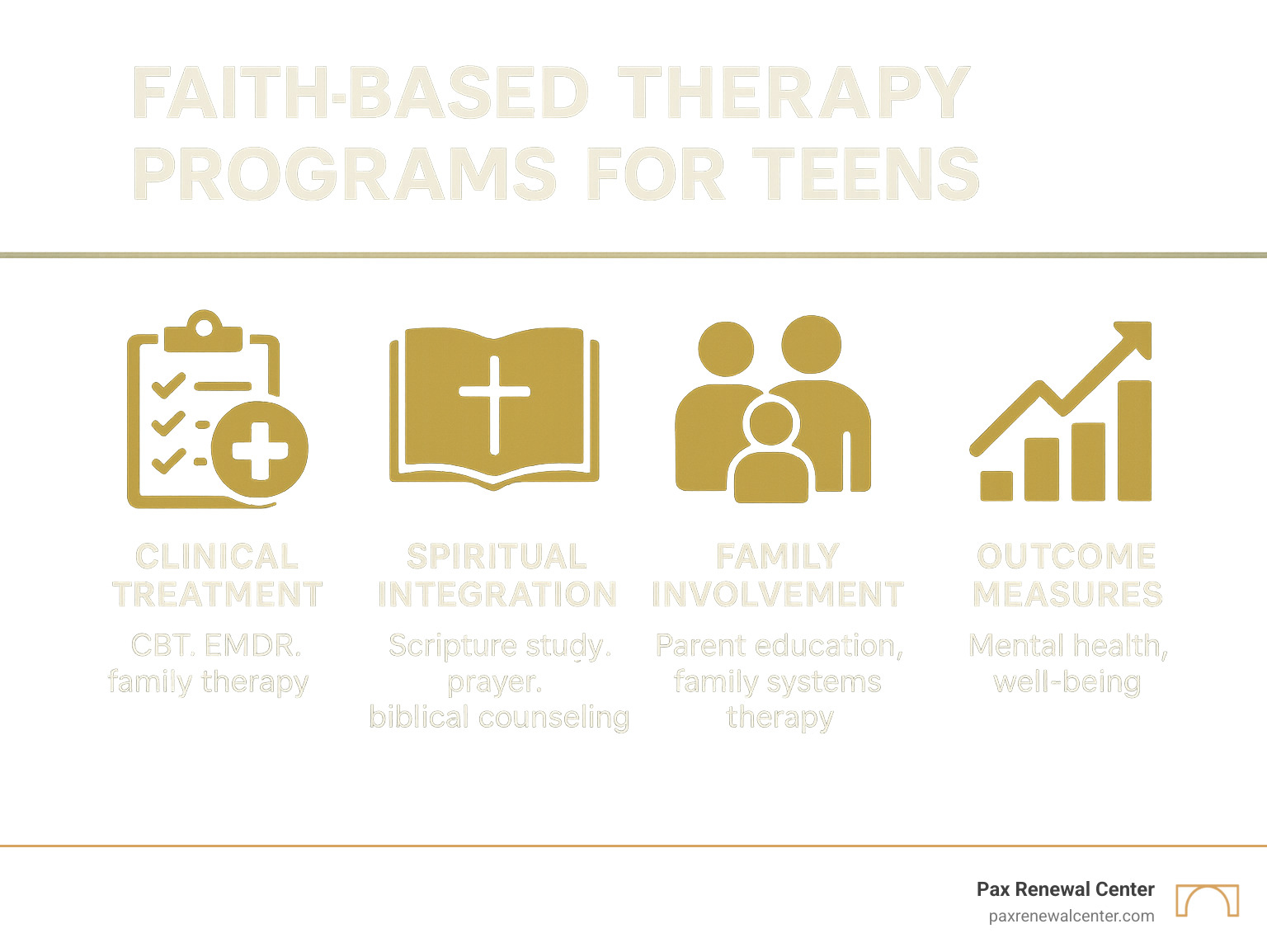
At Pax Renewal Center, we don’t ask families to choose between good therapy and their faith. Instead, we weave together scripture integration, prayer, and mentorship with proven treatments like CBT, EMDR, and family systems therapy. Our licensed therapists are equipped to help teens explore how their faith can be a source of strength and healing, enriching therapy with the hope that Catholic values and Christian principles provide.

What Makes Faith-Based Therapy Programs for Teens Unique?
Faith-based programs go deeper than just managing symptoms. They build on a foundation of Gospel identity, helping teens understand they are created in God’s image and deeply loved. This changes how they see themselves, providing a powerful antidote to depression and anxiety. This holistic healing addresses the spiritual roots of struggles, while a biblical worldview offers a solid framework for navigating life’s challenges with purpose and wisdom.
Blending Bible & Brain Science
Good science and strong faith work together powerfully. We see no conflict between the two.
- Cognitive Behavioral Therapy (CBT) helps teens challenge negative thoughts, pairing perfectly with biblical wisdom about renewing our minds.
- EMDR helps process trauma within a faith context, reminding teens that God “heals the brokenhearted”.
- Exposure therapy for anxiety is bolstered by the courage found in faith, as described in Philippians 4:6-7.
Everything we do is shaped by the truth of Genesis 1:27: each person is made in God’s image. This ensures every teen is seen not as a problem to be solved, but as an individual with incredible worth and potential for healing.
Program Formats & Settings
Faith-based therapy programs for teens come in various formats to meet different levels of need. This variety ensures you can find a fit for your teen and family situation.
- Outpatient clinics involve regular therapy sessions (usually weekly) while your teen lives at home.
- Online groups and teletherapy offer accessible virtual care, removing geographical and scheduling barriers.
- Intensive Outpatient Programs (IOPs) provide a higher level of care with multiple sessions per week.
- Residential treatment centers offer 24/7 supervision and intensive therapy in a live-in facility.
- Therapeutic boarding schools combine academics with intensive therapy for longer-term care.
- Wilderness therapy programs use outdoor experiences to build resilience and self-reliance.
Here’s a quick comparison:
| Program Type | Intensity | Typical Length | Family Involvement | Environment |
|---|---|---|---|---|
| Outpatient Counseling | Low | Ongoing | Moderate | Home-based, weekly clinic visits |
| Online/Teletherapy | Low-Moderate | Ongoing | Moderate | Home-based, virtual sessions |
| Intensive Outpatient (IOP) | Moderate | Weeks-Months | High | Home-based, multiple weekly clinic visits |
| Residential Treatment | High | Months | Moderate-High | Structured, 24/7 live-in facility |
| Therapeutic Boarding School | High | 6-18+ Months | Moderate-High | Structured, live-in facility with academics |
| Wilderness Therapy | High | Weeks-Months | Moderate | Remote, outdoor settings |
Outpatient & Virtual Options
For many families, outpatient and virtual faith-based therapy programs for teens are both practical and effective. At Pax Renewal Center, our outpatient counseling allows teens to get professional support while staying connected to their home and community. We prioritize family involvement, often inviting parents and siblings into sessions to improve communication and strengthen bonds. The affordability and flexible scheduling of outpatient and virtual therapy make quality care accessible to more families, removing barriers to getting help.

Family-Based and Group Therapy
Healing rarely happens in isolation. Family-based therapy is crucial for lasting change, as it addresses the family system as a whole. Sessions are not about blame but about improving communication and building healthier connections. Group therapy provides the power of peer connection. In a guided setting, teens share experiences, learn coping skills, and realize they are not alone. This community connection is incredibly validating and often becomes a vital complement to individual therapy, creating a sense of belonging and shared healing.
Choosing the Right Fit for Your Teen
Selecting the right faith-based therapy program for teens is a crucial decision. It requires discernment beyond reading a website. You’re looking for a place where your teen will be understood and cared for in a way that honors both their clinical needs and your family’s values.
Key factors to consider include the clinical credentials of the staff, the program’s safety record, and the availability of a continuum of care with aftercare planning. Practical matters like insurance coverage and scholarship opportunities are also important. More info about teen counseling services can help you understand what comprehensive care looks like.
Key Questions to Ask
When evaluating programs, ask targeted questions to ensure a good fit:
- Licensure and Modalities: Are therapists licensed? What evidence-based methods (CBT, EMDR, family systems) do they use?
- Faith Alignment: How is faith integrated into programming? Does the approach feel authentic and supportive for your family?
- Family Involvement: What is the family’s role in treatment? Are there family therapy sessions and regular communication?
- Success Metrics: How does the program measure progress and track outcomes?
- Cost Transparency: What is the full cost? Are there additional fees, and is financial assistance available?
Red Flags to Avoid
Trust your parental instincts. If something feels off, it probably is. Watch for these red flags:
- Lack of accreditation or proper licensing is a dealbreaker.
- No individualized treatment plan suggests a cookie-cutter approach that ignores your teen’s unique needs.
- Punitive rules that rely on shame or fear create more trauma than healing.
- Minimal parent contact or attempts to isolate your teen from family support is a serious warning sign.
- Unrealistic promises or guarantees of a quick fix. Reputable programs are honest about the time and effort healing requires.
What a Typical Day Looks Like
For intensive or residential faith-based therapy programs for teens, each day is carefully structured to balance healing, growth, and hope. This predictable, nurturing rhythm creates the safety and stability that struggling teens need.
A day often begins with a morning devotion or quiet reflection, setting a peaceful tone. The core of the day involves clinical work, such as individual therapy using methods like CBT or EMDR, and group process sessions where teens connect with peers. Many programs also include academic support to keep teens on track with school.
Afternoons may bring recreation, art therapy, or service projects to help teens build healthy coping skills and find purpose. The day might wind down with evening prayer and a mentor check-in for guidance and encouragement.

Faith and Clinical Care Integrated
What makes these programs unique is how spiritual practices and clinical care are woven together. Faith isn’t confined to a single service; it’s a living source of strength.
- Faith Practices: Days are enriched with scripture study, worship, and journal reflection. Many programs use models similar to Celebrate Recovery groups to foster accountability and freedom through biblical principles.
- Clinical Touchpoints: These faith elements are built on a solid clinical foundation. Teens receive professional care through CBT sessions, EMDR processing for trauma, trauma-informed yoga, and, when needed, medication management. Family therapy sessions remain a crucial clinical touchpoint, as healing the entire family system is key to lasting change.
Frequently Asked Questions about Faith-Based Therapy Programs for Teens
As parents considering faith-based therapy programs for teens, it’s natural to have questions. Here are answers to some of the most common ones we hear at Pax Renewal Center.
Is professional therapy compatible with Christian faith?
Absolutely. We believe God works through skilled professionals, and therapy is a powerful tool for the healing and restoration He desires. At Pax Renewal Center, we integrate proven clinical methods like CBT and EMDR with Christian values, seeing no conflict between good science and strong faith. Scripture encourages seeking wise counsel, and licensed therapists provide just that.
How long do faith-based programs for teens usually last?
The duration depends on the teen’s needs and the program format. Outpatient counseling may last several months, while intensive outpatient programs (IOPs) typically run for 6-12 weeks. Residential programs are longer, ranging from a few months to a year. A quality program will always tailor the treatment length to the individual’s progress.
Do teens have to be religious to benefit from a faith-based program?
No. Teens do not need to be religious to benefit. These programs are built on universal values of love, dignity, and hope that create a caring environment for everyone. The core clinical therapies are effective regardless of a person’s beliefs. While spiritual tools are available, participation is never forced. We respect each teen’s journey and focus on providing authentic care that leads to healing.
Conclusion
Watching your teenager struggle is heartbreaking, but you are not helpless, and there is hope. Faith-based therapy programs for teens offer a path to restoration by bridging the clinical care your child needs with the spiritual foundation your family values.
This holistic approach addresses the whole person—mind, body, and spirit. We’ve seen teens trapped by anxiety find freedom, and families who felt broken find their way back to each other.
At Pax Renewal Center in Lafayette, Louisiana, this is our mission. Our team of licensed, faith-integrated therapists, led by Dan Jurek, combines proven therapies like EMDR, CBT, and family systems work with the timeless wisdom of scripture. We believe complete healing is possible and are honored to walk alongside families on that journey.
Whether your teen is battling anxiety, depression, or trauma, our specialized teen counseling services are designed to meet them where they are. We offer both in-person and virtual sessions to make quality care accessible.
Your teenager’s story isn’t over. With the right support, today’s struggles can become the foundation for tomorrow’s strength. If you’re ready to take the next step, you don’t have to do it alone.
For more information about our counseling services and how we can support your family, please visit our services page. We’d be honored to walk with you.