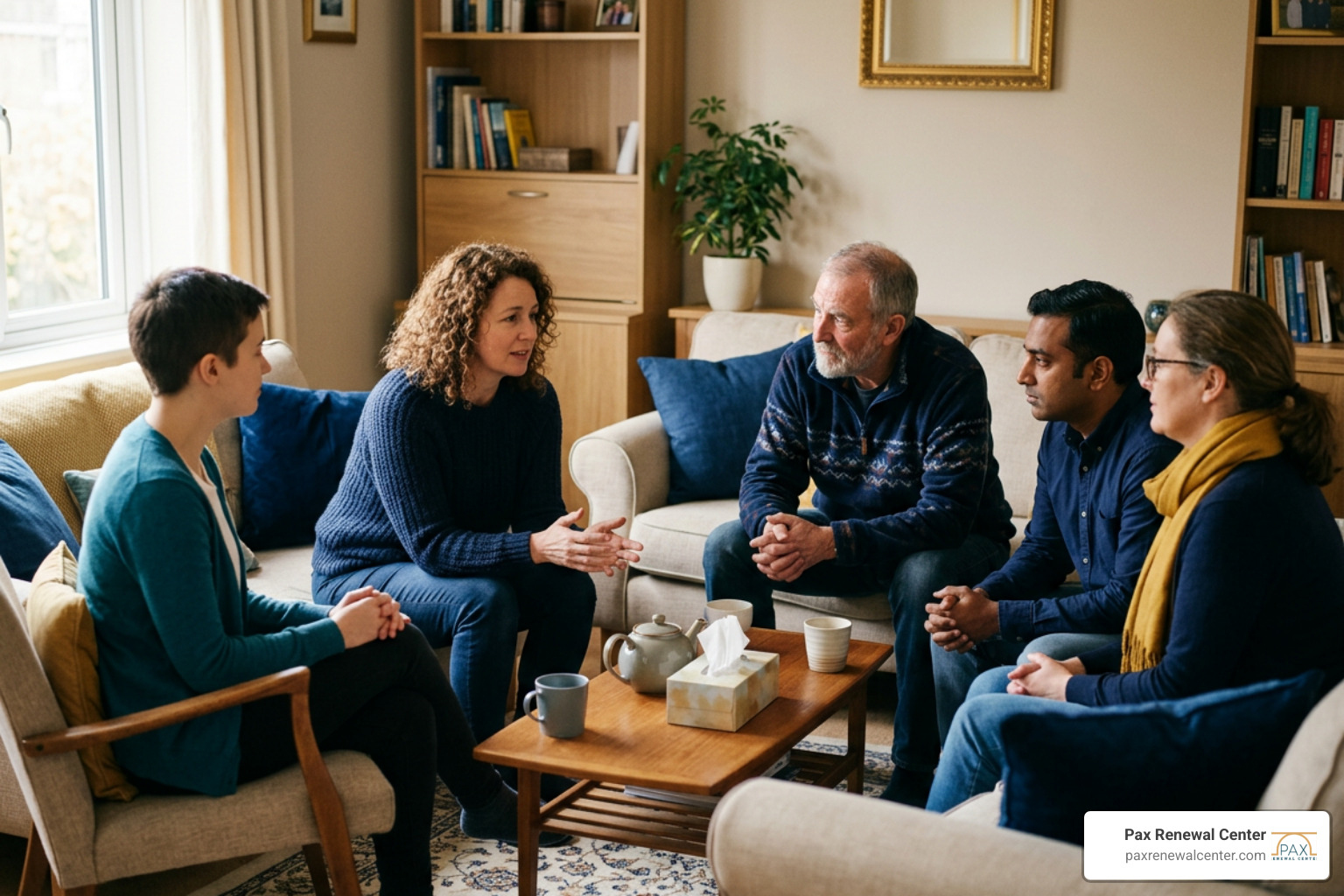

Why Counseling for Divorce Can Transform Your Healing Journey
Counseling for divorce provides essential emotional support and practical guidance to help individuals and couples steer one of life’s most challenging transitions with greater clarity and peace.
What counseling for divorce offers:
- Individual therapy – Process grief, anxiety, and trauma from relationship breakdown
- Couples counseling – Explore reconciliation or plan respectful separation
- Discernment counseling – Gain clarity on whether to save or end the marriage
- Co-parenting support – Develop healthy communication for children’s wellbeing
- Family counseling – Help children and teens adjust to family changes
- Group programs – Connect with others facing similar challenges
Going through a divorce can feel overwhelming. Research shows that about 64% of participants who received divorce counseling described their post-divorce relationships as cooperative. Quality counseling helps reduce conflict, improves communication, and creates better outcomes for everyone involved, especially children.
Whether you’re questioning your marriage, already separated, or struggling with post-divorce adjustment, professional guidance can make the difference between a destructive process and a transformative one.
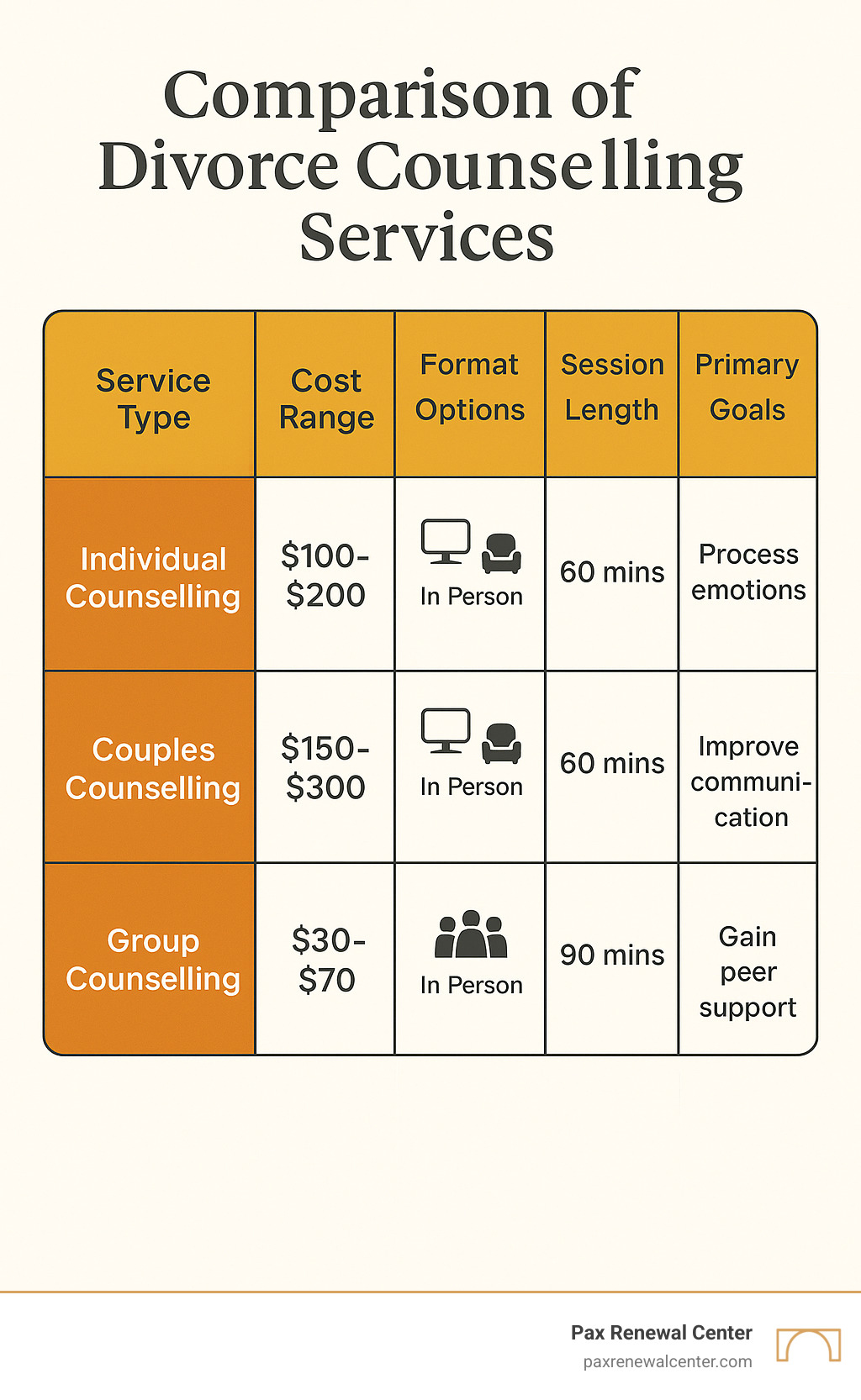
What to Expect From This Guide
This comprehensive guide serves as your roadmap through the various counsellng for divorce services available. We’ll explore different therapeutic approaches, help you understand when each type of support is most beneficial, and provide practical tools for decision-making.
You’ll find how individual therapy can help process grief and rebuild self-esteem, when couples counseling might still be valuable during separation, and how specialized approaches like discernment counseling can bring clarity. Our goal is to help you make informed decisions about which services align with your specific needs and values.
Top Counseling for Divorce Services & When to Use Them
Navigating divorce feels overwhelming, but you don’t have to face it alone. The world of divorce counseling has expanded to offer multiple types of support, each designed to meet you exactly where you are in your journey.
Individual therapy serves as the foundation for most divorce healing. When your world feels turned upside down, individual sessions provide a safe harbor where you can process emotions and rebuild your sense of self.
Couples sessions might surprise you during divorce proceedings, but they serve important purposes. Sometimes couples find they want to fight for their marriage. Other times, these sessions help create respectful separation plans or establish healthy co-parenting patterns.
Family support services recognize that divorce affects everyone in the household. Children need help understanding family changes, while parents learn to maintain loving relationships with their kids across two homes.
Group programs offer something individual therapy cannot – the comfort of knowing you’re not alone. Connecting with others facing similar challenges reduces isolation and provides practical insights.
The choice between online and in-person services depends on your personal preferences and circumstances. Online counseling has gained tremendous credibility, with research showing it can be just as effective as face-to-face sessions for many divorce-related issues.
Discernment counseling addresses a specific situation – when one spouse wants to work on the marriage while the other is ready to leave. This specialized approach helps mixed-agenda couples gain clarity about their relationship’s future.
Individual Counseling for Divorce
Individual therapy provides the solid ground you need when everything else feels shaky. Counseling for divorce on an individual level addresses deep concerns with proven therapeutic approaches.
Cognitive Behavioral Therapy (CBT) helps untangle negative thought patterns that often emerge during divorce. CBT techniques help you recognize distorted thoughts and develop more balanced, realistic perspectives about yourself and your future.
Eye Movement Desensitization and Reprocessing (EMDR) proves particularly valuable when dealing with traumatic aspects of relationship breakdown. EMDR helps you process painful experiences without becoming overwhelmed by the associated emotions.
Understanding the grief stages – denial, anger, bargaining, depression, and acceptance – helps normalize your emotional journey. Individual therapy provides specific coping tools for each stage while acknowledging that healing isn’t linear.
Online Divorce Counseling: Pros and Cons
The rise of online divorce counseling has opened doors for people who might otherwise struggle to access support. Scientific research on tele-therapy effectiveness confirms that telehealth counseling can be just as effective as in-person sessions for many mental health concerns.
Online counseling offers significant advantages. Geographic barriers disappear, allowing you to access specialized divorce counsellors regardless of location. Privacy improves for many people who feel more comfortable discussing sensitive topics from their own space. Scheduling becomes more flexible with online sessions often accommodating non-traditional hours.
However, online counseling isn’t perfect for everyone. Technology challenges or unfamiliarity with digital platforms can create barriers. Some people simply prefer face-to-face interaction for such personal conversations. Crisis situations may require immediate in-person intervention that online platforms cannot provide.
Discernment Counseling Snapshot
Discernment counseling addresses a specific and painful situation – when spouses have different levels of commitment to saving their marriage. More info about discernment counseling provides detailed information about this specialized therapeutic approach.
This model differs significantly from traditional couples therapy. Instead of focusing on solving relationship problems, discernment counseling helps couples gain clarity about whether their marriage can be saved and whether both partners are willing to do the necessary work.
The process presents three clear paths: continuing the marriage as it currently exists, ending the marriage with greater clarity and confidence, or committing to six months of intensive couples therapy with both partners fully engaged.
The process typically involves 1-5 sessions, with most couples attending an average of 3.5 sessions. Each session includes both individual and joint components, allowing each partner to explore their feelings privately while also engaging in structured conversations together.
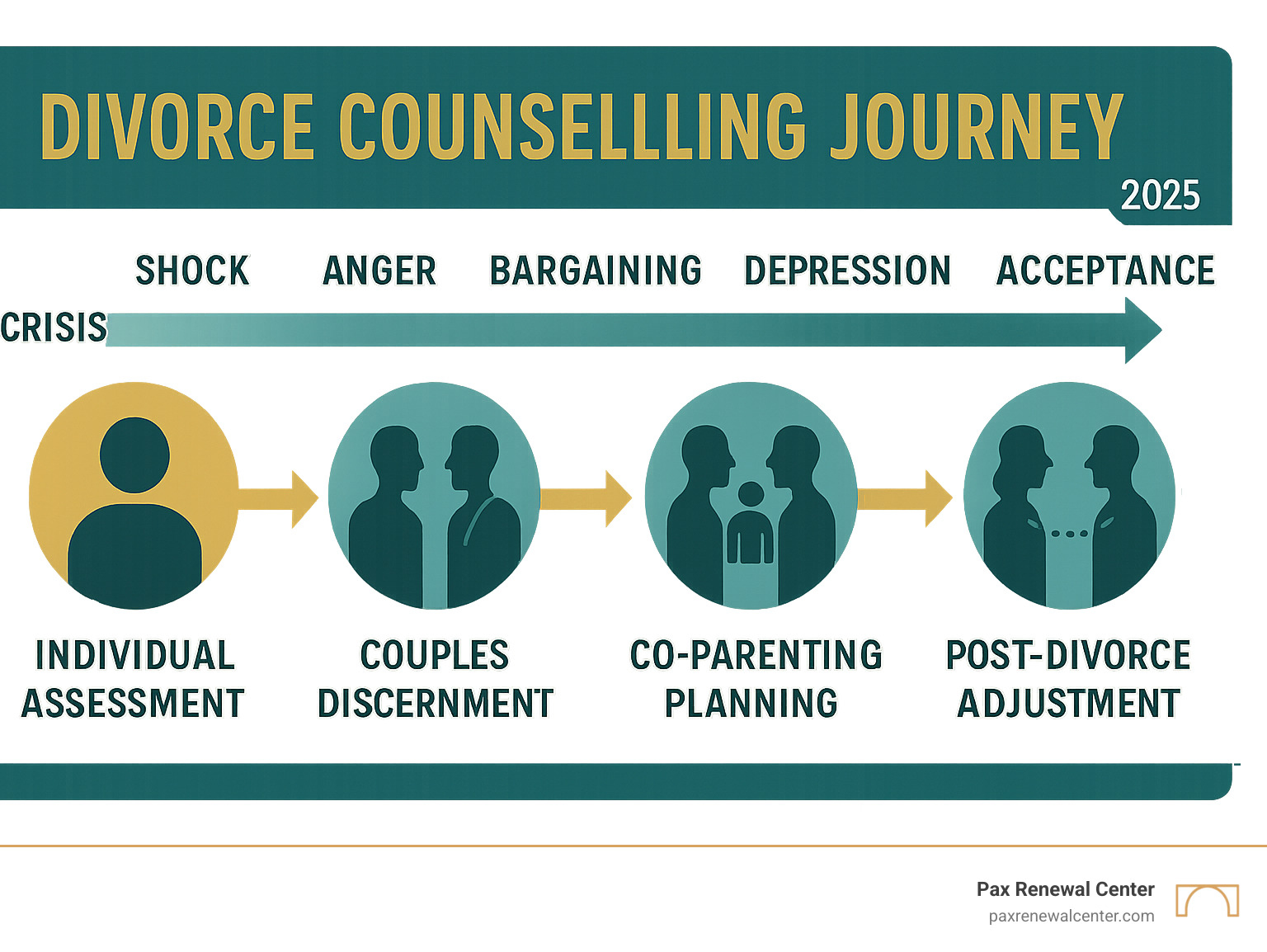
Emotional Roadmap: From Shock to Renewal
Going through a divorce feels like riding an emotional roller coaster – one day you’re angry, the next you’re sad, and sometimes you feel numb. The good news? These feelings are completely normal and follow predictable patterns that researchers have studied extensively.
Shock and denial hit first, even when you’ve seen the problems coming. Your mind struggles to accept this new reality. During this stage, divorce counseling focuses on grounding techniques that help you stay present and gentle reality testing.
Anger often surprises people with its intensity. While anger feels uncomfortable, it actually serves an important purpose – it gives you energy to make necessary changes and helps you establish healthy boundaries. Therapy provides a safe space to express these feelings without saying or doing things you’ll regret later.
Bargaining sounds like “If only I had tried harder” or “Maybe we can still work this out if…” Your mind keeps searching for ways to undo what’s happening. Therapeutic work helps you process these thoughts while gently accepting what cannot be changed.
Depression brings the deep sadness of loss. You might feel hopeless, withdraw from friends, struggle with sleep, or lose interest in things you used to enjoy. This stage requires careful attention to distinguish between normal grief and clinical depression.
Acceptance doesn’t mean you’re happy about the divorce. It means you can acknowledge what’s happening and start looking forward instead of backward. This stage involves rebuilding your sense of self and developing genuine hope for your future.
Scientific research on long-term divorce outcomes offers encouraging news: most people experience significant improvement in their emotional wellbeing within two years of divorce, especially when they receive appropriate support during the transition.
Coping Mechanisms & Self-Care
Building healthy coping skills isn’t just about surviving divorce – it’s about creating a foundation for thriving afterward. Counseling for divorce emphasizes developing a personal toolkit of strategies that work for your unique situation.
Journaling provides a safe place to dump all those swirling thoughts and emotions. Writing helps you make sense of what you’re feeling and track your progress over time. Many clients find that journaling before bed helps quiet their racing minds and improves sleep quality.
Exercise offers multiple benefits during divorce recovery. Physical activity releases natural mood boosters, reduces stress hormones, and gives you a healthy outlet for anger and frustration.
Prayer and spiritual practices provide comfort and guidance for many people navigating divorce. Faith-based counseling for divorce recognizes that your relationship with God can be a powerful source of strength.
Support groups connect you with others who truly understand what you’re going through. Whether formal therapy groups or informal community gatherings, peer support reduces that isolating feeling.
Communication & Conflict Resolution
Learning to communicate effectively during divorce might seem impossible when emotions are running high, but these skills can make the difference between a destructive process and one that preserves dignity for everyone involved.
Active listening means truly focusing on what the other person is saying instead of planning your counterattack. This feels nearly impossible when you’re hurt and angry, but it’s a skill that can be learned with practice.
“I” statements help you express your feelings and needs without attacking or blaming. Instead of “You never cared about our family,” try “I feel hurt when I think about how our priorities became so different.”
Forgiveness represents one of the most complex parts of divorce recovery. It doesn’t mean pretending harmful behavior was okay. Instead, forgiveness is about releasing the emotional burden of resentment – it’s actually a gift you give yourself.
Co-Parenting & Family Healing After Divorce
When parents separate, their children’s well-being naturally becomes the top priority. Research shows that kids can absolutely thrive after divorce when parents work together and put their children’s emotional needs first. Counseling for divorce offers proven strategies that help families steer this transition with grace and wisdom.
Every child responds differently to divorce based on their age and personality. Your preschooler might worry they caused the divorce and need extra reassurance. School-age children often feel torn between parents and may secretly hope mom and dad will get back together. Teenagers usually understand what’s happening but might feel angry or worried about their own future relationships.
Cooperative parenting doesn’t mean you and your ex-spouse need to be best friends. It simply means both of you commit to putting your children’s needs above your personal hurt or anger. This looks like sharing important information about school events, keeping discipline approaches somewhat consistent, and never speaking negatively about the other parent in front of your kids.
Attachment security remains possible even when family structure changes. Your children need to know they’re loved by both parents and that the divorce doesn’t threaten their relationship with either of you.

More info about family counselor support provides additional resources for families working through these challenges together.
Child-Focused Counseling Tools
Children need their own special kind of support during divorce – one that speaks their language and meets them where they are developmentally. Counseling for divorce with children looks quite different from adult therapy, incorporating creative approaches that help kids express feelings they might not even have words for yet.
Play therapy becomes a powerful tool for younger children. Through dollhouses, puppets, and art supplies, kids can show what they’re experiencing inside. These aren’t just random activities – they’re windows into how your child is processing the family changes.
Teen groups offer something unique that individual therapy sometimes can’t – the relief of knowing you’re not alone. Adolescents often feel more comfortable opening up to peers who truly understand what it’s like to shuttle between two homes.
Resilience training teaches practical skills for coping with stress and change. Children learn relaxation techniques, problem-solving strategies, and ways to communicate their needs to parents and other adults.
Rebuilding Extended Family Relationships
Divorce ripples out beyond just the immediate family. Grandparents, aunts, uncles, and close family friends often struggle with divided loyalties or feel unsure about their role in this new reality.
Grandparent relationships can become particularly tricky during divorce. Your children benefit enormously from maintaining connections with extended family, but grandparents may feel caught between supporting their adult child and maintaining relationships with grandchildren.
Holiday planning requires thoughtful coordination to ensure children can maintain beloved traditions while accommodating new family structures. This might involve alternating holidays between parents or creating entirely new traditions.
The ultimate goal is preserving meaningful relationships while establishing healthy boundaries that support the new family structure. Children thrive when they can maintain connections with people who love them, even as family dynamics shift and change.
How to Choose a Qualified Divorce Counselor
Finding the right therapist during one of life’s most challenging transitions can feel overwhelming, but it’s one of the most important decisions you’ll make. The difference between working with a skilled divorce counselor professional and settling for generic therapy can mean the difference between healing and staying stuck in pain.
Credentials provide your first clue about expertise. Licensed Marriage and Family Therapists (LMFT) have completed specialized training in relationship dynamics and family systems. Licensed Professional Counselors (LPC) with additional divorce-focused training also bring valuable skills to the table.
Specialization matters more than you might think. A therapist who dedicates significant time to divorce-related issues stays current with research, understands legal considerations, and has developed refined techniques for these specific challenges.
Faith integration becomes particularly important when your spiritual beliefs are central to your identity. Many people find that divorce challenges their faith or creates conflicts between religious teachings and personal circumstances. A skilled faith-based counselor can address these spiritual dimensions while maintaining professional clinical standards.
Before booking your first session, ask potential therapists about their experience with divorce cases, their specific training in this area, and their approach to couples who feel uncertain about their marriage’s future.
Budget considerations extend beyond session fees to include the long-term value of quality care. Investing in skilled divorce counselors early can prevent more expensive problems down the road. Many therapists understand the financial strain of divorce and offer sliding scale fees or payment plans.
Insurance coverage varies widely, so verify your benefits before beginning therapy. Understanding your coverage helps avoid unexpected expenses during an already stressful time.

Vetting for Counseling for Divorce Expertise
Beyond basic credentials, true expertise in divorce counseling requires deeper investigation. Not every therapist who works with couples has the specialized knowledge needed for divorce-related challenges.
Experience data tells a story about a therapist’s background. Ask about the number of divorce cases they’ve handled and their approach to various challenges that might arise. A therapist who has guided dozens of clients through divorce will have insights that someone newer to this work simply can’t offer.
Trauma-informed care becomes crucial when divorce involves betrayal, domestic violence, or other traumatic experiences. Your therapist should understand how trauma affects the nervous system and have specific techniques for addressing trauma symptoms.
Continuing education in divorce-related topics demonstrates an ongoing commitment to professional development. Look for therapists who attend conferences, complete specialized training, or pursue additional certifications in areas like Collaborative Divorce or Discernment Counseling.
Using Discernment Quizzes Before Booking
Self-assessment tools can bring clarity to your thoughts and feelings before you invest in therapy. The Discernment Quiz: Mixed Feelings provides a structured way to explore your thoughts about your marriage and can help you prepare for your first counseling session.
Clarity checks help you identify whether you’re dealing with temporary relationship stress or deeper compatibility issues. These assessments can reveal patterns you might not have noticed and help you articulate your concerns more clearly when you do meet with a therapist.
Taking a quiz before therapy offers several benefits. It clarifies your goals for therapy, helps you choose the most appropriate type of counseling, and provides talking points for initial therapy sessions.
Frequently Asked Questions about Divorce Counseling
When should I start divorce counseling—before filing or after?
The timing of divorce counseling can significantly impact your healing journey and the outcomes for your entire family. While there’s no perfect moment to begin therapy, starting before you file legal papers often provides the greatest benefit and flexibility.
Pre-filing counseling gives you breathing room to process your emotions without the pressure of legal deadlines. You have time to explore whether your marriage might still be salvageable, gain clarity about what you truly want, and develop communication skills that will serve you well regardless of your final decision.
Research consistently shows that couples who engage in structured therapeutic conversations before filing often achieve more cooperative divorces. They’re better equipped to handle the inevitable stress of legal proceedings and more likely to maintain respectful relationships afterward.
But don’t let the timing of legal proceedings stop you from seeking help. Post-filing counseling remains incredibly valuable even after you’ve started the divorce process. Therapy can help you steer the emotional rollercoaster of legal proceedings and develop effective co-parenting strategies.
Consider seeking help immediately if you’re experiencing thoughts of self-harm, domestic violence, or severe depression – your safety and well-being matter more than any legal timeline.
How many sessions does effective counseling usually take?
Discernment counseling offers the most predictable timeline since it’s specifically designed as a short-term intervention. Most couples attend between 1-5 sessions, with research showing an average of 3.5 sessions before gaining clarity about their relationship’s future.
Individual therapy for divorce-related issues typically requires more time for meaningful change. Most people benefit from 12-20 sessions to work through the complex emotions, develop healthy coping strategies, and rebuild their sense of identity.
Couples therapy focused on divorce planning or developing co-parenting strategies usually takes 6-12 sessions to establish effective communication patterns and create practical strategies for moving forward respectfully.
Several factors influence how many sessions you’ll need, including the complexity of your situation, your motivation level, and your support systems. Therapy is an investment in your long-term wellbeing and your family’s future.
Can faith-based counseling still work if my spouse isn’t religious?
This question comes up frequently, and the good news is that faith-based counseling for divorce can be highly effective even when spouses have different religious beliefs or when one partner isn’t religious at all. The key lies in finding a therapist who can skillfully respect diverse perspectives while maintaining their clinical expertise.
Skilled faith-based counselors understand how to integrate spiritual resources for believers while providing excellent clinical care that benefits everyone in the room. We focus on therapeutic techniques that work regardless of religious belief while offering additional spiritual support for those who want it.
Many therapeutic principles naturally align with universal human values – concepts like forgiveness, hope, compassion, and personal growth resonate with people regardless of their religious framework. A respectful approach means that professional faith-based counselors don’t impose their faith on clients but rather meet each person where they are in their spiritual journey.
When interviewing potential therapists, ask direct questions: How do you work with couples who have different religious beliefs? Can you provide effective therapy without requiring religious participation?
At Pax Renewal Center, we’ve successfully worked with couples from diverse religious backgrounds, including many situations where one partner is deeply religious and the other is not. Our approach focuses on clinical excellence while respecting each individual’s spiritual journey.
Conclusion
Divorce doesn’t have to define you – it can refine you. With the right support and guidance, this painful chapter can become the foundation for a stronger, more authentic life. Counseling for divorce offers the roadmap from heartbreak to healing, providing both the practical tools and emotional support needed to steer this transition with dignity and hope.
Throughout this guide, we’ve explored the many paths available to you. Individual therapy helps rebuild your sense of self and process complex emotions. Discernment counseling brings clarity when you’re torn between saving your marriage and letting it go. Online counseling breaks down barriers to getting help, while specialized co-parenting support ensures your children’s wellbeing remains protected.
The evidence speaks for itself – people who receive professional support during divorce fare significantly better than those who try to go it alone. They communicate more effectively, co-parent more successfully, and emerge from the process with greater emotional resilience.
At Pax Renewal Center in Lafayette, Louisiana, we’ve walked alongside countless individuals and families through these difficult seasons. Our team understands that your story is unique, and we’re committed to meeting you exactly where you are. Whether you’re still wrestling with whether to stay or go, already deep in the legal process, or working to rebuild your life after divorce, we offer both the clinical expertise and spiritual wisdom to guide you forward.
We integrate evidence-based approaches like EFT, EMDR, and the Gottman Method with faith-based support that honors your spiritual journey. As one of the few practices in Louisiana certified in discernment counseling, we’re equipped to help mixed-agenda couples find clarity and peace about their relationship’s future.
Your healing doesn’t have to wait. Whether you prefer in-person sessions in Lafayette or the convenience of online counseling, we’re here to support you with compassion, expertise, and genuine care. The path forward may feel uncertain right now, but you don’t have to walk it alone.
More info about our counseling services provides additional resources and information about how we can support you through this important transition.