

Defining Emotional Burnout in Relationships
When we talk about emotional burnout in relationships, we aren’t just talking about a bad week or a single argument. We are describing a state of “emotional bankruptcy.” It is the feeling that your relational bank account is overdrawn, and you simply have nothing left to deposit.
Many people confuse this feeling with “falling out of love,” but there is a distinct difference. Falling out of love is often a change in the fundamental feelings of attraction and choice. In contrast, relationship burnout is a depletion of capacity. You may still care deeply for your partner, but you are too exhausted to access that love. It is buried under layers of Stress and Anxiety that have gone unmanaged.
Burnout often manifests as emotional numbness. You might find yourself sitting across from your spouse and feeling… nothing. Not even anger—just a heavy, tired weariness. This is actually a protective response from your nervous system; it shuts down to conserve what little energy you have left.
To help you distinguish where you stand, consider this comparison:
| Feature | Temporary Rough Patch | Chronic Relationship Burnout |
|---|---|---|
| Duration | Short-term (days or a few weeks) | Long-term (months or years) |
| Cause | Tied to a specific event (move, job change) | Accumulation of unresolved issues |
| Communication | Arguments are heated but still happen | Arguments decrease because you’ve given up |
| Hope | You feel frustrated but see a way out | You feel cynical and “stuck” |
| Intimacy | Temporarily paused | Feels like a chore or is non-existent |
This Relationship Burnout vs. Falling out of Love distinction is vital because it changes the goal of therapy. We aren’t just trying to “find the spark”; we are trying to reduce the load on your nervous system so the spark can breathe again.
Signs and Symptoms of Emotional Burnout in Relationships
How do you know if you’ve crossed the line from “stressed” to “burnt out”? One of the most common indicators is what we call “Roommate Syndrome.” You manage the calendar, you handle the kids, and you coordinate the groceries, but you haven’t had a heart-to-heart conversation in months. You are efficient business partners, but the romantic connection has evaporated.
Another major red flag is Negative Sentiment Override. This is a psychological state where your “filter” for your partner becomes permanently skewed. If they forget to pick up milk, you don’t think, “Oh, they were busy.” Instead, your brain tells you, “They did this on purpose because they don’t respect my time.” Every neutral or even positive action is viewed through a lens of cynicism.
Other symptoms include:
- Dreading home: Sitting in your car for ten minutes after work because you aren’t ready to face the emotional demands inside.
- Loss of humor: The inside jokes that used to sustain you now feel annoying or pointless.
- Physical lethargy: Feeling physically heavy or having trouble sleeping specifically due to relational tension.
- Emotional withdrawal: You stop sharing your “inner world”—your fears, dreams, and daily struggles—because it feels like too much effort.

This Burnout, Emotional Numbness, and Intimacy gap often leads to one partner “zoning out” during interactions, not out of malice, but because their “emotional battery” is at 1%.
Root Causes: Why Love Becomes Exhausting
If you are experiencing emotional burnout in relationships, it isn’t because you are “weak” or “bad at marriage.” It’s often because of the sheer volume of pressure you are carrying.
One of the primary drivers is unresolved conflict. As mentioned in the intro, 69% of conflicts in a relationship are perpetual. These are the arguments about personality differences or lifestyle preferences that never truly go away. When couples don’t learn how to “manage” these issues rather than “solve” them, they get stuck in a loop. It’s like running a marathon on a treadmill—you’re exhausted, but you haven’t moved an inch.
Then there is the mental load. This is the invisible labor of keeping a life together. When one partner feels they are carrying 90% of the emotional or domestic responsibility, resentment builds. This resentment is the “acid” that erodes the foundation of the relationship.
External factors also play a massive role. We often see how 5 Ways Outside Stress Can Impact Your Marriage, such as high-pressure jobs, financial strain, or parenting demands, leak into the home. If you come home “fried” from a ten-hour shift, you have no “buffer” left for your partner’s needs.

The Role of Insecure Attachment in Emotional Burnout in Relationships
Our early life experiences shape how we handle intimacy, known as our attachment style. If you have an anxious attachment style, you might constantly “pursue” your partner for reassurance. When you feel burnt out, you may transition into a “collapsed pursuer”—you’ve tried so hard for so long to connect that you finally just give up and shut down.
Conversely, those with an avoidant attachment style tend to withdraw when things get heavy. This creates what we call the “Waltz of Pain”: one partner reaches out (often with criticism), the other retreats, and both end up feeling isolated and exhausted.
Scientific research on attachment and burnout shows that insecure attachers report lower relationship satisfaction and feel less supported by their partners, which accelerates the burnout process. Understanding these patterns is a core part of our relationship services at Pax Renewal Center, as it allows us to address the “why” behind the exhaustion.
Proven Strategies for Recovery and Reconnection
The path back from emotional burnout isn’t paved with grand gestures or expensive vacations. It is built on “micro-moves,” small, consistent actions that signal safety to the nervous system.
One of the most effective tools we teach is the Ritual of Connection. These are predictable moments where you turn toward each other. A famous example from the Gottman Method is the 6-second kiss. Why six seconds? Because it’s long enough to be romantic and release oxytocin (the bonding hormone), but short enough to do even when you’re busy.
Another essential strategy is the stress-reducing conversation. This is a 20-minute daily check-in where the goal is not to solve problems. Instead, you simply listen to your partner vent about their day. The “rule” is that you must be on your partner’s side. If they complain about their boss, you don’t play devil’s advocate; you say, “That sounds so frustrating. I can see why you feel that way.”
For many of our clients, integrating Faith-Based Therapy for Stress provides a deeper anchor. Recognizing that your spouse is a gift from God, even when they are an “exhausting” gift, can shift your perspective from frustration to compassion.

Rebuilding Through Vulnerability and Shared Meaning
Recovery requires a shift from “emotional bankruptcy” to “emotional abundance.” This starts with self-compassion. You cannot give what you do not have. If you are berating yourself for being a “bad spouse,” you are only adding to your burnout.
In Colossians 3:12, we are reminded to “clothe yourselves with compassion, kindness, humility, gentleness and patience.” This applies to how you treat yourself as much as how you treat your partner. When you offer yourself kindness, you create the internal space needed to offer it to others.
We encourage couples to find marriage support that helps them build shared meaning. This means asking: “What is the ‘story’ of us? What are we building together?” When you have a shared purpose—whether it’s raising a family, serving your church, or a shared hobby, it acts as the “glue” that holds you together when feelings are thin.
Daily Appreciation Micro-Moves:
- The “I Noticed” Statement: “I noticed you handled the dishes tonight, thank you.”
- The “High Point” Check-in: Asking “What was the best part of your day?” rather than “How was work?”
- Non-Demand Touch: A hand on the shoulder or a brief hug that doesn’t lead to sex, just connection.
- The “We” Language: Using “we” and “us” when talking about future plans to reinforce the bond.
When to Seek Professional Help
Sometimes, the “load” is simply too heavy to lift on your own. If you find that every conversation turns into a fight, or if the silence in your home has become deafening, it is time to seek professional guidance.
At Pax Renewal Center, we utilize evidence-based approaches like Emotionally Focused Therapy (EFT) and the Gottman Method. EFT is particularly powerful for burnout because it focuses on the “protest cries” for love that are often hidden behind anger or withdrawal. It helps couples move out of the “Waltz of Pain” and into a secure bond.
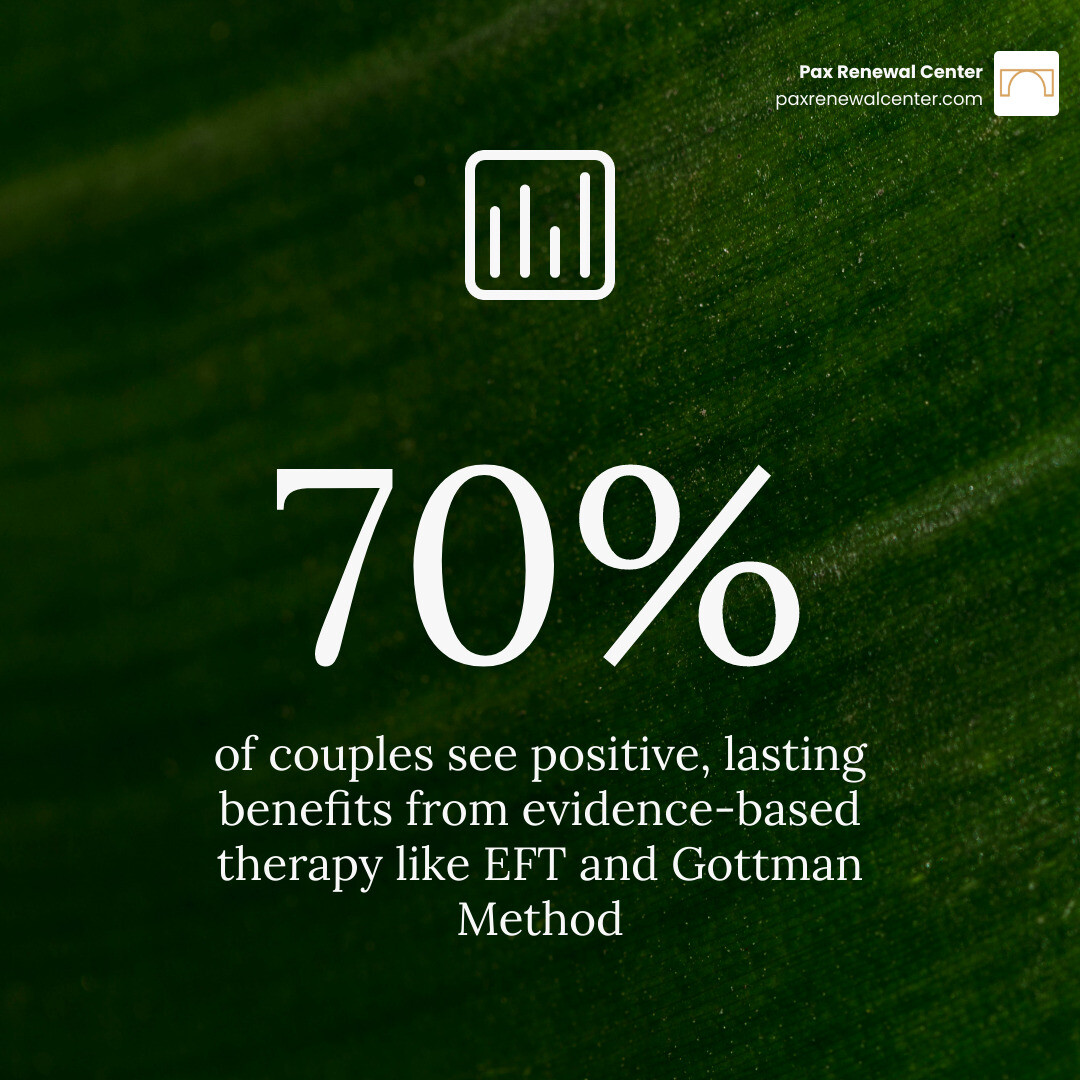
Scientific research on therapy effectiveness indicates that 70% of couples who seek therapy see positive, lasting benefits. Seeking couples counseling is not a sign of failure; it is a sign of commitment. It says, “Our relationship is valuable enough to fight for.”
Reversing the Brink of Divorce
For some, the burnout has progressed so far that they feel they are on the Brink Of Divorce. In these cases, we often recommend Discernment Counseling. This is a short-term process (usually 1–5 sessions) designed for couples where one partner is “leaning out” of the relationship, and the other is “leaning in.” The goal isn’t to fix the marriage immediately, but to gain clarity and confidence about the next steps.
We also specialize in affair recovery and intensive therapy for couples in crisis. Whether you are in Lafayette, LA, or looking for online support, there are paths to restoration that you haven’t explored yet.
Frequently Asked Questions about Relationship Exhaustion
Is relationship burnout reversible, or the end of the road?
It is absolutely reversible. Unlike workplace burnout, where the solution is often to leave the job, relationship burnout can be healed by changing the dynamics within the partnership. It requires both partners to acknowledge the exhaustion and commit to “reducing the load” together. Small, consistent changes in how you communicate and connect can rebuild the emotional bank account over time.
How do I tell my partner I feel burnt out without blaming them?
The key is using “I” statements and a “soft start-up.” Instead of saying, “You make me so tired,” try: “I’ve been feeling really overwhelmed and disconnected lately, and I miss the ‘us’ we used to be. I think I’m experiencing some relationship burnout, and I’d love for us to figure out how to recharge together.” This invites your partner to be your teammate rather than your adversary.
What is the difference between relationship burnout and depression?
While they share symptoms like fatigue and loss of interest, burnout is specifically “situational.” You might feel fine at work or with friends but feel depleted the moment you step into your home. Depression is usually “pervasive,” affecting all areas of your life. However, chronic relationship burnout can lead to clinical depression if left unaddressed. A professional therapist can help you distinguish between the two.
Conclusion
Emotional burnout in relationships is a heavy burden, but you don’t have to carry it alone. At Pax Renewal Center, our mission is to facilitate relational restoration and spiritual renewal for couples in Lafayette and beyond. We believe that no relationship is too far gone if there is a willingness to turn toward one another with grace and professional support.
Whether you need marriage counseling in Lafayette, LA, or you’re looking for the flexibility of our online programs, we are here to help you move from exhaustion to abundance.
Are you ready to see where your relationship stands? Take the Discernment Quiz today to gain clarity on your path forward. Your journey toward healing and a stronger, faith-grounded connection starts with a single step. Reach out to us at Pax Renewal Center, we look forward to walking this path with you.