

Why Faith-Based Therapy Offers Hope for Mind, Body, and Spirit
Faith based therapy combines proven psychological methods with spiritual guidance to help people heal from emotional wounds, strengthen relationships, and find deeper meaning in life. This approach recognizes that for many people, faith is central to their identity and healing journey.
Quick Overview: What You Need to Know About Faith-Based Therapy
- What it is: Professional counseling that integrates prayer, scripture, and spiritual practices with evidence-based treatments like CBT and EMDR
- Who it’s for: Anyone seeking therapy aligned with their Christian values, whether facing relationship issues, trauma, anxiety, or spiritual struggles
- How it works: Licensed therapists combine clinical training with respect for your faith tradition
- Types available: Individual therapy, couples counseling, family therapy, and pastoral counseling
- Cost: Often covered by insurance when provided by licensed professionals
The numbers tell a compelling story. Over 80% of Americans consider themselves affiliated with a religion, and research shows that publications dealing with religious and spirituality topics have increased by 600% in a ten-year period. Yet many people struggle to find mental health support that honors their faith.
Whether you’re dealing with marriage problems, childhood trauma, anxiety, or simply want personal growth rooted in your Christian values, faith-based therapy offers a path forward. It’s not about choosing between science and faith – it’s about bringing both together for complete healing.
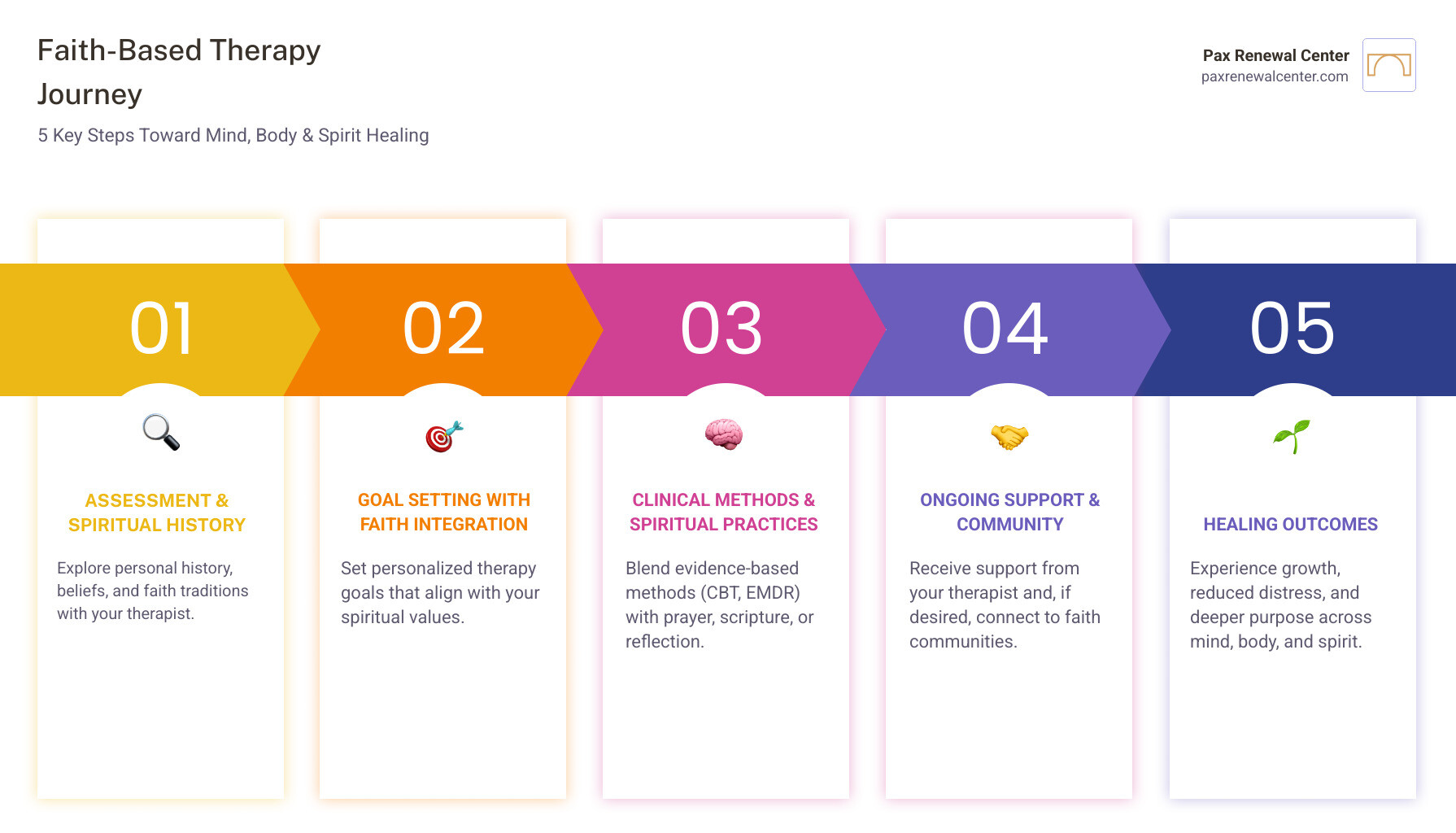
What Is Faith-Based Therapy?
At its core, faith based therapy (sometimes called Christian counseling or spiritual counseling) is professional mental health care that intentionally integrates your spiritual or religious beliefs with evidence-based psychological practices. It’s not just about saying a prayer before a session (though that’s an option!); it’s a holistic approach that honors mind, body, and spirit.
Faith-based therapists may use:
- Prayer and meditation as part of the healing process
- Scripture or religious texts for guidance and encouragement
- Evidence-based methods like Cognitive Behavioral Therapy (CBT), Eye Movement Desensitization and Reprocessing (EMDR), and Emotionally Focused Therapy (EFT)
- Pastoral counseling for those seeking support from a clergy member or spiritual leader
- Interfaith approaches that respect a wide variety of traditions
Research confirms the value of this approach. For example, studies show that religious involvement can increase life expectancy by 29% and spiritual well-being is closely linked to better outcomes in therapy.
Key Features of Faith-Based Therapy
-
Shared Values and Worldview
- Therapists and clients often share (or deeply respect) the same faith tradition, which can foster trust and openness.
- Clients don’t have to self-censor spiritual beliefs; therapy becomes a safe space for both emotional and spiritual struggles.
-
Client-Led Integration
- You set the pace for how much your faith is integrated. Some want every session to include prayer and scripture; others simply want a therapist who “gets” their worldview.
-
Clinical Licensure and Best Practices
- Licensed therapists at places like Pax Renewal Center hold advanced degrees and state licensure, ensuring you receive professional, ethical care.
- We blend clinical best practices with spiritual resources—never one at the expense of the other.
-
The Power of the Therapeutic Alliance
- The most significant factor in therapy outcomes is the strength of the relationship between therapist and client. Shared faith can deepen this bond, but empathy and skill matter most.

How Faith-Based Therapy Works: Integrating Science and Spirituality
Faith-based therapy is not about choosing between a “Bible verse” and a “psychology tool.” It’s about weaving both together for deeper healing.
We use a mind-body-spirit model of care:
- Mind: Addressing negative thought patterns with cognitive techniques (CBT, EMDR)
- Body: Managing stress and trauma with techniques like relaxation, breath work, or even nature-based spiritual practices
- Spirit: From your faith—prayer, scripture, church connection, or spiritual rituals—as key resources for resilience
How Do Evidence-Based and Faith-Based Approaches Work Together?
| Clinical Method | Secular CBT Example | Faith-Integrated CBT Example |
|---|---|---|
| Cognitive Behavioral | Challenge negative thoughts with evidence | Challenge negative thoughts with evidence and relevant scripture |
| EMDR (Eye Movement) | Process trauma using memory recall | Process trauma with memory recall, adding prayer for surrender and hope |
| EFT (Couples Therapy) | Identify negative cycles in relationships | Explore negative cycles while inviting prayer, forgiveness, or spiritual commitments |
Fun fact: Many mainstream therapies like CBT or the Gottman Method have been adapted for faith-based settings, and research shows they can be just as—if not more—effective when spiritual beliefs are honored.
Levels of Care in Faith-Based Therapy
-
Physiological Interventions
- Stress reduction, relaxation, and body-based therapies
- May include guided imagery, mindful breathing, or even incorporating sacred music
-
Cognitive Restructuring
- Challenging negative or distorted beliefs about self, others, or God
- Using scripture or religious wisdom to reframe guilt, shame, or hopelessness
-
Spiritual Practices
- Prayer, meditation, forgiveness rituals, gratitude journaling
- Involving community, church, or small groups for accountability and support

Choosing the Right Faith-Based Therapist
Finding someone who “gets” both your spiritual life and your mental health concerns can feel overwhelming, but it’s absolutely doable (and worth it!).
Here’s what to look for:
-
Licensure and Credentials
- Choose a therapist who is licensed (LPC, LMFT, etc.) and has experience in integrating faith and counseling. At Pax Renewal Center, all our therapists meet these standards.
- Ask about specialized training in both clinical and spiritual care.
-
Approach and Comfort Level
- Is the therapist comfortable integrating prayer, scripture, or spiritual practices at your request?
- Do they respect your faith background—or are they likely to impose their own beliefs?
-
Pastoral vs. Clinical Counseling
- Pastoral counselors may be clergy with spiritual training but not always licensed for mental health disorders.
- Faith-based clinical counselors are licensed therapists who integrate, but do not replace, evidence-based methods with faith principles.
-
Questions to Ask in a Consultation
- How do you integrate faith into therapy?
- Do you have experience working with people from my tradition?
- How do you handle differences in belief or practice?
- Can we balance prayer/scripture with talk therapy and tools like CBT or EMDR?
-
Sliding Scale and Online Options
- Many faith-based therapists offer sliding-scale fees or accept insurance.
- Online therapy and telehealth are available for those outside Lafayette or needing flexibility.
For more on our services, see Pax Renewal Center Counseling Services.

Finding Local & Online Providers
- Local Care: If you’re in Lafayette, LA, we offer in-person therapy for individuals, couples, and families.
- Online/Telehealth: Virtual sessions are available for those in Louisiana or who prefer online appointments. This includes group support through our Skool platform.
- Therapist Directories: Use trusted directories that specify faith-based or Christian counselors.
- Initial Consultation: Book a call or meeting to ensure comfort and fit—remember, the therapeutic relationship is key!
Benefits & Effectiveness of Faith-Based Therapy
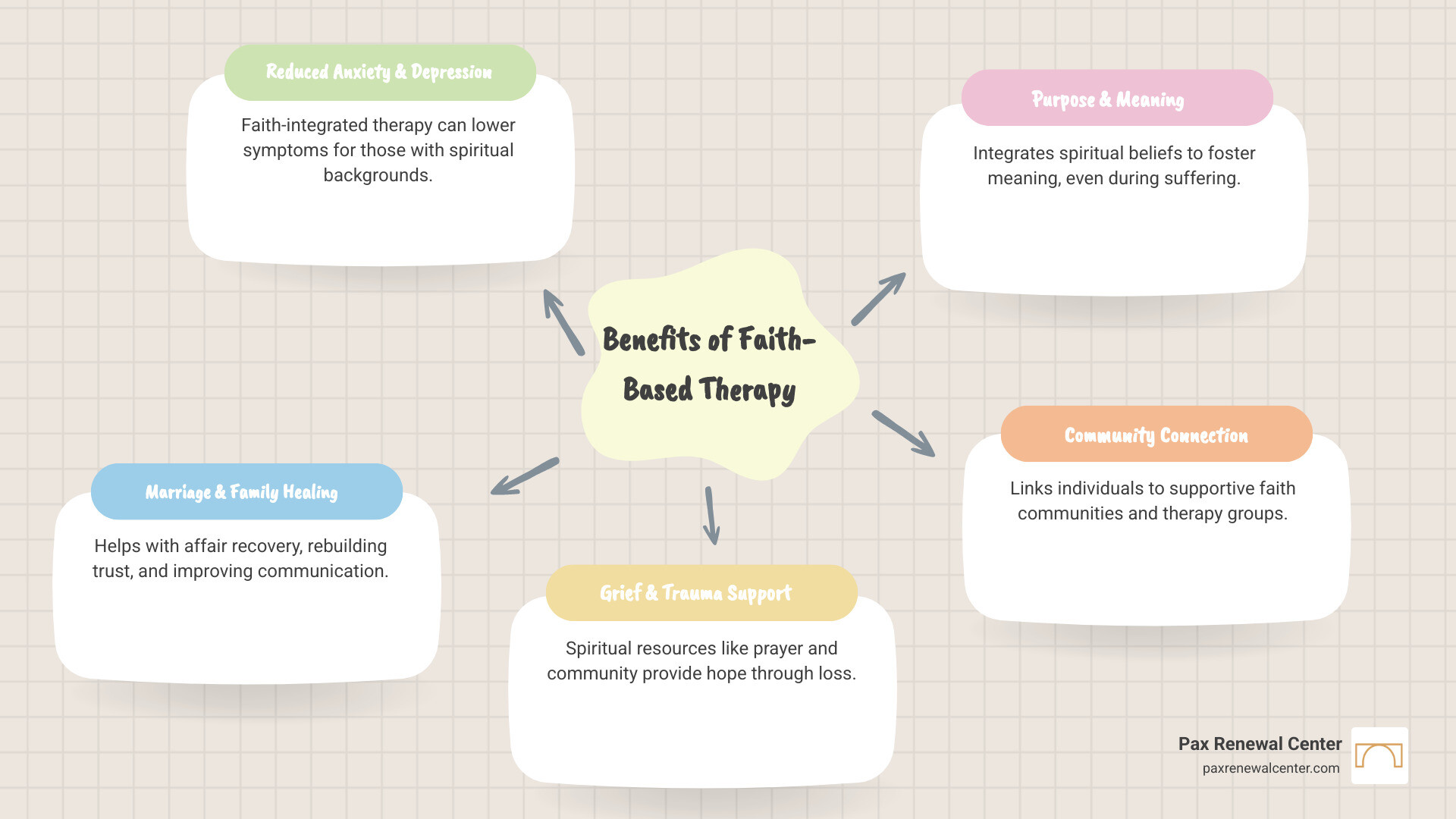
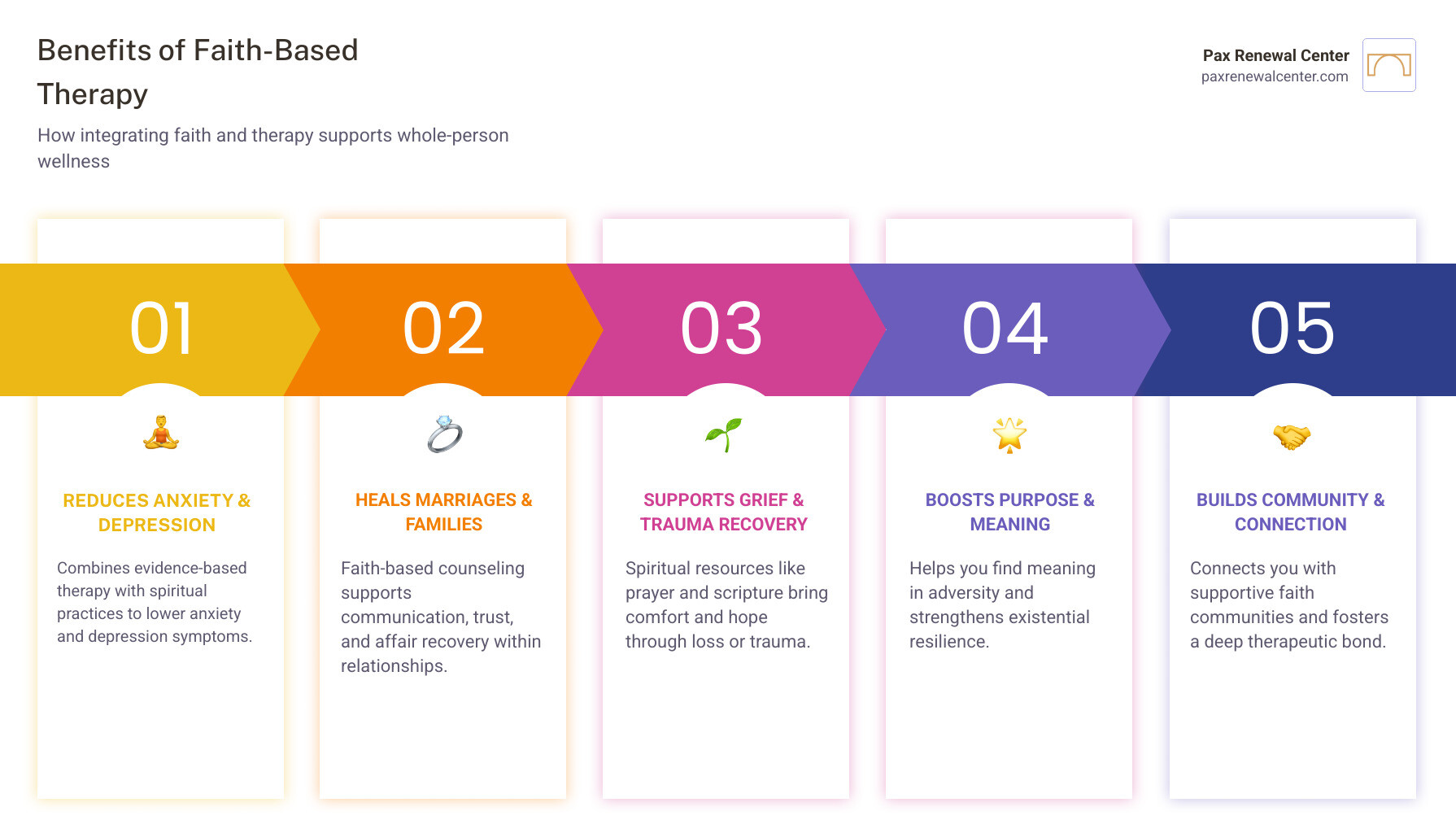
Why do so many people seek out faith-based therapy? Because it speaks to the whole person—body, mind, and spirit.
Proven Benefits
- Reduced Anxiety and Depression
- Studies show that integrating faith with therapy can reduce symptoms of depression and anxiety, especially for those already religious or spiritual.
- Healing for Marriages and Families
- Faith-based couples counseling can help with affair recovery, trust rebuilding, communication, and discernment.
- Support Through Grief and Trauma
- Spiritual resources like prayer, scripture, and faith community offer comfort and hope during loss or trauma.
- Greater Sense of Purpose and Meaning
- Therapy that honors your spiritual journey helps you find meaning even in suffering—what psychologists call “existential resilience.”
- Community and Belonging
- Faith-based therapy often connects you to faith communities, church support, or group counseling for ongoing encouragement.
- Strong Therapeutic Bond
- Shared values can build deeper trust, which is the strongest predictor of positive outcomes in therapy.
Evidence Snapshot: Does Faith-Based Therapy Work?
- Meta-analyses of nearly 100 studies show that religiously accommodated treatments are at least as effective as secular therapy, and sometimes more effective for religious clients.
- Unique spiritual benefits: Faith-based therapy is especially strong in improving spiritual well-being and sense of purpose, not just symptom relief.
- Client satisfaction: 55–74% of clients say they want to discuss spirituality in therapy; client-led faith integration leads to higher satisfaction.
For a deep dive, see Understanding a Faith-Based Approach to Counseling in the Catholic Christian Tradition.
Frequently Asked Questions about Faith-Based Therapy
Thinking about faith-based therapy but have questions? You’re not alone! Here are answers to the most common concerns:
Will my therapist try to convert me?
Absolutely not. Ethical, licensed faith-based therapists never impose their beliefs or try to “convert” clients. Therapy is a safe space for your journey—whether you’re deeply religious, questioning, or just seeking meaning. At Pax Renewal Center, we meet you where you are.
What if I’m spiritual but not religious?
Faith-based therapy isn’t just for churchgoers or those with a specific denomination. We work with people across the spectrum—from devout Catholics to the “spiritual but not religious.” The key is integrating whatever is meaningful to you, whether it’s formal prayer, meditation, or simply exploring life’s big questions.
Can insurance cover faith-based sessions?
Yes! When provided by a licensed clinical therapist, faith-based counseling is typically covered by insurance just like any other therapy. We’re happy to help you verify your benefits and understand your options.
Is everything confidential?
Yes. Confidentiality is a cornerstone of professional therapy, including faith-based sessions. Your privacy is protected by law and our ethical standards.
What if my problems aren’t ‘spiritual’?
We get it—sometimes anxiety is just anxiety, and a tough marriage is a tough marriage! Faith-based therapy simply gives you the option to bring faith into the conversation if and when it helps. We use all the tools at our disposal—clinical and spiritual—to support your healing.
Conclusion
Faith based therapy is about hope, healing, and wholeness. It’s about honoring your story—past and present, mind and spirit—and walking with you toward a future filled with meaning and renewal.
At Pax Renewal Center, we believe that you shouldn’t have to choose between excellent clinical care and spiritual support. Our team brings decades of experience, advanced training in Gottman Method, EFT, EMDR, CBT, and a deep respect for Christian and Catholic values. Whether you’re looking for couples counseling, support for trauma, help for your teen, or a place to process grief and loss, we’re here for you.
Ready to experience therapy that honors every part of you? Learn more about our faith-based counseling services and book your consultation. Healing and renewal are possible—let’s take the next step, together.