

Why Christian Counseling for Teens Offers Hope in Today’s Mental Health Crisis
Christian counseling for teens combines evidence-based therapy with biblical guidance to address the unique challenges facing today’s adolescents. Here’s what you need to know:
What Christian Counseling for Teens Includes:
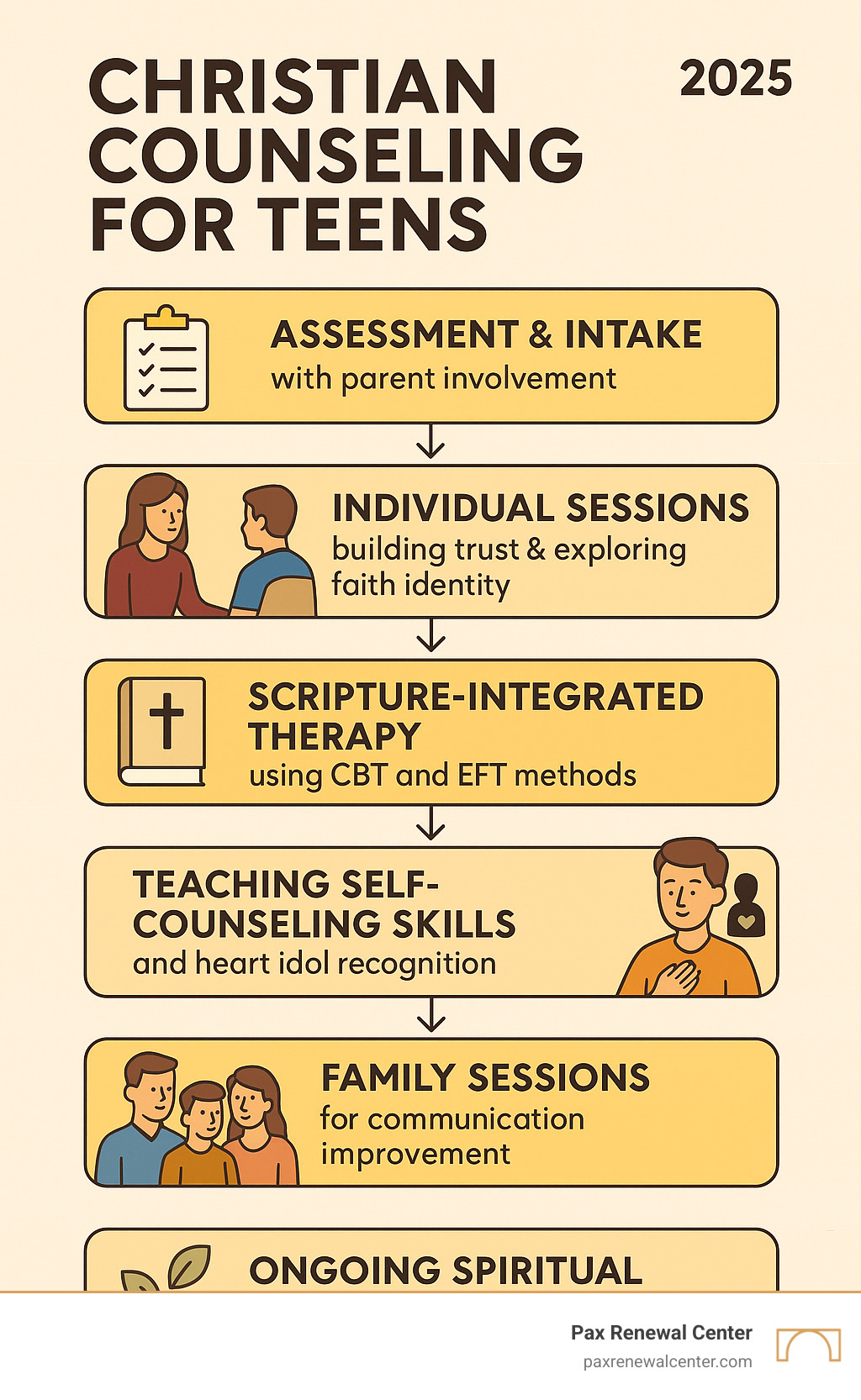
- Scripture-integrated therapy using proven methods like CBT and EFT
- Identity formation rooted in Christ rather than peer approval
- Teaching teens to recognize and replace “heart idols” with godly priorities
- Self-counseling tools based on biblical wisdom (especially Proverbs)
- Parent involvement balanced with teen confidentiality needs
Common Issues Addressed:
- Anxiety and depression (affecting 20% of teens)
- Identity confusion and peer pressure struggles
- Family conflict and communication breakdowns
- Trauma recovery and emotional regulation
- Spiritual questions and faith development
Since the pandemic, teens have faced unprecedented levels of depression, anxiety, and trauma. Research shows that early intervention through counseling significantly improves long-term emotional and spiritual health outcomes.
What makes Christian teen counseling different? It addresses both the symptoms and the soul. While secular therapy focuses on behavior change, faith-based counseling helps teens understand their identity in Christ and develop lasting hope.
Why Today’s Teens Need Faith-Integrated Care
The teenage years have always been challenging, but today’s adolescents face something unprecedented. The U.S. Surgeon General’s advisory reveals a stark reality: since the pandemic began, our teens have experienced a mental health crisis unlike anything previous generations have faced.
The pandemic created a perfect storm of stressors that hit teens particularly hard. Distance learning disrupted their social connections right when peer relationships matter most. Economic instability in families created anxiety about the future. Fear and uncertainty became daily companions.

The numbers tell a heartbreaking story. Twenty percent of teens now live with a mental health condition, and suicide has become the third leading cause of death among young people. Nearly half of middle school students report being bullied, while 84% of teens turn to the internet for answers to their deepest struggles.
But here’s what makes this crisis even more complex: many teens are experiencing what researchers call “spiritual emptiness” alongside their emotional struggles. They’re desperately searching for meaning, purpose, and identity in a culture that offers quick fixes to eternal questions. Social media promises connection but delivers comparison. Academic achievement promises security but creates pressure.
This is precisely why christian counseling for teens has become so essential. When we address only the psychological symptoms without acknowledging the spiritual dimension of human nature, we’re treating half the person. Teens who receive counseling that integrates both their emotional needs and their spiritual development show remarkable resilience that goes far beyond what traditional therapy alone can provide.
Early intervention makes all the difference. Research consistently shows that anxiety and depression respond well to therapy, especially when treatment begins promptly. But when we combine evidence-based approaches with biblical wisdom, we see teens develop what Scripture calls “the peace that passes understanding” – a deep stability that weathers life’s storms.
At Pax Renewal Center, we’ve witnessed this change countless times. Today’s teens face pressures their parents never imagined – from social media’s relentless comparison culture to academic stress that starts earlier than ever. Faith-integrated care doesn’t ignore the real psychological needs teens have. Instead, it addresses both the symptoms and the soul.
For families dealing with traumatic experiences, we provide comprehensive support and resources. You can learn more about coping with trauma through our specialized approaches that combine clinical expertise with spiritual care.
The isolation many teens experienced during the pandemic actually highlighted something profound: we’re created for connection – with others and with God. When teens refind this truth through faith-integrated counseling, they develop resilience that carries them through current struggles and prepares them for future challenges.
Christian Counseling for Teens: Core Distinctives
When parents hear about christian counseling for teens, they sometimes wonder if it’s just regular therapy with a few Bible verses sprinkled in. The truth is much deeper than that. Faith-integrated counseling recognizes that teenagers are whole people – body, mind, and spirit – and that lasting healing addresses all three dimensions.
At Pax Renewal Center, our approach rests on the understanding that God’s Word provides the ultimate framework for understanding who we are, why we struggle, and how we heal. As Psalm 34:18 beautifully promises, “The Lord is close to the brokenhearted and saves those who are crushed in spirit”. This doesn’t mean we ignore what science has taught us about the mind and emotions. Instead, we see all truth as God’s truth and weave together proven therapeutic methods with biblical wisdom.
One of the most powerful concepts we teach teens is recognizing their heart idols – those things they’re unconsciously worshipping instead of God. For many teenagers, these might be peer approval, academic success, romantic relationships, or social media validation. When these idols are threatened or fail to deliver the satisfaction they promise, anxiety and depression often follow. Helping teens identify and replace these false sources of security with trust in God creates change that goes far deeper than surface-level behavior modification.
Perhaps most importantly, we help teens find their true identity in Christ. Instead of building self-worth on achievements, appearance, or what others think, they learn they are beloved children of God. This foundation remains steady even when circumstances change or when they make mistakes.
We don’t believe families should have to choose between clinical excellence and faith integration. Our therapists are trained in evidence-based methods like Cognitive Behavioral Therapy (CBT), Emotionally Focused Therapy (EFT), and EMDR. We use these proven techniques within a biblical framework that addresses what theologians call the noetic effects of sin – the way that our separation from God affects not just our behavior but our thinking patterns themselves.
For families wanting to understand more about our faith-based approach, we integrate Catholic and Christian values with clinical best practices in ways that honor both faith and science.
How Christian Counseling for Teens Differs from Secular Therapy
While we deeply respect the contributions secular therapy has made to mental health, christian counseling for teens offers some distinctive advantages that many families find invaluable.
The foundation starts with worldview. Secular therapy often operates from a humanistic perspective that sees people as essentially good and capable of self-improvement through the right techniques or insights. Christian counseling recognizes both human dignity – we’re made in God’s image – and human brokenness – we’re all affected by sin.
Prayer integration transforms the counseling experience from simply talking about problems to bringing them before God together. Many teens tell us how meaningful it is to know their counselor is praying for them between sessions.
The hope we offer is different too. Secular therapy can provide excellent coping strategies and behavioral changes, but christian** counseling offers hope rooted in Christ’s redemptive work. Teens learn that their struggles don’t define them and that God specializes in bringing beauty from ashes.
Finally, Christian counseling connects teens to a broader community of faith that can provide ongoing support, mentorship, and accountability long after counseling ends.
When to Seek Professional Christian Counseling for Your Teen
Many parents struggle with knowing when normal teenage ups and downs cross the line into needing professional help. We often tell parents to trust their instincts – if something feels wrong, it probably is.
Behavioral changes that warrant attention include social withdrawal from friends and family, dramatic shifts in sleep or appetite, declining grades, loss of interest in activities they used to love, and increased irritability or anger outbursts.
Emotional red flags include persistent sadness lasting more than two weeks, excessive worry about various activities or events, expressions of hopelessness or worthlessness, any talk of self-harm or suicide, and extreme mood swings that interfere with daily life.
Some situations require immediate professional help: any mention of suicide or self-harm, substance abuse, eating disorders, sexual acting out, or legal troubles. Don’t wait if you’re seeing these warning signs.
For parents wanting to learn more about recognizing depression signs, we provide detailed guidance to help you know when it’s time to seek help.
Seeking counseling isn’t a sign of failure as a parent or a lack of faith. It’s wisdom in action, getting your teen the support they need to thrive.

Practical Tools & Activities Teens Can Use Now
One gift of** counseling is that students can start using what they learn right away, often the very day they leave our office.
The Self-Counseling Project
We teach teens to examine their own hearts with Scripture:
- What am I really wanting right now?
- How does that line up with what God wants?
- What would trusting Him look like?
Wise Wants & Heart Idols
Proverbs shows that desires for love, security, and purpose are good—until they turn into idols like peer approval or perfect grades. Naming that shift helps teens choose God over counterfeit hopes.
Put Off / Put On (Ephesians 4:22-24)
Identify one unhelpful pattern (“put off” anxious self-talk) and replace it with a Christ-centered alternative (“put on” confidence in God’s acceptance). Change stays specific and doable.
Scripture Journaling & Creative Expression
Writing—or drawing—truth that speaks to their situation turns Bible reading into dialogue. Art and music often express feelings words can’t.
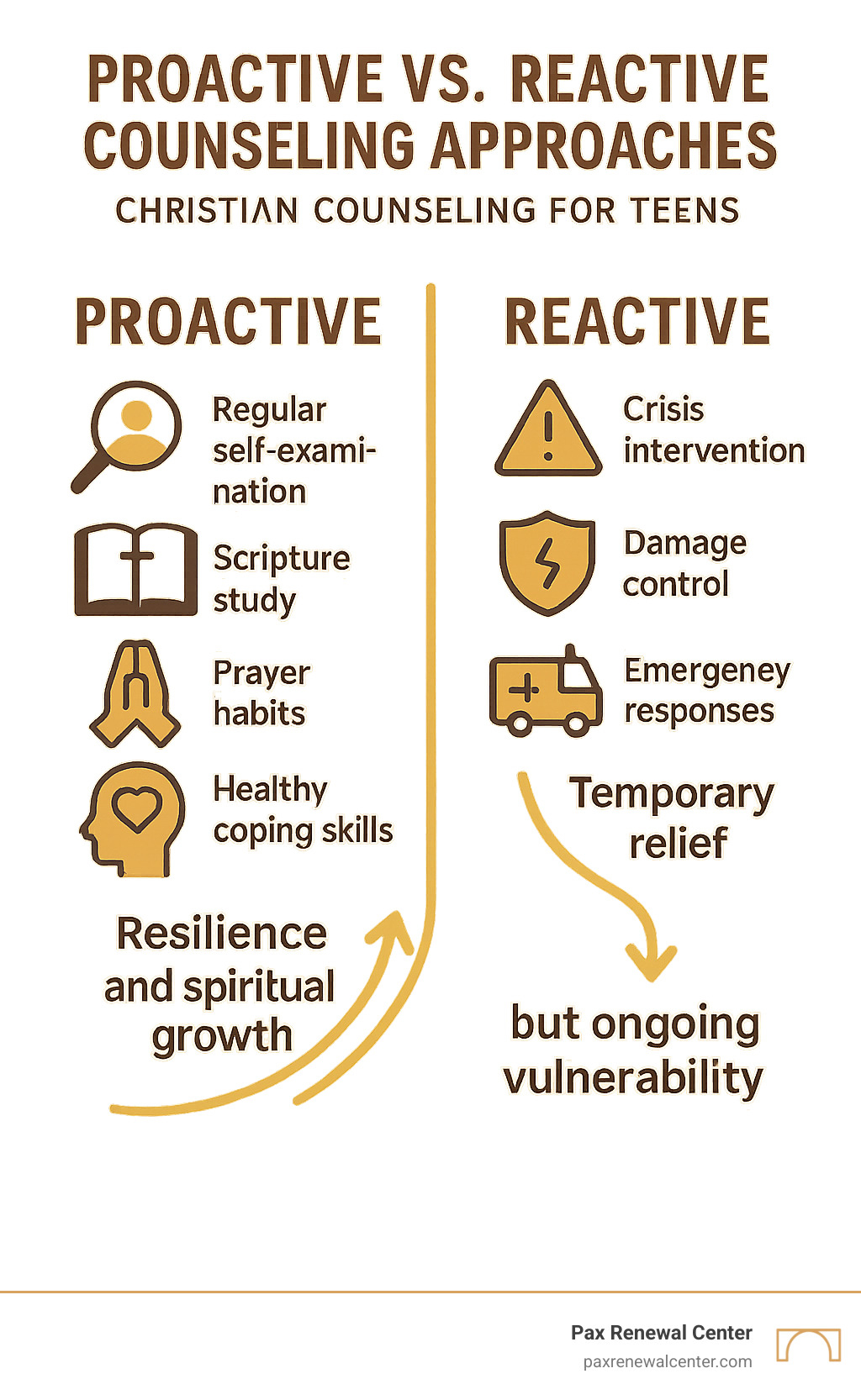
Proactive vs. Reactive Care
Daily practice builds spiritual “muscle memory” so teens are equipped before crisis strikes.
For more on how everyday habits fuel growth, explore our resources on personal development.
A Pocket Toolbox
- Matthew 7:1-5 self-examination
- Renewing the mind (Romans 12:2) to swap lies for truth
- Short “prayer starters” for anxiety, anger, or loneliness
- An accountability buddy who asks gentle questions
Five Bible verses for anxious moments:
- Philippians 4:6-7
- Matthew 6:26
- Isaiah 41:10
- 1 Peter 5:7
- Psalm 23:4
Practiced regularly, these tools move teens from crisis reaction to confident resilience.
Role of Parents, Family, and Church Community
When we work with teens at Pax Renewal Center, we quickly find something important: counseling for teens works best when the whole family is involved. A teenager doesn’t exist in isolation – they’re part of a family system, a church community, and a network of relationships that all influence their healing journey.
Building Strong Parent Partnerships is at the heart of everything we do. We’ve learned that parents are often their teen’s greatest advocates, but they need guidance on how to help effectively. We work closely with moms and dads to help them understand what their teenager is experiencing while maintaining appropriate confidentiality boundaries.
Parents learn practical skills like communicating with empathy rather than judgment. Instead of immediately jumping to solutions when their teen shares a problem, they learn to listen first. We teach them how to set healthy boundaries that promote growth – boundaries that protect without suffocating, that guide without controlling.
One of the most powerful things we help parents do is model the grace and forgiveness they want to see in their teens. When parents can admit their own mistakes and ask for forgiveness, it creates an atmosphere where teens feel safe to be honest about their struggles.
Family sessions often become turning points in the counseling process. We’ve seen families transform when they learn to express emotions in healthy ways and steer disagreements with respect. These sessions aren’t about blame – they’re about helping everyone understand their role in creating a healthier family dynamic.
The church community plays a vital role that extends far beyond Sunday morning services. Youth groups provide peer relationships with shared values. Adult mentors offer wisdom and support that complements what parents provide. Service opportunities help teens focus outward and find their God-given gifts.
We encourage what we call proactive discipleship – building spiritual practices into family life before problems arise. Families who regularly read Scripture together, serve others, and have meaningful spiritual conversations tend to weather teenage storms much better than those who only turn to faith during crises.
For more insight into how professional counseling empowerment strengthens entire families, we provide comprehensive resources for parents who want to support their teens effectively.
Supporting Your Teen Between Sessions
Here’s something every parent needs to hear: the real healing happens between our counseling sessions, not during them. The hour your teen spends in my office each week is important, but the other 167 hours of their week matter even more.
Creating communication rituals makes all the difference. Some families find their best conversations happen during car rides when there’s no pressure to make eye contact. Others find that bedtime talks, when defenses are down, become sacred spaces for honest sharing. One family I work with has “coffee dates” every Saturday morning – just parent and teen, no phones, no agenda except being together.
Boundary setting with love is an art that requires both wisdom and flexibility. Teens need structure, but they also need room to grow. We help parents learn to set clear expectations about behavior and consequences while allowing appropriate independence. This might mean establishing technology boundaries that promote healthy habits, setting curfews that balance safety with social needs, or maintaining academic expectations that encourage effort without demanding perfection.
Shared devotional time creates natural opportunities for spiritual conversations. Many families find that reading through Proverbs together – just a chapter or even a few verses – opens doors for discussing how biblical wisdom applies to current situations.
Every parent should have crisis resources readily available. Keep these numbers handy: the National Suicide Prevention Lifeline at 988, the Crisis Text Line (text HOME to 741741), and of course, 911 for emergencies. The National Suicide Prevention Lifeline provides 24/7 support when you need it most.
Perhaps most importantly, modeling grace means showing your teen the same patience and forgiveness you hope they’ll extend to others. This means admitting when you make mistakes, asking for forgiveness when you hurt your teen, showing patience during difficult seasons, and celebrating growth rather than demanding perfection.

Frequently Asked Questions about Christian Counseling for Teens
Parents usually arrive with a handful of concerns. Here are the ones we hear most often at Pax Renewal Center.
What issues can christian counseling for teens address?
Nearly every challenge common to adolescence: depression, anxiety, trauma, eating disorders, self-harm, friendship drama, bullying, academic stress, substance experimentation, questions about sexuality, faith doubt, grief, and major life transitions. The difference is that we treat both the symptoms and the spiritual questions underneath.
How are Scripture and therapy techniques integrated?
We blend evidence-based methods with biblical truth:
- CBT challenges distorted thoughts and fills the gap with Scripture (e.g., replacing “I’m worthless” with Psalm 139:14).
- EFT deepens secure attachment while grounding ultimate security in Christ.
- EMDR or exposure work can be paired with prayer or imagery of God’s protection.
The process is natural, never forced—because God is the Author of both science and faith.
Do parents participate in the counseling process?
Absolutely, but with healthy boundaries:
- Intake includes parents so we see the full picture.
- Individual sessions give teens privacy to speak freely.
- Family sessions practice new communication skills and resolve conflict.
- Parent consultations provide guidance, resources, and support.
- Safety concerns (suicidal talk, self-harm, substance abuse) override privacy, and parents are contacted immediately.
Our goal is a stronger, healthier family system where everyone grows together.
Conclusion
The teenage years don’t have to feel like an endless storm for your family. When adolescent struggles meet faith-integrated care, something beautiful happens; healing becomes possible. We’ve witnessed countless teenagers transform from despair to hope, from isolation to meaningful connection, from destructive patterns to healthy growth rooted in their identity in Christ.
Christian counseling for teens offers something desperately needed in today’s mental health landscape. It doesn’t just treat symptoms or teach coping strategies – it addresses the deepest questions of identity, purpose, and belonging that every teenager grapples with. By weaving together proven therapeutic techniques with biblical wisdom, we help teens build the kind of resilience that carries them through not just high school, but through all of life’s challenges.
At Pax Renewal Center in Lafayette, Louisiana, we understand that your teenager’s struggles affect your entire family. That’s why our team of faith-based therapists works with both the clinical and spiritual dimensions of adolescent development. We integrate evidence-based methods like CBT, EFT, EMDR, and exposure therapy with Catholic and Christian values, creating a comprehensive approach that honors both professional excellence and spiritual truth.
Here’s what we want every parent to know: seeking help is actually a sign of wisdom, not weakness. Just as you wouldn’t hesitate to take your teen to the doctor for a broken bone, emotional and spiritual wounds deserve the same level of professional care. The earlier you intervene, the more effectively we can prevent small struggles from becoming major crises.
The hope we offer isn’t just temporary relief or positive thinking. It’s hope anchored in the unchanging character of God – the One who promises to be close to the brokenhearted and to work all things together for good. This kind of hope doesn’t disappoint because it’s not dependent on circumstances or feelings.
Your teen’s story is still being written. Some of the most transformative chapters often emerge from the most difficult seasons. With skilled clinical care, biblical guidance, and the support of a faith community that truly understands, both healing and growth are not just possible – they’re probable.
You don’t have to steer this journey alone. Professional counseling for teens can provide your family with the tools, support, and hope needed to not just survive adolescence, but to emerge stronger and more connected than before.
Ready to take that first step toward hope? We’re here to walk alongside your family. Contact Pax Renewal Center today to learn more about our counseling services and begin your journey toward healing, restoration, and renewal.