

Finding the Right Depression Counseling Support
Depression counseling is structured, confidential support that helps you understand symptoms, build practical coping skills, and take small steps toward feeling more like yourself. If low mood, numbness, exhaustion, hopelessness, or loss of interest lasts two weeks or more – or starts affecting work, relationships, parenting, sleep, or daily tasks – start by looking for a licensed therapist with experience treating depression.
A good first step is to:
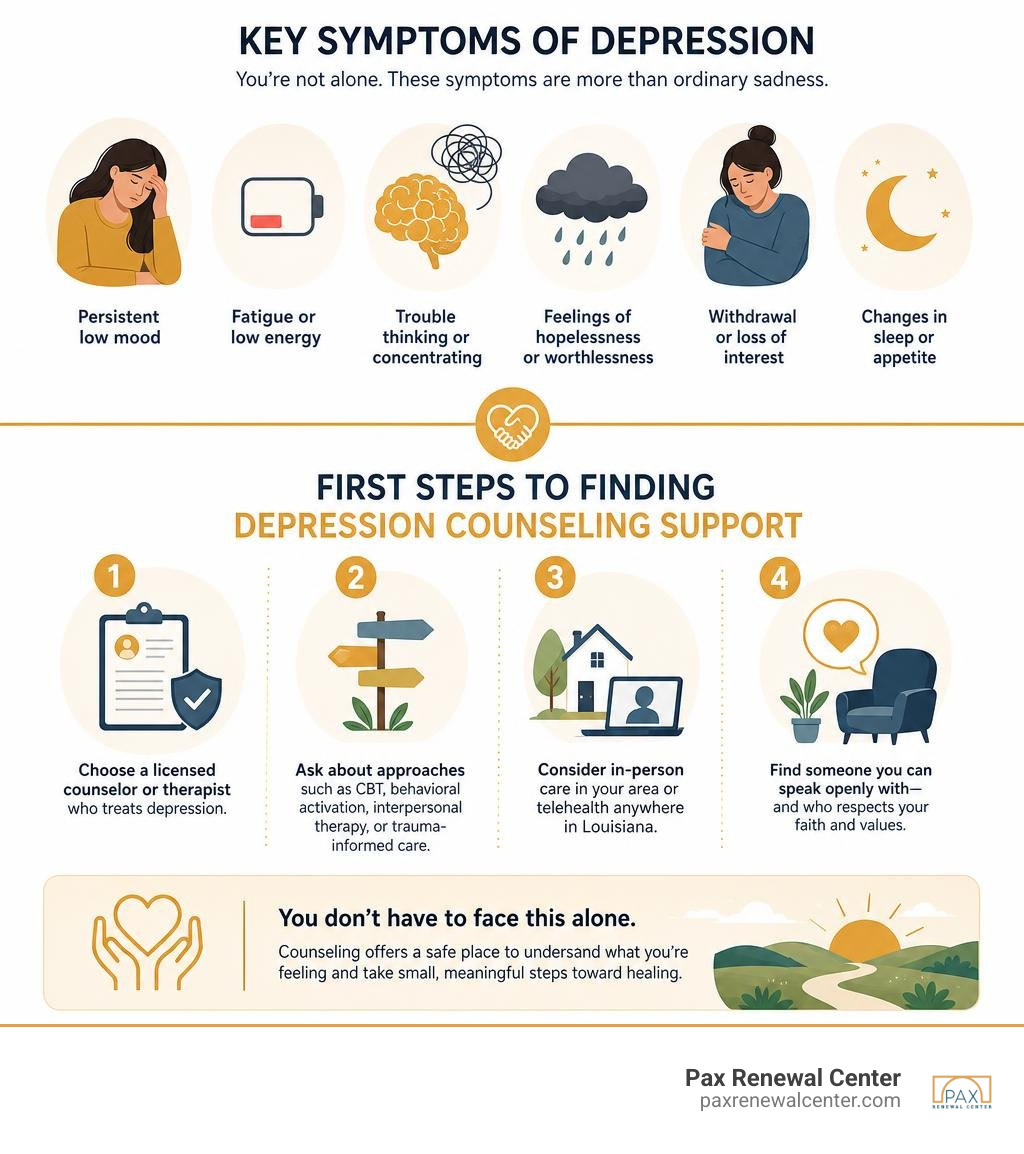
- Choose a licensed counselor, therapist, or clinical social worker who treats depression.
- Ask about approaches such as CBT, behavioral activation, interpersonal therapy, or trauma-informed care.
- Consider whether you want in-person care in Lafayette or telehealth anywhere in Louisiana.
- Look for a therapist you can speak openly with and, if it matters to you, one who can respectfully integrate Christian or Catholic faith into care.
Depression is more than ordinary sadness. It can show up as irritability, physical fatigue, trouble thinking, withdrawal, or feeling emotionally flat. Counseling gives you a place to name what is happening and a plan for responding to it. You do not need a formal diagnosis or the perfect words before scheduling a first conversation.
Recognizing the Core Signs: Temporary Struggles vs. Clinical Conditions
Depression affects over 280 million people worldwide, and roughly 1 in 4 Americans suffers from depression at some point in life. Despite how common it is, people frequently wonder whether they are simply experiencing a rough week or carrying a clinical condition that requires professional help.
Identifying Key Physical, Cognitive, and Emotional Symptoms
Clinical depression alters how the brain and body process daily life. It is not just feeling “down”; it creates noticeable shifts across several domains:
- Emotional Numbness & Anhedonia: A profound loss of interest or pleasure in activities you once enjoyed, along with feeling disconnected or emotionally flat.
- Hopelessness & Worthlessness: A persistent belief that circumstances will never improve, accompanied by excessive guilt or harsh self-criticism.
- Chronic Fatigue & Physical Slowing: A heavy, leaden feeling in the limbs, where even brushing your teeth or getting out of bed demands monumental effort.
- Cognitive Fog: Difficulty concentrating, making decisions, or remembering routine information at work or home.
- Sleep & Appetite Disruptions: Insomnia, waking up at 3:00 AM unable to return to sleep, oversleeping, or significant changes in appetite and weight.
These symptoms can look different across age groups. For example, teenagers often display irritable moods, withdrawal from family activities, or academic decline rather than overt sadness. You can learn more about these patterns in our guide on dealing with adolescent depression strategies.
When to Seek Professional Depression Counseling vs. Managing a Rough Patch
Everyone experiences grief, disappointment, and stress. A rough patch typically resolves as circumstances improve or after getting rest and social support. However, clinical depression tends to settle in and compound.
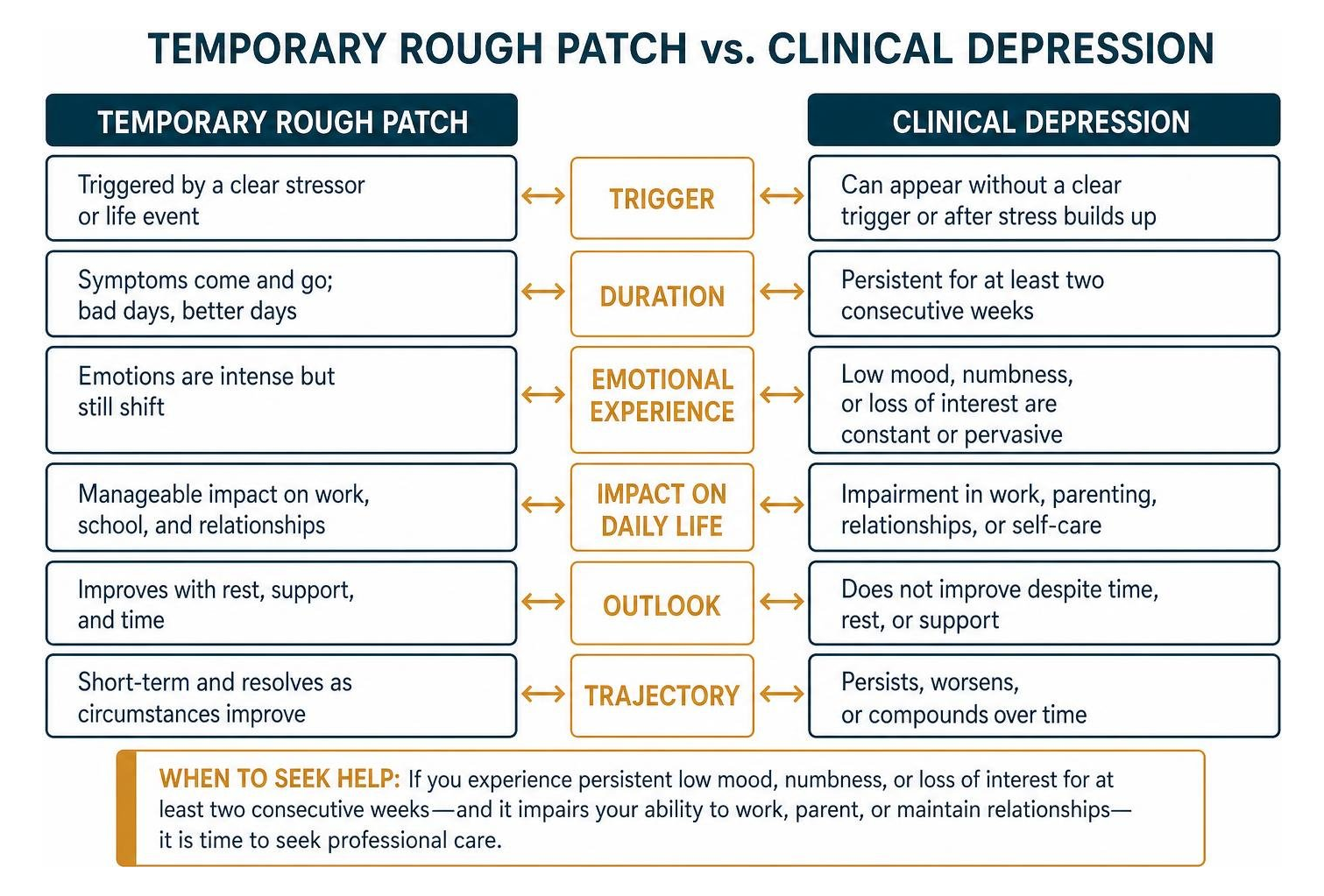
The standard clinical benchmark is the two-week marker: if you experience persistent low mood, numbness, or loss of interest for at least two consecutive weeks—and it impairs your ability to work, parent, or maintain relationships—it is time to seek professional care. Research shows that the heritability of depression is roughly 40% to 50%, meaning genetic vulnerability often interacts with environmental stressors to lock the nervous system into an overactive stress response.
Crisis Safety and Immediate Help: If you or someone you love is experiencing thoughts of suicide, immediate help is available. You are not alone, and there is no shame in reaching out:
- 988 Suicide & Crisis Lifeline: Call or text 988 (available 24/7, free, and confidential).
- Louisiana Resources: Connect with state-level mental health initiatives through the Louisiana Office of Behavioral Health.
- Emergency Care: Call 911 or visit the nearest hospital emergency room if immediate safety is at risk.
Evidence-Based Modalities Used in Depression Counseling
Understanding How Depression Counseling Differs from General Talk Therapy
While general talk therapy provides an open space to vent and explore thoughts, depression counseling is an active, targeted clinical intervention. It focuses on disrupting the neurobiological and behavioral feedback loops that keep depressive states alive.
General therapy might explore your week casually, but depression counseling targets core schemas (deeply held negative beliefs such as “I am broken” or “Nothing matters”), uses structured symptom monitoring, and implements concrete behavioral interventions to reignite energy and agency. Men, in particular, often internalize depressive symptoms as irritability, workaholism, or emotional shutdown; our resource on understanding men’s mental health explores how structured therapeutic goals help break these destructive cycles.
Proven Therapeutic Approaches: CBT, IPT, EMDR, and Faith Integration
Clinical research highlights several proven methodologies for relieving depression:
- Cognitive Behavioral Therapy (CBT): Focuses on identifying and reframing distorted, automatic thoughts that fuel feelings of worthlessness. Research shows that cognitive therapy is at least as effective as antidepressant medication in alleviating depressive symptoms and significantly more effective in preventing future relapses.
- Behavioral Activation (BA): A component of CBT that systematically schedules manageable, rewarding activities to stimulate dopamine pathways and overcome inertia.
- Interpersonal Psychotherapy (IPT): Addresses social conflicts, role transitions, unresolved grief, and relational isolation that trigger or sustain depressive episodes.
- Dialectical Behavior Therapy (DBT) Skills: Teaches emotional regulation, distress tolerance, and mindfulness techniques to handle overwhelming waves of despair.
- Eye Movement Desensitization and Reprocessing (EMDR): When depression stems from unprocessed trauma, chronic adverse childhood experiences, or major life shocks, EMDR helps reprocess the underlying memories driving the emotional distress.
- Faith-Based & Christian Counseling: For clients who desire it, integrating clinical psychology with Christian values, Scripture, and prayer provides deep spiritual renewal alongside emotional relief. Explore how we integrate these elements in our faith-based therapy guide.
For a broader clinical overview of diagnostic standards and medical protocols, review the Mayo Clinic clinical overview on depression diagnosis and treatment.
| Therapy Modality | Core Focus | Best Suited For | Primary Benefit |
|---|---|---|---|
| Cognitive Behavioral Therapy (CBT) | Automatic thoughts & cognitive distortions | Negative self-talk, catastrophic thinking | Long-term relapse prevention |
| Behavioral Activation (BA) | Routine, scheduling, activity pacing | Severe fatigue, numbness, lack of motivation | Restores daily functional energy |
| Interpersonal Therapy (IPT) | Relational conflicts & life transitions | Grief, marriage strain, social isolation | Improves communication & support |
| EMDR & Trauma Therapy | Reprocessing adverse past experiences | Trauma-induced depression, deep shame | Clears nervous system blockages |
| Christian / Faith-Based Therapy | Clinical tools integrated with spiritual truth | Clients seeking faith-aligned healing | Restores holistic hope & purpose |
Navigating Your Treatment Journey: Formats, Medication, and Timelines
In-Person vs. Telehealth Options and Treatment Durations
One of the greatest barriers to depression treatment is the fatigue that makes leaving the house feel daunting. Fortunately, modern clinical care offers flexible delivery options.

Studies show that online cognitive-behavioral therapy (e-CBT) is just as effective—and in some studies slightly more effective—than face-to-face therapy for reducing depressive symptoms. Virtual care removes travel friction, allowing you to connect with a licensed therapist from the privacy and comfort of your home.
When beginning counseling, understanding the timeline helps set realistic expectations:
- Early Progress (Sessions 1–4): Establishing safety, conducting assessments, and identifying behavioral patterns.
- Noticeable Symptom Relief (Sessions 6–8): Most clients begin experiencing measurable shifts in energy, perspective, and emotional stability within 6 to 8 sessions.
- Full Treatment Course (Sessions 14–16): In cognitive therapy, a complete course of 14 to 16 sessions solidifies coping mechanisms, rewires negative core schemas, and builds a comprehensive relapse prevention plan.
If you are looking for local providers in Acadiana, take a look at our complete walkthrough on finding the best therapists in Lafayette LA.
Combining Medication Management with Holistic Self-Care
For moderate to severe depression, a combined approach often yields the best outcomes. Antidepressant medications (such as SSRIs or SNRIs) help regulate neurotransmitter activity in the brain, lifting the heaviest physiological fog so you can actively engage in the cognitive and emotional work of therapy.
If medication is appropriate, our therapists collaborate closely with your primary care physician or a psychiatric nurse practitioner (PMHNP). Alongside clinical therapy, small daily habits support nervous system recovery. You can read our practical guide on 10 simple ways to improve mental health without medication to learn how gentle movement, morning sunlight, sleep hygiene, and nutritional adjustments support therapeutic progress.
How to Choose the Right Therapist and Prepare for Your Intake
Evaluating Credentials, Costs, and Therapeutic Fit
Finding the right clinician makes a significant difference in your recovery. Look for fully licensed mental health professionals who hold credentials such as:
- LPC (Licensed Professional Counselor)
- LMFT (Licensed Marriage and Family Therapist)
- LCSW (Licensed Clinical Social Worker)
- Board-Approved Supervisors (LPC-S, LMFT-S) who have advanced clinical experience.
When researching therapists, ask about their experience treating depression, their specific modalities (like CBT, EFT, or EMDR), and their approach to session goals. Depression also places heavy strain on relationships; if your marriage is feeling the weight of one partner’s low mood, our resource on supporting a spouse with depression provides actionable guidance for couples navigating this together.
Frequently Asked Questions About Depression Therapy
How long does depression counseling typically take to show noticeable results?
Most clients begin to notice meaningful relief within 6 to 8 sessions of consistent, weekly therapy. A comprehensive course of cognitive-behavioral treatment typically spans 14 to 16 sessions. The exact duration depends on the severity of the depression, whether co-occurring anxiety or trauma is present, and how actively coping strategies are practiced between sessions.
Is online counseling as effective as in-person therapy for depression?
Yes. Clinical trials indicate that telehealth counseling—especially video-based CBT—is just as effective as in-person therapy for treating depression. Virtual counseling offers added accessibility for individuals struggling with the intense fatigue, low motivation, or scheduling constraints that often accompany depressive episodes.
What happens during an initial depression counseling intake session?
Your first session is a gentle, collaborative assessment. Your counselor will ask about your current symptoms, medical history, family dynamics, and major life stressors. You will explore what goals you want to achieve and begin establishing a personalized treatment plan. You do not need to have everything figured out before you arrive; your therapist is there to guide the conversation step by step.
Conclusion
Depression can make you feel entirely isolated, but it is one of the most treatable mental health conditions available to modern clinical psychology. You do not have to carry the heavy weight of exhaustion, numbness, or despair by yourself.
At Pax Renewal Center in Lafayette, Louisiana, our experienced team provides compassionate, evidence-based care tailored to your unique journey. Whether you are seeking individual depression therapy, trauma recovery through EMDR, marriage restoration, or spiritually grounded Christian counseling, we are here to help you rediscover hope and lasting renewal. Explore our full range of faith-based counseling services to take your first step toward healing today.