

Why a Treatment Plan for Infidelity PDF Is the First Step Toward Healing
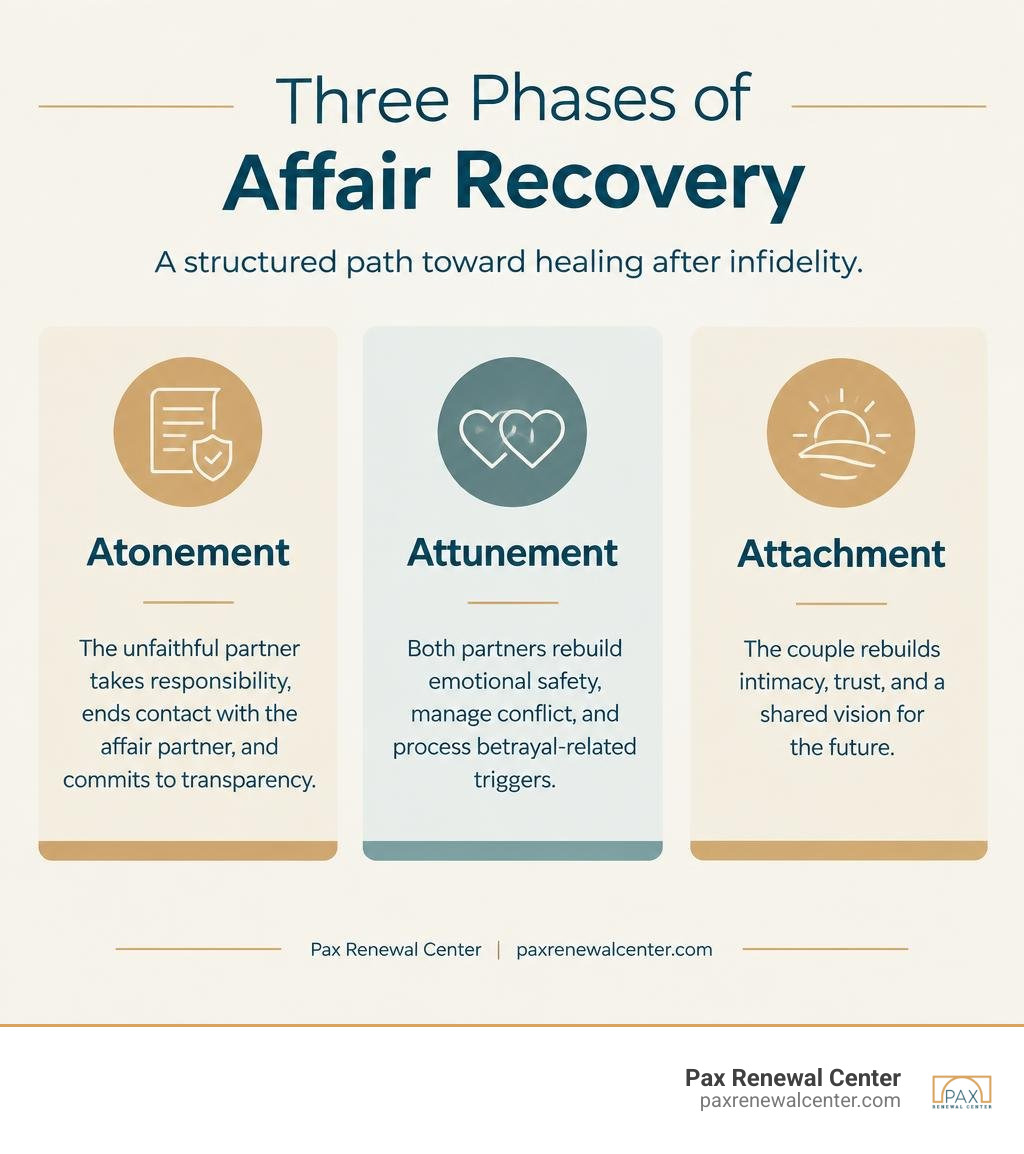
A treatment plan for infidelity pdf gives couples and individuals a structured, evidence-based roadmap for recovering from betrayal. Here is a quick overview of what these resources typically cover:
- Atonement – The unfaithful partner takes full responsibility, ends all contact with the affair partner, and commits to transparency.
- Attunement – Both partners work to rebuild emotional safety, manage conflict, and process trauma triggers.
- Attachment – The couple rebuilds intimacy, trust, and a shared vision for the future.
Infidelity is widely recognized as one of the most painful experiences a committed relationship can face. It is not just a sexual betrayal. It is a rupture of the entire relationship contract — the mutual trust, respect, and safety that a partnership is built on.
Research confirms what most couples already feel: the discovery of an affair often triggers responses that closely mirror trauma. Shock, obsessive thoughts, emotional swings, and a profound sense of loss are all common. These are normal reactions to a devastating event.
Yet recovery is possible. Studies show that with the right structure and support, many couples not only survive infidelity — they build a stronger relationship than they had before.
That is exactly what a well-designed treatment plan is built to do.
I’m Dan Jurek, M.A., LPC-S, LMFT-S, founder and clinical director of Pax Renewal Center in Lafayette, Louisiana, with over 35 years of experience using evidence-based and faith-integrated approaches — including EFT and the Gottman Method — to help couples heal from betrayal using a structured treatment plan for infidelity pdf. Whether you are in the middle of a crisis or just beginning to consider your options, this guide will walk you through the tools and frameworks that make real recovery possible.
Core Principles of an Effective Treatment Plan for Infidelity PDF
When we talk about recovering from betrayal, we aren’t just looking for “tips” or “advice.” We are looking for a clinical framework that has been proven to work. At Pax Renewal Center, we lean heavily on the Gottman Method, which is based on over 40 years of research with thousands of couples.
One of the most important things to understand is the Sound Relationship House. This model shows that trust and commitment are the two “weight-bearing walls” that hold up every other part of a relationship—friendship, intimacy, and shared meaning. When infidelity occurs, these walls crumble. A professional treatment plan for infidelity focuses on rebuilding these walls from the ground up.
Another core principle is the Intersystems Approach. This means we don’t just look at the “act” of the affair. We look at the individual factors (like personal history or trauma), the relational factors (communication gaps or marital drift), and even intergenerational factors (how your parents handled conflict).
Key principles of a solid recovery plan include:
- Emotional Safety First: You cannot heal if you don’t feel safe. This requires immediate boundaries and absolute honesty.
- The Trust Metric: Trust isn’t a vague feeling; it’s a measurable outcome of consistent, transparent behavior over time.
- Evidence-Based Care: We use methods like Emotionally Focused Therapy (EFT) and Cognitive Behavioral Therapy (CBT) to address the deep attachment injuries caused by betrayal.
The Three Essential Phases of Infidelity Recovery
Recovery isn’t a straight line—it’s more like a journey with specific milestones. Most clinical guides, including the Gottman Trust Revival Method, break this down into three distinct phases.

Phase 1: Atonement
This is the “crisis management” phase. The goal here is not to fix the marriage yet, but to stop the bleeding. The unfaithful partner must provide a full, honest disclosure (without being asked to provide graphic sexual details that can cause further trauma). They must take 100% accountability without saying “I did this because you were cold.” While there may be issues in the marriage to address later, the choice to betray is solely the responsibility of the one who strayed.
Phase 2: Attunement
Once the initial “explosion” has settled, we move into attunement. This is where the couple learns to talk about their feelings without spiraling into a fight. We focus on achieving emotional satisfaction by learning how to “turn toward” each other instead of away. This phase involves processing the affair’s “why” and learning how to handle conflict constructively.
Phase 3: Attachment
The final phase is about rebuilding the bond. This is where we look at the future. How do we prevent this from happening again? What are our new boundaries? We often use resources like an Affair Recovery Guide to create a “relapse prevention plan.” This ensures that the couple has the tools to stay connected even when life gets stressful.
Managing the Initial Crisis with a Treatment Plan for Infidelity PDF
The first 30 to 90 days after discovery are often the most volatile. It’s normal to feel like your world has ended. During this time, a treatment plan for infidelity pdf serves as an “emergency kit.”
- Emotional Stabilization: We focus on grounding techniques to manage flashbacks and panic attacks.
- Commitment Assessment: Sometimes, one or both partners aren’t sure if they want to stay. In these cases, we might recommend discernment counseling to help the couple decide whether to work on the marriage or move toward a healthy separation.
- Transparency Rules: This often includes “open phone” policies, sharing passwords, and check-ins. While this might feel like “policing,” it is a temporary and necessary step to rebuild the “Trust Metric.”
- Impact Letters: The betrayed partner writes a letter explaining the depth of their pain, and the unfaithful partner responds with a letter of sincere, non-defensive apology.
Practical Tools and Worksheets for Individual and Couple Healing
Healing requires more than just talking; it requires “doing.” A structured treatment plan for infidelity pdf often includes worksheets to help you process complex emotions.
One of the most helpful tools is Trigger Tracking. Triggers are people, places, or thoughts that bring the pain of the affair back to the surface.
| Internal Triggers (Memories/Thoughts) | External Triggers (Places/People) |
|---|---|
| Intrusive thoughts about the affair partner | Driving past a specific restaurant or hotel |
| Feeling “not good enough” or low self-esteem | Seeing a certain name on a phone screen |
| Dreams or nightmares about the betrayal | Hearing a song that was popular during the affair |
| Physical sensations of anxiety or chest tightness | Seeing the “other person” on social media |
To manage these, we teach the DBT PLEASE skill, which focuses on physical health to stabilize emotional health:
- PL: Treat Physical Illness
- E: Balanced Eating
- A: Avoid mood-altering substances
- S: Balanced Sleep
- E: Exercise
Other essential tools found in a Coping with Infidelity Guide include the “Shame Monster” exercise—where the unfaithful partner draws and externalizes their shame to keep it from turning into defensiveness—and daily emotion tracking to help both partners communicate their needs clearly.
Rebuilding Trust Using a Structured Treatment Plan for Infidelity PDF
Trust is built in very small moments. It’s the “sliding door” moments where you choose to be honest instead of secretive, or present instead of distracted.
Rebuilding trust requires:
- Verification: The unfaithful partner must be willing to provide evidence of their whereabouts and actions.
- Behavior Change: If the affair happened with a co-worker, the behavior change might mean finding a new job or cutting off all non-essential contact.
- Preventing Marital Drift: We work on preventing the “drift” that often precedes affairs by scheduling regular “State of the Union” meetings.
- The Forgiveness Process: Forgiveness is not a one-time event; it’s a decision to release the “debt” of the betrayal so it no longer poisons the future. This requires deep empathy and humility from the partner who strayed.
Overcoming Obstacles and Integrating Professional Support
Recovery is rarely a smooth upward curve. There will be setbacks. You might have a great week followed by a terrible day because of a sudden trigger. This is normal.
Common obstacles include:
- Ongoing Deception: If more lies come out later (the “trickle-truth” effect), it resets the recovery clock to zero.
- Shame: If the unfaithful partner gets stuck in shame, they often become defensive, which prevents the betrayed partner from feeling heard.
- Intergenerational Patterns: Sometimes we subconsciously repeat the mistakes our parents made.
While self-help PDFs are a great start, they are often not enough for deep-seated trauma. This is where couples counseling in Lafayette, LA becomes vital. At Pax Renewal Center, we offer specialized marriage intensives for couples in crisis. These intensives provide months of therapy in just a few days, helping you break through the “stuck” points and establish a clear path forward.
Frequently Asked Questions about Infidelity Treatment
How long does infidelity recovery typically take?
Healing from betrayal trauma is a long-term process. Generally, it takes between 18 months and 3 years for the betrayed partner to feel a sense of “normalcy” again. For the partner who strayed, their own recovery and character growth can take 3 to 5 years. It is a marathon, not a sprint, and it requires immense patience from both sides.
Can a marriage really survive after an affair?
Yes. In fact, Gottman research shows that couples who go through a structured recovery process have an 86% survival rate if the betrayer is willing to answer questions and remain transparent. Many couples find that the “Marriage 2.0” they build after the affair is more honest, intimate, and resilient than the original relationship.
When should we seek professional counseling versus self-help?
If you find yourselves having the same circular arguments, if there is ongoing deception, or if the betrayed partner is experiencing severe PTSD symptoms (flashbacks, inability to function at work), it is time for clinical intervention. If you feel you are on the brink of divorce, a specialized therapist can provide the safety and structure needed to navigate the crisis.
Conclusion
Infidelity doesn’t have to be the end of your story. While the pain is real and the road is long, a structured treatment plan for infidelity pdf provides the framework you need to move from crisis to connection.
At Pax Renewal Center in Lafayette, Louisiana, we are dedicated to your emotional healing, relational restoration, and spiritual renewal. Whether you are looking for local marriage counseling in Lafayette or you want to join our online community for expert-led support, we are here to help you rebuild.
You don’t have to walk this path alone. There is a way back to trust, and it starts with the first step toward healing today.