

A Practical Start to Online Counseling for Couples
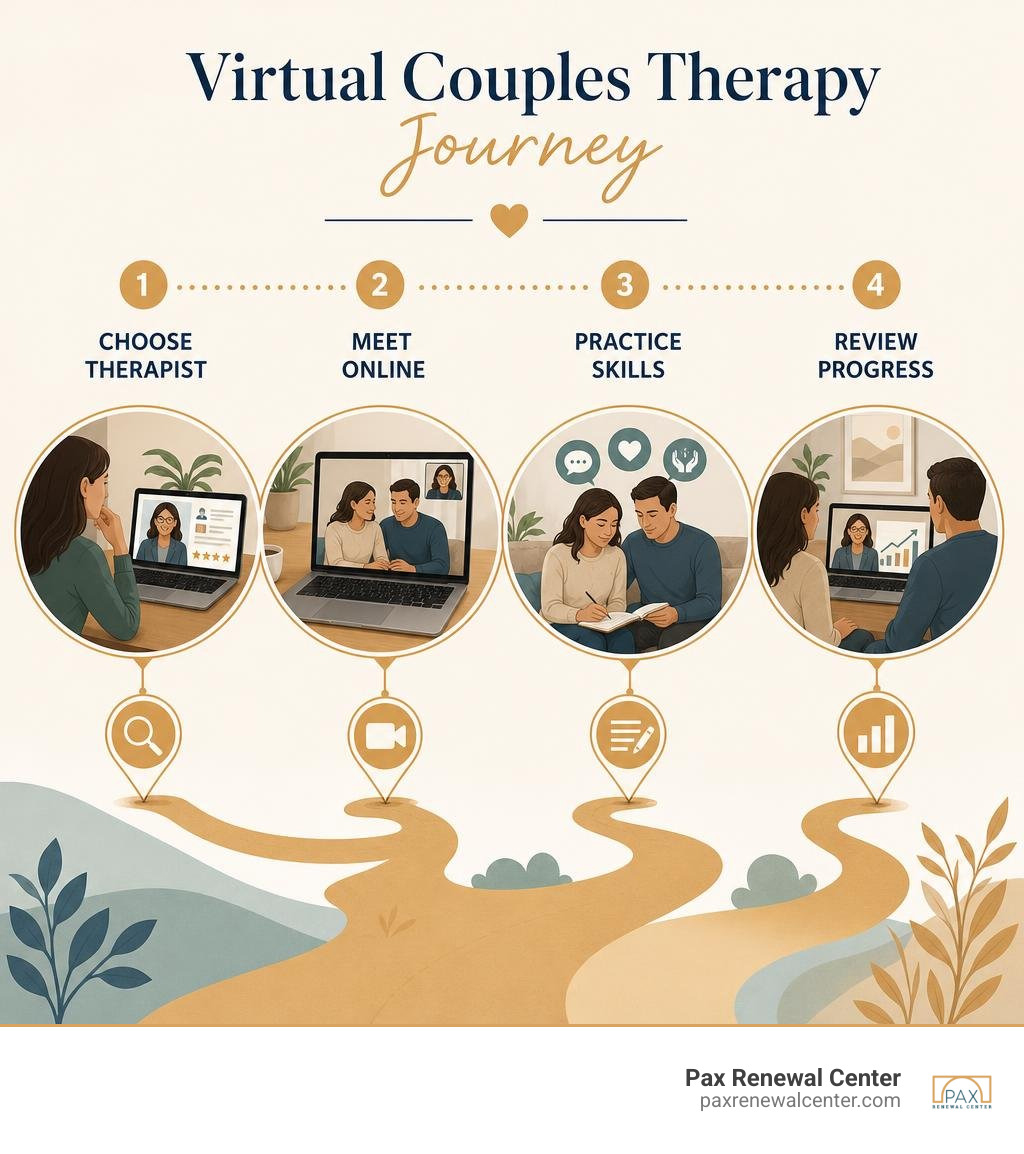
Online counseling for couples can be a strong option when both partners want help with communication, trust, conflict, or emotional distance but need more flexibility than office visits allow. Look for a licensed couples therapist, choose a private place for video sessions, complete the intake honestly, and ask whether the therapist uses proven approaches such as Emotionally Focused Therapy, the Gottman Method, or CBT.
Virtual therapy removes travel time and can make regular sessions easier for busy Louisiana couples. It can also work when partners are in different places. Still, it is not right for every situation. High-risk abuse, immediate safety concerns, or a mental-health crisis require local emergency help and specialized care.
The best results rarely come from the video platform alone. They come from a good therapist match, enough session time for both people to be heard, and a shared willingness to practice new skills between meetings. Couples should also confirm privacy practices, session format, and how easily they can change therapists if the fit is not right.
Online counseling for couples terms to learn:
Understanding Online Counseling for Couples: Benefits and How It Works
Modern relationships carry unique pressures, and finding two open hours to drive across town, sit in an office, and return home during rush hour often prevents partners from seeking timely support. Virtual relationship care bridges that gap by bringing structured, clinical interventions directly into your home environment.
The core mechanics of virtual care mirror office-based therapy: you and your partner meet with a licensed clinician via a secure video feed to address relational distress, dismantle destructive interaction cycles, and cultivate emotional safety. However, the shift to a digital format introduces practical advantages and unique clinical nuances.
Our team often sees that couples communicate more authentically when seated on their own living room sofa. Being in a familiar, comfortable setting reduces the clinical intimidation factor, making it easier to discuss vulnerable topics such as intimacy, parenting friction, and financial stress.
| Factor | Virtual Couples Therapy | Traditional In-Person Therapy |
|---|---|---|
| Scheduling Flexibility | High; accommodates lunch breaks, childcare, or differing work shifts | Moderate; requires factoring in commute and waiting room times |
| Travel Requirements | Zero commute; accessible from home or separate locations | Requires dedicated travel to a clinic or office |
| Comfort & Environment | Familiar home atmosphere; relaxed personal setting | Neutral, professional office space |
| Therapeutic Alliance | Strong; relies on clear video connection and active engagement | Strong; built on shared physical presence |
| Crisis Suitability | Best for mild-to-moderate conflict and growth goals | Essential for high-risk situations, acute safety risks, or severe crisis |
Building a robust therapeutic alliance remains just as achievable through a screen as it is across an office table. Research shows that therapist neutrality, empathetic attunement, and evidence-based frameworks translate seamlessly over video. For couples balancing careers, family obligations, or unique scheduling demands, exploring an Online Relationship Therapy Complete Guide can help determine if the digital format fits your daily routine.
Key Clinical Modalities and Approaches
The platform hosting your call is simply the delivery mechanism; what creates lasting transformation is the clinical modality guiding your sessions. Licensed therapists draw from proven methodologies adapted for the virtual environment:
- Emotionally Focused Therapy (EFT): Grounded in adult attachment theory, EFT helps couples identify the underlying fears and unmet emotional needs driving surface-level arguments. Therapists de-escalate reactive cycles (like the classic pursue-withdraw pattern) and guide partners toward secure, vulnerable emotional bonding.
- The Gottman Method: Based on decades of empirical research, this approach offers structured assessments and actionable exercises to dismantle the “Four Horsemen” (criticism, contempt, defensiveness, and stonewalling). Couples learn emotional attunement, repair attempts, and shared meaning. For an in-depth breakdown of this framework, consult our Gottman Marriage Counseling Complete Guide.
- Cognitive Behavioral Interventions (CBT): Cognitive behavioral approaches target distorted thinking patterns and assumptions that trigger negative emotional reactions between spouses. Partners learn to reframe cognitive misinterpretations, establish healthy boundaries, and practice constructive conflict resolution.
Clinicians may also integrate specialized frameworks recognized by professional associations such as the American Association for Marriage and Family Therapy and other evidence-based modalities to support unique relational dynamics.
Evaluating Session Formats in Online Counseling for Couples
Not all virtual counseling formats follow the same rhythm. Finding the right structure depends on the complexity of your relationship challenges and your available time:
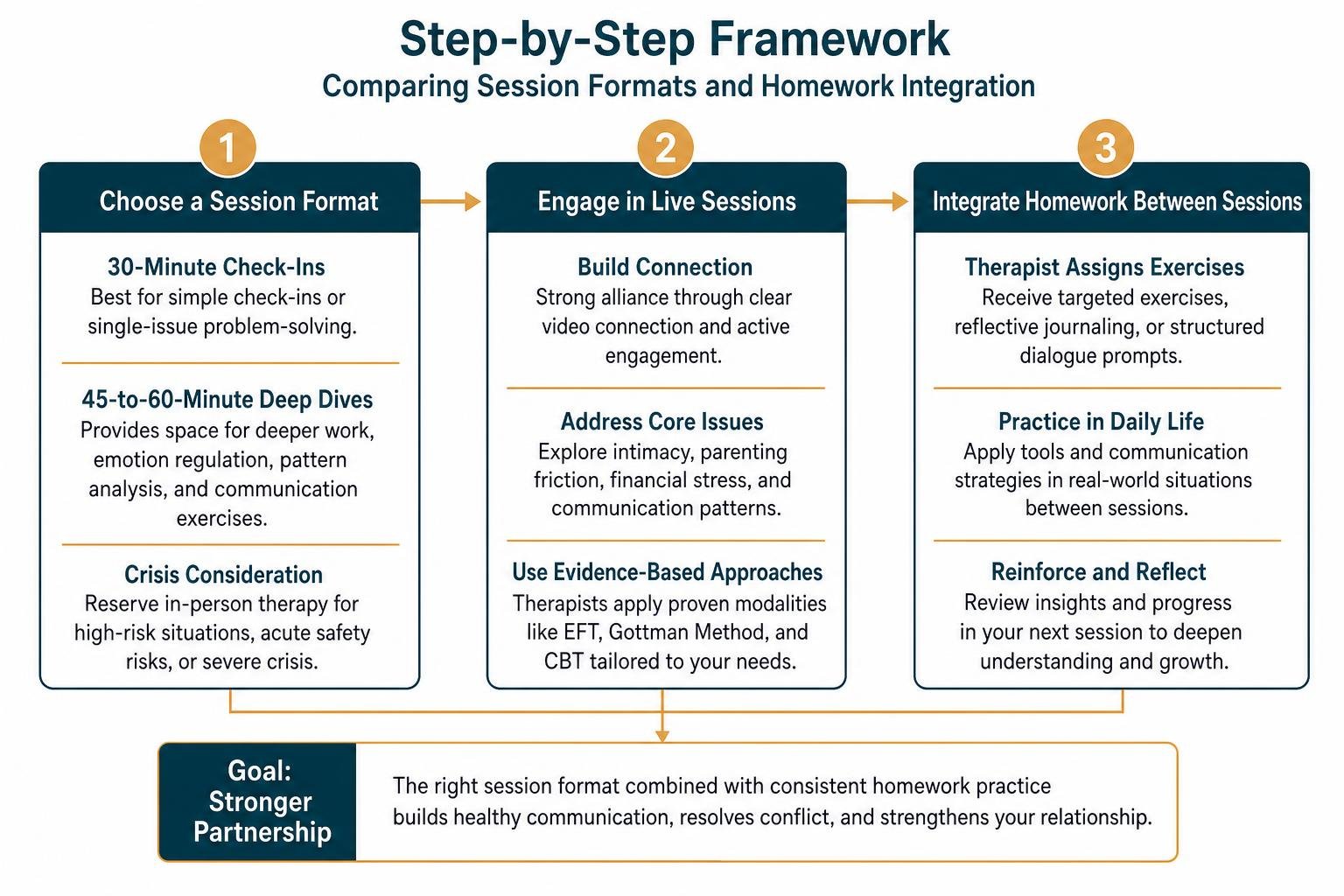
- 30-Minute Check-Ins: Some subscription models offer brief 30-minute appointments. While these can work for simple check-ins or single-issue problem-solving, many couples find half an hour too brief to unpack deep emotional injuries, especially when both individuals need equal time to speak without feeling rushed.
- 45-to-60-Minute Deep Dives: Standard 45- to 60-minute sessions provide the space needed for meaningful therapeutic work. This duration allows the clinician to regulate escalating emotions, analyze specific interaction patterns, and lead partners through real-time communication exercises.
- Asynchronous Homework and Secure Messaging: Between live meetings, therapists frequently assign targeted exercises, reflective journaling, or structured dialogue prompts. Practicing these tools during daily life solidifies new habits and accelerates progress.
If bandwidth or reliable video access is a concern, reviewing a Beginners Guide to Phone Counseling for Couples can provide an alternative audio-based pathway to professional support.
Costs, Insurance Coverage, and Financial Considerations

Investing in your relationship requires transparency regarding financial arrangements, payment structures, and coverage models. Across the mental health field, digital relationship therapy is typically structured through either monthly subscriptions or pay-per-session fee arrangements.
Monthly subscription models generally bundle a set number of live video sessions with between-session messaging tools. Conversely, fee-for-service or pay-per-session practices bill for individual appointments, allowing couples to adjust session frequency (weekly, bi-weekly, or monthly) to match their clinical needs and budget.
Navigating third-party coverage for marriage counseling can involve specific considerations. While some commercial plans cover relationship therapy, many insurers require a formal mental health diagnosis for an individual partner before authorizing reimbursement. To learn how to navigate these complexities, utilize A Practical Guide to Online Couples Counseling with Insurance. Additionally, many couples utilize Health Savings Accounts (HSA) or Flexible Spending Accounts (FSA) to cover qualified therapy expenses.
Navigating Onboarding, Privacy, and Therapist Matching
A smooth start to virtual counseling relies on a thorough onboarding process and clear data security protocols:
- Intake Questionnaires: During onboarding, both partners typically complete independent intake questionnaires. These surveys assess relationship history, communication patterns, core areas of conflict, and individual mental health backgrounds. Clear and honest answers ensure the clinician can accurately assess your needs from day one.
- Therapist Matching and Neutrality: A vital factor in successful couples counseling is clinician neutrality. Both partners must feel equally seen, heard, and supported, without the therapist siding with either individual. High-quality services maintain straightforward processes that allow couples to switch clinicians easily if the therapeutic rapport is not a mutual fit.
- Privacy and HIPAA Compliance: Confidentiality is essential for honest vulnerability. Legitimate remote therapy services utilize encrypted, HIPAA-compliant video portals to protect your private discussions and records. Before starting, confirm that your provider uses secure software and adheres to established professional confidentiality standards.
Specialized Remote Support: From Long-Distance to Faith-Based Guidance

Online counseling provides meaningful accessibility for partners in specialized circumstances that traditional office visits cannot easily accommodate.
Dual-location sessions allow partners separated by business travel, military deployment, or living arrangements to join the same secure virtual room alongside their counselor. If you and your significant other are navigating physical separation, our Best Long Distance Couples Counseling Guide outlines effective strategies for maintaining intimacy and alignment from afar.
Virtual care is also highly effective during transitional stages of a relationship:
- Premarital Preparation: Engaged couples can establish strong foundational habits around communication, finances, and family expectations by working through The Definitive Guide to Online Pre Marriage Counseling.
- Faith-Integrated Counseling: For couples who desire spiritual alignment alongside clinical expertise, Virtual Christian Therapy integrates Catholic and Christian principles with evidence-based interventions like EFT and Gottman methods.
Is Online Counseling for Couples Right for Every Relationship Crisis?
While remote therapy offers broad accessibility, it operates within clear clinical boundaries. Virtual platforms are best suited for couples facing communication breakdowns, life transitions, emotional disengagement, parenting disagreements, or trust rebuilds.
However, virtual counseling is not appropriate for all situations:
- Intimate Partner Violence (IPV): Active physical, psychological, or coercive abuse requires specialized in-person interventions and safety planning rather than standard couples therapy.
- Active Crisis or Self-Harm: Situations involving acute suicidal ideation or unmanaged psychosis require immediate local emergency services.
- Unaddressed Severe Addiction: Active, untreated chemical dependency often necessitates specialized individual addiction treatment before effective couples work can begin.
When spouses feel deeply ambivalent about whether to remain married or end the relationship, standard couples therapy can sometimes cause frustration. In these moments, structured discernment sessions help partners gain clarity and confidence about their direction. Learn how this structured framework functions by reading our Step by Step Guide to Online Discernment Counseling.
Frequently Asked Questions About Online Relationship Therapy
How much does virtual couples counseling typically cost per month?
Monthly expenses depend on whether you choose a subscription-based platform or a fee-for-service private practice, as well as your meeting frequency. Subscription formats generally bundle live appointments with digital messaging features, whereas per-session arrangements allow you to pay as you go. Some insurance plans, HSAs, or FSAs can help offset out-of-pocket costs.
What should we do if our matched online counselor is not the right fit?
A positive therapeutic alliance is essential for lasting progress. If either partner feels the counselor lacks neutrality, misunderstands your values, or utilizes an ineffective clinical style, communicate your concerns openly. Reputable practices and digital platforms maintain simple re-matching protocols so you can transition to a clinician whose style better matches your goals.
Can online marriage counseling work if we live in separate locations?
Yes. Secure telehealth platforms allow multiple devices to join the same private video room simultaneously. This three-way connection enables therapists to work effectively with couples managing long-distance dynamics, temporary work relocations, or separate living arrangements across different cities.
Conclusion
Every marriage encounters seasons of friction, emotional distance, and unexpected transitions. Choosing virtual relationship support allows you and your partner to break destructive cycles, heal unresolved wounds, and cultivate lasting emotional closeness from the comfort of your home.
True relational renewal begins with intentionality, consistent practice, and the guidance of an experienced clinician who respects your values. At Pax Renewal Center, our experienced team provides clinically grounded, faith-integrated care tailored to your unique journey.
To explore our full range of virtual counseling options and find the right path forward for your relationship, visit our Online Couples Counseling Complete Guide.