

Why Virtual Christian Therapy Matters for Your Well-being
Virtual Christian therapy offers a powerful path to healing by bringing professional mental health care and a faith-based worldview together, all from the comfort of your home. This approach is for anyone who wants their beliefs to be an integral part of their mental health journey. It combines clinical therapy with Christian values, offers accessibility regardless of location, and provides guidance from licensed therapists who understand both mental health and spirituality.
Mental health struggles are common, with over 20% of adults facing a mental illness. These issues are just as real within church communities, where finding support that understands your faith can be a challenge. Virtual Christian therapy fills this gap, offering a safe space to find hope and healing. It provides expert help that aligns with your deepest beliefs, bringing healing right to your fingertips.
I’m Dan Jurek, M.A., LPC-S, LMFT-S, founder and clinical director of Pax Renewal Center. For over 35 years, I’ve specialized in faith-based marriage and individual therapy, including through innovative virtual Christian therapy programs.
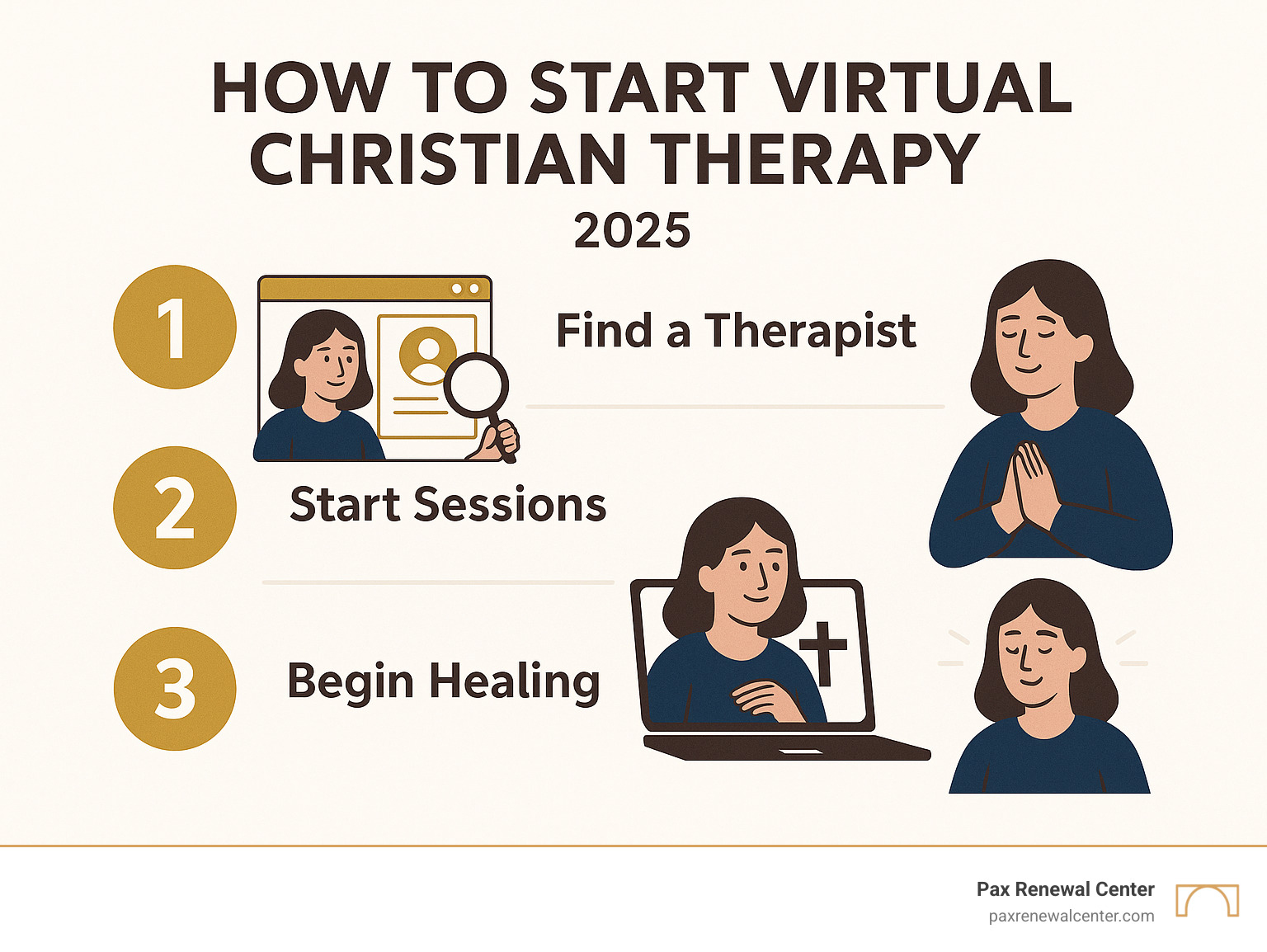
The Unique Benefits of Seeking Therapy Online
In our busy world, how we access mental health support is evolving. Virtual Christian therapy is a significant step forward, offering unique advantages over traditional in-person sessions. We’ve seen this approach change lives by bringing comfort and guidance to those who might otherwise struggle to get help.
One of the greatest benefits is convenience and accessibility. Geographical barriers or mobility issues can make regular therapy appointments a hurdle. Virtual Christian therapy removes these obstacles, allowing you to connect with a qualified therapist from the privacy of your home. This eliminates travel stress and makes it easier to access care.
Beyond physical access, online therapy expands your ability to find a therapist who shares your Christian worldview. Finding this specific fit locally can be difficult. Online platforms broaden your search, increasing the likelihood of finding a counselor who can weave your spiritual journey with proven therapeutic practices.
Anonymity and reduced stigma are also key benefits. For some, walking into a therapist’s office is intimidating. Virtual therapy offers a discreet alternative, which can help people feel more open and honest, accelerating the healing process. Finally, the flexible scheduling is a game-changer for busy lives. With evening and weekend appointments often available, it’s easier to prioritize your mental health without disrupting your routine. Consistent care is vital for progress, and this flexibility helps you stay on track. Blending faith and spirituality into mental health support offers profound benefits, as highlighted in studies on The mental health benefits of religion & spirituality.
How Virtual Christian Therapy Ensures Confidentiality
We understand that confidentiality is essential when discussing personal matters. Virtual Christian therapy services are built with strong protections to keep your information safe, meeting the same high standards as in-person therapy.
At the core of this is our use of HIPAA-compliant platforms. The Health Insurance Portability and Accountability Act (HIPAA) sets strict federal rules for protecting health information. The technology we use for video calls and messaging is encrypted and secure to prevent unauthorized access. We choose platforms that meet these tough requirements to ensure your sessions are private.
Beyond technology, professional ethics guide our practice. Our licensed therapists are bound by strict confidentiality rules. We also use an informed consent process to clearly explain how your information is handled and any rare legal limits to confidentiality. Our secure systems create a safe space for you to share openly, knowing your privacy is our top priority.
Integrating Faith into Modern Therapeutic Practices
One of the defining aspects of virtual Christian therapy is how it weaves Christian faith with modern therapy methods. We believe true healing involves the mind, emotions, and spirit.
At Pax Renewal Center, we combine clinical practices—like Emotionally Focused Therapy (EFT), Gottman Method, EMDR, and Cognitive Behavioral Therapy (CBT)—with biblical wisdom. This isn’t just adding faith on top; it’s approaching mental health through a lens that sees God’s truth as foundational. We believe lasting healing begins when we align our thoughts with God’s truth.
This integration can include prayer in sessions or exploring scripture as guidance to place struggles in a spiritual context. We might work on aligning your thoughts with God’s truth, replacing harmful thought patterns with perspectives rooted in the Bible. For us, the Bible is a guide for living a thriving life.
Our therapists are skilled professionals and individuals rooted in their Christian faith. This allows us to provide a compassionate, professional, and faith-aligned space where you can feel understood. To learn more about our approach, we invite you to read our perspective on Understanding a Faith-Based Approach to Counseling in the Catholic Christian Tradition.
What to Expect from Your Virtual Christian Therapy Journey
Starting a virtual Christian therapy journey is a hopeful step toward healing and spiritual growth. This section will guide you through the process, from the challenges we can address to what you can expect from your first session onward. Our goal is to make this experience supportive, clear, and transformative.
Common Issues Addressed
Virtual Christian therapy can effectively help with a wide range of challenges by integrating faith into a holistic, clinical approach. At Pax Renewal Center, we blend our practices with an understanding of your Christian faith to guide individuals, couples, and families.
Common issues we address include:
- Depression: We help clients steer feelings of hopelessness and sadness, exploring spiritual roots to find renewed hope in Christ.
- Anxiety: We provide practical tools to manage worry and fear, guiding you toward God’s peace.
- Trauma and PTSD: Using specialized therapies like EMDR, we help process past hurts and foster healing and resilience.
- Marriage and relationship conflict: With methods like EFT and the Gottman Method, we work to improve communication and restore intimacy. With 38% of churchgoing Christian marriages facing divorce, our aim is to help couples align their relationships with God’s design.
- Addiction: We support individuals in overcoming various addictions by integrating clinical interventions with spiritual principles for lasting freedom.
- Grief and loss: We guide clients through loss, helping them find comfort and hope by drawing on faith as a source of strength.
- Self-worth challenges: We address issues of identity and shame, helping clients understand their value as cherished children of God.
- Spiritual struggles: We offer a safe space to explore doubts, church trauma, or feelings of disconnection from God.
- Life transitions: We support individuals through major life changes, helping them find stability and direction.
At Pax Renewal Center in Lafayette, Louisiana, we are skilled in these areas, offering personalized support for each journey. We provide individual therapy, specialized marriage counseling (including affair recovery and discernment counseling), and therapy for children and adolescents, understanding that faith is a powerful resource for all ages.
Your First Session and Beyond
Beginning your virtual Christian therapy journey is a supportive process designed to make you feel understood from the start.
Your journey often begins with a brief, no-obligation initial consultation. This is a chance for us to learn about your situation and for you to ask questions, ensuring our services are the right fit for you.
If we both agree it’s a good match, the first few sessions focus on building rapport. We’ll get to know your story, faith background, and goals. This is a collaborative process where we work together to set clear, achievable goals for your therapy. We will explore your experiences and thought patterns, always considering how your faith can be a resource for healing.
Throughout your therapy, you can expect a collaborative process where your active participation is key. This may include reflection exercises between sessions, such as journaling, practicing new skills, or engaging in prayer. Client engagement is vital for profound, lasting change. We are here to walk alongside you with support and encouragement. For more details, explore our guide on What You Can Expect From Psychotherapy: The First Sessions.
The Role of a Christian Therapist
In virtual Christian therapy, your therapist is both a clinical professional and a compassionate spiritual guide. As Christian therapists, our faith is an inseparable part of who we are and how we practice.

As professional guides, we use evidence-based modalities like CBT, EFT, and EMDR to address your mental health concerns. We are trained to diagnose and treat a wide range of conditions, providing you with practical tools and strategies for growth.
As spiritual mentors, we also understand the impact of faith on your life. We provide non-judgmental support where you can explore your beliefs and doubts. We can integrate prayer and scripture into sessions, if you desire, to connect your healing journey with your walk with God. This can help you re-evaluate experiences from a spiritual perspective and build trust in Him.
Our ultimate aim is to help you find enduring hope and resilience, rooted in aligning with God’s truth. We are honored to walk with you through difficult seasons, offering empathy and encouragement, always pointing you towards the restoration found in Christ.
Finding the Right Therapist and Service for You
Choosing the right virtual Christian therapy service and therapist is an important step. With many options available, it can feel overwhelming. We’re here to help you understand what to look for, how costs work, and when virtual therapy might not be the best fit, so you can make a confident decision.
Essential Qualifications and Credentials
When seeking virtual Christian therapy, ensuring your therapist has the right qualifications is key. Effective faith-based counseling combines excellent clinical skills with a genuine Christian heart.
First, confirm your therapist is a state-licensed mental health professional, holding credentials like Licensed Professional Counselor (LPC), Licensed Marriage and Family Therapist (LMFT), or Licensed Clinical Social Worker (LCSW). These licenses show the therapist has completed rigorous academic training, supervised clinical hours, and passed state exams, ensuring they meet high professional standards. At Pax Renewal Center, our therapists are highly qualified, with many holding supervisory licenses (LPC-S, LMFT-S).
Beyond licensure, consider their clinical experience with the specific challenges you’re facing. For specialized treatments like EMDR, it’s wise to find a qualified and experienced EMDR therapist with specific certification.
Equally important is the therapist’s theological background. Some may have additional training in biblical studies or certifications in Christian counseling. Many faith-based therapists provide a “Statement of Faith,” which clarifies their core beliefs and how they shape their practice. This helps ensure your therapist understands your struggles from both a clinical and a spiritual perspective. Our team at Pax Renewal Center is rooted in Catholic and Christian values, allowing us to offer truly integrated spiritual guidance.
Understanding Costs and Insurance
Understanding the financial side of virtual Christian therapy is important. While specific prices vary, here are the common payment models:
- Subscription Models: You pay a recurring fee (weekly or monthly) that often includes unlimited messaging and a set number of live sessions. This can be a good value for ongoing support.
- Pay-Per-Session Models: You are charged a set fee for each session. This may be better for occasional support or a more traditional meeting schedule.
When it comes to insurance, many virtual Christian therapy providers with licensed therapists may accept various plans. We recommend contacting your insurance provider to ask about your mental health benefits, co-pays, and any limits on telehealth services. Even if a service is out-of-network, you may be able to submit claims for reimbursement. Many services also accept Health Savings Accounts (HSA) and Flexible Spending Accounts (FSA). We also strive to make counseling accessible by offering affordable group therapy and an online community through our Skool platform.
Potential Limitations of Virtual Christian Therapy
While virtual Christian therapy offers many benefits, it’s not a perfect fit for every situation. Understanding these limitations ensures you get the best care for your needs.
First, virtual Christian therapy is not for crisis situations. If you are having thoughts of harming yourself or others, seek immediate in-person help by going to an emergency room or calling a crisis hotline. Your safety is the top priority.
Second, there are technology requirements, such as a stable internet connection and a private space for your sessions. While rare, technical issues can sometimes occur.
The therapeutic fit is also crucial. Even with a wide pool of therapists, finding someone you connect with is vital. Most services allow you to switch therapists, and we encourage you to do so until you find the right match.
Finally, for some severe mental illnesses or court-ordered therapy, in-person care or a more intensive level of support may be more appropriate than what online platforms can provide. Our commitment is to help you find the right level of care for your unique situation.
Frequently Asked Questions about Online Christian Counseling
Exploring therapy, especially online and with a faith focus, brings up many questions. Here, we’ll address some of the most common ones to help you feel confident as you consider your healing journey with virtual Christian therapy.
What is the difference between Christian counseling and biblical counseling?
This is an important distinction. Christian counseling, which we practice at Pax Renewal Center, integrates licensed, clinical practices with faith. Your therapist is a state-licensed mental health professional (LPC, LMFT, LCSW) who uses evidence-based approaches like CBT, EMDR, or the Gottman Method. This professional also thoughtfully incorporates Christian principles and a biblical worldview into sessions. They can diagnose and treat mental health conditions and are regulated by state licensing boards.
Biblical counseling, on the other hand, relies solely on scripture for guidance. Biblical counselors are typically not licensed mental health professionals and do not use clinical psychological techniques or diagnose conditions. They often have a pastoral or lay counseling background. While valuable for spiritual guidance, Christian counseling offers a unique blend of professional clinical expertise and spiritual wisdom.
How effective is online therapy compared to in-person sessions?
Research and client experiences consistently show that online therapy, including virtual Christian therapy, is highly effective and often just as impactful as in-person meetings for many mental health issues.
The core of good therapy—the connection with your therapist and consistent support—is achievable online. Studies show high user satisfaction, with some platforms reporting that 93% of users rate their experience as good or excellent. The convenience and accessibility of online therapy eliminate travel time and stress, making it easier to attend sessions consistently. This consistency is a major factor in making real progress.
Effectiveness depends on your specific needs and the fit with your therapist. For common challenges like anxiety, depression, and relationship struggles, virtual Christian therapy is a flexible and impactful way to get professional help. It may not be the right fit for severe crises that require immediate, in-person intervention.
Can virtual Christian therapy help with marriage issues?
Absolutely. Virtual Christian therapy is an incredibly effective and often preferred way for couples to work through challenges. At Pax Renewal Center, we have seen amazing changes in relationships through online sessions.
Virtual couples therapy provides a neutral space for honest communication. Our therapists are trained in methods like the Gottman Method and Emotionally Focused Therapy (EFT), which are designed to improve communication, resolve conflict, and rebuild trust. Statistics show that even among churchgoers, about 38% of Christian marriages end in divorce, highlighting the need for practical tools alongside faith.
Virtual Christian therapy blends clinical expertise with faith-based principles to help couples align their relationship with God’s truth, fostering healing and restoration. We offer support for everything from communication breakdowns to affair recovery. We also provide private or group intensives and an online community through our Skool platform for expert-led support at a reduced cost.
Begin Your Journey to Healing and Wholeness

As we’ve seen, virtual Christian therapy offers a unique path to healing, caring for your mind, body, and spirit. It blends modern clinical psychology with the timeless wisdom of the Christian faith, lighting the way toward lasting change.
Hope is accessible from anywhere. The benefits of virtual Christian therapy—unparalleled accessibility, faith-aligned therapists, privacy, and flexible scheduling—mean that high-quality care is at your fingertips. You no longer have to face mental health struggles alone or compromise your spiritual values to get support.
At Pax Renewal Center in Lafayette, Louisiana, we are committed to helping individuals, couples, and families find emotional healing and spiritual renewal. Our qualified, faith-based therapists integrate proven clinical practices like EFT, the Gottman Method, and EMDR with spiritual guidance rooted in Catholic and Christian values.
Whether you need marriage counseling, individual therapy for anxiety or trauma, or support for children and teens, we are here for you. If you’re ready to take the next step toward a life of greater peace and purpose, we invite you to explore the impact professional, faith-based counseling can have. Learn more about Finding Hope and Empowerment Through Professional Counseling or Explore our faith-based counseling services today. Your journey to healing and wholeness awaits.