

Understanding Phone Therapy vs In-Person Sessions
When you compare phone counseling to traditional in-person sessions, the most obvious difference is physical presence. In an office setting, a therapist relies heavily on nonverbal communication—watching posture, facial expressions, and hand gestures. Over the phone, our entire clinical focus shifts toward voice quality: tone, cadence, pauses, pitch, and emotional resonance.
Many couples find that removing the visual element actually helps lower their guard. Sitting face-to-face in a clinical office can make some people feel exposed or defensive. On a voice call, you can speak from the comfort of your couch, wearing your comfortable clothes, in an environment where you already feel safe. This setting fosters a strong therapeutic alliance because both partners often feel less intimidated and more willing to open up about sensitive topics.
From a practical standpoint, phone-based relationship support eliminates commute times, parking headaches, and childcare arrangements. Scheduling becomes significantly easier when you don’t have to factor in 45 minutes of driving each way.
| Feature | Telephone Couples Counseling | Traditional In-Person Therapy |
|---|---|---|
| Location Flexibility | Anywhere with clear cellular reception | Requires physical travel to an office |
| Privacy Level | High; talk comfortably from your own space | Moderate; waiting rooms and public transit |
| Visual Cues | Relies on vocal tone and emotional pacing | Relies on full body language and expressions |
| Scheduling | Easily fits around work and family routines | Requires dedicated commute and appointment blocks |
| Cost Efficiency | Lower travel costs and reduced time off work | Includes travel costs, parking, and transit |
Key Benefits and Drawbacks of Couples Counseling Over the Phone
Choosing couples counseling over the phone offers distinct advantages, along with a few challenges worth considering before you get started.
Primary Benefits
- Lower Barrier to Entry: According to industry research, traditional in-person therapy in the US costs $100 to $200 per hour on average. Phone counseling and remote relationship support offer predictable care that eliminates additional costs like gas, parking, or lost work hours.
- High Client Satisfaction: Data shows that 97% of surveyed individuals believe they got the help they needed from couples therapy. Remote relationship support yields remarkable results: 91% of couples feel improvements in their relationship after just 4 weeks, 88% feel more hopeful, and 94% report feeling less anxious about their relationship challenges.
- Reduced Intimidation: For partners who feel self-conscious or anxious in traditional clinical settings, speaking over the phone provides a layer of emotional safety that promotes deeper honesty.
- Unbeatable Convenience: Sessions can be held from your home, an office during lunch breaks, or even while traveling.
Potential Drawbacks
- Absence of Facial Cues: The therapist cannot see tears, subtle nods, or crossed arms, requiring both partners to express their feelings verbally rather than relying on silent expressions.
- Technical Interruptions: Dropped calls, spotty cellular service, or poor audio quality can disrupt the flow of emotional conversations.
- Home Distractions: Conducting therapy from home means managing ambient noises, pets, doorbells, or children knocking on the door.
Relationship strain rarely happens out of nowhere; it is usually sparked by specific daily pressures.
Primary triggers for relationship stress include:
- Major life shifts (job changes, moving, or caring for aging parents)
- Financial pressure and conflicting spending priorities
- Parenting stress and differing discipline styles
- Emotional distance and loss of physical intimacy
- Unresolved past grievances and recurring arguments
Who Benefits Most from Couples Counseling Over the Phone?
Phone counseling is a flexible solution for many relational dynamics, but it is especially beneficial for:
- Long-Distance Couples: Spouses who are separated by military deployments, business travel, or temporary job relocations can use conference calling to engage in Long Distance Relationship Therapy.
- Busy Parents: Moms and dads balancing work and child-rearing can hold sessions during naptime or after bedtime without hiring a babysitter.
- Rural Residents: Couples living in rural areas of Louisiana without immediate access to specialized marriage therapists can connect directly with experienced clinicians.
- Introverted Partners: Individuals who find face-to-face emotional discussions overwhelming often find their voice more easily over a audio phone call.
Navigating Technical and Communication Challenges
To get the absolute most out of your phone therapy sessions, a small amount of preparation goes a long way:
- Optimize Audio Quality: Use a reliable headset or phone mic rather than a low-quality speakerphone. Clear audio ensures your therapist catches subtle shifts in your voice.
- Secure a Quiet Space: Choose a private room where you will not be overheard or interrupted. Close doors, silence notifications, and inform household members that you are on an important call.
- Manage Emotional Pacing: Without visual cues, it is easy to accidentally speak over one another. Practice taking deliberate pauses after your partner speaks to ensure they have finished their thought before you respond.
What Common Issues Can Be Addressed via Telephone Counseling?

Many couples worry that phone therapy is only meant for minor marital tune-ups. In practice, phone-based counseling effectively treats the exact same core issues addressed in office settings.
Through voice sessions, we help couples work through:
- Recurring Arguments: Breaking the habit of repeating the same argument repeatedly by identifying underlying emotional triggers. Read more in our guide on Why Couples Repeat the Same Argument 101.
- Emotional Distance & Marital Drift: Rebuilding affection and connection when partners feel like roommates living under one roof. Learn strategies in How to Rebuild Trust After Emotional Disconnection in 7 Simple Steps.
- Financial Stress: Addressing money disagreements, budgeting conflicts, and mismatched financial values in a structured, non-judgmental atmosphere.
- Premarital & Discernment Guidance: Aligning on future goals before marriage or thoughtfully evaluating next steps when a couple is uncertain about staying together.
Key Signs Your Relationship Needs Professional Help
It is always better to address relational friction before small misunderstandings turn into deep resentment. Consider seeking professional phone counseling if you notice:
- Passive-Aggressive Behavior: Sarcasm, cold shoulders, or veiled comments replacing honest, direct communication.
- Contempt & Disrespect: Eye-rolling tones, dismissal, or derogatory comments during disagreements.
- Chronic Emotional Burnout: Feeling utterly exhausted by the relationship or feeling like every conversation turns into a potential landmine.
- Lack of Emotional Intimacy: Avoiding meaningful conversations and sharing life updates with outside friends rather than your spouse.
- Breakdowns in Trust: Secrecy surrounding finances, phone use, or emotional boundaries with outside individuals.
How Phone Counseling Sessions Work for Remote or Multi-Location Couples

One of the greatest features of couples counseling over the phone is its ability to bridge physical distance seamlessly. If you and your partner are in different cities, states, or even countries, your therapist can host a simple three-way teleconference.
During these multi-location calls, we utilize evidence-based frameworks like Emotionally Focused Therapy (EFT) and the Gottman Method. These clinical approaches focus on mapping communication loops, de-escalating conflict, and creating secure emotional bonds. You can explore these methods in detail through our Best Long Distance Couples Counseling Guide.
What to Expect During Couples Counseling Over the Phone
If you have never experienced a telephone counseling session before, here is what a standard treatment flow looks like:
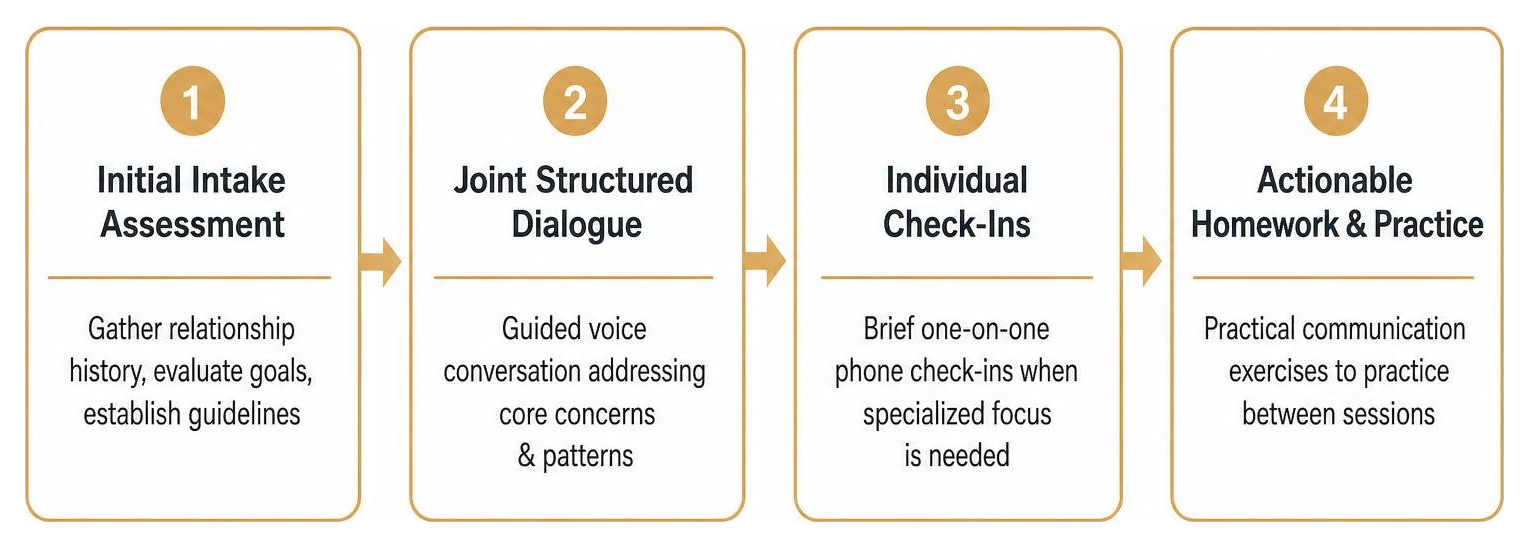
- Initial Intake Assessment: Your therapist conducts an introductory call to learn your relationship history, understand primary stressors, and establish clear guidelines for respectful conversation.
- Joint Structured Dialogue: During standard weekly sessions, both partners join the line. The counselor manages session pacing, ensuring neither partner dominates the conversation and both feel heard.
- Individual Check-Ins: Occasionally, your counselor may schedule brief individual phone check-ins with each partner to process personal concerns or individual history.
- Actionable Homework & Practice: At the end of each session, you receive clear communication exercises or reflection questions to practice at home before the next call.
Choosing the Right Service, Crisis Resources, and Hotlines
When selecting phone relationship support, it is important to distinguish between short-term crisis triage hotlines and structured, clinical couples therapy.
If you are experiencing an immediate mental health crisis, feeling completely overwhelmed, or looking for free immediate advice, telephone hotlines offer immediate assistance. National lines like the 988 Suicide & Crisis Lifeline (call or text 988) or the Mental Health Hotline (866-903-3787) provide 24/7 free emotional support. Military families can also access zero-cost confidential counseling through Military OneSource (800-342-9647).
For couples seeking long-term relational growth, healing from past wounds, or deep communication changes, scheduling formal sessions with a licensed Marriage and Family Therapist (LMFT) or Licensed Professional Counselor (LPC) is recommended. To find out more about structured virtual options, explore our guide to Online Relationship Counseling.
Frequently Asked Questions About Phone Relationship Support
Is phone couples counseling covered by health insurance?
Coverage for phone-based teletherapy depends entirely on your specific health insurance provider and policy benefits. Many insurance carriers expanded teletherapy coverage to include voice-only sessions, while others require video platforms or limit coverage to in-person sessions. We recommend calling the member services number on the back of your insurance card to verify your out-of-network behavioral health benefits, copays, and reimbursement options before your initial session.
What if my partner refuses to participate in phone therapy?
It is common for one partner to feel hesitant about starting therapy. The good news is that you can still begin phone counseling on your own. Engaging in individual relationship counseling allows you to clarify your personal feelings, improve your communication habits, and break negative interaction cycles. When one partner changes how they react and communicate, it often shifts the dynamic of the entire relationship, frequently encouraging the hesitant partner to join later.
How do free hotlines differ from ongoing phone counseling?
Free relationship and mental health hotlines are designed for short-term crisis triage, emotional stabilization, and resource navigation. Hotline advocates provide immediate, single-session emotional support, safety planning, and local referrals. In contrast, ongoing phone counseling with a licensed therapist involves structured, recurring sessions tailored to your specific relationship history, emotional wounds, and long-term goals using evidence-based clinical methodologies.
Conclusion

Your relationship does not have to remain stuck in constant conflict, cold silence, or emotional distance. Couples counseling over the phone provides a accessible, proven path to rebuild intimacy, resolve recurring arguments, and restore healthy communication—all from the comfort and privacy of your own space.
At Pax Renewal Center, located in Lafayette, Louisiana, our team of dedicated, faith-based therapists integrates proven clinical models—such as the Gottman Method, Emotionally Focused Therapy (EFT), CBT, and EMDR—with Catholic and Christian values. Whether you prefer in-person sessions at our practice or virtual support tailored to your busy schedule, we are here to walk alongside you toward relational healing and spiritual renewal.
Ready to take the next step toward a stronger, healthier partnership? Restore Your Relationship with Online Couples Counseling today, or reach out to our team directly at Pax Renewal Center to find the support your marriage deserves.