

Why Long-Distance Relationships Need Specialized Support
Long-distance relationship therapy has become an essential resource for the millions of couples navigating love across miles. As of 2023, more than 14 million couples in the United States consider themselves in long-distance relationships, facing unique challenges that traditional relationship advice often doesn’t address.
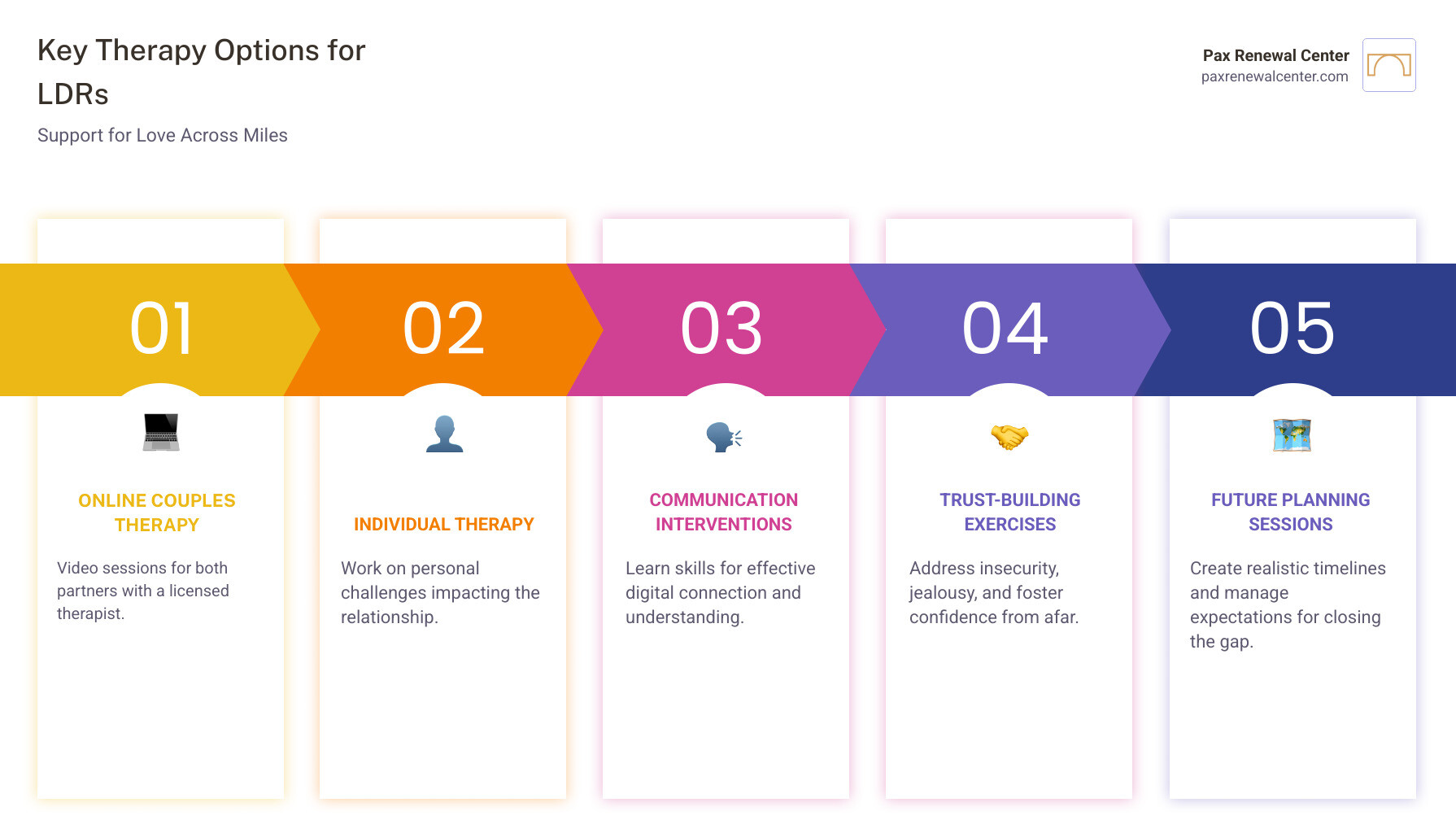
Common therapy options for long-distance couples include:
- Online couples therapy – Video sessions with both partners and a licensed therapist
- Individual therapy – Working on personal challenges that affect the relationship
- Communication-focused interventions – Learning skills for digital connection
- Trust-building exercises – Addressing insecurity and jealousy from a distance
- Future planning sessions – Creating realistic timelines for closing the gap
The physical separation in long-distance relationships creates emotional challenges that can feel overwhelming. Communication barriers arise when you can’t read body language or share spontaneous moments. Trust issues develop more easily when you’re not part of each other’s daily lives. Loneliness and anxiety about the future can strain even the strongest bonds.
But here’s the good news: distance doesn’t have to doom your relationship. With the right support and therapeutic tools, many couples emerge from long-distance periods with stronger communication skills and deeper trust than they had before.
Research shows that 63% of people who tried online therapy found it effective, and for long-distance couples, teletherapy removes geographical barriers that might otherwise prevent them from getting help together.
The Unique Challenges of Navigating Love Across Miles

Love doesn’t recognize zip codes or time zones, but the human heart certainly feels their impact. When you’re building a life with someone hundreds or thousands of miles away, every day brings unique challenges that couples living in the same city never have to face.
The reality is that long-distance relationship therapy exists precisely because these challenges are real, significant, and require specialized support to steer successfully.
Why Distance Creates Strain
Imagine trying to comfort your partner after a difficult day at work, but all you have is a phone screen between you. The physical separation that defines long-distance relationships removes so many of the natural ways we connect and communicate with the people we love most.
When you can’t see your partner’s facial expressions during a serious conversation, or catch that subtle eye roll that lets you know they’re actually joking, communication barriers multiply quickly. A text that seems short might feel cold when your partner was simply rushed. A delayed response to a good morning message can spiral into worry about what’s wrong.
This lack of non-verbal cues creates a communication minefield that even the most loving couples struggle to steer. Research on common issues in long-distance relationships shows just how universal these struggles are.
The loneliness and isolation can hit at unexpected moments. You might be surrounded by friends at a party, but feel completely alone because the one person you want to share the experience with isn’t there. Or you come home to an empty apartment night after night, knowing your person is living their own full life somewhere else entirely.
Perhaps most challenging of all is balancing independence and togetherness. You need to maintain your own friendships, hobbies, and growth while staying deeply connected to someone you rarely see. It’s like trying to dance together when you can’t even hear the same music.
Common Emotional Problems in LDRs
The strain of distance often manifests in predictable but painful ways. Jealousy and insecurity can creep in when your partner mentions a coworker’s name one too many times, or when their social media shows them having fun without you. Your rational mind knows they love you, but your heart whispers, “What if?”
Anxiety about the future keeps many long-distance couples awake at night. When will we finally be together? What if one of us gets a job opportunity that makes closing the distance harder? What if we’ve built up an unrealistic idea of what life together will actually look like?
Trust issues don’t always stem from actual betrayal. Sometimes they grow from the simple fact that you’re not part of each other’s daily reality. When your partner’s stories about their day feel incomplete, or when they seem distant during calls, doubt can take root even in the most faithful hearts.
The emotional and sexual frustration of long-distance relationships affects nearly every couple. Physical touch isn’t just about intimacy – it’s how we comfort, celebrate, and connect. When that’s missing for weeks or months at a time, both partners can feel emotionally starved.
These challenges often compound when external stressors enter the picture. Work pressure, family issues, or financial concerns can feel even more overwhelming when you can’t physically be there for each other. For more insights on this topic, read about managing outside stress in relationships.
The good news? Every single one of these challenges is workable. At Pax Renewal Center, we’ve seen countless couples transform their long-distance struggles into relationship strengths. Distance is tough, but it doesn’t have to be the end of your love story.
How Long-Distance Relationship Therapy Helps Bridge the Gap

When couples are separated by miles, it often feels like you’re trying to build a bridge with only half the materials. That’s where long distance relationship therapy becomes your missing toolkit. The beautiful truth is that many couples actually emerge from their long-distance experience stronger than before – but it rarely happens by accident.
The challenges you’re facing aren’t just “distance problems” – they’re relationship dynamics that distance has magnified. Communication struggles, trust concerns, and intimacy challenges exist in every relationship, but when you can’t reach over and touch your partner’s hand during a difficult conversation, everything feels more intense.
Building a Stronger Connection
Long-distance relationship therapy works by giving you concrete tools to create a connection across the miles. Think of it as learning a new language: the language of loving someone you can’t always see.
Facilitating effective communication becomes your lifeline. In therapy, we move beyond those surface-level “How was your day?” conversations to create real emotional intimacy. You’ll learn how to set communication expectations that work for both of you – maybe that’s a good morning text, an evening video call, or a weekly “relationship check-in.” More importantly, you’ll find how to steer misunderstandings before they spiral into relationship-threatening conflicts.
When miscommunication happens (and it will), you’ll have the skills to address it quickly and lovingly. We help couples create communication rituals that provide stability and something to look forward to each day.
Rebuilding and maintaining trust requires intentional effort when you’re apart. Distance doesn’t automatically create trust issues, but it can amplify existing insecurities. In therapy, we create a safe space to voice those 2 AM worries about what your partner is doing or whether they’re still as committed as you are.
Trust grows through consistent actions over time. We help couples identify specific behaviors that build security – like being transparent about social plans, following through on promises, or simply responding to messages in a timely way.
Fostering emotional intimacy without physical presence requires creativity and intentionality. Emotional intimacy isn’t just about sharing your day – it’s about sharing your inner world. We guide couples in having deeper conversations about dreams, fears, values, and experiences that shaped them.
This might look like “virtual dates” where you cook the same recipe together over video chat, reading the same book and discussing it, or simply creating space for vulnerable conversations about your relationship hopes and fears. Our guide on achieving emotional satisfaction in marriage offers additional insights that apply beautifully to long-distance relationships.
Creating shared meaning gives your relationship purpose beyond just “getting through” the distance. We help couples align their individual goals with their relationship vision. This means having honest conversations about timelines, career decisions, and what your life together will actually look like when the distance closes.
Common Techniques Used in Long-Distance Relationship Therapy
At Pax Renewal Center, we use proven therapeutic approaches custom-designed specifically for the unique dynamics of long-distance relationships.
Talk therapy provides the foundation – a safe, confidential space where both partners can express their true feelings without judgment. Sometimes the most healing thing is simply being heard and understood by both your partner and a neutral professional.
Communication exercises go beyond just talking. We teach specific techniques for having difficult conversations, expressing needs clearly, and really hearing what your partner is trying to tell you. These aren’t theoretical concepts – they’re practical tools you’ll use in your daily interactions.
Cognitive Behavioral Therapy (CBT) helps when anxiety, jealousy, or negative thought patterns are damaging your relationship. If you find yourself catastrophizing about your partner’s silence or creating stories about what they’re doing, CBT can help you recognize these patterns and respond more rationally. This approach is particularly helpful for managing intense emotions like anger or insecurity, as outlined in resources about CBT for anger management.
Emotionally Focused Therapy (EFT) is one of our core approaches at Pax Renewal Center. EFT helps you understand the emotional cycles that happen in your relationship – like when one partner withdraws, and the other pursues, creating more distance. We guide you toward expressing your deeper needs and fears, creating genuine emotional safety even across miles.
The Gottman Method provides research-backed strategies for building friendship, managing conflict constructively, and creating shared meaning in your relationship. Dr. Gottman’s decades of research offer concrete tools that work especially well for couples navigating distance.
Signs You Might Benefit from Long-Distance Relationship Therapy
Sometimes it’s hard to know when normal long-distance challenges have crossed into territory that needs professional support. Here are some clear indicators that long-distance relationship therapy could help:
You’re experiencing constant misunderstandings where simple conversations regularly turn into arguments or leave both of you feeling frustrated and unheard. Communication has become a minefield rather than a source of connection.
There’s growing emotional distance despite regular contact. You might talk every day but feel less connected than ever. One or both of you feels lonely even while “in a relationship.”
Unresolved conflicts keep resurfacing without real resolution. You find yourselves avoiding certain topics to prevent fights, but the underlying issues never actually get addressed.
You’re considering separation, not because you don’t love each other, but because the distance feels impossible to manage. If you’re questioning whether your relationship can survive, our discernment quiz can help you explore these feelings in a structured way.
Worry about the future dominates your thoughts. Anxiety about when or if the distance will close, or how you’ll transition to being together, feels overwhelming and affects your daily life.
Trust issues, jealousy, or difficulty balancing your individual life with relationship needs are creating ongoing stress and conflict.
If any of these resonate with your experience, know that seeking help isn’t a sign of failure – it’s a sign of commitment to your relationship’s success.
Navigating the Practicalities of Online Therapy for LDRs
When you’re dealing with the challenges of a long-distance relationship, finding the right therapeutic support can feel overwhelming. The good news? Online therapy has revolutionized how couples can access help, removing those frustrating geographical barriers that once made joint counseling nearly impossible.
Long-distance relationship therapy conducted online allows both partners to connect with a skilled therapist from wherever they are, whether you’re in different states, countries, or even time zones. This flexibility has been a game-changer for couples who previously had limited options for getting professional support together.
Finding the Right Therapist for You
Choosing the right therapist for your long-distance relationship therapy journey requires some careful consideration, especially when you’re navigating the complexities of different locations and licensing requirements.
Licensing across states becomes a crucial factor when you and your partner live in different areas. Since 2020, organizations like PSYPACT have worked to simplify multi-state licensing for mental health professionals. This means some therapists can legally provide services to clients in multiple states. You’ll want to verify that your potential therapist is licensed to work with both of you, regardless of where you’re located. The Information on PSYPACT website can help you understand which states participate in these agreements.
Finding a specialist who truly understands long-distance relationship dynamics makes a significant difference in your therapy experience. Look for therapists who don’t just offer couples counseling, but who have specific experience with the unique challenges you’re facing – things like managing different time zones, building trust from afar, and planning for your future together.
The importance of fit cannot be overstated. Even the most qualified therapist won’t be helpful if you don’t feel comfortable opening up to them. Most therapists offer brief consultation calls where you can get a sense of their communication style and approach. Both partners should feel heard and understood – if something doesn’t feel right, it’s perfectly okay to keep looking.
Considering faith-based counseling might be important if your spiritual values play a central role in your relationship. At Pax Renewal Center, we integrate clinical best practices like EFT and the Gottman Method with spiritual guidance rooted in Catholic and Christian values. This approach can be particularly meaningful for couples who want their therapy to align with their faith journey. For more guidance on finding the right therapeutic approach, check out our More info about Marriage Counseling Lafayette, LA Guide.
Preparing for Your First Session
Once you’ve found your therapist, taking some time to prepare can help you get the most out of your long-distance relationship therapy sessions.
Creating a list of issues beforehand helps ensure you don’t forget important concerns once you’re in session. We encourage each partner to write down the relationship challenges they want to address, including how long each issue has been present and what specifically feels difficult about it. This preparation helps your therapist understand your situation more quickly.
Discussing goals with your partner before your first session can help align your expectations. While your therapist will guide deeper conversations about what you hope to achieve, having a preliminary chat about your shared goals shows you’re approaching therapy as a team.
Setting up a private space is essential for creating the right environment for honest conversation. Both partners need a quiet, comfortable area where interruptions won’t happen. This privacy helps create the safety needed for vulnerable discussions about your relationship.
A technology check might sound basic, but it’s incredibly important. Test your internet connection, camera, and microphone ahead of time. Most therapists use HIPAA-compliant platforms specifically designed for secure telehealth sessions. Getting familiar with the platform beforehand eliminates technical stress during your actual session. Research consistently shows the Benefits of telehealth counseling, particularly its convenience and ability to connect you with specialized support regardless of your location.
Understanding the process helps set realistic expectations. Your first session will likely focus on getting to know both of you, understanding your relationship history, and setting initial goals together. Therapy is a collaborative journey – the more open and engaged you are, the more helpful it will be.
The beauty of online therapy for long-distance couples is that it meets you where you are, literally and figuratively. You’re already navigating the challenge of loving someone from afar – your therapy shouldn’t add another layer of complexity to that journey.
Frequently Asked Questions about LDR Counseling
If you’re considering long-distance relationship therapy, you’re probably wondering how it all works and whether it’s right for your situation. These are the questions we hear most often from couples who are ready to take that brave first step toward strengthening their relationship across the miles.
How does online therapy for couples actually work?
Online therapy for long-distance couples feels surprisingly natural once you get started. We use secure, HIPAA-compliant platforms that protect your privacy while allowing both you and your partner to join from wherever you are, whether that’s different cities, states, or even countries.
During joint video sessions, all three of you (both partners and your therapist) can see and hear each other clearly. This means we can still pick up on those important facial expressions and body language cues that make communication richer and more meaningful. Your therapist acts as a neutral facilitator, creating a safe space where both of you can express yourselves honestly without judgment.
The accessibility and convenience of this approach are a game-changer for long-distance couples. No more worrying about finding a therapist who works for both your schedules and locations. You can attend sessions from your own comfortable spaces, and we can work around different time zones to find times that work for everyone.
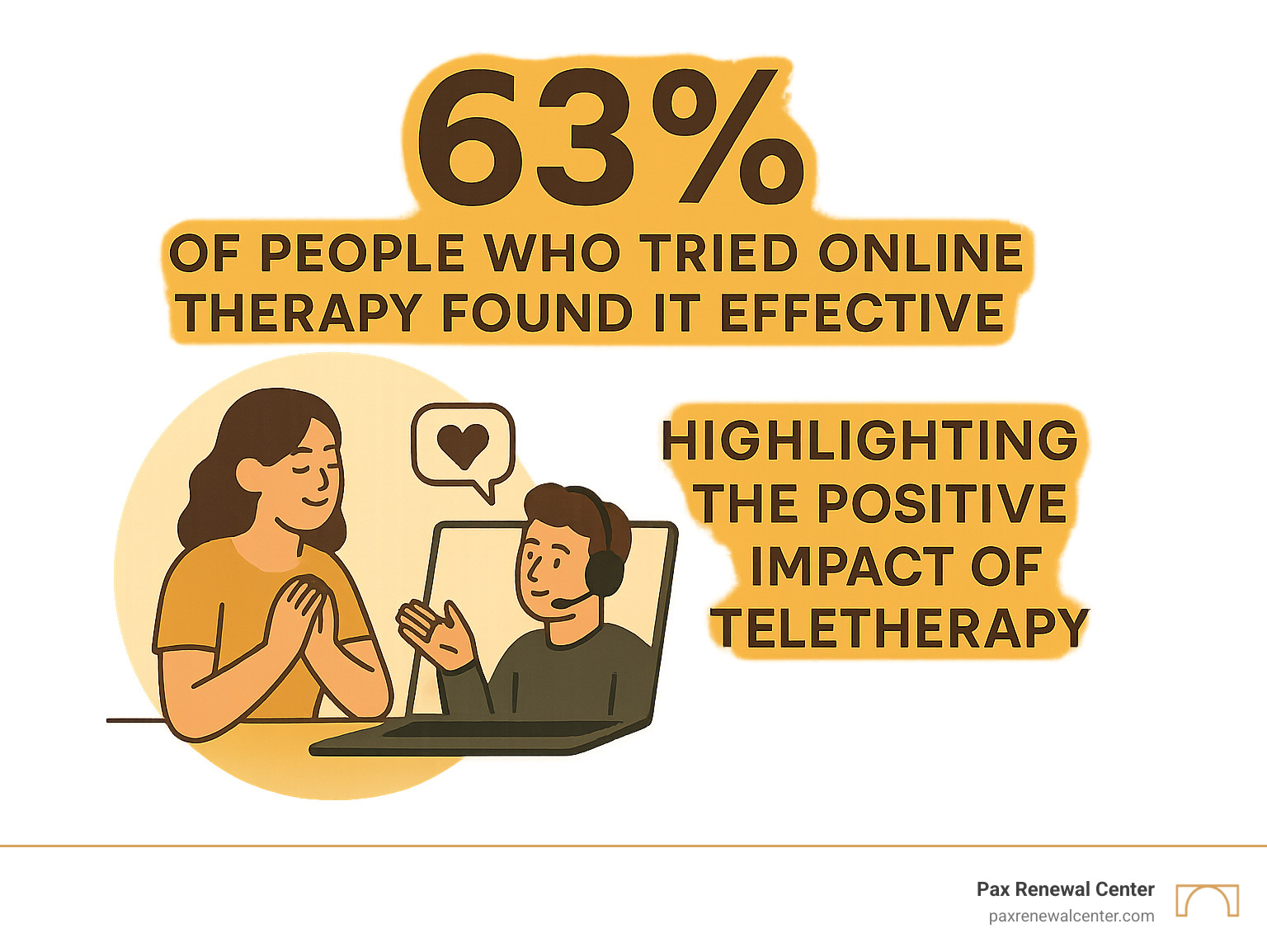
Research consistently shows that 63% of people found online therapy effective, which gives us confidence that this format can truly make a difference in your relationship. Many of our couples tell us they actually prefer the online format because it feels less intimidating and allows them to be more open from the comfort of their own spaces.
How can therapy help us plan for the future and closing the distance?
One of the most stressful parts of being in a long-distance relationship is the constant question: “When will we finally be together?” Long-distance relationship therapy can help transform that anxiety into a clear, actionable plan that brings you both peace and excitement about your future.
We start with goal setting, helping you both get crystal clear about what you want your shared future to look like. This goes beyond just “living in the same place” to exploring deeper questions about marriage, career paths, starting a family, or where you want to build your life together.
Navigating timelines and expectations is where many couples get stuck. We’ll help you create realistic timelines that consider both partners’ career goals, financial situations, and personal circumstances. More importantly, we’ll help you identify potential obstacles before they become problems and develop concrete steps to overcome them.
The tricky part is balancing individual vs. couple goals, and this is where therapy really shines. You both have dreams and aspirations that matter, and we’ll help you figure out how to honor those individual goals while still moving toward your shared vision. Sometimes this means one partner relocating first, or finding creative solutions that work for both of your careers.
Managing uncertainty is perhaps the most valuable skill we can teach you. Life rarely goes exactly according to plan, and long-distance relationships come with extra unknowns. We’ll equip you with tools to handle job changes, family emergencies, or other curveballs that might affect your timeline. If you’re feeling uncertain about the relationship itself, our An Introductory Guide to Discernment Counseling can help you work through those deeper questions.
What are the long-term outcomes of successful therapy for an LDR?
The couples who complete long-distance relationship therapy often tell us they feel more prepared for a lifetime together than couples who never faced the challenge of distance. That might sound surprising, but here’s why it’s true.
Stronger communication skills develop out of necessity when you can’t rely on physical presence to smooth over misunderstandings. You’ll learn to express your needs clearly, listen with genuine curiosity, and resolve conflicts even when you can’t hug it out afterward. These skills serve you incredibly well once you’re living in the same place.
Deeper trust and intimacy often emerge from successfully navigating the vulnerability of loving someone from afar. When you’ve learned to trust each other across miles and time zones, that foundation becomes unshakeable. You’ll know how to maintain emotional connection even during busy or stressful periods in your shared life.
The resilience you build together is remarkable. Couples who’ve successfully managed long-distance relationships develop an incredible capacity to handle whatever life throws at them. You’ll have proven to yourselves that your love can survive challenges, which gives you confidence to face future obstacles as a team.
When you do finally close the distance, you’ll experience a smoother transition to living together than many couples expect. Because you’ve been intentional about communication and planning, you’ll be better prepared for the adjustments that come with sharing daily life.
Your improved conflict resolution skills will serve you well throughout your relationship. Instead of avoiding difficult conversations or letting resentments build, you’ll know how to address issues directly and constructively – a skill that many couples struggle with even after years of living together.
The bottom line is overall relationship satisfaction that comes from knowing you’ve built something truly strong together. You’ll have the confidence that comes from choosing each other again and again, even when it was hard. For more insights into building lasting, healthy relationships, explore our resources on More on healthy relationships.
Conclusion

Love doesn’t always follow a neat timeline or geography. If you’re reading this while your partner is hundreds or thousands of miles away, you already know that distance is a challenge, but it doesn’t have to be a dealbreaker. Throughout this article, we’ve explored how long-distance relationship therapy can transform what feels like an impossible situation into an opportunity for deeper connection and growth.
The benefits of professional support for long-distance couples are clear and profound. Stronger communication skills help you move beyond surface-level check-ins to truly meaningful conversations. Improved trust and intimacy develop when you have the tools to address insecurities head-on. Better conflict resolution means disagreements become opportunities for understanding rather than sources of lasting resentment. Perhaps most importantly, successful planning for your future together gives you both something concrete to work toward during the difficult waiting periods.
Every couple’s journey is unique, but one truth remains constant: therapy serves as a powerful tool for growth and connection. Whether you’re struggling with constant misunderstandings, growing emotional distance, or anxiety about when you’ll finally close the gap, professional guidance can help you steer these challenges with confidence and hope.
Long-term relationship success is absolutely possible for couples who are willing to invest in their connection despite the miles. Many of the couples we work with find that their time apart actually strengthened their relationship in ways they never expected. They learned to communicate more intentionally, trust more deeply, and appreciate each other more fully.
At Pax Renewal Center, we understand the unique pressures and joys of long-distance love. Our faith-based approach combines proven therapeutic methods like EFT and the Gottman Method with spiritual guidance, offering you a comprehensive path forward. We’ve seen countless couples not just survive the distance, but emerge stronger and more committed than ever before.
If you’re ready to transform your long-distance challenges into relationship strengths, we’re here to support you every step of the way. Distance may test your love, but with the right tools and guidance, it doesn’t have to defeat it. Explore our counseling services and find out how we can help you build the lasting, fulfilling relationship you both deserve.