

Why Faith-Based Family Counseling Matters for Modern Families
Faith-based family counseling combines professional therapeutic techniques with spiritual principles to help families heal, grow, and strengthen their relationships within a framework that honors their religious beliefs and values.
Key Elements of Faith-Based Family Counseling:
- Licensed therapists who integrate prayer, scripture, and Christian principles into evidence-based treatment
- Family systems approach that addresses relationship dynamics through a spiritual lens
- Holistic care targeting emotional, mental, and spiritual wellness simultaneously
- Confidential sessions that respect both therapeutic ethics and religious values
- Flexible approaches ranging from biblical counseling to faith-integrated psychology
For many Christian families, traditional therapy can feel incomplete or misaligned with their core beliefs. When families face challenges like communication breakdowns, behavioral issues with children, marital conflict, or trauma, they often seek guidance that honors both their faith and their need for professional mental health support.
Research shows that nearly 50% of married couples attend counseling at some point, and faith-based approaches can be particularly effective for families whose spiritual beliefs are central to their identity. The Psychology Today directory lists over 350 Christian counselors in Alberta alone, indicating strong demand for faith-integrated mental health services.
As someone who has spent over 35 years providing faith-based family counseling in Lafayette, Louisiana, I’ve witnessed how integrating Christian values with proven therapeutic methods creates powerful healing experiences for families. My work combines evidence-based approaches like Emotionally Focused Therapy and the Gottman Method with Catholic spiritual principles to help families restore harmony and deepen their faith together.
What Is Faith-Based Family Counseling?
Faith-based family counseling brings together professional mental health care and the spiritual foundation that guides your family’s daily life. It’s like having a skilled therapist who truly understands why you start dinner with prayer and why Sunday mornings are sacred in your home.
When families walk into our counseling room, they often feel relieved to find a space where their faith isn’t just tolerated—it’s celebrated and woven into their healing journey. This approach recognizes that for many Christian families, trying to separate their spiritual beliefs from their emotional struggles feels artificial and incomplete.
Licensed therapists who practice faith-based counseling hold the same professional credentials as any secular therapist, but they bring an additional understanding of how spiritual principles can support healing. They know how to integrate prayer and scripture naturally into sessions, creating moments where families can connect with God’s guidance while working through their challenges.
The family systems approach we use views your family as God designed it, interconnected and interdependent. When one family member struggles, it affects everyone. Through a Christian lens, we help families understand how biblical principles about love, forgiveness, and communication can restore harmony to their relationships.
Holistic care means we’re not just treating symptoms or behaviors. We’re addressing the whole person, mind, body, and spirit. Sometimes emotional healing requires spiritual renewal, and sometimes spiritual growth requires addressing underlying mental health concerns.
| Faith-Based Counseling | Traditional Secular Counseling |
|---|---|
| Integrates prayer and scripture | Relies primarily on psychological theories |
| Views problems through spiritual lens | Focuses on behavioral and cognitive patterns |
| Counselor shares client’s faith | Counselor maintains religious neutrality |
| May incorporate biblical principles | Uses secular ethical frameworks |
| Addresses spiritual wellness | Focuses on mental/emotional health |
Scientific research on faith-based counseling confirms what many families already know intuitively: when your therapist shares your worldview, trust builds faster and healing often comes more naturally.
Faith-Based Family Counseling vs. Traditional Therapy
The difference isn’t about one approach being better than the other; it’s about finding the right fit for your family’s values and needs. Faith-based family counseling examines life’s challenges through the faith lens that already shapes how you make decisions and understand your purpose.
While traditional therapy might focus on communication techniques, we explore those same skills through biblical principles about speaking truth in love and bearing one another’s burdens. Shared values create a foundation of understanding that allows families to dive deeper into their struggles without having to explain their beliefs.
Is Faith-Based Family Counseling Right for Your Family?
Faith-based family counseling works beautifully for families where Christian beliefs influence daily decisions and long-term goals. You don’t need to be a “perfect” Christian family—in fact, many families seek our help precisely because they’re struggling to live out their faith values during difficult seasons.
Crisis triggers that often bring families to our door include marital conflict, parenting challenges with teenagers, grief and loss, financial stress, addiction struggles, or the complexities of blended family life. These situations test both emotional resilience and spiritual foundations, making faith-integrated support especially valuable.
The Changeal Benefits for Modern Families

When families combine professional therapy with their Christian faith, something beautiful happens. The results go far beyond what either approach could achieve alone. Faith-based family counseling creates lasting change because it addresses the spiritual roots of family challenges, not just the surface symptoms.
Restored relationships become possible when families work within their faith framework. There’s something powerful about applying biblical principles of forgiveness and grace to real-life conflicts. Instead of just learning communication techniques, families find how to love each other the way God loves them, unconditionally and with endless patience.
Reduced depression and anxiety often follow naturally. When families strengthen their connection to God through counseling, they find hope in the darkest moments. Scientific research on spiritual health benefits shows that patients who incorporate spiritual practices into their healing process experience better outcomes and faster recovery times.
Improved communication happens when families learn to speak to each other with the same grace God shows us. Improved resilience develops as families learn to lean on God’s strength during tough times. Inter-generational healing breaks cycles that have hurt families for generations.
Spiritual & Mental Health Gains
The combination of faith and professional therapy creates benefits that touch every aspect of family life. Gratitude and hope naturally flourish in faith-based counseling. When families learn to see God’s hand in their struggles, they develop the kind of resilience that carries them through any storm.
Community support becomes more accessible as families learn to connect with their church communities in healthier ways. Meaning-making transforms suffering into purpose. Faith provides a framework for understanding why difficult things happen and how God can use them for good.
Who Can Benefit?
Couples find how to build their relationship on biblical foundations that last. Parents find practical guidance for raising children in today’s complex world while maintaining Christian values. Teens and children face unique pressures today, and faith-based counseling helps them develop strong identities rooted in Christian values. Blended families benefit greatly from faith-based approaches that help create unity around shared spiritual values.
Inside the Counseling Room: Process, Approaches, and Confidentiality

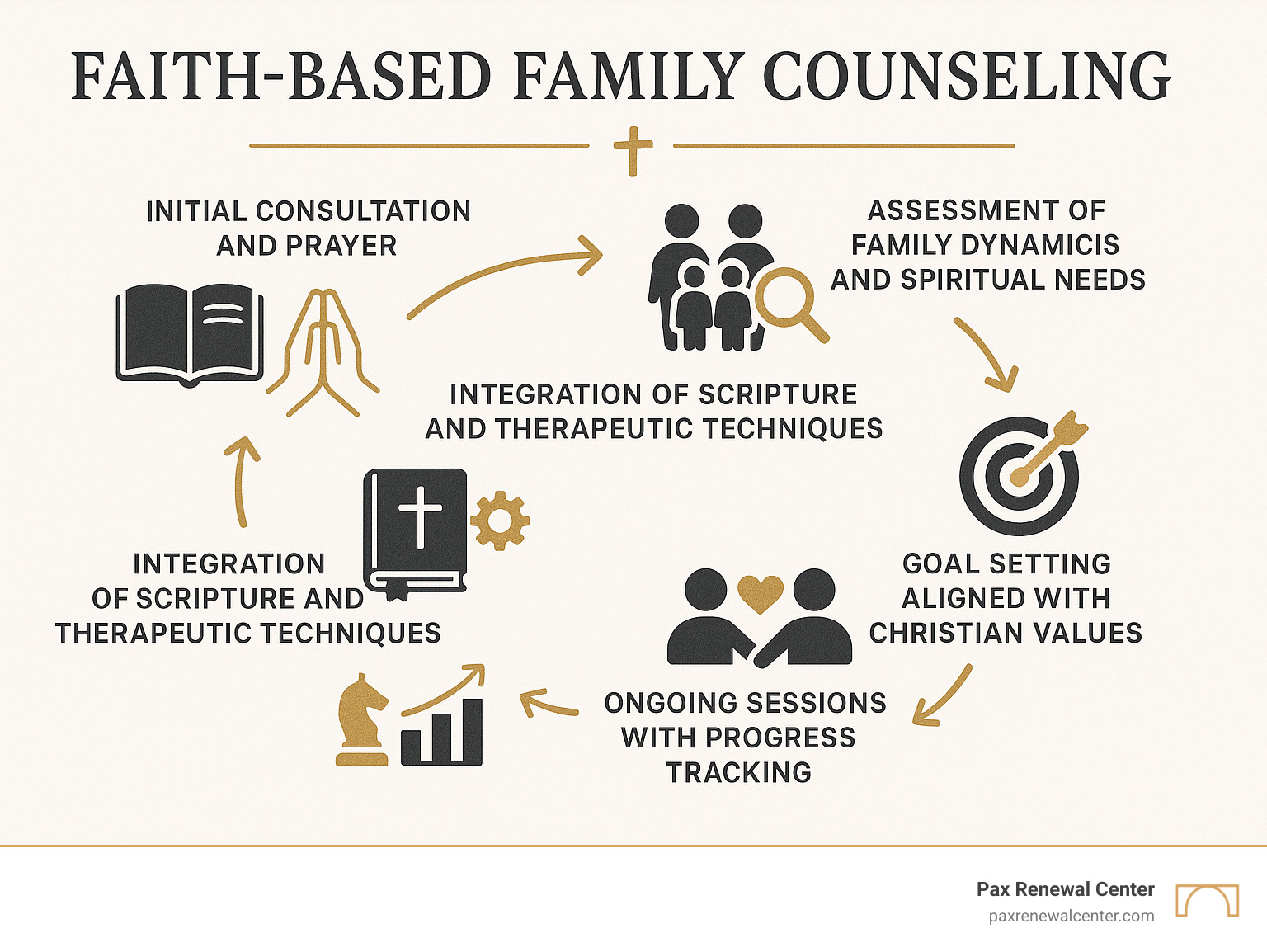
Walking into your first counseling session can feel overwhelming, but understanding what happens during faith-based family counseling helps families feel more prepared and confident about their healing journey.
Your experience begins with a comprehensive intake process that goes beyond typical questionnaires. We want to understand your family’s story from both a clinical and spiritual perspective. During the first session, we focus on creating a safe, welcoming environment where every family member feels heard and valued.
Confidentiality remains sacred in our practice. Everything shared in sessions stays confidential, protected by both professional ethics and legal requirements. The only exceptions involve situations where someone might be at risk of harm – and we’ll always discuss these rare circumstances with you directly.
Our therapeutic toolkit combines evidence-based clinical methods with faith-integrated approaches. We use proven techniques like Cognitive Behavioral Therapy (CBT) to help families identify and change negative thought patterns, Emotionally Focused Therapy (EFT) to strengthen emotional bonds between family members, and the Gottman Method for couples seeking to improve communication and intimacy.
For families dealing with trauma, we offer EMDR therapy that helps process difficult experiences while honoring the spiritual dimension of healing. The faith-integrated aspects of our work might include bibliotherapy, using scripture passages as resources for healing and guidance. We also incorporate prayer as a therapeutic tool when families find it meaningful.
First-Session Expectations in Faith-Based Family Counseling
Your first session is designed to help you feel comfortable and hopeful about the journey ahead. We spend considerable time building rapport with each family member, understanding your unique story, and learning about your faith background.
Goal setting happens collaboratively. We work together to identify specific, achievable objectives that honor both your therapeutic needs and spiritual values. Most families receive practical homework assignments between sessions designed to fit your family’s schedule and comfort level.
Styles Within Faith-Based Family Counseling
Biblical counseling relies primarily on scripture and prayer, with less emphasis on psychological theories. Integrative counseling combines evidence-based therapeutic techniques with Christian principles. Pastoral counseling emphasizes spiritual guidance and may include elements like confession or spiritual direction. Trauma-informed faith-based counseling recognizes that trauma affects both mind and spirit.
How to Find a Qualified Faith-Based Family Counselor
Finding the right faith-based family counselor can feel overwhelming, but knowing what to look for makes the process much clearer. You want someone who not only understands your family’s struggles but also shares your spiritual foundation.
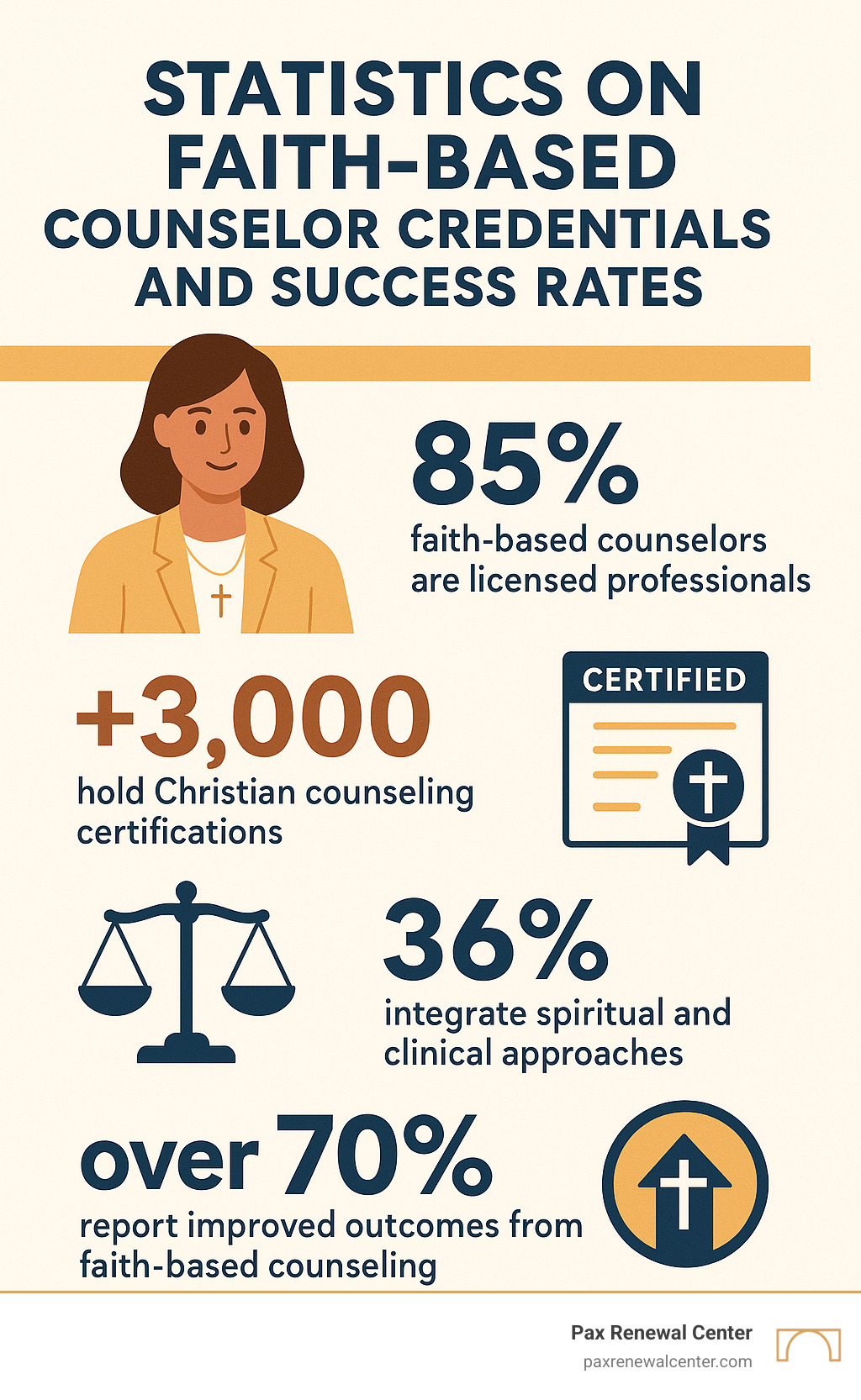
Professional credentials matter tremendously. Your counselor should hold proper state licensure – look for Licensed Professional Counselor (LPC), Licensed Clinical Social Worker (LCSW), or Licensed Marriage and Family Therapist (LMFT). These credentials require master’s degrees and thousands of hours of supervised practice.
Specialization in family therapy is crucial since working with families requires different skills than individual counseling. Cultural and denominational fit can significantly impact your comfort level. Online directories like Psychology Today make searching much easier. Telehealth options have revolutionized access to quality care, working particularly well for families with busy schedules.
More info about x services can help you understand when professional help is needed and what to expect from family counseling.
Questions to Ask Before You Begin Faith-Based Family Counseling
Before starting faith-based family counseling, having an honest conversation with potential counselors helps ensure a good fit. Understanding their approach is essential. Ask: “How do you integrate faith into your counseling practice?”
Prayer and scripture usage vary significantly among faith-based counselors. Emergency policies matter for family safety. Success metrics help set realistic expectations and reveal the treatment philosophy.
Practical Considerations: Cost, Insurance & Online Options
Insurance benefits often cover mental health services, including faith-based counseling when provided by licensed professionals. Employee Assistance Programs (EAP) through your workplace frequently include short-term counseling benefits. Virtual therapy options have proven equally effective as in-person treatment for most families, offering greater scheduling flexibility.
Measuring Progress & Navigating Crises of Faith

One of the most rewarding aspects of faith-based family counseling is witnessing the change that occurs when families align their healing journey with their spiritual beliefs. Goal tracking forms the foundation of our assessment process. We work together to establish clear, measurable objectives that honor both your therapeutic needs and spiritual aspirations.
Session reviews happen naturally as part of our ongoing dialogue. Each meeting includes time to process what’s working well and how family members are experiencing change. Outcome scales provide objective measures of progress that complement our subjective observations.
Perhaps uniquely in faith-based family counseling, we sometimes encounter families experiencing spiritual doubt or a crisis of faith during their healing journey. We create safe spaces for families to explore these concerns without judgment. Pastoral collaboration can be incredibly valuable during these seasons, with your permission.
Progress in faith-based counseling often looks different from secular therapy. Families may experience spiritual breakthroughs alongside emotional healing. The beauty of integrating faith into family counseling is that it acknowledges the whole person – mind, body, and spirit.
Frequently Asked Questions about Faith-Based Family Counseling
When families consider faith-based family counseling, they often have important questions about how the process works and what to expect.
How is confidentiality handled?
Your privacy is absolutely protected in faith-based family counseling. We follow the same strict confidentiality laws and professional ethics as any licensed therapist. The only exceptions are situations where someone might be in danger of harming themselves or others.
Family sessions require special attention to confidentiality. We establish clear agreements about what information can be shared between family members. We don’t share information with your pastor or church leaders without your written permission.
Can non-religious family members participate?
Faith-based family counseling absolutely welcomes families where not everyone shares the same faith commitment. We never pressure anyone to pray or study scripture if they’re not comfortable with those practices.
Instead, we focus on shared values that most people can accept, things like love, respect, honesty, and healthy communication. Many families find that faith-based counseling actually helps bridge the gap between religious and non-religious family members.
What if counseling doesn’t seem to work?
Sometimes families feel stuck or wonder if they’re making progress. This is completely normal. First, we’ll explore whether we need to adjust our approach. We also consider whether other factors might be interfering with your progress, such as untreated depression, anxiety, addiction, or major life stressors.
Seeking help shows courage and wisdom. Even when progress feels slow, you’re investing in your family’s future in ways that often become clear over time.
Conclusion
When families face challenges that seem overwhelming, faith-based family counseling provides a bridge between professional expertise and the spiritual foundation that guides your daily life. It’s not about choosing between faith and therapy; it’s about finding healing that honors both your need for clinical support and your relationship with God.
The families I’ve worked with over the past 35 years have taught me that lasting change happens when we address the whole person – mind, heart, and spirit. When your counselor understands why you pray before meals, why forgiveness matters deeply to you, and how your faith shapes your parenting decisions, the therapeutic process becomes more authentic and effective.
Your family’s struggles don’t define you; they’re opportunities for growth and deeper connection. Whether you’re navigating teenage rebellion, marital conflict, or the aftermath of trauma, there’s hope for restoration. The same God who created your family also provides pathways to healing, often through the skilled hands of professional counselors who share your values.
Many families worry that seeking counseling means they’ve failed somehow. The truth is quite the opposite. Recognizing when you need help demonstrates wisdom and courage. It shows your commitment to your family’s wellbeing and your willingness to invest in the relationships that matter most.
The journey toward healing isn’t always smooth or quick. There will be difficult conversations, moments of vulnerability, and times when progress feels slow. But when families commit to growth within their faith framework, they often find not just solutions to their immediate problems, but a deeper understanding of God’s design for their relationships.
At Pax Renewal Center here in Lafayette, we’ve seen countless families experience change through faith-based family counseling. Our approach combines proven therapeutic methods like Emotionally Focused Therapy and the Gottman Method with the timeless wisdom of Catholic and Christian principles. We believe that when clinical expertise meets spiritual guidance, families can experience healing that touches every aspect of their lives.
Your family’s story isn’t over; it’s still being written. The challenges you’re facing today can become the foundation for stronger relationships tomorrow. Take that first step toward healing. Your family’s future depends on the courage you show today in seeking the help you need.
More info about counseling services is available to help you understand how our faith-based approaches can transform your family’s relationships and spiritual life.