

Why Christian Trauma Healing Networks Are Essential for Faith-Based Recovery
Christian trauma healing network resources provide specialized support that combines biblical principles with evidence-based mental health practices. These networks serve both trauma survivors and the professionals who care for them, offering toolkits, training, and community support rooted in faith.
Key Christian Trauma Healing Network Resources:
- Training & Certification: Certified Christian Trauma Care Provider (CCTCP) programs with 10-hour Level 1 and 5-hour Level 2 courses
- Digital Toolkits: Interactive worksheets and handouts for counselors and pastors
- Small Group Programs: Bible-based healing curricula delivered through apps and in-person sessions
- Church Training: 7-day courses for trauma-informed ministry with 100% participant recommendation rates
- Professional Community: Networking for mental health professionals, pastors, and lay ministry leaders
- Crisis Response Tools: Immediate support resources for community disasters and individual trauma
The research shows that approximately 25% of children in the United States experience at least one significant traumatic event before age 16. Christian trauma healing networks address this need by equipping churches and counselors with Christ-centered approaches that integrate Scripture with proven therapeutic methods.
These networks recognize that “trauma is perhaps the greatest mission field of the 21st century” and that “when Jesus created the Church, he designed it to be a place where hurting people could heal and receive care.” They provide hope through biblical lament, endurance-building, and the restoration of false beliefs with scriptural truth.
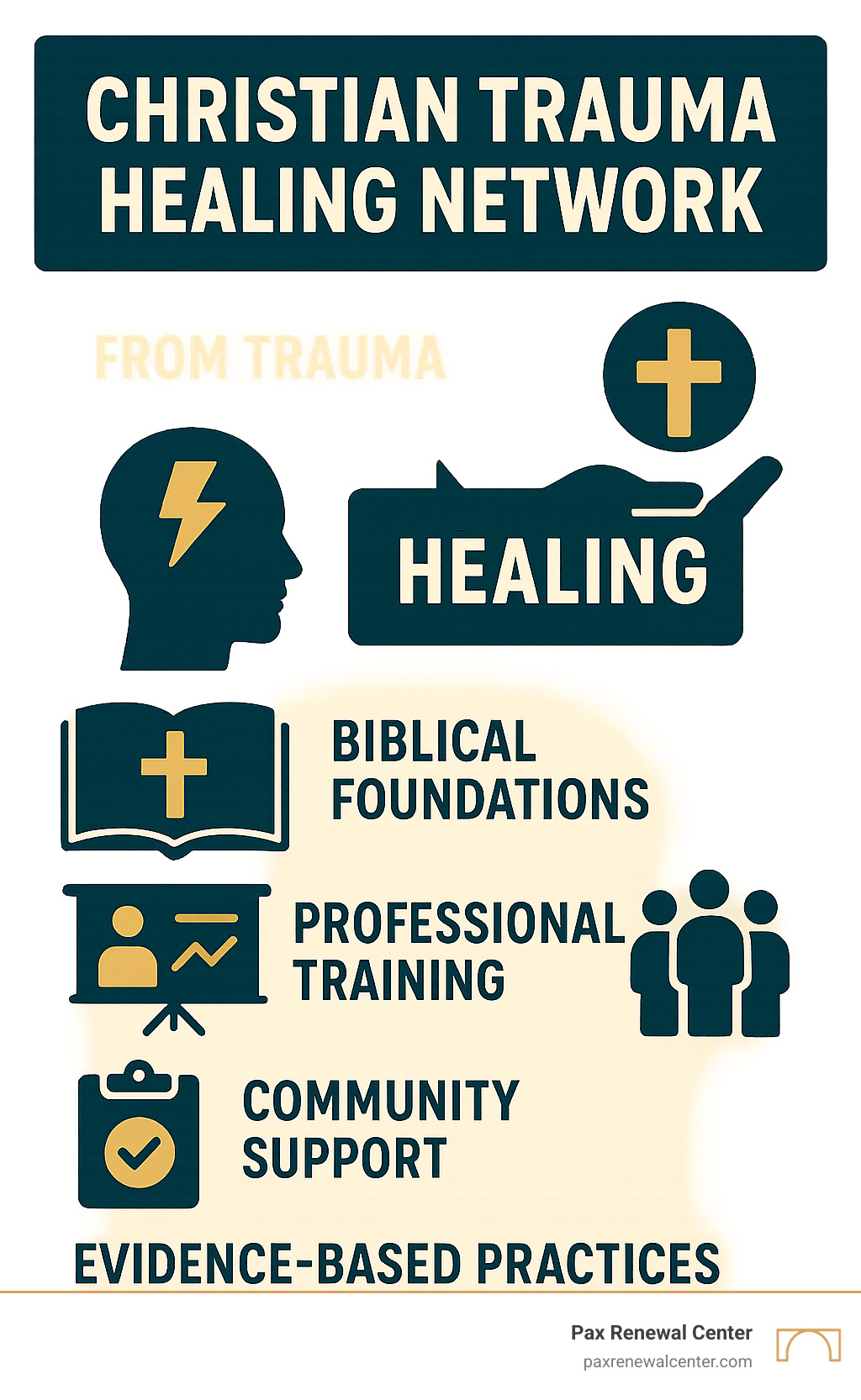
Understanding Christian Trauma Healing Networks
When trauma touches our lives, it affects far more than just our emotions or thoughts. It reaches into the deepest parts of who we are, including our faith and spiritual well-being. That’s where christian trauma healing networks come in, serving as bridges between professional mental health care and faith-based ministry.
These networks understand something crucial: healing from trauma isn’t just about fixing what’s broken in our minds. It’s about restoring wholeness to our entire being, mind, body, and spirit. This comprehensive approach recognizes that true healing often requires both clinical expertise and spiritual support working together.
The mission driving these networks centers on equipping caregivers at every level. Whether you’re a licensed therapist, a pastor, or someone who simply wants to help others in your community, these networks provide the tools and training you need. With over 214 active subscribers receiving regular updates and resources, they’ve built thriving communities of people who understand that healing happens best when we’re not walking alone.
As trauma expert Dr. Diane Langberg has wisely observed, effective trauma healing requires both clinical knowledge and spiritual understanding. Christian trauma healing networks accept this dual approach wholeheartedly, offering resources that weave together scientific research on trauma and faith with biblical wisdom and practical ministry tools.
Why Christian Trauma Healing Networks Exist
The heart behind Christian trauma healing networks beats with a simple but profound recognition: trauma is everywhere around us, and it’s one of the most significant challenges our communities face today. But here’s what makes these networks different—they don’t see trauma as just a clinical problem to solve.
Instead, they view trauma through what we might call a Christ-centered lens. This perspective understands that while trauma can absolutely devastate lives, it also opens doors for deep healing and spiritual growth. This isn’t about minimizing pain or offering quick fixes. It’s about providing a framework where people can find genuine meaning and hope, even in their darkest moments.
The networks operate on the understanding that trauma truly is a mission field, perhaps one of the most important mission fields of our time. When someone is struggling with the aftermath of trauma, they’re not just dealing with symptoms. They’re wrestling with questions about God, meaning, safety, and hope.
Who Christian Trauma Healing Networks Serve & Equip
Christian trauma healing networks serve two main groups, each with unique needs but working toward the same goal of healing.
Mental health professionals find specialized training that helps them integrate faith with proven therapeutic approaches like EMDR, CBT, and trauma-focused therapy. These professionals gain access to peer collaboration, clinical resources, and continuing education that equips them to serve Christian clients more effectively. They learn how to honor both their clinical training and their clients’ faith journey.
Pastors and ministry leaders receive practical tools for recognizing when someone might be struggling with trauma, how to provide initial support, and how to create church environments that feel safe for trauma survivors. Importantly, they also learn when it’s time to refer someone to professional therapy and how to maintain supportive pastoral relationships throughout the healing process.
Lay leaders are equipped with basic trauma awareness and response skills. They learn how to be helpful first responders in their communities while understanding the important boundaries of their role. This creates a referral hub where professional therapists, pastors, and lay leaders can work together effectively through networking and collaboration.
Core Principles of Christ-Centered Trauma Healing
The foundation of Christian trauma healing networks rests on principles that honor both sound clinical practice and deep biblical truth.
Scripture engagement serves as a central healing tool, but not in superficial ways. These networks teach how to deeply engage with God’s Word in ways that promote genuine healing and restoration. This means moving beyond simple Bible verse solutions to truly wrestling with Scripture in the context of pain and healing.
Evidence-based practice integration ensures that biblical approaches work hand-in-hand with proven therapeutic methods. This isn’t an either/or approach—it’s a both/and methodology that honors both God’s truth and the clinical insights He’s given us through research and practice.
Lament and honest grief are recognized as essential parts of healing. These networks teach that we must acknowledge our pain fully before we can truly accept hope. Following the biblical model found in Psalms and other passages, they create space for authentic sorrow alongside genuine hope.
Endurance building focuses on helping trauma survivors develop resilience through understanding God’s purposes in suffering. From Romans 5:3-5, these networks teach that suffering can produce endurance, which builds character, which ultimately produces hope that doesn’t disappoint.
Sanctification through suffering provides a theological framework for understanding how God can use even traumatic experiences for spiritual growth and change. This never minimizes the reality of pain or suggests that suffering is somehow deserved, but it does offer a pathway toward finding meaning and growth through the healing process.
Top Christ-Centered Trauma Support Group Approaches & Resources
The landscape of Christian trauma healing offers diverse approaches to meet different needs and circumstances. From professional certification programs to small group healing models, these resources provide comprehensive support for trauma survivors and those who care for them.

Each approach recognizes that healing happens best within community and that faith provides both comfort and practical tools for recovery. These resources complement professional therapy and can be particularly valuable for those seeking more info about trauma treatment that honors their faith journey.
Christian Trauma Healing Toolkits & Certification
Trauma Care Toolkits represent some of the most practical resources available through Christian trauma healing networks. These digital collections include interactive worksheets, handouts, and assessment tools specifically designed for faith-based trauma care.
The Trauma Care Toolkit Volume 01 provides foundational resources for understanding trauma’s impact and beginning the healing process. It includes materials for both individual and group use, with biblical foundations integrated throughout.
Trauma Care Toolkit Volume 02, created in 2023, offers more advanced resources for ongoing trauma care. These tools are available to paid network members and include interactive worksheets that can be emailed to clients between sessions, extending the healing process beyond formal therapy appointments.
The Pastor’s Toolkit specifically addresses the unique challenges faced by ministry leaders. It includes assessment tools for recognizing trauma symptoms, guidelines for providing appropriate pastoral care, and clear protocols for when professional referrals are necessary.
Certification Programs offer structured training for those wanting to become Certified Christian Trauma Care Providers (CCTCP). The Level 1 program is a 10-hour course designed for both professional and lay counselors, covering foundational trauma counseling skills from a Christian perspective.
The CCTCP Level 2 program is a 5-hour advanced course focusing on complex trauma and helping clients who are currently experiencing traumatization. This advanced training is particularly valuable for professional counselors working with severe trauma cases.
All certifications are valid for two years, after which renewal is required. This ensures that certified providers stay current with both clinical developments and evolving best practices in faith-based trauma care.
Small Group Healing Models
Small group healing models represent one of the most accessible and effective approaches within Christian trauma healing networks. These programs recognize that healing happens best in community, providing safe spaces where trauma survivors can process their experiences alongside others who understand their journey.
App-Based Groups offer convenience and accessibility for those who may not have local Christian trauma support available. These digital platforms provide structured curricula, trained facilitators, and peer support through secure online environments.
Bible-Based Curriculum forms the foundation of most small group programs, using Scripture not as superficial comfort but as deep wells of truth that can transform hearts and minds. Participants learn to engage with biblical passages that speak directly to their trauma experiences.
The global reach of these programs is remarkable, with training delivered in 24 nations and consistently receiving 100% recommendation rates from participants. This international scope demonstrates the universal need for faith-based trauma healing and the effectiveness of these approaches across diverse cultural contexts.
The statistic that 25% of children experience significant trauma before age 16 underscores the critical importance of these programs. Small groups provide early intervention opportunities that can prevent trauma from creating lifelong patterns of dysfunction and pain.
For those interested in the scientific research on neurobiology behind these approaches, the integration of biblical principles with neurological understanding creates particularly powerful healing environments.
Community Healing Sessions
Multi-Session Healing Groups provide structured environments where trauma survivors can work through their experiences over time. These aren’t one-time events but ongoing communities that support long-term healing and growth.
The Facilitator Equipping Process ensures that group leaders are properly trained and supported. Initial Equipping sessions teach individuals how to facilitate healing groups, while Advanced Equipping prepares experienced facilitators to mentor and certify new leaders.
Isaiah 61 Model provides the theological framework for many community healing sessions, focusing on God’s promise to “bind up the brokenhearted” and “proclaim freedom for the captives.” This passage offers both comfort and practical guidance for the healing process.
The Trauma Healing Framework used in these sessions combines biblical truth with practical exercises like gratitude journaling, remembrance practices, and Scripture meditation. Participants learn to identify false beliefs formed in trauma and replace them with biblical truth.
Trauma-Informed Church Training
Online and In-Person Courses equip entire church communities to become trauma-informed environments. These comprehensive programs help churches understand how to create safe spaces for trauma survivors and respond appropriately to crisis situations.
The 7-Day Curriculum is typically delivered over six months, allowing participants to integrate learning gradually. This extended timeframe ensures that churches can implement changes thoughtfully and sustainably.
International Impact demonstrates the global need for trauma-informed churches. Programs have been delivered in 24 countries, with evaluations consistently showing 100% participant recommendation rates. This remarkable satisfaction rate speaks to both the quality of the training and the desperate need it addresses.
Churches completing these programs report significant improvements in their ability to support trauma survivors, create healing environments, and respond effectively to community crises. The training helps ministry leaders understand when to provide pastoral care and when professional referrals are necessary.
Survivor Refuge & Prayer Networks
Survivor Refuge Programs provide immediate support for those in crisis situations. These programs offer safe spaces, prayer support, and connection to appropriate resources for trauma survivors who need immediate assistance.
Prayer Support Networks mobilize communities to provide ongoing spiritual support for trauma survivors. These networks understand that healing is not just a clinical process but a spiritual one that benefits from the prayers and support of the broader faith community.
Newsletter and Resource Links keep participants connected to ongoing support and new resources. These communications provide encouragement, practical tips, and updates on new developments in Christian trauma healing.
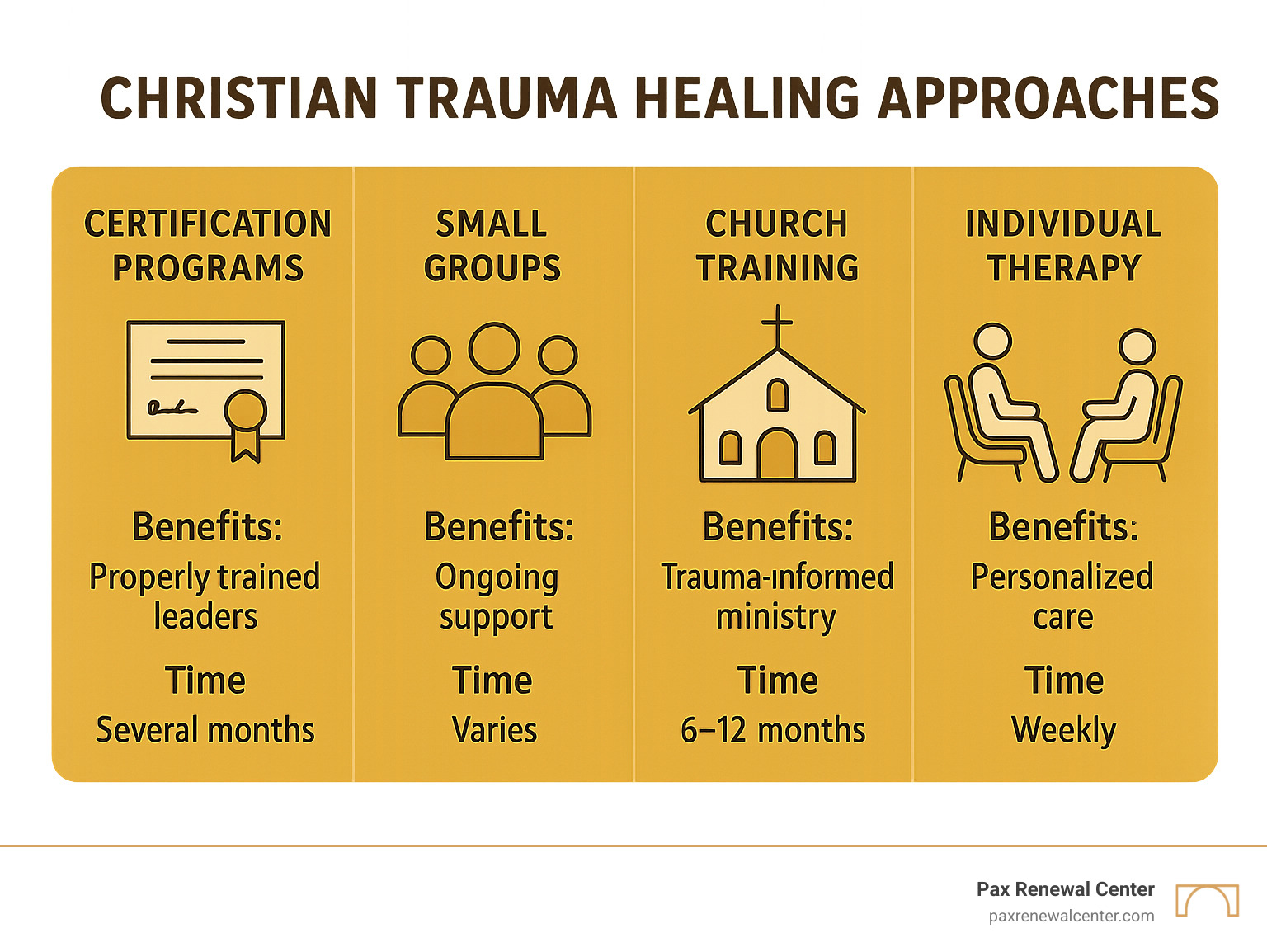
Choosing the Right Faith-Based Trauma Healing Path
Selecting the most appropriate Christian trauma healing network resource requires careful consideration of individual needs, circumstances, and goals. The abundance of available options can feel overwhelming, but understanding the key factors can help guide decision-making.
Clinical vs. Lay Support represents one of the most important distinctions. Professional therapy through qualified Christian counselors provides intensive, individualized treatment for severe trauma, while lay support through small groups and church programs offers community-based healing for those with less severe symptoms or as supplements to professional care.
Time Commitment varies significantly across different approaches. Certification programs require 10-15 hours of initial training plus ongoing renewal, while small group participation might involve weekly meetings for several months. Church training programs typically span six months with periodic intensive sessions.
Spiritual Fit is crucial for effective healing. Some individuals thrive in structured, curriculum-based programs, while others prefer more flexible, relationship-focused approaches. The key is finding resources that align with your spiritual maturity and preferred learning style.
At Pax Renewal Center, we often recommend combining multiple approaches for optimal healing. Professional therapy provides the clinical foundation, while small group participation offers community support, and church training helps create supportive environments for ongoing recovery.
For those seeking more info about faith-based counseling, we integrate these network resources with our clinical practice to provide comprehensive care that addresses both psychological and spiritual needs.
Matching Needs to Resources within Christian Trauma Healing Networks
Individual Therapy Needs are best addressed through professional counseling that incorporates Christian trauma healing network resources. This approach provides personalized treatment while utilizing the tools and insights developed by these networks.
Group Work Benefits include peer support, shared experiences, and the healing power of community. Small group participation is particularly valuable for those who feel isolated by their trauma or who benefit from learning alongside others with similar experiences.
Leadership Training Opportunities serve those called to help others heal from trauma. Whether pursuing professional certification or lay ministry training, these programs equip individuals to become healing agents within their communities.
Member Benefits of joining Christian trauma healing networks include access to exclusive resources, networking opportunities, ongoing education, and community support. These benefits extend far beyond initial training or program participation.
Uprooting False Beliefs & Cultivating Hope
One of the most powerful aspects of Christian trauma healing networks is their focus on identifying and replacing false beliefs that develop in the wake of trauma. These beliefs often masquerade as truth and can create ongoing cycles of pain and dysfunction.
False Belief Identification involves tracing current struggles back to their traumatic origins. For example, a man whose alcoholic father repeatedly called him a failure might struggle with perfectionism and fear of failure throughout his adult life.
Planting Truth Processes use Scripture and prayer to replace false beliefs with biblical truth. This isn’t simply positive thinking but a deep spiritual process that requires both cognitive work and spiritual disciplines like lament, meditation, and prayer.
Gratitude Journaling serves as a practical tool for cultivating hope and resilience. By regularly recording blessings and positive experiences, trauma survivors can retrain their brains to notice good things rather than focusing exclusively on threats and problems.
The Romans 5 Model provides a theological framework for understanding how suffering can produce endurance, character, and ultimately hope. This progression helps trauma survivors understand that their pain can have purpose without minimizing the reality of their struggle.

Frequently Asked Questions about Christian Trauma Healing Networks
What is the process to become a Certified Christian Trauma Care Provider?
The Certified Christian Trauma Care Provider (CCTCP) process begins with the Level 1 training, a 10-hour course designed for both professional and lay counselors. This foundational program covers basic trauma counseling skills from a Christian perspective, integrating biblical principles with evidence-based practices.
After completing Level 1, participants can pursue CCTCP Level 2, a 5-hour advanced course focusing on complex trauma and helping clients currently experiencing traumatization. This advanced training is particularly valuable for professional counselors and those working with severe trauma cases.
Certification Renewal is required every two years, ensuring that certified providers stay current with both clinical developments and evolving best practices in faith-based trauma care. The renewal process typically involves continuing education and demonstration of ongoing competency.
How are Scripture and evidence-based therapies like EMDR or CBT combined?
Christian trauma healing networks excel at integrating biblical truth with proven therapeutic methods. Rather than viewing these approaches as competing, they understand them as complementary tools that address different aspects of human healing needs.
EMDR Integration with Christian principles involves using biblical truth to process traumatic memories and replace lies with Scripture-based truth. Clients might engage with passages about God’s love and protection while processing traumatic memories through bilateral stimulation.
CBT Integration focuses on identifying negative thought patterns and replacing them with biblical truth. This approach recognizes that many cognitive distortions stem from spiritual wounds and require both therapeutic techniques and spiritual healing for complete resolution.
At Pax Renewal Center, we regularly combine these approaches in our clinical practice, finding that clients experience deeper and more lasting healing when both psychological and spiritual dimensions are addressed simultaneously.
How can churches quickly start supporting trauma survivors?
Churches can begin supporting trauma survivors immediately by implementing several practical steps:
Create Safe Environments by training key leaders to recognize trauma symptoms and respond appropriately. This includes understanding triggers, providing emotional safety, and knowing when professional referrals are necessary.
Establish Referral Networks with qualified Christian counselors who can provide professional treatment when needed. Churches should never attempt to provide therapy but can offer crucial pastoral support alongside professional care.
Implement Small Group Programs using resources from Christian trauma healing networks. These programs provide structured support while maintaining appropriate boundaries between pastoral care and professional therapy.
Develop Crisis Response Protocols for when trauma occurs within the church community. Having clear procedures for responding to crises helps churches provide immediate support while ensuring appropriate professional help is obtained.
Conclusion
Finding healing from trauma through faith doesn’t have to be a journey you walk alone. Christian trauma healing networks offer a bridge between professional mental health care and spiritual support, creating pathways to restoration that honor both your clinical needs and your faith journey.
At Pax Renewal Center in Lafayette, Louisiana, we’ve seen countless lives transformed when people combine professional therapy with the community support and resources these networks provide. Our team understands that trauma wounds both the mind and the spirit, requiring healing approaches that address every part of who you are.
Dan Jurek and our experienced therapists have witnessed how Christian trauma healing network resources can amplify the healing that happens in the therapy room. When you’re working with a counselor who understands your faith and can connect you with supportive community resources, recovery becomes not just possible but sustainable.
Whether you’re a trauma survivor taking your first steps toward healing, a pastor wanting to better support your congregation, or a mental health professional seeking to integrate faith with clinical practice, these networks offer practical tools and genuine community support.
The path forward might include joining a small group healing program, pursuing professional therapy, or participating in church-based trauma training. What matters most is taking that first step and allowing others to walk alongside you.
Your healing journey matters. The pain you’ve experienced doesn’t define your future, and the hope these networks offer isn’t just wishful thinking—it’s rooted in both clinical research and biblical truth about God’s desire for your restoration.
If you’re ready to explore how professional counseling can work alongside faith-based community support, we invite you to learn more about our services at Pax Renewal Center. Our therapists are trained in evidence-based approaches like EMDR, CBT, and trauma-focused therapy, all integrated with spiritual wisdom and compassionate care.
Seeking help is actually a step of faith, trusting that God has provided both professional counselors and supportive communities to help you find the peace and restoration He desires for your life. Your story of pain can become a testimony of healing, hope, and God’s faithfulness.