
Social Anxiety Disorder in Teens Can Affect School, Friends, and Daily Life
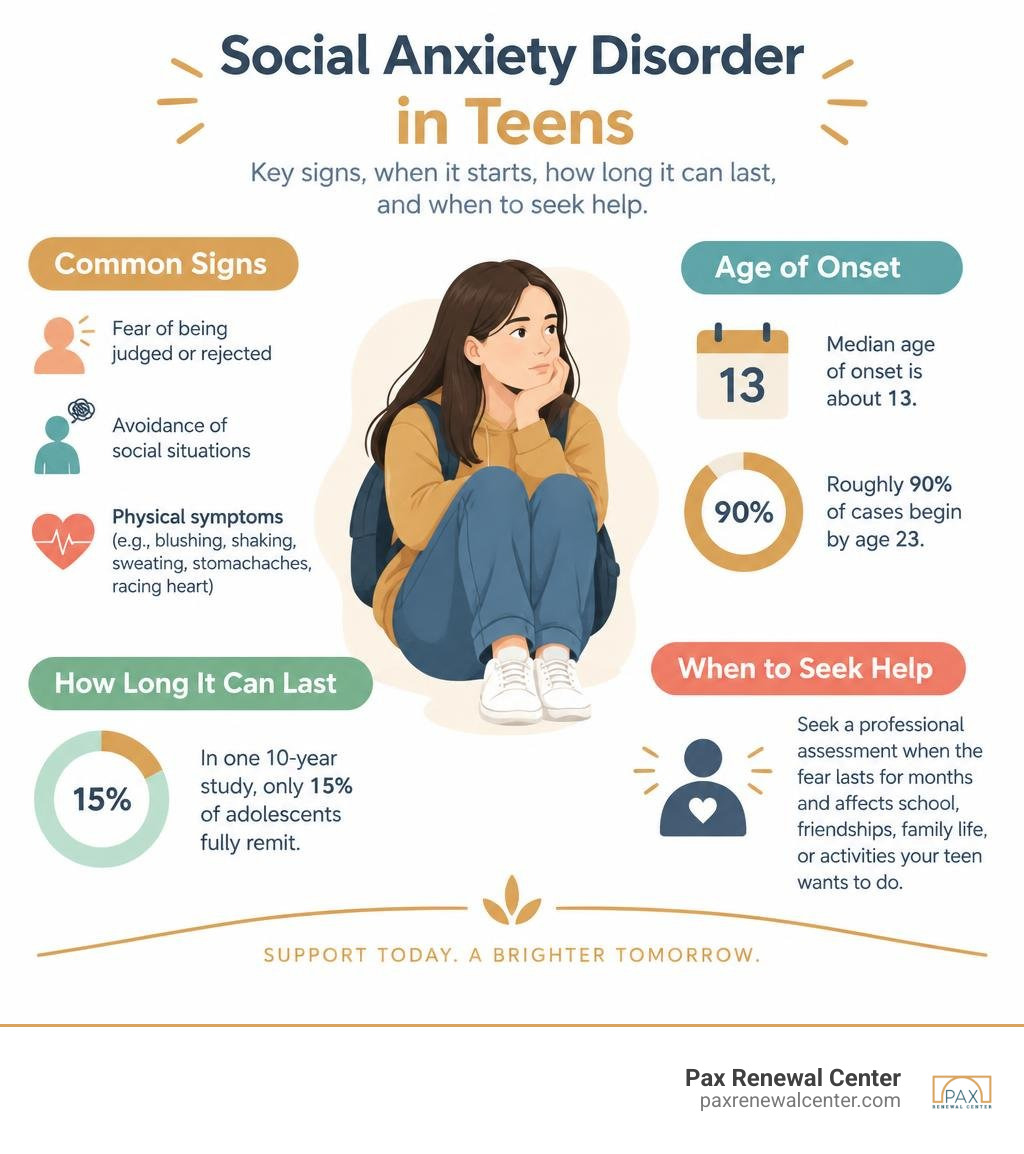
Social anxiety disorder in teens is more than ordinary shyness. It is a lasting fear of being judged, embarrassed, or rejected that leads a teen to avoid everyday situations such as answering in class, eating near peers, joining activities, or making eye contact. Parents may also notice physical signs like blushing, shaking, sweating, stomachaches, or a racing heart.
A simple rule of thumb: seek a professional assessment when the fear lasts for months and gets in the way of school, friendships, family life, or activities your teen wants to do. Avoidance can bring quick relief, but it often strengthens the fear over time.
Adolescence is a high-risk period because peer approval, social comparison, and public self-consciousness become especially intense. The median age of onset is about 13, and research suggests that roughly 90% of cases begin by age 23. Without support, symptoms can persist: in one 10-year study, only 15% of adolescents with social anxiety fully remitted.
This matters because social anxiety can affect grades, friendships, dating relationships, and a teen’s sense of belonging. It can also make a capable young person seem withdrawn, angry, unmotivated, or uninterested when they are actually overwhelmed by fear of negative evaluation.
I am Dan Jurek, M.A., LPC-S, LMFT-S, founder and clinical director of Pax Renewal Center, with more than 35 years of counseling experience supporting individuals and families facing anxiety and other emotional struggles. My work with social anxiety disorder in teens combines evidence-informed care, compassionate family support, and faith-sensitive counseling when that fits the teen and family’s values.
Essential social anxiety disorder in teens terms:
- teen anxiety disorder
- teen anxiety disorder treatment
- what is generalized anxiety disorder in children and teens
Recognizing Social Anxiety Disorder in Teens: Core Symptoms and Signs
Social anxiety disorder (SAD)—historically termed social phobia—is characterized by marked, persistent fear or anxiety regarding social situations where the individual might be scrutinized, criticized, or evaluated by others. In the clinical landscape of youth mental health, epidemiological research indicates lifetime prevalence rates around 12% across the general population, with point prevalence climbing to approximately 10% by late adolescence.
When evaluating adolescents, clinicians look for functional impairment across multiple domains: academic, familial, and peer settings. Parents wondering how to spot early markers can review clinical screening to assess teen anxiety symptoms to systematically identify distress patterns. The NIMH guidance on social anxiety disorder highlights that this condition involves intense somatic responses, negative cognitive spirals, and active social avoidance lasting six months or longer.
| Feature | Typical Adolescent Shyness | Clinical Social Anxiety Disorder |
|---|---|---|
| Onset & Duration | Situational; diminishes as the teen warms up | Persistent; lasts at least 6 months without relief |
| Functional Impairment | Minimal; teen still participates in activities | Severe; school avoidance, falling grades, isolated |
| Physical Distress | Mild butterflies or brief hesitance | Intense blushing, trembling, panic attacks, nausea |
| Safety Behaviors | Rare; occasional quietness | Constant; eye contact avoidance, phone staring |
| Cognitive Focus | Normative concern about peer impressions | Catastrophic assumptions of humiliation and judgment |
Differentiating Shyness from Social Anxiety Disorder in Teens
Many teenagers experience fleeting self-consciousness when entering a new school or delivering a speech. However, there is a fundamental distinction between temperamental shyness and a clinical anxiety disorder. Shyness is a personality trait characterized by initial hesitation that typically decreases as familiarity builds. It rarely paralyzes an adolescent or stops them from pursuing their goals.
Conversely, clinical social anxiety involves pervasive dread and functional paralysis. When a teenager refuses to walk into the school cafeteria, fakes illness to avoid group presentations, or exhibits intense emotional meltdowns before minor social events, they are not acting out of defiance. Recognizing why your teen is not just being dramatic allows parents to offer compassionate validation instead of punitive reactions. Untreated social anxiety can look like defiance or apathy because teens will often resort to anger or total shutdown rather than endure the raw panic of social evaluation.
Physical, Emotional, and Behavioral Manifestations
The symptomatology of adolescent social anxiety manifests across three interconnected systems:
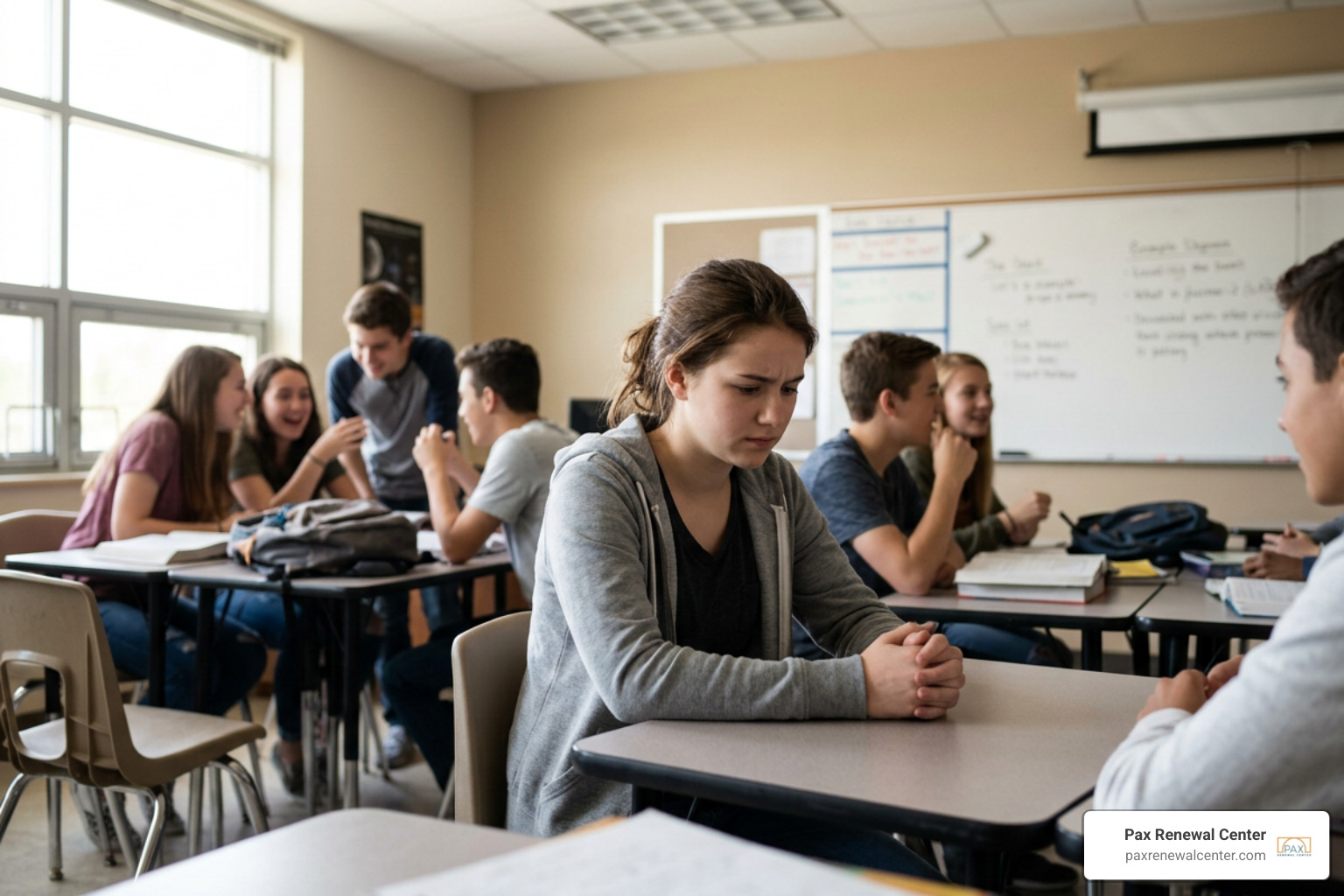
- Physiological Arousal: Somatic triggers activate the autonomic nervous system, resulting in rapid heart rate, profuse sweating, gastrointestinal distress, tremors, muscle tension, and uncontrollable blushing. For many teens, the fear of exhibiting these visible physical signs becomes a primary source of anticipatory panic.
- Cognitive Distortions: Adolescents maintain intense internal criticism, anticipating that others will perceive them as awkward, incompetent, or strange. They fall prey to mind-reading (“Everyone is laughing at me”) and catastrophizing (“If I stumble on this word, my social life is over”).
- Behavioral Avoidance and Safety Actions: Beyond overt avoidance (skipping classes or avoiding social gatherings), subtle safety behaviors emerge. These include wearing oversized hoodies to hide physical features, staring relentlessly at a phone screen, speaking in barely audible whispers, or positioning oneself near exits.
Cognitive and Developmental Drivers of Adolescent Social Fears
Adolescence represents a distinct neurodevelopmental window. Frontolimbic brain networks undergo substantial remodeling: subcortical structures like the amygdala demonstrate heightened sensitivity to social evaluation, while prefrontal cortical regions responsible for executive cognitive control and emotion regulation are still maturing. This biological shift creates an elevated vulnerability to social stress.
Findings from a longitudinal study on social anxiety trajectories and cognitive factors reveal that distinct developmental trajectories exist across youth. Adolescents categorized in high-anxiety trajectories display elevated negative interpretation biases, intense self-focused attention, behavioral inhibition, and diminished perceived social competence. Peer groups become the primary mirror through which identity is constructed, making perceived rejection feel like an existential threat.
Applying the Clark and Wells Cognitive Model to Adolescents
The seminal cognitive model developed by Clark and Wells (1995) provides an explanatory framework for why social anxiety persists rather than extinguishing naturally over time (Leigh & Clark, 2018). When an anxious adolescent enters a feared social situation, a systematic cognitive cascade is triggered:
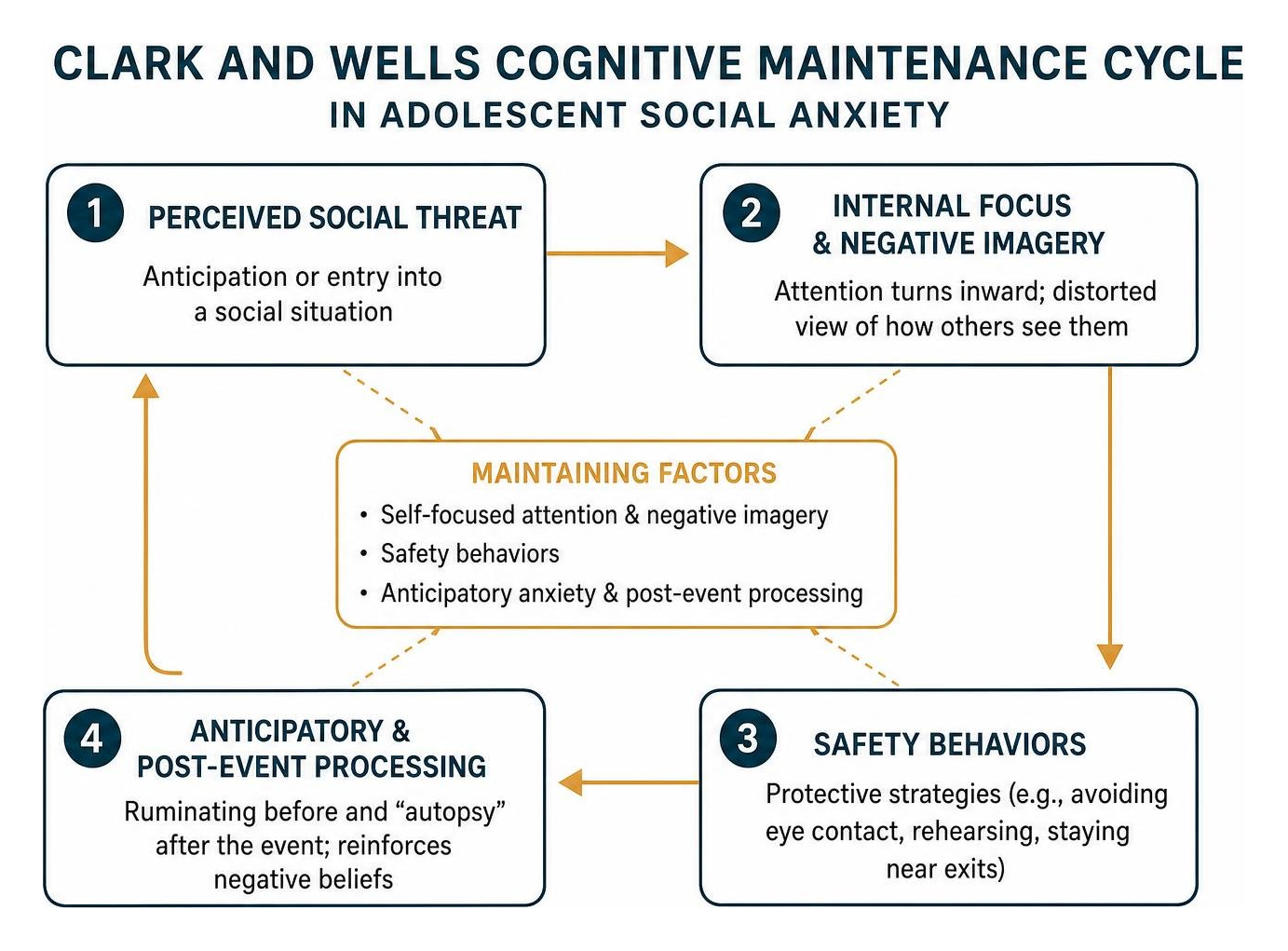
As synthesized in clinical research on the Clark and Wells cognitive model in youth, several core maintaining factors lock this cycle into place:
- Self-Focused Attention and Negative Imagery: Attention snaps inward. The adolescent constructs a distorted mental representation of how they appear to others—often seeing themselves from an external vantage point as red-faced, clumsy, or uncoordinated.
- Safety Behaviors: To prevent feared catastrophes, teens deploy protective mechanisms (e.g., rehearsing every sentence, avoiding eye contact, gripping a podium). These behaviors inadvertently prevent the disconfirmation of catastrophic beliefs and can disrupt social flow.
- Anticipatory and Post-Event Processing (“The Autopsy”): Prior to an event, the teen ruminates on impending failure. Following the encounter, they engage in post-event processing, reviewing their perceived blunders in vivid detail, which consolidates negative memories and reinforces future avoidance.
Academic and Relational Consequences of Social Anxiety Disorder in Teens
The impact of social anxiety extends far beyond momentary discomfort. Because learning environments demand collaborative work and verbal presentations, socially anxious students often experience measurable drops in academic performance. Adolescents with clinical or subclinical social anxiety frequently show lower grade point averages compared to non-anxious peers, not due to cognitive deficits, but due to classroom avoidance and test-related panic.

Relationally, socially anxious teenagers report fewer friendships, lower relationship quality, and heightened isolation. Because their safety behaviors are frequently misread by peers as coldness or aloofness, these adolescents face a significantly higher risk of peer victimization and bullying. This creates a painful cycle: fear of negative evaluation drives awkward withdrawal, which invites peer exclusion, ultimately confirming the teen’s deepest fears.
Evidence-Based Treatment Pathways and Therapeutic Approaches
Left untreated, social anxiety follows a chronic, unremitting course. Long-term prospective research shows that over a 10-year span, 57% of adolescents with social anxiety disorder continue to experience clinical or symptomatic anxiety, with only 15% achieving complete spontaneous remission. Consequently, evidence-based psychological intervention is essential.
Effective clinical care centers on cognitive restructuring, attentional training, and graded behavioral exposure. Families exploring care can consult our comprehensive teen anxiety disorder treatment options to evaluate modalities suited to their adolescent’s specific presentation. Furthermore, a landmark randomized controlled trial evaluating group CBT formats for adolescents demonstrated that structured Cognitive Behavioral Therapy produces medium-to-large clinical effect sizes, substantially reducing symptom severity (Agersnap et al., 2026).
Core exposure exercises frequently used in clinical treatment hierarchies include:
- Direct Eye-Contact and Greeting Drills: Practicing brief, intentional eye contact and simple verbal greetings with store clerks or peers.
- Intentional Social Blunder Experiments: Deliberately dropping a pencil, asking for the wrong item, or mispronouncing a word to discover that social catastrophe does not occur.
- Classroom-Simulated Presentations: Delivering short, graded speeches with therapist and peer audiences while practicing the reduction of safety behaviors.
- Assertiveness and Boundary Exercises: Asking a peer for a favor or declining an unreasonable request in role-play scenarios.
Individual and Group Cognitive Behavioral Therapy
Cognitive Behavioral Therapy (CBT) adapted for adolescents directly targets the maintaining mechanisms identified in the Clark and Wells framework. In individual therapy, clinicians help teenagers identify and challenge catastrophic predictions while systematically eliminating safety behaviors.
Key components of modern adolescent CBT include:
- Video Feedback: Anxious teens view video recordings of their social interactions alongside the therapist to contrast their internal, distorted self-image against objective reality.
- Attention Training Technique (ATT): Training teens to intentionally pivot their attention away from internal bodily sensations (heart rate, blushing) outward toward the external conversational environment.
- Behavioral Experiments with Graded Exposure: Rather than passive habituation, exposures are framed as empirical tests to evaluate whether feared outcomes actually materialize when safety behaviors are dropped.
At Pax Renewal Center in Lafayette, Louisiana, our clinical approach integrates evidence-based modalities like CBT and EMDR with faith-sensitive counseling. We guide young people to recognize their inherent dignity, quiet their inner critic, and build lasting interpersonal confidence within a supportive, values-grounded framework.
School Accommodations and Parental Support Strategies
Recovery requires alignment between the clinical office, the school environment, and the home. Educators and parents can collaborate on practical support plans:
- Gradual Presentation Accommodations: Rather than exempting a socially anxious student from speaking assignments—which reinforces avoidance—teachers can structure graded milestones (e.g., presenting first to the teacher alone, then to two trusted peers, and eventually to the whole class).
- Parental Scaffolding without Over-Accommodation: When parents order meals for their teens or speak on their behalf, they unintentionally signal that the adolescent is incapable of handling the interaction. Parents can practice supportive validation paired with gentle encouragement to take small social risks.
- Addressing Co-Occurring Conditions: Social fears rarely exist in total isolation. Many teens simultaneously navigate generalized worry; understanding what generalized anxiety disorder looks like in teens ensures that therapy addresses overlapping symptom profiles comprehensively.
Frequently Asked Questions About Teen Social Anxiety
What is the median age of onset for adolescent social anxiety?
The median age of onset for social anxiety disorder is 13 years old. This developmental timing coincides directly with the transition into middle and high school, a period marked by rapid frontolimbic neurological maturation, surging pubertal hormones, and heightened public self-consciousness. Approximately 90% of all lifetime cases emerge before the age of 23, underscoring the critical necessity of early adolescent screening and intervention.
Will social anxiety disorder resolve on its own over time?
Clinical studies confirm that social anxiety disorder rarely remits spontaneously. Prospective data tracking adolescents over a 10-year period show that only 15% experience complete spontaneous recovery without formal treatment, while 57% continue to suffer from chronic symptomatic impairment into adulthood. Because safety behaviors and avoidance reinforce catastrophic cognitive beliefs, structured therapeutic intervention is necessary to alter the long-term developmental trajectory.
How does social media affect social anxiety in adolescents?
Social media platforms amplify adolescent social anxiety by creating an environment of continuous digital surveillance, curated perfection, and quantified peer validation (likes, shares, views). For socially anxious teens, online communication often functions as a high-level safety behavior, allowing them to exert hyper-vigilant control over their image while avoiding real-time, spontaneous face-to-face interaction. This dynamic exacerbates fear of negative evaluation and fuels rumination.
Conclusion
Adolescent social anxiety is a pervasive, biologically rooted, and cognitively maintained disorder that goes far beyond simple shyness. Left unaddressed, it impairs academic growth, limits relational intimacy, and establishes chronic patterns of avoidance that persist well into adulthood.
However, with timely intervention targeting cognitive biases, internal self-focus, and avoidance behaviors, adolescents can break free from fear. At Pax Renewal Center in Lafayette, Louisiana, our team is committed to helping youth and their families navigate emotional and relational challenges through evidence-based therapies integrated with compassionate, faith-informed care. If your adolescent is struggling with social fears, explore our specialized adolescent counseling services to start the journey toward healing, confidence, and lasting emotional renewal.
References
Leigh E, Clark DM. “Understanding Social Anxiety Disorder in Adolescents and Improving Treatment Outcomes: Applying the Cognitive Model of Clark and Wells (1995)..” Clinical child and family psychology review, 2018. PMCID PMC6447508. Agersnap TN, Lomholt JJ, Jensen MB, Thastum M. “Comparison of Disorder-Specific Group CBT and Generic Group CBT in Treating Adolescents with Social Anxiety Disorder: A Randomized Controlled Trial..” Research on child and adolescent psychopathology, 2026. PMCID PMC12881119.