

Understanding the Anxiety Disorder Test for Teens vs. Clinical Diagnosis
When you first suspect your teenager is carrying a heavy burden of stress, taking an online screener can feel like a breath of fresh air. It offers a structured way to ask: Is this normal teenage stress, or is something deeper going on? However, it is essential to understand the difference between an informal assessment and a formal medical diagnosis.
Screening tools use self-reported answers to gauge symptom frequency. They are wide-net instruments designed to flag emotional distress. On the other hand, a clinical diagnosis of a teen anxiety disorder can only be made by a licensed mental health professional or medical doctor.
A clinical diagnostic process involves in-depth interviews, evaluating medical histories, ruling out underlying physical conditions (like thyroid imbalances or vitamin deficiencies), and measuring symptoms against the rigorous criteria of the Diagnostic and Statistical Manual of Mental Disorders (DSM-5).
Key Differences Between Self-Screening and Professional Diagnosis
Understanding how an online screener differs from a professional evaluation helps keep test results in their proper perspective:
- Scope and Depth: Informal self-assessments capture a snapshot of current feelings. A clinical evaluation explores your teen’s developmental background, family history, and underlying emotional triggers.
- Symptom Duration: Clinical diagnostics require symptoms to persist consistently over a specific timeframe (often 6 months or more for conditions like Generalized Anxiety Disorder) rather than just a tough week at school.
- Functional Impairment: A clinician specifically measures how much anxiety disrupts basic daily life—such as school attendance, family relationships, personal hygiene, and social development.
- Differential Diagnosis: Qualified therapists know how to untangle complex, overlapping issues. For example, anxiety frequently mimics or co-occurs with depression, ADHD, sensory processing differences, or trauma.
How to Take an Online Anxiety Disorder Test for Teens at Home

Taking an anxiety screener at home should be a gentle, low-pressure experience. If you are a parent guiding your teenager, approach the idea with curiosity rather than alarm.
Choose a quiet time when your teen is rested—not right after an intense homework session or a argument. Explain that the tool is simply a way to help them express how they have been feeling lately.
Most validated tools focus on a 2-week observation window. Encourage your teen to answer based on their typical experience over those past fourteen days rather than an unusually stressful single afternoon. You can explore interactive tools such as the Adolescent Anxiety Questionnaire or complete parent-observation check-ins together to open up healthy dialogue.
Top Validated Anxiety Screening Tools for Teenagers
Not all online quizzes are created equal. While many lighthearted personality quizzes exist on social media, healthcare professionals rely on standard, peer-reviewed psychological instruments to measure youth distress accurately.
| Screening Tool | Best Used For | Typical Format | Key Diagnostic Focus |
|---|---|---|---|
| GAD-7 | Broad screening for generalized worry and physical tension | 7 Self-Report Questions | General anxiety severity over the past 2 weeks |
| LSAS-CA | Specific fear of social judgment and performance | 24 Situational Scenarios | Social fear vs. behavioral avoidance in youth |
| Parent-Observation Tools | Behavioral tracking by caregivers over time | 10–20 Behavioral Items | Changes in sleep, academics, hygiene, and mood |
Generalized Anxiety Disorder-7 (GAD-7) Scale
The GAD-7 is one of the most widely respected, clinically validated screening tools in modern medicine. Originally published in 2006 by medical researchers, it measures the frequency of seven core anxiety symptoms over the past two weeks on a 0 to 3 scale (“Not at all” to “Nearly every day”).
Research demonstrates that at a cutoff score of 10, the GAD-7 boasts an 89% sensitivity and 82% specificity for Generalized Anxiety Disorder. Furthermore, a score of 8 or higher on the GAD-7 strongly suggests a teenager may be struggling with clinical anxiety and should be evaluated by a professional.
The GAD-7 also offers reasonable sensitivity for flagging panic disorder, social phobia, and post-traumatic stress. You can try a free online version through the GAD-7 Anxiety Test to gauge recent symptom patterns.
Liebowitz Social Anxiety Scale for Children & Adolescents (LSAS-CA)
Social anxiety in teenagers often gets mistaken for simple shyness or teenage attitude. The LSAS-CA is a specialized instrument that helps separate normal social hesitations from debilitating social anxiety disorder.
The tool walks adolescents through youth-specific scenarios—such as eating in front of peers in the school cafeteria, reading aloud in class, entering a room where others are already seated, or asking a teacher for help. It evaluates two distinct dimensions for each situation:
- Emotional Fear: How much internal dread or panic the situation causes.
- Behavioral Avoidance: How often the teen actively avoids the situation to escape discomfort.
Evaluating both fear and avoidance gives parents and counselors a clear picture of how social anxiety limits a teen’s day-to-day choices. You can explore a self-scoring version using the Liebowitz Social Anxiety Scale.
Recognizing Physical, Emotional, and Behavioral Red Flags
Anxiety in teenagers is a chameleon. While adults often express anxiety through verbal statements like “I feel overwhelmed,” adolescents frequently translate emotional pain into physical ailments or sharp behavioral shifts.
Understanding why your teen is not just being dramatic allows you to view their struggles through an empathetic, clinical lens.

Behavioral and Academic Warning Signs
When anxiety begins overloading a teenager’s nervous system, their daily habits and routines start to shift. Keep an eye out for these persistent warning signs:
- Social Withdrawal: Isulating in their bedroom for hours, ignoring text messages from long-time friends, or abandoning beloved extracurricular activities and sports.
- Academic Decline: A sudden drop in grades, missing assignments, or intense dread surrounding tests and school attendance.
- Digital Overuse and Avoidance: Hiding behind phone screens or gaming consoles constantly as an escape mechanism to numb real-world worries.
- Hygiene and Space Neglect: Allowing personal grooming to slip or leaving their living space unusually chaotic as executive functioning becomes overwhelmed by stress.
- Extreme Irritability: Experiencing explosive mood swings, snapping at minor requests, or displaying intense sensitivity to perceived criticism.
Physical and Emotional Symptoms in Adolescents
Because the mind and body are intrinsically linked, chronic worry triggers a continuous “fight-or-flight” hormonal response. The World Health Organization estimated in 2022 that 301 million people globally live with an anxiety disorder, and physical somatic symptoms are among the most common indicators in young people:
- Frequent Somatic Complaints: Unexplained tension headaches, chronic stomachaches, nausea, or muscle soreness without an underlying medical illness.
- Sleep Disruptions: Difficulty falling asleep due to racing thoughts, waking up repeatedly, suffering night terrors, or sleeping late into the day to escape stress.
- Panic Episodes: Sudden, overwhelming surges of fear accompanied by a racing heartbeat, shortness of breath, trembling, sweating, or feeling dizzy.
- Perfectionism and Reassurance-Seeking: Expressing constant, low self-esteem (“I can’t do anything right”) or repeatedly needing adult validation regarding safety, school performance, or friendships.
Interpreting Results and Next Steps for Teen Mental Health
Once your teenager completes a screener or you finish a parent-observation tool, take a breath. A high score is not a personal failure—it is simply valuable information pointing you toward clarity and relief.
If your teen’s results indicate mild, moderate, or severe anxiety, share the findings with a qualified doctor or mental health professional. You can also explore preliminary screening resources like the MHA Anxiety Assessment to gather additional context.
If at any point your teen expresses feelings of worthlessness, mentions self-harm, or thoughts of suicide, access immediate help by calling or texting the 988 Suicide & Crisis Lifeline.
What High Scores on an Anxiety Disorder Test for Teens Mean
A high score on a screening tool flags elevated distress that deserves professional care. Research shows that approximately 50% of people diagnosed with depression are also diagnosed with an anxiety disorder, making expert evaluation critical to addressing co-occurring mental health needs.
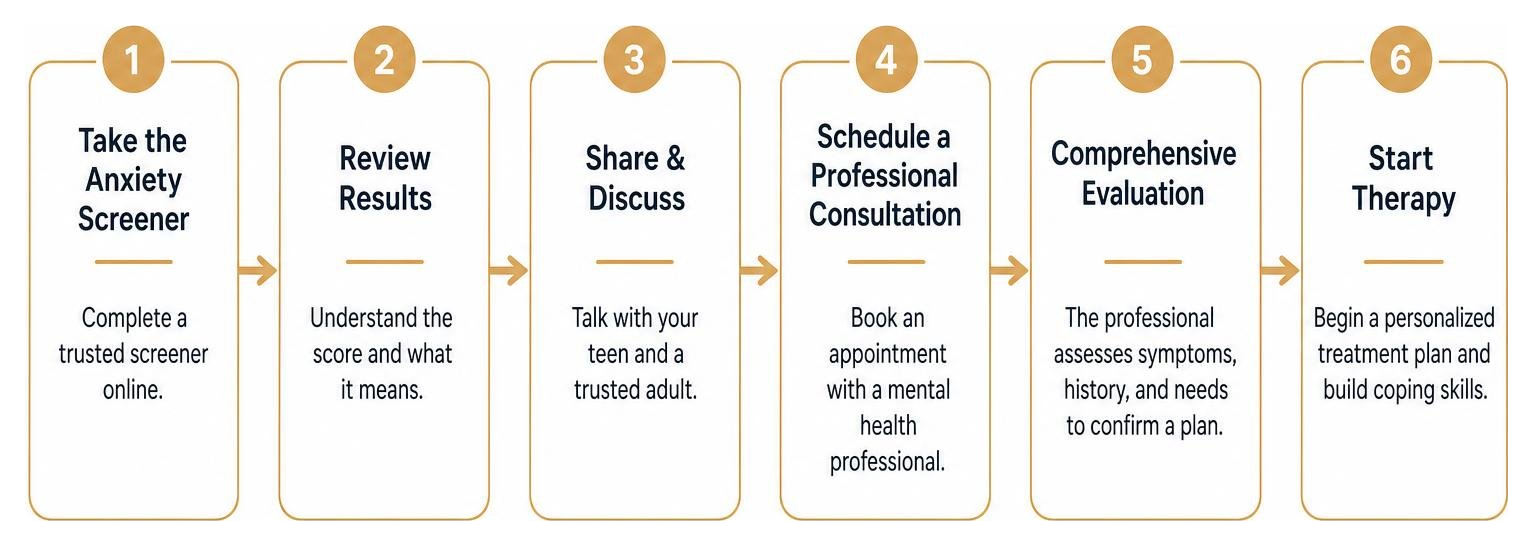
When reviewing high screener scores, consider these steps:
- Avoid Overreacting: Stay calm. Your teenager looks to you as an emotional anchor. Let them know you love them and that anxiety is manageable with the right tools.
- Track Symptoms: Keep a quiet log of when anxiety peaks (e.g., Sunday nights before school, before social gatherings, or during noisy events).
- Schedule a Clinical Consultation: Reach out to a professional practice to schedule an intake. Review our anxiety counseling complete guide to learn what to expect during initial sessions.
Evidence-Based Therapies and Parental Support Strategies
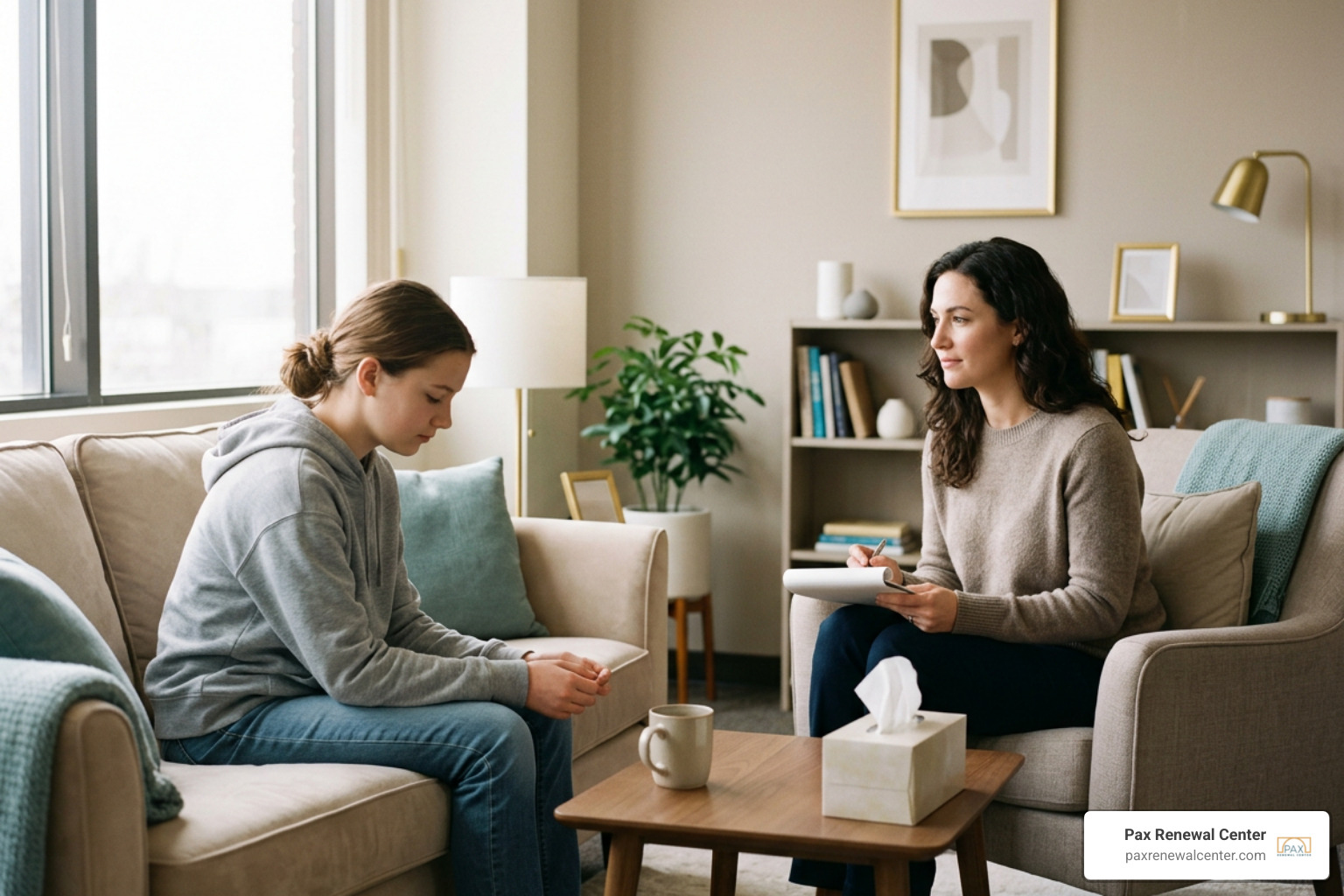
The good news is that adolescent anxiety disorders are highly treatable. Modern psychotherapy equips teenagers with lifelong tools to regulate their nervous systems and reshape anxious thought patterns:
- Cognitive Behavioral Therapy (CBT): The gold standard for youth anxiety. CBT helps teens identify irrational “thought traps” (like catastrophizing), challenge negative self-talk, and replace worry with balanced perspectives.
- Exposure Therapy: A structured technique especially effective for phobias and social anxiety, gently helping teens face feared situations in small, manageable steps until the brain unlearns the fear response.
- EMDR (Eye Movement Desensitization and Reprocessing): For teens whose anxiety stems from past trauma, bullying, or distressing life events, emdr for anxiety helps reprocess distressing memories so they no longer trigger acute fight-or-flight reactions.
- Integrative and Faith-Based Therapy: For families who value spiritual grounding, working with a Christian counselor blends evidence-based techniques with compassionate, faith-aligned values. Explore our teen counseling lafayette la guide for local care options.
How Parents Can Offer Daily Support at Home
Outside the therapy room, parents play a vital role in creating a peaceful environment:
- Establish Consistent Routines: Regular sleep schedules, predictable mealtimes, and organized daily habits create a strong sense of internal safety.
- Validate Feelings First: Resist the urge to immediately solve their problems or dismiss worries with “You’ll be fine.” Instead, say: “I can see how much that is stressing you out, and I’m right here with you.”
- Model Calming Techniques: Practice deep belly breathing, muscle relaxation, or grounding techniques (like the 5-4-3-2-1 sensory method) together.
- Encourage Healthy Boundaries: Help your teen set sensible limits on screen time, social media consumption, caffeine intake, and late-night study sessions.
Frequently Asked Questions About Teen Anxiety Screening
What is the best anxiety test for teenagers?
The GAD-7 (Generalized Anxiety Disorder-7) scale is widely considered the best initial screening tool for general anxiety due to its strong clinical validation, ease of use, and high sensitivity. For teens struggling specifically with social fears, peer dynamics, or public speaking dread, the LSAS-CA (Liebowitz Social Anxiety Scale for Children & Adolescents) offers deep, targeted insight into social anxiety and avoidance patterns.
Can a teenager take an anxiety test at home without a doctor?
Yes, a teenager can take an anxiety screener at home on paper or through a trusted online platform. Taking an informal screener in a comfortable, private home environment can be a great, low-stress conversation starter between a parent and teen. However, home screeners are strictly educational tools and cannot replace a formal medical evaluation by a physician or licensed therapist.
What GAD-7 score indicates a teen needs professional help?
A score of 8 or higher on the GAD-7 indicates that a teenager is experiencing moderate to severe anxiety symptoms that warrant attention. Scores between 8 and 9 point to mild-to-moderate generalized distress, while scores of 10 to 14 represent moderate anxiety, and 15 to 21 reflect severe anxiety. Any score above 8 should prompt a conversation with a licensed counselor or pediatrician.
Conclusion: Taking the First Step Toward Healing
Navigating adolescent anxiety can feel overwhelming, but you do not have to walk this road alone. Utilizing a brief screening questionnaire like an anxiety disorder test for teens is an empowering, compassionate first step toward understanding your child’s inner world.
When we identify anxiety early, we open the door to emotional healing, healthier family relationships, and renewed confidence for your teenager’s future. At Pax Renewal Center, located in Lafayette, Louisiana, our experienced counselors specialize in integrating evidence-based clinical care—such as CBT, EMDR, and exposure therapy—with warm, faith-aligned spiritual guidance.
Whether your teen is struggling with social dread, academic pressure, panic episodes, or chronic worry, we are here to support your family every step of the way. Explore our comprehensive Pax Renewal Center mental health services or contact our team today to schedule an intake evaluation and help your teen step into a brighter, more peaceful tomorrow.