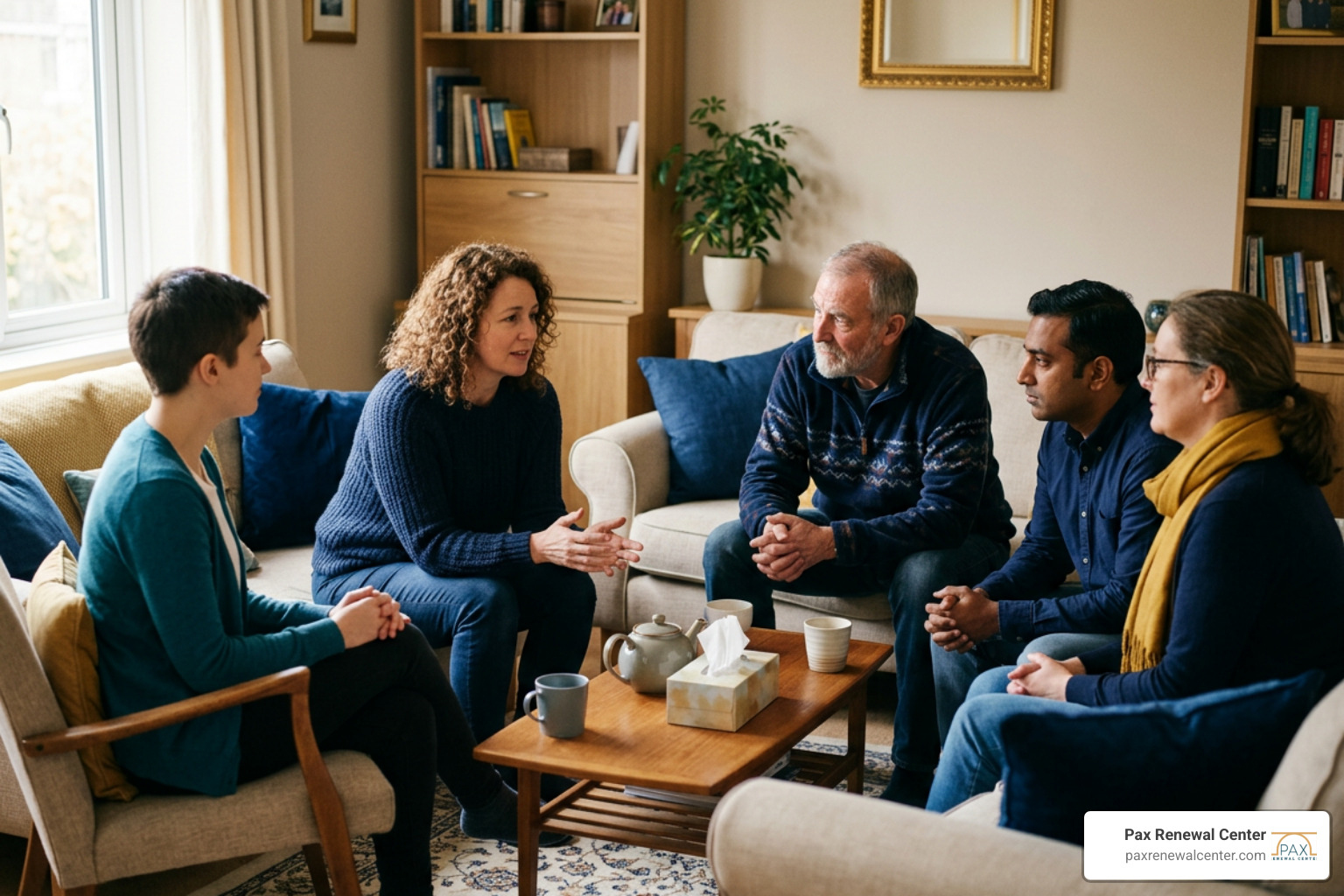

Understanding Qualification Levels in Online Training for Counsellors
Navigating the landscape of online training for counsellors begins with understanding national qualification frameworks and how academic levels translate into actual clinical practice capabilities. Whether you are studying under regulated frameworks in North America or standard frameworks like the UK’s Regulated Qualifications Framework (RQF), course levels dictate your scope of practice, clinical responsibility, and professional independence.
| Qualification Level | Primary Focus | Practical Application | Progression Pathway |
|---|---|---|---|
| Level 2 / Basic Skills | Foundational active listening, empathy, professional boundaries | Non-clinical helping roles, community support, human resources | Entry requirement for intermediate certificates |
| Level 3 / Intermediate | Theoretical models, self-awareness, basic therapeutic alliance | Supportive care roles under direct guidance | Prepares candidates for core professional diplomas |
| Level 4 / Professional Diploma | Supervised client practice, ethical decision-making, core modalities | Independent client work under clinical supervision | Primary benchmark for core practitioner registration |
| Level 5 / Specialized Practitioner | Specialized clinical areas (e.g., trauma, telehealth, complex grief) | Independent practice, advanced agency work | Pathway to specialist practice, supervision, or master’s study |
Foundational Certificates and Skills Courses
Foundational programs—typically categorized as Level 2 or Level 3 qualifications—introduce learners to core therapeutic conditions, active listening skills, and the boundaries required for supportive listening roles. These introductory courses are ideal for professionals in education, social work, human resources, or ministry who want to enhance their interpersonal effectiveness without acting as primary mental health diagnosticians.
For instance, foundational skills programs like the Chrysalis Level 3 Certificate in Introduction to Counselling Skills emphasize self-understanding, non-judgmental attending, and practical communication frameworks. While these certificates build vital interpersonal skills, they do not grant direct authority to practice as an independent therapist or bill health insurance.
Advanced Diplomas and Professional Certification Pathways
To transition from basic helping skills to independent client practice, aspiring practitioners must complete advanced professional diplomas or graduate degree programs (Level 4, Level 5, or Master’s-level study). Higher-level programs demand substantial guided learning hours, structured theoretical integration, and direct clinical placements.
Comprehensive options like the Foundation Counselling Skills Distance Learning at UEL combine rigorous theoretical frameworks with structured virtual practice, bridging the gap between basic interpersonal communication and formal academic study. Advanced diploma tracks prepare students for direct client contact by integrating ethics, psychopathology, multicultural competence, and evidence-based therapeutic modalities.
Standards, Accrediting Bodies, and Course Recognition
A training program’s value depends heavily on its official recognition and accreditation by established professional bodies. Selecting an unaccredited course can leave graduates ineligible for state licensure, national registry listings, or professional liability insurance. For a comprehensive guide on evaluating clinical education providers, explore our breakdown of 5 Ways to Find Professional Training for Therapists Like a Pro.
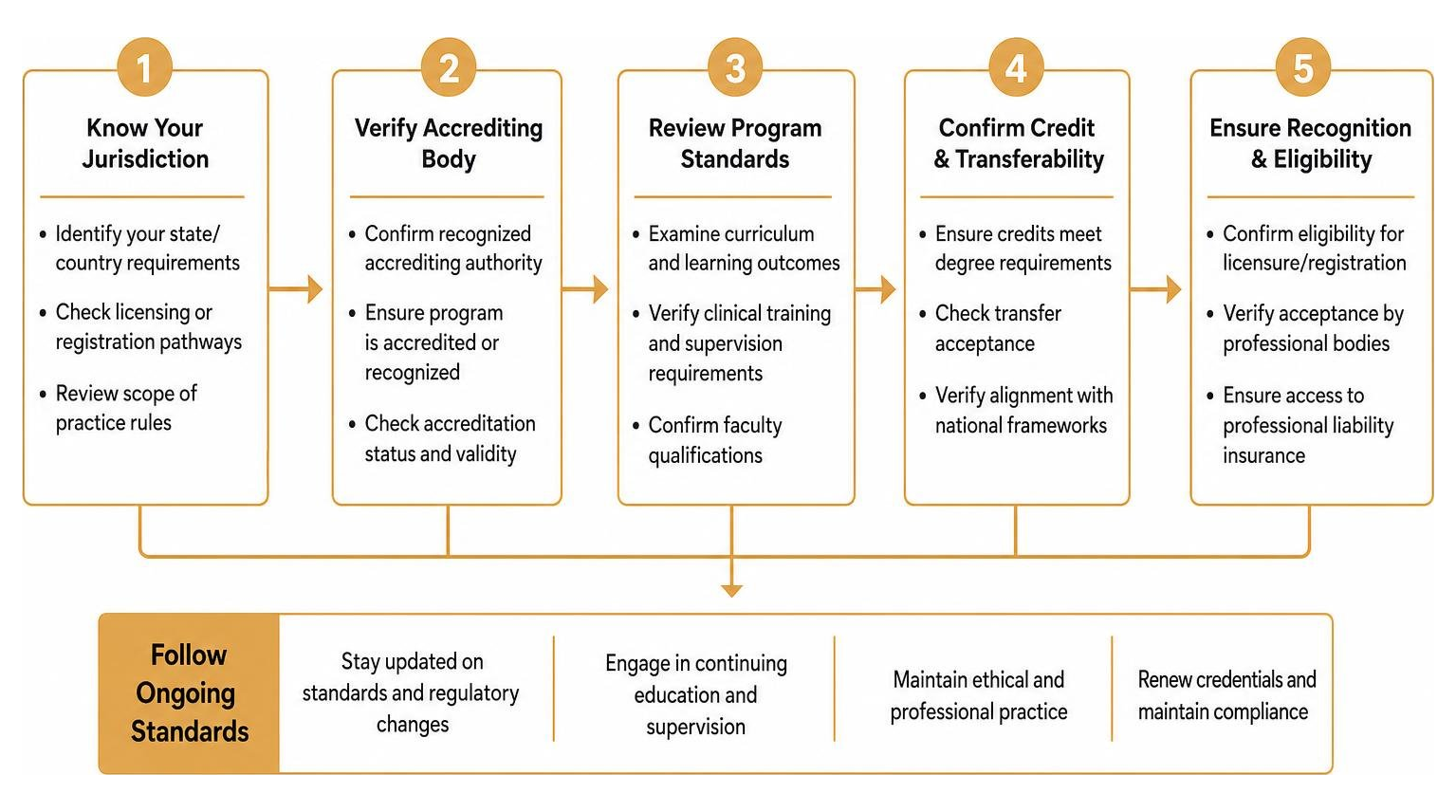
Navigating Accreditation Requirements for Online Training for Counsellors
When evaluating online training for counsellors, you must verify that the course provider aligns with your jurisdiction’s governing standards:
- United States & State Licensing Boards: Independent clinical practice requires a CACREP-accredited or state-approved graduate degree (M.A. or M.S. in Counseling), alongside rigorous supervised clinical hours. For clinicians operating in Louisiana, educational tracks must align with the regulations set by the Louisiana Licensed Professional Counselors Board of Examiners (LPCBE).
- UK Awarding Organizations & Professional Registers: Candidates pursuing qualifications across the Atlantic look for credentials granted by awarding bodies such as the Counselling & Psychotherapy Central Awarding Body (CPCAB), mapped against established professional frameworks like the British Association for Counselling and Psychotherapy (BACP) framework or quality-checked by the National Counselling and Psychotherapy Society (NCPS).
Recognized accrediting bodies mandate specific minimum standards for guided learning, direct personal therapy, and supervised practice, ensuring that online graduates meet identical quality benchmarks to traditional classroom students.
Comparing Online Training for Counsellors vs In-Person Programs
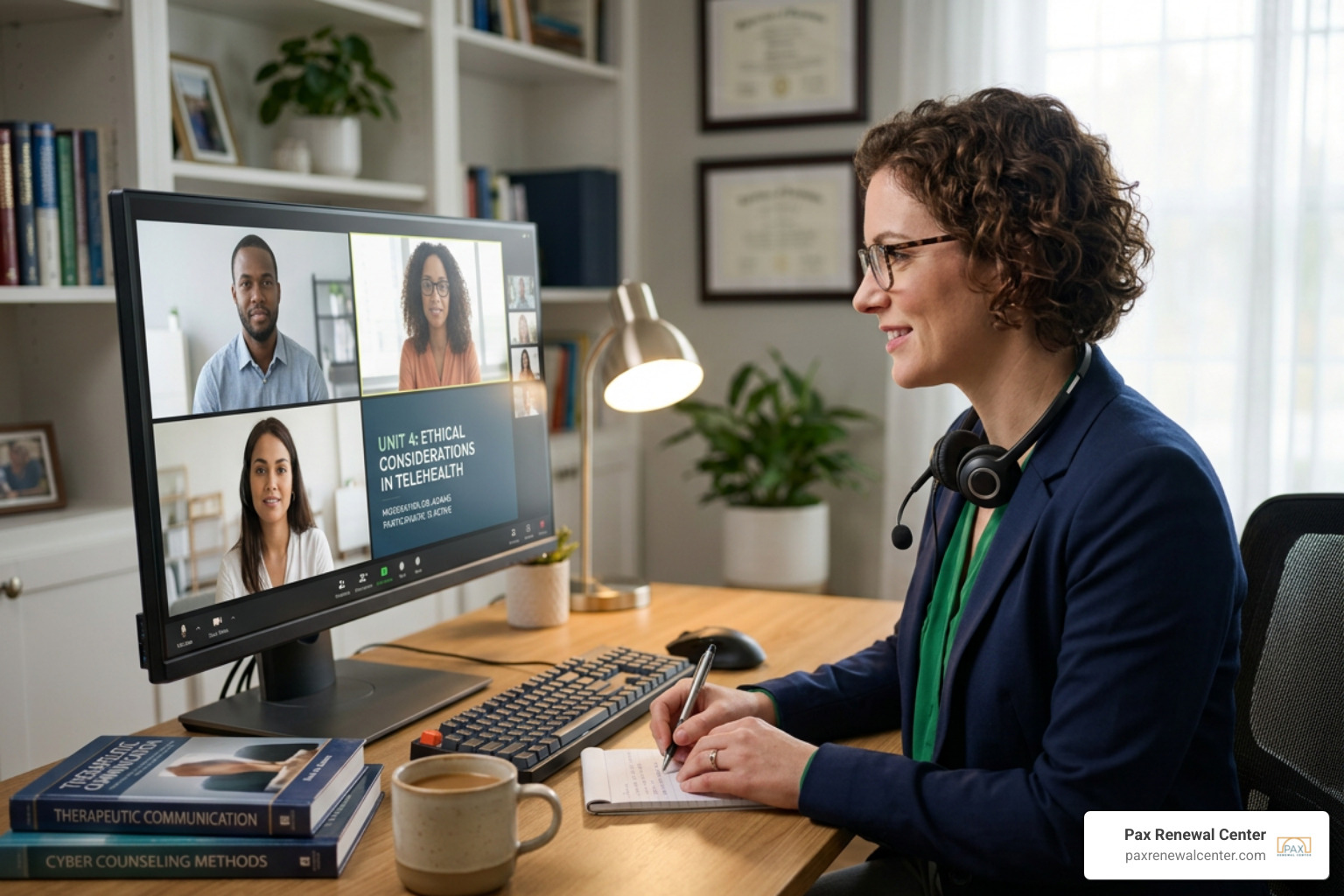
A common question among prospective students is whether virtual counselor education maintains the clinical rigor of traditional classroom learning. Modern distance learning programs overcome historical online limitations by employing synchronous video roleplays, mandatory residency weekends, real-time tutor evaluations, and interactive student cohorts.
| Feature | Online Training Programs | Traditional In-Person Programs |
|---|---|---|
| Scheduling Flexibility | High; async lectures with scheduled virtual labs | Fixed; rigid on-campus class times |
| Peer Interaction | Virtual break-out rooms and digital discussion forums | Physical practice rooms and face-to-face peer cohorts |
| Clinical Placement | Local community agency placement under approved local supervision | University-affiliated clinics or regional site placements |
| Skill Assessment | Submitted video roleplays, live Zoom evaluations, peer assessments | In-person live observations by faculty staff |
Industry outcomes demonstrate that when an online program includes required live practice and direct supervision, graduates achieve career readiness and professional competence equal to their in-person peers.
Practical Skill Building and Specialized Modalities in Remote Education
Developing core therapeutic conditions—empathy, unconditional positive regard, and congruence—requires interactive practice. Modern online training for counsellors ensures robust skill acquisition through live online skills labs where students execute peer roleplays under the direct observation of qualified clinical faculty.
Tutors assess student performance using continuous video evaluation, measuring micro-skills such as paraphrasing, body language awareness, emotional tracking, and goal alignment. Students also maintain reflective journals to cultivate deep personal self-awareness, ensuring they enter clinical practice equipped to handle complex relational dynamics.
Specialized Clinical Pathways: Trauma, Addiction, and Modalities
Once clinicians establish core counseling skills, advanced online training allows them to specialize in targeted therapeutic modalities:
- Cognitive Behavioral Therapy (CBT): Mastering evidence-based cognitive restructuring, exposure techniques, and behavioral activation. To learn more about incorporating CBT into modern practice, read our guide on how to Unlock Cognitive Behavioral Therapy: A Clinician’s Journey.
- Trauma-Informed Care & EMDR: Training in specialized trauma protocols like Eye Movement Desensitization and Reprocessing (EMDR) and somatic healing modalities allows practitioners to address complex PTSD safely.
- Addiction & Recovery: Developing competencies in chemical dependency, behavioral addictions, and motivational interviewing.
- Advanced Grief Therapy: Gaining specialized expertise to guide clients past acute loss and complex bereavement. Expand your practice capabilities with our insights on Beyond Bereavement: Advanced Grief Therapy for Clinicians.
Telehealth, Telephone, and Digital Ethics

The rapid expansion of remote clinical services makes specialized digital training essential. Delivering therapy via video, phone, or text introduces unique ethical, legal, and clinical challenges that traditional counselor education does not fully address.
Courses like the CPCAB Level 5 Award in Online and Phone Counselling Practice train clinicians to manage digital risk, cross-jurisdictional licensing compliance, data encryption, and technology failures.
Clinicians learn to navigate digital phenomena such as the “black-hole effect”—where asynchronous or text-based clients project intense emotions without visual cues—and establish secure emergency protocols for remote clients experiencing acute distress.
Continuing Education, Supervision, and Low-Cost Training Resources
Professional growth does not end upon earning a primary license or diploma. Licensed counselors must complete ongoing continuing education units (CEUs) or Continuing Professional Development (CPD) hours to maintain active credentialing, adapt to evolving research, and maintain high standards of client care.
Professional clinical supervision remains the cornerstone of safe counseling practice. Licensed Professional Counselor Interns and Provisionally Licensed Professional Counselors in Louisiana must work under approved clinical supervisors to meet licensure hours. To locate qualified guidance tailored to regional standards, review our guide on Supervision Success in the Bayou State: Best LPC Supervisors in Louisiana.
Fulfilling Continuing Education Requirements Online
State licensing boards require practitioners to complete accredited continuing education credits during every renewal cycle. In Louisiana, licensed counselors must verify that their chosen courses meet board-approved standards, such as those governed by the National Board for Certified Counselors (NBCC) or offered through official state professional platforms. For details on state regulations, consult the official guide on Louisiana Counselor Continuing Education Requirements.

Practitioners expanding into remote care often utilize flexible self-paced offerings, such as the Online and Telephone Counselling CPD Course, which provides structured hours mapped directly to recognized digital practice frameworks.
Accessible Low-Cost and Free Educational Tools
Entering the counseling field or maintaining professional credits does not always require massive financial investments. Numerous reputable institutions offer high-quality introductory modules, assessment tools, and webinars at low or no cost:
- Introductory Certificate Modules: Accessible programs like the Level 3 Counselling and Psychotherapy Free Certificate Course allow entry-level learners to explore theoretical models, basic ethics, and practice management concepts risk-free.
- University Open Courses: Leading public academic institutions publish introductory psychology, listening skills, and mental health first aid modules that serve as excellent preparation for formal graduate study.
- Professional Association Webinars: Organizations such as the American Counseling Association (ACA) regularly host free or discounted clinical webinars covering specialized practice trends, suicide prevention protocols, and legal updates.
Frequently Asked Questions about Online Counselor Training
How do online courses ensure practical skill development without face-to-face interaction?
High-quality online counseling courses use mandatory synchronous video sessions where students practice active listening, paraphrasing, and therapeutic boundary-setting in real time with peers. Instructors observe these virtual breakout rooms live or review recorded student roleplays to evaluate micro-skills, offering detailed written and verbal feedback to build clinical competence.
Can I become a fully qualified counselor exclusively through online study?
In many jurisdictions, academic coursework can be completed entirely online through accredited institutions. However, achieving full professional licensure or registration requires completing mandatory in-person or community-based clinical placements under direct professional supervision. Hybrid structures ensure graduates combine theoretical mastery with real-world clinical experience.
What continuing education requirements must licensed counselors meet annually?
Continuing education requirements vary by state licensing board and professional organization. In Louisiana, Licensed Professional Counselors must complete designated accredited CEU hours each renewal period, including mandatory credits in professional ethics, telehealth protocols, and multicultural competence.
Conclusion

Selecting the right online training for counsellors requires aligning your personal professional goals with recognized accreditation standards, structured qualification levels, and high-quality clinical skill development. Whether you are taking your very first step toward a foundational skills certificate or expanding your established practice into specialized modalities like trauma processing or online therapy, choosing accredited education ensures your work remains safe, effective, and ethically grounded.
At Pax Renewal Center, we understand that professional excellence goes hand in hand with compassionate, faith-sensitive care. Led by Dan Jurek and a team of qualified therapists, our practice integrates evidence-based clinical practices—including Emotionally Focused Therapy (EFT), the Gottman Method, EMDR, and Cognitive Behavioral Therapy (CBT)—with spiritual guidance rooted in Catholic and Christian values. Based in Lafayette, Louisiana, we provide comprehensive in-person and online counseling services, offering marriage therapy, individual counseling, and family renewal.
To learn more about how our clinical approach supports personal healing and relational restoration, Explore Professional Counselling Services with Pax Renewal Center today.