
When Childhood Anxiety Needs More Than Reassurance
Anxiety therapy for kids can help when a child’s fears and worries are so strong that they disrupt school, sleep, friendships, family life, or everyday activities. Feeling nervous before a test, meeting new people, or sleeping away from home is a normal part of growing up. Anxiety may need professional support when it is intense, lasts, and leads a child to avoid the life they want to live.
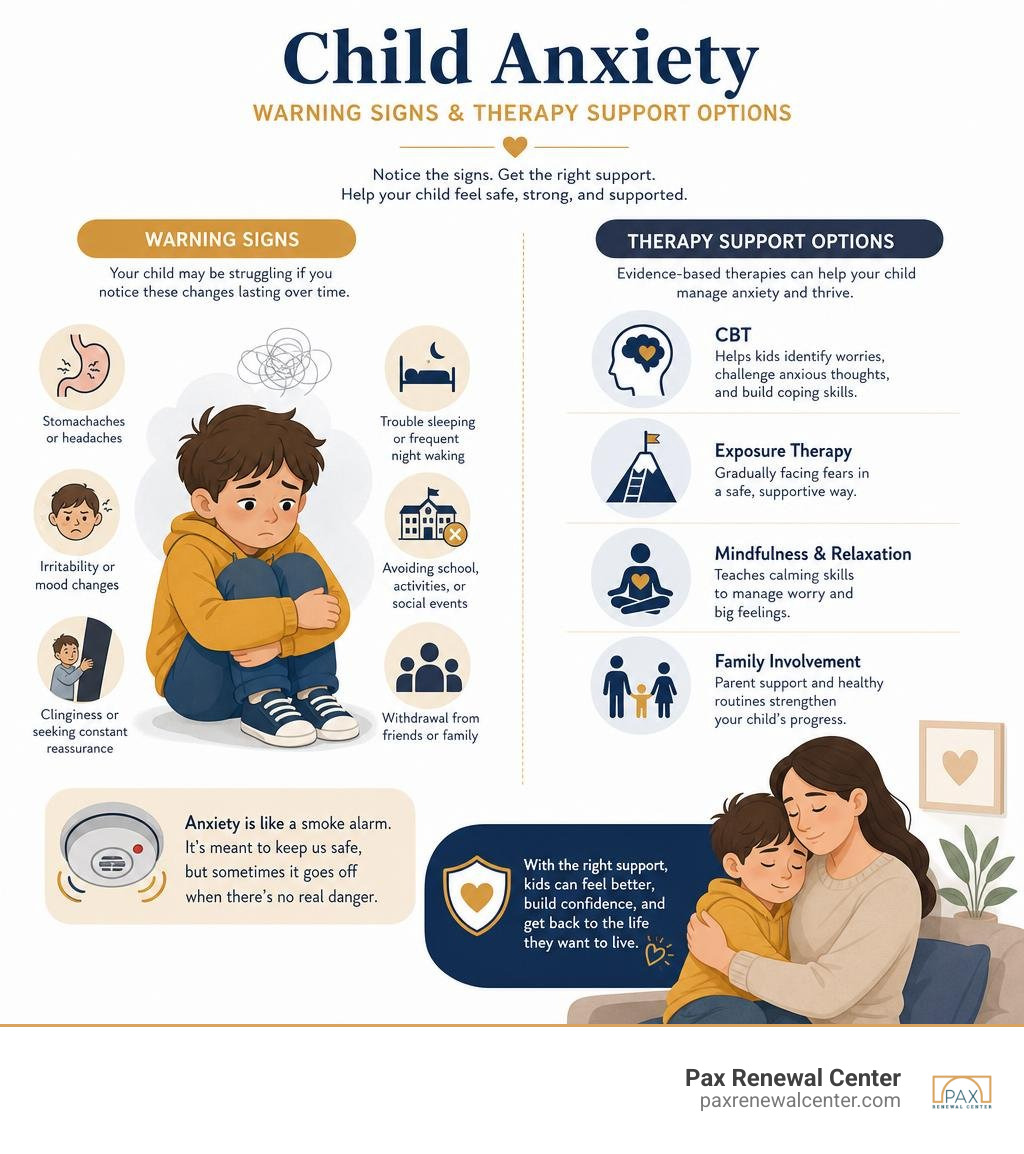
Children do not always say, “I feel anxious.” They may complain of stomachaches or headaches, become irritable, cling to a parent, seek constant reassurance, or refuse school and social events. Anxiety disorders are among the most common mental health concerns for children and teens, affecting an estimated 15% to 20% of young people.
A helpful way to think about anxiety is as a smoke alarm. It is meant to warn a child about danger, but sometimes it sounds for something closer to burnt toast than a real fire. The goal is not to erase every anxious feeling. It is to help a child and family understand the alarm, respond with confidence, and restore daily functioning.
I am Dan Jurek, M.A., LPC-S, LMFT-S, founder and clinical director of Pax Renewal Center in Lafayette, Louisiana, with more than 35 years of counseling experience supporting individuals and families through anxiety, trauma, and life stress. In this guide to anxiety therapy for kids, I will explain the signs to notice, the therapies supported by research, and the important role parents can play in a child’s healing.
Anxiety therapy for kids glossary:
Understanding Childhood Anxiety: Symptoms, Causes, and Diagnosis
Fear and worry are natural developmental safeguards. A toddler naturally fears separation from a primary caregiver, while a young child might express a rational fear of the dark or strange noises. However, when fear becomes persistent, out of proportion to real danger, and disrupts developmental milestones, it crosses the threshold from normative anxiety into a clinical anxiety disorder. Research reveals that excessive anxiety affects approximately 30% of children and adolescents over their lifetime, making it the most frequent mental health condition facing youth today.
Children rarely process anxiety the way adults do. While an adult typically recognizes that their panic or worry is irrational, children often lack the meta-cognitive awareness to articulate, “My nervous system is overwhelmed.” Instead, childhood anxiety frequently presents through somatic complaints like persistent stomachaches, sudden headaches, or extreme irritability. A child who throws a meltdown before going to birthday parties or school is rarely just being defiant—they are often experiencing a fight-or-flight response triggered by internal distress.
When evaluating a child’s mental health, clinicians utilize a comprehensive framework known as the 4P Biopsychosocial Formulation to understand the root causes and maintaining factors of childhood anxiety:

- Predisposing Factors: Genetic vulnerability plays a significant role. Children with a family history of anxiety or inherited behavioral inhibition are naturally more sensitive to environmental stressors.
- Precipitating Factors: Acute events such as severe illness, academic pressure, family loss, parental conflict, or trauma can trigger the onset of acute anxiety.
- Perpetuating Factors: Behavioral avoidance and well-intentioned parental accommodation (like allowing a child to stay home from school or constantly offering reassurance) inadvertently reinforce anxiety over time.
- Protective Factors: A supportive family structure, strong cognitive abilities, willingness to participate in therapy, and faith or community connections foster emotional resilience.
To make a formal diagnosis, healthcare professionals rely on standardized diagnostic guidelines. According to the official Clinical Practice Guideline for the Assessment and Treatment of Children and Adolescents With Anxiety Disorders, symptoms must persist for at least 6 months and cause measurable functional impairment across multiple domains—such as home, school, or social relationships—before a formal anxiety disorder diagnosis is assigned. Addressing these issues early prevents anxiety from evolving into more complex struggles like teen anxiety disorder later in development.
Common Types of Anxiety Disorders in Children
Anxiety presents in distinct patterns depending on the child’s age, temperament, and life circumstances:
- Separation Anxiety Disorder: Marked by excessive, developmentally inappropriate fear regarding separation from primary attachment figures. Children may worry that something terrible will happen to their parents while apart.
- Generalized Anxiety Disorder (GAD): Characterized by uncontrolled, excessive worry about multiple everyday topics, including academic performance, sports, safety, health, and future events.
- Social Anxiety Disorder (Social Phobia): Involves intense fear of judgment, embarrassment, or scrutiny in social or academic settings, leading to withdrawal from group activities, public speaking, or peer interactions.
- Specific Phobias: Severe, irrational fear of distinct objects or scenarios, such as dogs, dark rooms, injections, storms, or vomiting (emetophobia).
- Panic Disorder: Unexpected, recurring panic attacks involving sudden rushes of extreme physical discomfort, heart palpitations, shortness of breath, and intense fear of losing control.
- Selective Mutism: A continuous inability to speak in specific social situations (like school) despite speaking comfortably in familiar settings (like at home).
Recognizing Emotional and Physical Symptoms
Because young minds process fear through bodily sensations and physical distress, parents often notice physical cues before identifying emotional ones.
Common indicators include:
- Physical Signs: Rapid heart rate, hyperventilation, muscle tension, dizziness, fatigue, frequent stomachaches, or nausea before school.
- Behavioral Patterns: Chronic sleep disruption, difficulty falling asleep alone, severe clinginess, tantrums during transitions, and persistent school avoidance.
- Emotional Traits: Overwhelming perfectionism, excessive concern about making mistakes, low frustration tolerance, and an urgent need for constant parental reassurance.
Recognizing these indicators early allows parents to incorporate holistic lifestyle adjustments—such as structured sleep routines, physical activity, and mindfulness strategies outlined in our guide on 10 Simple Ways to Improve Your Mental Health Without Medication—alongside specialized clinical care.
Modern Evidence-Based Options for Anxiety Therapy for Kids
When seeking effective anxiety therapy for kids, parents are often relieved to learn that childhood anxiety is highly treatable. Modern evidence-based care prioritizes time-limited, skill-focused interventions that empower children with practical coping tools. For mild to moderate pediatric anxiety, structured psychological interventions typically yield substantial clinical improvement within 8 to 12 sessions.
National and international clinical protocols, such as the Evidence-based Clinical Practice Guideline for Anxiety in Children and Young People, establish psychological therapy as the primary first-line intervention for youth. Modern therapy models move beyond traditional open-ended “talk therapy” to focus on active behavioral training and cognitive restructuring. Rather than relying solely on emotional habituation, contemporary treatment utilizes the inhibitory learning model—teaching the child’s brain that they can tolerate distress and navigate uncertain situations safely, creating new, resilient neural pathways that override former fear responses.
For detailed insight into how cognitive modalities are implemented locally in Lafayette, Louisiana, parents can review our comprehensive resource on CBT Therapy Lafayette LA Ultimate Guide.
Cognitive Behavioral Therapy as the Foundation of Anxiety Therapy for Kids
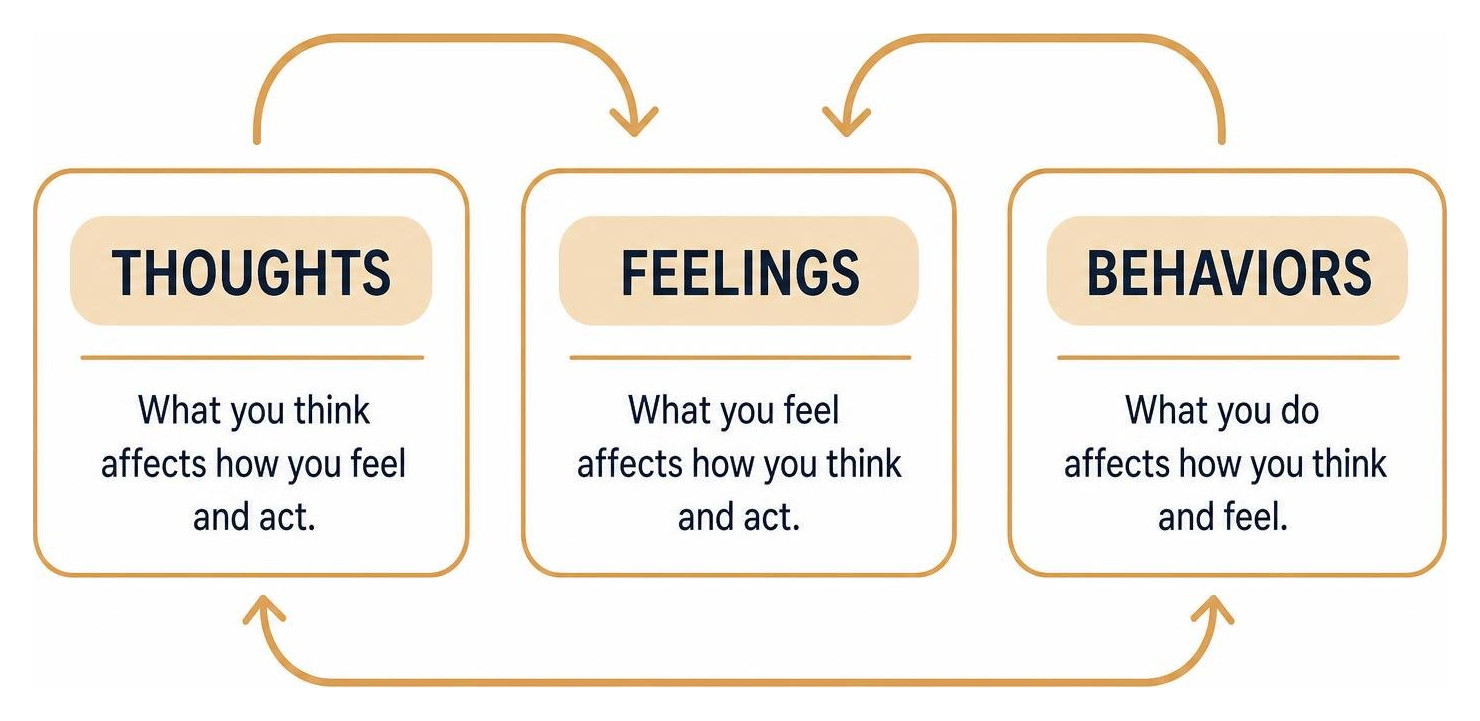
Cognitive Behavioral Therapy (CBT) stands as the gold standard in pediatric mental health care. At its core, CBT helps young clients understand the direct connection between thoughts, feelings, and behaviors:
To make complex cognitive concepts intuitive for young minds, therapists often help children externalize their anxiety. Instead of seeing anxiety as an internal character flaw, the child learns to view anxiety as an external entity—frequently nicknamed “The Bully in the Brain,” “Mr. Bossy,” or “The Fear Monster.”

Through creative tools like thought logs and visual coping ladders, children learn to identify negative automatic thoughts (“If I make a mistake on this test, everyone will think I’m stupid”) and replace them with realistic, empowering alternatives (“Making mistakes is how I learn, and my family loves me no matter what”). As detailed in scientific literature on Cognitive Behavioral Therapy for Children and Adolescents with Anxiety Disorders – PMC, cognitive restructuring helps demystify internal panic and gives children tangible control over their emotional responses.
Exposure Therapy and Systematic Desensitization
While cognitive strategies provide a firm foundation, research demonstrates that exposure therapy is the single most critical active ingredient in resolving childhood anxiety. Avoidance is anxiety’s greatest fuel: every time a child avoids a feared situation (such as skipping a birthday party or sleeping in their parents’ bed), they receive immediate, short-term relief. However, this avoidance reinforces the brain’s false belief that the situation was truly dangerous.
Exposure therapy systematically breaks this self-defeating cycle through gradual, controlled desensitization. Together, the therapist and child construct a customized fear hierarchy rated on a Subjective Units of Distress Scale (SUDS) from 1 (minimal worry) to 10 (extreme panic):
- Level 2: Looking at a picture of a dog.
- Level 4: Watching a video clip of a small dog playing.
- Level 6: Standing across the street from a friendly dog on a leash.
- Level 8: Petting a small, calm dog while holding a parent’s hand.
- Level 10: Visiting a park where off-leash dogs are playing.
Through step-by-step in-vivo (real-life) exposures, children experience a violation of fear expectations. They discover that their feared outcome rarely happens and that uncomfortable physical sensations naturally peak and subside without needing to flee.
Innovative Digital and Parent-Led Approaches in Anxiety Therapy for Kids
Accessing traditional face-to-face therapy can sometimes be challenging due to geographic constraints or busy family schedules. Thankfully, recent clinical trials demonstrate that alternative delivery models yield strong clinical outcomes.
Major research trials, such as The Kids FACE FEARS pragmatic randomized trial of therapist-led vs guided internet cognitive-behavioral therapy for pediatric anxiety: rationale and methods – Macquarie University, demonstrate that guided internet-delivered CBT (iCBT) and telehealth formats offer accessible, non-inferior alternatives to standard office-based care.
| Therapy Delivery Format | Primary Focus | Parent Involvement | Average Duration | Best Suited For |
|---|---|---|---|---|
| Traditional Individual CBT | Direct child skill-building, cognitive restructuring, in-vivo exposures. | Moderate (co-therapist, home practice supervisor). | 8–12 weekly sessions. | Mild to severe anxiety, older children, teens. |
| Guided Internet CBT (iCBT) | Digital interactive modules, structured exposure assignments. | High (guided home module completion). | 8–10 digital modules. | Mild to moderate anxiety, busy schedules, remote areas. |
| Parent-Led Therapy (e.g., SPACE) | Eliminating parental accommodation, building caregiver support skills. | Very High (parents are the primary target of intervention). | 10–12 weekly sessions. | Younger children, school refusal, severe accommodation. |
The Parent’s Role, Alternative Modalities, and Medication Considerations
Parents play a pivotal role in the trajectory of childhood anxiety. When a child is in distress, a parent’s natural instinct is to protect them—offering immediate reassurance, completing difficult tasks for them, or allowing them to avoid intimidating scenarios. In clinical terms, these behaviors are called parental accommodation. While accommodation brings short-term calm, it inadvertently communicates to the child that they are incapable of handling discomfort on their own.
Parent-based treatment programs, such as Supportive Parenting for Anxious Childhood Emotions (SPACE), train parents to act as supportive co-therapists. Rather than forcing the child directly into intense therapy sessions, SPACE teaches parents how to systematically reduce accommodations while communicating loving confidence in their child’s resilience. For comprehensive parenting strategies on managing behavioral dynamics, explore our Parenting Counseling Complete Guide.
When traditional CBT alone is insufficient or when children have neurodevelopmental differences (such as Autism Spectrum Disorder or ADHD), therapists adapt care. Modified CBT programs incorporate sensory regulation tools, visual schedules, and play-based modalities to engage younger children effectively.
Additionally, network meta-analyses published in clinical journals—such as the study on the Effects of different interventions on anxiety disorders in children and adolescents: a systematic review and bayesian network meta-analysis | BMC Psychiatry | Springer Nature Link—highlight the growing clinical evidence for Acceptance and Commitment Therapy (ACT), play-based emotional processing, and structured physical exercise in improving emotional regulation for youth.
When Medication is Recommended for Childhood Anxiety
While psychological therapy remains the primary intervention for pediatric anxiety, medication is sometimes considered a valuable partner in care. Pharmacotherapy is rarely used as a standalone solution; instead, it is integrated when severe functional impairment prevents a child from participating in therapy.
- Indications for Medication: Severe school refusal, intense suicidal distress, debilitating panic attacks, or when baseline anxiety is so high that the child cannot engage in CBT sessions.
- First-Line Medications: Selective Serotonin Reuptake Inhibitors (SSRIs) such as fluoxetine or sertraline, and Serotonin-Norepinephrine Reuptake Inhibitors (SNRIs).
- Safety and Monitoring: Prescriptions require close supervision by a board-certified child psychiatrist or pediatric provider to monitor dosage, side effects, and therapy readiness, as highlighted in public health resources like Mental Health Matters: Supporting Your Child’s Wellbeing.
Long-Term Outlook and Building Emotional Resilience
The long-term outlook for children who receive timely, evidence-based anxiety therapy for kids is exceptionally positive. Unaddressed childhood anxiety carries a risk of heterotypic continuity—meaning an untreated condition like separation anxiety in early childhood can evolve into depression, panic disorder, or substance abuse during adolescence and adulthood.
Early clinical intervention interrupts this path. By learning emotional coping mechanics, distress tolerance, and cognitive reframing early in life, children build enduring self-efficacy. They come to understand that anxiety is not a stop sign, but a temporary physical sensation they can master—paving the way for lifelong psychological health, confidence, and relational well-being.
Frequently Asked Questions about Childhood Anxiety Therapy
How long does anxiety therapy for kids typically take?
For mild to moderate pediatric anxiety, evidence-based Cognitive Behavioral Therapy (CBT) typically requires 8 to 12 weekly sessions. Severe cases or complex co-occurring conditions may require longer treatment or step-down care plans. Progress is monitored regularly through standardized anxiety scales completed by parents and therapists.
Can young children under 8 years old benefit from anxiety therapy?
Yes. For children under age 8, therapists adapt traditional CBT into engaging, play-based interventions. These modifications utilize concrete visual props, storybooks, sensory calming activities, and heavy parental involvement to teach emotional regulation skills appropriate for early childhood developmental stages.
What should parents do if a child refuses to go to therapy?
If a child resists attending counseling, parents can utilize parent-only counseling programs like SPACE (Supportive Parenting for Anxious Childhood Emotions). By training parents to reduce household anxiety accommodations and alter parental responses at home, children show measurable reductions in anxiety even without setting foot in a clinic session.
Conclusion
At Pax Renewal Center in Lafayette, Louisiana, we understand that watching your child struggle with intense fears and worries can feel overwhelming. Childhood anxiety affects the entire family, but your child does not have to carry this heavy burden alone. Through evidence-based interventions—such as Cognitive Behavioral Therapy, systematic exposure, play therapy, and supportive parent coaching—children can break free from avoidance and regain their childhood confidence.
Our clinical team integrates proven therapeutic practices (including CBT, EMDR, and family systems) with compassionate, faith-aligned values rooted in Christian and Catholic principles. Whether you choose in-person sessions at our Lafayette office or seek guidance through structured family support, early intervention is the greatest gift you can offer your child’s emotional future.
To take the first step toward lasting family healing and emotional resilience, contact our team today to Explore Pax Renewal Center Services.