

Understanding Teen Anxiety: A Growing Concern for Parents
Teen anxiety disorder affects approximately one in four adolescents, making it the most common mental health concern for today’s youth. While all teens experience stress, an anxiety disorder is different. It involves excessive, persistent fear that interferes with daily life, relationships, and school for weeks or months at a time.
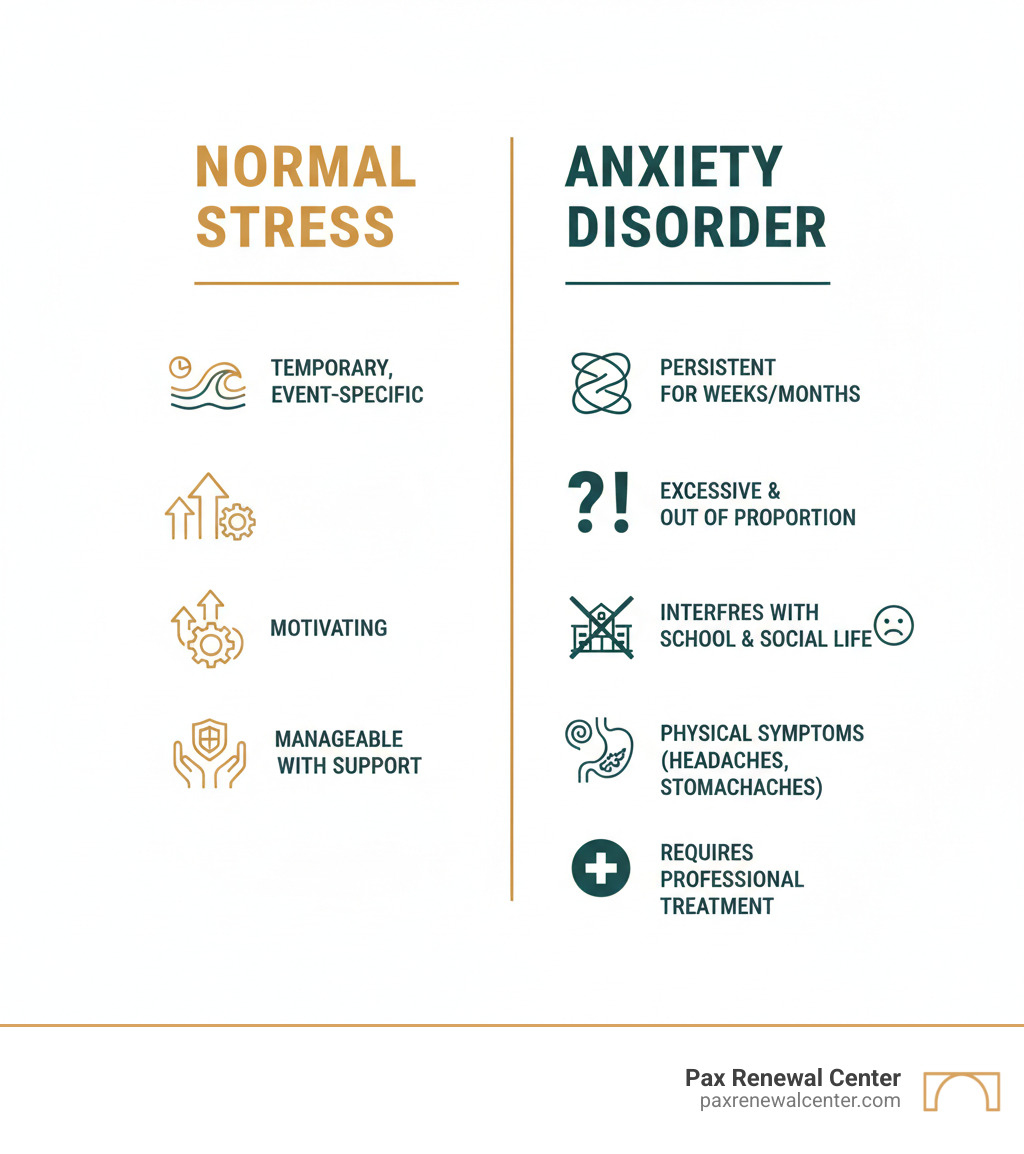
Normal stress is temporary and tied to a specific event, like a test. A teen anxiety disorder, however, involves intense, lasting worry that feels uncontrollable and disrupts daily life, causing avoidance and physical symptoms.
Adolescence is challenging, but today’s teens face unique stressors like social media comparison, cyberbullying, and 24/7 connectivity. The good news is that anxiety disorders are highly treatable. With the right support, teens can learn to manage their anxiety and thrive.
I’m Dan Jurek, M.A., LPC-S, LMFT-S, founder of Pax Renewal Center in Lafayette, Louisiana. With over 35 years of experience, I’ve helped countless families steer teen anxiety disorder through faith-based counseling that combines proven therapeutic methods with Christian values. Whether your teen is struggling with social anxiety, panic attacks, or generalized worry, there is hope and effective help available.
Understanding Teen Anxiety: More Than Just Moodiness
Anxiety is a normal emotion—your body’s built-in alarm system that signals danger and motivates you to act. For teens, a healthy dose of anxiety can push them to prepare for a test or perform well in sports.
However, anxiety becomes a problem when the reaction is stronger than the situation calls for, lasts too long, or feels out of control. When it reaches this level, it stops being helpful and starts interfering with a teen’s sleep, schoolwork, and relationships. This persistent, excessive worry is what defines a teen anxiety disorder. For more on this, see our resources on Stress and Anxiety.
| Symptom Category | Teenagers | Younger Children |
|---|---|---|
| Primary Worries | Internal concerns: self-image, performance, social standing, body image, future success | External fears: separation from parents, monsters, the dark, strangers |
| Social Symptoms | Intense fear of judgment, avoiding social events, worrying about what peers think, fear of embarrassment | Clinginess, reluctance to go to school, fear of being alone |
| Physical Complaints | Headaches, stomachaches, muscle tension, fatigue, sleep problems, panic attack symptoms | Stomachaches, crying, tantrums, regression in behavior |
| Communication Style | May hide feelings, become irritable or withdrawn, difficulty expressing emotions directly | More likely to express fears openly or through behavior changes |
| Academic Impact | Perfectionism, test anxiety, procrastination due to fear of failure, drop in grades | Difficulty concentrating, school refusal, trouble completing work |
How Anxiety in Teenagers Differs from Younger Children
As the Child Mind Institute notes, a key difference is what teens worry about. While young children have external fears (like monsters), teen anxiety turns inward. It often centers on self-perception, performance, social standing, and body image. The normal self-consciousness of adolescence becomes overwhelming, and the pressure to excel in school and extracurriculars can feel catastrophic. This internal focus makes teen anxiety disorder a unique challenge.
The Physical Toll: Physical Symptoms of Anxiety in Teens
Anxiety isn’t just “in their head”—it shows up powerfully in the body. When the brain perceives a threat, it triggers physical responses. For teens with a teen anxiety disorder, this alarm system is stuck on, creating constant physical tension.
Common physical complaints include:
- Chronic headaches and stomachaches
- Muscle tension, especially in the neck and shoulders
- Fatigue and persistent exhaustion
- Sleep problems, like trouble falling asleep or restless nights
- Panic attacks, which can be terrifying episodes of a racing heart, shortness of breath, dizziness, and a feeling of losing control. Many teens having their first panic attack believe they are dying.
These physical symptoms are not imaginary. They are real bodily responses to anxiety that can be debilitating. Recognizing these signs is a crucial first step toward getting your teen the help they need.
Recognizing the Red Flags: Signs of a Teen Anxiety Disorder

It can be hard to tell the difference between typical teenage behavior and a teen anxiety disorder. Teens rarely say, “I have anxiety.” Instead, their struggles show up in their emotions and behaviors.
Emotional symptoms can look like irritability, restlessness, or difficulty concentrating. Anxious teens often become extremely self-conscious, replaying social interactions and worrying they did something embarrassing.
Behavioral changes are often more telling.
- Avoidance: They may start avoiding social situations, school events, or family gatherings. School refusal is a major red flag.
- Constant Reassurance-Seeking: They might repeatedly ask if everything will be okay or need you to check their work multiple times.
- Withdrawal: They may quit activities they once loved or spend hours alone in their room.
- Substance Use: Some teens turn to alcohol or marijuana to self-medicate their anxiety, creating a dangerous cycle.
If these patterns are affecting your teen’s daily life, they are signs that your teen needs support.
Common Types of a Teen Anxiety Disorder
A teen anxiety disorder can take several forms. Understanding the type can help you find the right support.
- Generalized Anxiety Disorder (GAD): Constant, widespread worry about many different things, accompanied by restlessness and physical symptoms.
- Social Anxiety Disorder: An intense fear of being judged or embarrassed in social situations, leading to avoidance of school events, parties, or even class participation.
- Panic Disorder: Sudden, terrifying panic attacks with physical symptoms like a racing heart and shortness of breath. It often emerges between ages 15 and 19.
- Agoraphobia: Fear of situations where escape might be difficult, often leading to avoiding public spaces or leaving the house.
- Specific Phobias: An irrational, intense fear of a particular object or situation, like heights, needles, or flying.
- Separation Anxiety Disorder: Intense distress when away from parents or home, which can also affect teenagers.
For more on the prevalence of these conditions, see this scientific research on adolescent mental disorders.
The Link Between a Teen Anxiety Disorder, Depression, and Substance Use
Anxiety rarely travels alone. It is often intertwined with depression and substance use.
The anxiety-depression connection is powerful. Living with chronic anxiety is exhausting and can lead to depression over time. At our Lafayette practice, we always assess for both, as addressing the root anxiety often relieves depressive symptoms. For more, see our guide on Supportive Strategies Against Adolescent Depression.
The anxiety-substance use cycle is also concerning. Teens may use alcohol or marijuana for quick relief, but this self-medication doesn’t fix the underlying problem and can lead to dependency. The Child Mind Institute emphasizes that this is not a healthy coping mechanism. At Pax Renewal Center, our holistic, faith-based approach addresses these overlapping issues to help your family find a path to healing.
The Modern Pressure Cooker: What Causes Anxiety in Today’s Teens?
The causes of a teen anxiety disorder are complex, stemming from an interplay of biological, psychological, and environmental factors. Some teens may have a genetic predisposition, while stressful life events like family changes or trauma can act as triggers. Daily pressures also contribute immensely. You can explore our general resources on Anxiety to learn more.
The Impact of Social Media and the Digital World

The digital world is a defining stressor for today’s teens, contributing significantly to teen anxiety disorder.
- Social Comparison: Constantly seeing curated, unrealistic portrayals of others’ lives fuels feelings of inadequacy.
- Fear of Missing Out (FOMO): Seeing friends’ activities online creates anxiety about being excluded.
- Cyberbullying: Anonymous or relentless online bullying can be difficult to escape and has profound psychological impacts.
- Pressure to Maintain an Online Persona: The need to present a perfect image online is exhausting and creates anxiety over likes and comments.
- Sleep Disruption: Late-night screen time disrupts sleep, which exacerbates anxiety.
The U.S. Surgeon General has issued an advisory highlighting these concerns, noting that teens spending over three hours a day on social media are at increased risk for mental health problems. You can read more in the U.S. Surgeon General’s advisory on social media.
School Stress and Test Anxiety
Today’s academic environment often feels like a pressure cooker. The intense focus on grades, standardized tests, and college admissions creates a culture of perfectionism and fear of failure. This is a major factor in teen anxiety disorder.
A specific form of this is test anxiety, an overwhelming dread that can impair performance. Symptoms include a racing heart, nausea, difficulty concentrating, and a mind going blank during an exam.
Parents and educators can help teens manage test anxiety by:
- Encouraging effective study habits over last-minute cramming.
- Teaching relaxation techniques like deep breathing.
- Helping them challenge negative thoughts.
- Emphasizing the importance of adequate sleep.
A Guide of Hope: How to Support and Treat Teen Anxiety
Finding out your teen is struggling with anxiety can be overwhelming, but there is real hope for healing. At Pax Renewal Center, we believe in a holistic approach combining professional guidance, family support, and faith.
Parental Support
You are your teen’s most powerful ally against a teen anxiety disorder.
- Create a safe space: Foster an environment where your teen can share fears without judgment. Practice active listening and validate their feelings by saying, “That sounds really scary.”
- Model healthy coping: Let your teen see how you manage your own stress, whether through exercise, prayer, or talking it through.
- Build self-esteem: Highlight their strengths and efforts, not just their achievements. Help them see setbacks as learning opportunities.
- Set realistic expectations: Be mindful that pushing too hard for perfection can contribute to anxiety.
If you’re feeling overwhelmed, seeking support for yourself is a sign of wisdom. Explore our resources on professional counseling to learn more.
Practical Coping Mechanisms for Teens

Teaching practical coping strategies gives your teen tools to manage anxiety. With practice, these can make a real difference.
- Mindfulness and Deep Breathing: Techniques like guided meditation or the 4-7-8 breathing exercise (breathe in for 4, hold for 7, exhale for 8) can calm an anxious mind and body.
- Journaling: Writing down thoughts provides a safe outlet to process emotions and identify anxiety patterns.
- Physical Activity: Exercise is a powerful anxiety reducer that releases endorphins and provides an outlet for nervous energy.
- Healthy Habits: A balanced diet and consistent, adequate sleep are foundational for emotional regulation.
- Grounding Techniques: The “5-4-3-2-1” method (name 5 things you see, 4 you touch, 3 you hear, 2 you smell, 1 you taste) can anchor a teen in the present moment during an anxiety spiral.
When to Seek Professional Help and Effective Treatments
Sometimes, a teen anxiety disorder requires professional intervention. It’s time to seek help if symptoms are persistent or worsening, or if anxiety is impairing your teen’s ability to function at school or with friends. Self-medication with drugs or alcohol and any thoughts of self-harm are serious red flags that require immediate professional attention.
At Pax Renewal Center in Lafayette, Louisiana, we offer compassionate, faith-based therapy for teens.
- Cognitive Behavioral Therapy (CBT): This is a highly effective treatment that helps teens identify and challenge negative thought patterns. It includes exposure therapy, where teens gradually and safely face their fears to build confidence.
- Faith-Based Approaches: We integrate proven clinical methods with spiritual guidance rooted in Catholic and Christian values, using prayer and faith as powerful coping tools.
- Medication Options: For moderate to severe anxiety, SSRIs may be recommended by a medical professional, usually in combination with therapy.
We work closely with families to create an individualized treatment plan. To learn more about our process, read our guide on What You Can Expect From Psychotherapy: The First Sessions. Seeking help is a sign of love and strength.
Frequently Asked Questions about Teen Anxiety
How do I help my teen during a panic attack?
Your calm presence is the most powerful tool. When your teen is having a panic attack, their body is in a state of intense fear.
- Stay Calm Yourself: Your steady presence is an anchor.
- Offer Gentle Reassurance: Say, “I’m here with you. You are safe. This feeling will pass.” Remind them that panic attacks are temporary and not dangerous.
- Don’t Minimize Their Fear: Avoid saying “just calm down.” Their fear feels very real.
- Guide Their Breathing: Encourage slow, deep breaths. Try breathing with them.
- Use Grounding Techniques: Ask them to name 5 things they can see, 4 they can touch, etc., to bring them back to the present moment.
Afterward, gently encourage them to resume normal activities to prevent avoidance behaviors from developing.
What is the difference between normal stress and an anxiety disorder in teens?
This is a common and important question. The key differences lie in duration, intensity, and impact.
- Normal stress is temporary and tied to a specific event (like a test). It can even be motivating and doesn’t stop a teen from functioning.
- A teen anxiety disorder involves persistent, excessive worry that lasts for weeks or months. The anxiety is out of proportion to the situation and significantly interferes with daily life, school, friendships, and health.
If your teen’s anxiety is persistent and disruptive, it’s time to seek professional help.
Can faith play a role in managing teen anxiety?
Absolutely. For many families, faith is a profound source of comfort and strength. At Pax Renewal Center, we integrate spiritual guidance with evidence-based therapy for a holistic approach to healing.
Faith can provide:
- Comfort and Hope: Prayer and belief in a loving God offer solace when things feel out of control.
- Purpose and Meaning: Connecting with spiritual values provides a steady foundation and helps answer deeper questions about identity.
- Community Support: A church youth group or faith community offers belonging and positive role models, reducing isolation.
Our Faith-Based Therapy for Stress combines clinical best practices like CBT with spiritual guidance. It’s not about replacing therapy, but about adding a spiritual dimension that can deepen healing and provide lasting hope.
Finding Calm Waters: Your Next Steps
Navigating a teen anxiety disorder can feel like steering through a storm, but you are not alone, and there is genuine hope for healing.
We’ve seen how teen anxiety differs from normal stress, how modern pressures intensify it, and the vital role you play as a parent. The most important truth is that teen anxiety disorder is highly treatable. With the right support, your teen can learn to manage their worries and build the resilience they need to thrive.
Early intervention makes all the difference. At Pax Renewal Center in Lafayette, Louisiana, our compassionate, faith-based therapists combine clinical excellence (using methods like CBT and EMDR) with the comfort and wisdom of Christian values. We create a safe space where teens feel heard, families find hope, and healing touches the mind, heart, and spirit.
Your next step is simple: reach out. We’re here to help your family find calm waters ahead.
We invite you to explore our comprehensive Christian Counseling for Teens Guide to learn more about how our unique blend of faith and therapy can bring lasting peace and change to your family.