

Why Parenting Counseling Can Transform Your Family
Parenting counseling is a specialized form of therapy that helps parents develop effective skills, manage challenging behaviors, and strengthen their relationship with their children. Unlike traditional family therapy, it focuses specifically on equipping parents with tools to create a healthier home environment.
Key benefits of parenting counseling include:
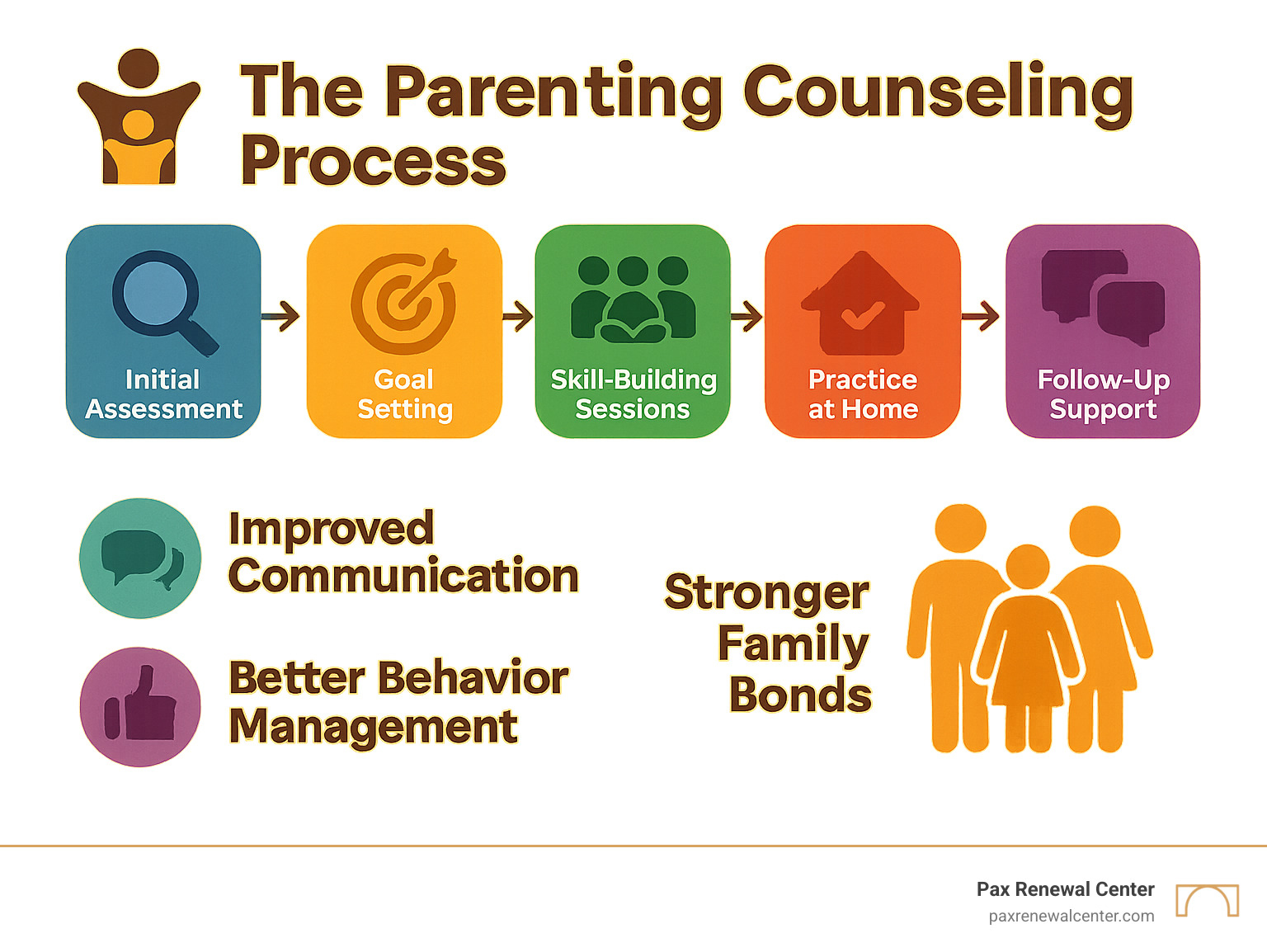
- Improved communication between parents and children
- Better behavior management strategies for tantrums, defiance, and emotional outbursts
- Improved emotional regulation skills for both parents and kids
- Stronger parent-child bonds through evidence-based techniques
- Reduced family conflict and stress levels
- Support for major life transitions like divorce, adoption, or blended families
Research shows that parents who completed a six-session counseling program scored significantly higher on emotional support, communication, limit setting, and overall satisfaction with their parenting relationship. The authoritative parenting style – combining warmth with clear boundaries – is consistently recommended by experts as the most effective approach for healthy child development.
Parenting can be full of ups and downs, no matter your child’s age. Whether you’re dealing with toddler tantrums, teenage rebellion, or navigating co-parenting after divorce, professional guidance can make a profound difference in your family’s wellbeing.
I’m Dan Jurek, M.A., LPC-S, LMFT-S, a Licensed Professional Counselor and Marriage and Family Therapist with over 35 years of clinical experience helping families heal and grow. Throughout my career, I’ve seen how parenting counseling can transform struggling families into thriving ones, especially when integrated with faith-based values and proven therapeutic approaches.
What Is Parenting Counseling? (Definition, Goals, and How It Differs)
At its core, parenting counseling is a short-term, focused form of therapy that provides parents with a safe space to discuss their experiences, learn new skills, and develop strategies to support healthy family dynamics. Unlike child therapy, which focuses on the child’s individual needs, parenting counseling recognizes parents as the primary agents of change in their family environment.
The fundamental principle behind parenting counseling is that when parents develop better skills and emotional regulation, the entire family benefits. As one research study noted, “Parents who participated in a six-session parent counseling program scored significantly higher than their pre-therapy results on emotional support, satisfaction, involvement, communication, limit setting, autonomy, role orientation, and dealing with their parent-child relationship.”
Many parents hesitate to seek help because they view it as a sign of failure. However, seeking scientific research on counseling outcomes shows that parenting counseling is actually a demonstration of care and commitment to your family’s wellbeing. As we often tell our clients at Pax Renewal Center, there’s no such thing as a “perfect parent” – that’s a myth like unicorns or dragons.
Primary Aims of Parenting Counseling
Communication Skills Development: One of the most significant benefits of parenting counseling is learning how to communicate effectively with your children. This includes active listening, using “I” statements instead of “you” statements, and providing age-appropriate explanations for decisions rather than relying on “because I said so.”
Emotional Regulation: Parents learn to identify and manage their own emotional triggers before reacting to challenging behaviors. This creates a calmer home environment and models healthy emotional responses for children.
Consistent Discipline: Counseling helps parents develop clear, consistent boundaries and consequences that are teaching-focused rather than punitive. This includes understanding the difference between discipline and punishment, and how to use positive reinforcement effectively.
Parenting Counseling vs. Other Therapies
Individual Therapy focuses on personal mental health issues, while parenting counseling specifically addresses the parent-child relationship and family dynamics. However, sometimes individual therapy for parents is recommended alongside parenting counseling, especially when personal issues like depression or anxiety are affecting parenting capacity.
Family Therapy involves all family members and addresses systemic family issues, while parenting counseling primarily focuses on equipping parents with skills and strategies. At Pax Renewal Center, we often integrate both approaches depending on the family’s needs.
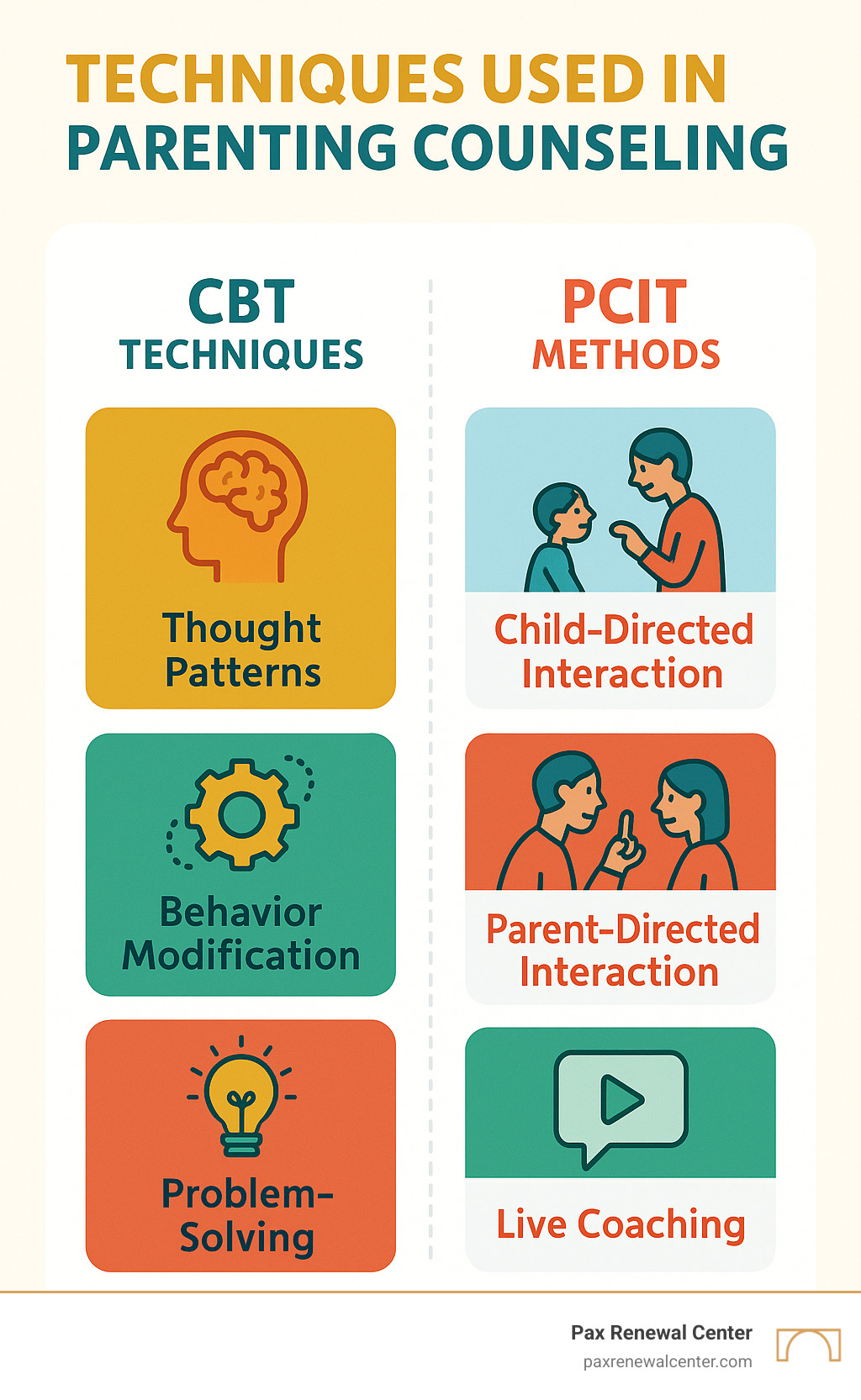
Parent-Child Interaction Therapy (PCIT) is a specific evidence-based treatment that involves both parent and child in sessions, teaching parents to interact more effectively with their children through coached practice sessions.
Faith-Based Integration: What sets our approach apart is the integration of Christian values and spiritual guidance with proven therapeutic techniques. We believe that incorporating faith can provide additional strength and wisdom for parents navigating challenging situations.
Common Challenges Addressed & Who Can Benefit
Parenting counseling addresses a wide range of challenges that families face. From our experience at Pax Renewal Center, we’ve seen how professional guidance can help with everything from daily behavioral issues to major life transitions.
Common issues include managing tantrums and defiant behavior, navigating the teenage years with their unique challenges of identity formation and increased independence, addressing anxiety or depression in children, helping families cope with trauma or significant life changes, and supporting parents through divorce, adoption, or blended family situations.
Single parents often benefit tremendously from parenting counseling, as they’re managing all parenting responsibilities alone and may lack the support system that two-parent families have. Cultural factors can also create unique challenges, especially for immigrant families navigating different cultural expectations around child-rearing.
The beauty of parenting counseling is that it’s not just for families in crisis. Even well-functioning families can benefit from learning new skills and reinforcing positive dynamics. As noted in our research, “Family counseling can help families become more open with each other, with improved communication and trust being key outcomes.”
For families dealing with specific challenges, our parenting resources provide additional support and guidance.
Red Flags That Signal It’s Time for Parenting Counseling
Chronic Conflict: If your home feels like a battleground more often than not, with frequent arguments, yelling, or power struggles that seem to escalate rather than resolve, it may be time to seek professional help.
School Issues: When behavioral problems at home start affecting your child’s performance at school, or when teachers are expressing concerns about your child’s behavior or emotional state, parenting counseling can provide valuable support.
Parental Burnout: Signs include feeling overwhelmed, exhausted, or emotionally depleted by parenting responsibilities. Physical symptoms like poor sleep, changes in appetite, or difficulty concentrating can also indicate that additional support is needed.
Other warning signs include feeling like you don’t recognize your child anymore, avoiding social situations due to embarrassment about your child’s behavior, or feeling like you’re constantly walking on eggshells at home.
Parenting Styles & Their Impact on Children
Understanding your parenting style is crucial for effective parenting. Research has identified four primary parenting styles, each with different impacts on children’s development:
Authoritarian Parenting: Characterized by strict rules, high expectations, and little warmth or flexibility. Children of authoritarian parents may struggle with self-esteem, have difficulty making decisions independently, and may rebel against authority as they get older.
Authoritative Parenting: This style combines clear expectations and boundaries with warmth, support, and open communication. Children of authoritative parents tend to be more confident, self-reliant, and socially competent. This is the style most recommended by parenting experts.
Permissive Parenting: High in warmth but low in structure and expectations. While children may feel loved, they often struggle with self-control, have difficulty following rules, and may have problems with authority figures.
Uninvolved Parenting: Low in both warmth and structure, often due to parents being overwhelmed by their own issues. Children may feel neglected and struggle with emotional regulation and forming healthy relationships.
Many parents aren’t consciously aware of their parenting style – it often develops subconsciously based on how they were raised or their current stress levels. Scientific research on parenting styles consistently shows that authoritative parenting produces the best outcomes for children’s emotional and behavioral development.
Inside a Parenting Counseling Session: Methods & What to Expect

Understanding what happens during parenting counseling sessions can help reduce anxiety and set realistic expectations. At Pax Renewal Center, we structure our sessions to be both educational and practical, giving parents concrete tools they can use immediately.
Initial Assessment: The first session typically involves a comprehensive assessment of family dynamics, parenting challenges, and goals. We explore your family history, current stressors, and specific behaviors or situations you’d like to address. This helps us develop a custom treatment plan.
Goal Setting: Together, we establish specific, measurable goals for your parenting journey. These might include reducing the frequency of meltdowns, improving bedtime routines, or developing better communication with your teenager.
Skill Building: Sessions focus on teaching practical skills like active listening, setting appropriate boundaries, using positive reinforcement effectively, and managing your own emotional responses to challenging behaviors.
Practice and Homework: We often assign exercises to practice between sessions. This might include keeping a behavior log, trying new communication techniques, or implementing specific strategies we’ve discussed.
Review and Adjustment: Each session begins with reviewing how the previous week went, what worked, what didn’t, and adjusting strategies as needed.
Techniques Used in Parenting Counseling
Communication Coaching: We teach parents how to listen without judgment, validate their children’s feelings, and communicate expectations clearly. This includes learning to give explanations for decisions rather than relying on “because I said so.”
Role-Playing: Practicing difficult conversations or challenging scenarios in a safe environment helps parents build confidence and develop automatic responses to common situations.
Behavior Management Plans: We help parents develop consistent, age-appropriate consequences and rewards that focus on teaching rather than punishment.
Mindfulness and Emotional Regulation: Parents learn techniques to manage their own stress and emotional reactions, creating a calmer home environment.
Genograms: These family maps help parents understand how their own upbringing influences their parenting style and identify patterns they want to change or continue.
At Pax Renewal Center, we integrate these evidence-based techniques with Christian principles and values, helping parents align their parenting approach with their faith while using proven therapeutic methods.
Duration, Cost & Expected Outcomes
Most parenting counseling programs range from 6-12 sessions, though some families may need additional support depending on their specific challenges. The six-session programs mentioned in our research showed significant improvements in multiple areas of parenting effectiveness.
Measurable Improvements: Research consistently shows that parents who complete parenting counseling programs demonstrate improved emotional support, better communication skills, more effective limit setting, and increased satisfaction with their parenting relationship.
Insurance and Accessibility: Many insurance plans cover parenting counseling, and we work with families to make services accessible. We also offer online counseling options for families who prefer virtual sessions or have scheduling constraints.
Expected Timeline: While some families see improvements within the first few sessions, lasting change typically develops over several weeks as new skills are practiced and integrated into daily life.
Parenting Counseling for Separated & Divorced Families

Co-parenting counseling is a specialized form of parenting counseling designed specifically for separated or divorced parents who need to work together for their children’s wellbeing. This type of counseling is distinctly different from couples therapy – it’s not about reconciling the romantic relationship, but about improving collaboration as co-parents.
Child-Centered Focus: The primary goal is always what’s best for the children involved. Co-parenting counseling helps parents move past their personal conflicts to focus on creating stability and consistency for their kids.
Legal Mandates: Sometimes judges order co-parenting counseling as part of custody arrangements, recognizing that professional guidance can help reduce future conflicts and court appearances.
Creating Parenting Plans: Counselors help parents develop detailed agreements about schedules, decision-making responsibilities, communication methods, and how to handle disagreements.
Our HelpGuide on successful co-parenting provides additional resources for families navigating separation or divorce.
How Co-Parenting Counseling Works
Assessment Phase: The counselor meets with both parents to understand the family dynamics, children’s needs, and specific challenges in the co-parenting relationship.
Goal Alignment: Parents work together to identify shared goals for their children’s wellbeing, even if they disagree on other matters.
Communication Training: Learning to communicate effectively about parenting matters without letting personal conflicts interfere.
Technology Integration: Many co-parenting counselors recommend apps and platforms that help parents coordinate schedules, track expenses, and communicate in a structured way.
Research shows that co-parenting counselors typically charge between $100 and $250 per hour, but the investment often saves money on future legal fees by reducing court disputes.
Benefits for Children & Parents
Reduced Stress: Children benefit from seeing their parents work together respectfully, even if they’re no longer married.
Stable Routines: Consistent rules and expectations across both households help children feel secure and reduce behavioral problems.
Improved Collaboration: Parents learn to separate their personal feelings from their parenting responsibilities, leading to better decision-making for their children.
Long-term Success: Families who complete co-parenting counseling often report better relationships and fewer conflicts over time.
How to Find the Right Parenting Counselor
Choosing the right counselor is crucial for successful parenting counseling. At Pax Renewal Center, we believe that the therapeutic relationship is just as important as the techniques used.
Credentials to Look For: Licensed Marriage and Family Therapists (LMFT), Licensed Professional Counselors (LPC), and Licensed Clinical Social Workers (LCSW) all have specialized training in family dynamics. Look for additional certifications in specific approaches like PCIT, EFT, or trauma-informed care.
Faith Compatibility: If faith is important to your family, look for counselors who can integrate Christian values with evidence-based therapeutic techniques. This doesn’t mean getting sermons during sessions, but rather having a counselor who understands and respects your spiritual beliefs.
Specialty Areas: Some counselors specialize in specific issues like adoption, trauma, ADHD, or autism spectrum disorders. Consider whether your family has specific needs that would benefit from specialized expertise.
Interview Process: Don’t hesitate to ask potential counselors about their approach, experience, and how they typically work with families. A good counselor will welcome your questions and help you feel comfortable.
Our comprehensive services at Pax Renewal Center include both individual and family counseling options, with therapists trained in various evidence-based approaches.
Preparing for Your First Appointment
Questions to Prepare: Write down specific behaviors or situations you’d like to address, your goals for counseling, and any questions about the process.
Family History: Be prepared to discuss your own upbringing, any significant family events, and current stressors that might be affecting your parenting.
Insurance Information: Bring your insurance cards and any required referrals or authorizations.
Open Mind: Come prepared to examine your own role in family dynamics and be willing to try new approaches.
Getting the Most Out of Parenting Counseling
Set Realistic Goals: Focus on specific, achievable changes rather than trying to transform everything at once.
Practice Skills: The real work happens at home between sessions. Consistently practicing new techniques is essential for lasting change.
Self-Care: Taking care of your own mental and physical health makes you a better parent. Don’t neglect your own needs.
Follow-Up: Even after formal counseling ends, occasional check-ins can help maintain progress and address new challenges as they arise.
Frequently Asked Questions About Parenting Counseling
What makes “parenting counseling” different from traditional family therapy?
Parenting counseling focuses specifically on equipping parents with skills and strategies to improve their relationship with their children and manage challenging behaviors. While family therapy involves all family members and addresses systemic family issues, parenting counseling primarily works with parents to help them become more effective in their parenting role.
The parent is viewed as the primary agent of change in the family system. By improving parenting skills, emotional regulation, and communication techniques, the entire family benefits. Sometimes parenting counseling may include children in sessions, but the focus remains on helping parents develop the tools they need to create a healthier home environment.
Is seeking parenting counseling a sign of failure or weakness?
Absolutely not. Seeking parenting counseling is actually a sign of strength and commitment to your family’s wellbeing. As we often tell our clients, parenting doesn’t come naturally for most people – it’s a learned skill that can be improved with guidance and practice.
Think of it like updating software on your devices. Just as technology needs regular updates to function optimally, parenting skills benefit from regular “updates” as children grow and family circumstances change. The COVID-19 pandemic highlighted how quickly parents needed to adapt and pivot, demonstrating that flexibility and seeking support are essential parenting skills.
Many successful parents have benefited from counseling, and research consistently shows that parents who complete parenting programs report higher satisfaction and effectiveness in their parenting role.
How long before I see results from parenting counseling?
Most parents begin to see some improvements within the first few sessions, though lasting change typically develops over several weeks as new skills are practiced and integrated into daily life. The research we referenced showed significant improvements after just six sessions, with parents scoring higher on emotional support, communication, limit setting, and overall satisfaction with their parenting relationship.
However, parenting counseling is not a quick fix. Real change takes time, practice, and patience. Some families may need additional sessions beyond the initial program, especially if they’re dealing with complex issues like trauma, severe behavioral problems, or major life transitions.
The key is to be patient with yourself and consistent in applying new skills. Even small improvements in communication or emotional regulation can have significant positive effects on your family’s overall wellbeing.
Conclusion & Next Steps
Parenting counseling offers hope and practical solutions for families facing challenges, whether they’re dealing with everyday behavioral issues or navigating major life transitions. The research is clear: parents who invest in developing their skills see measurable improvements in their relationships with their children and their overall family functioning.
At Pax Renewal Center, we’re committed to helping families in Lafayette, Louisiana, and beyond experience healing and growth through faith-integrated, evidence-based counseling services. Our team of experienced therapists understands that every family is unique, and we tailor our approach to meet your specific needs and values.
Seeking help is not a sign of weakness – it’s a demonstration of your love and commitment to your family. Whether you’re a new parent feeling overwhelmed, dealing with challenging behaviors, navigating co-parenting after divorce, or simply wanting to strengthen your family relationships, parenting counseling can provide the support and tools you need.
If you’re ready to take the next step in your parenting journey, we invite you to explore our comprehensive counseling services. Our team is here to support you with compassion, expertise, and faith-based guidance as you work toward creating the family life you desire.
For more information about our counseling services and how we can help your family thrive, visit our services page or contact us today. Your family’s healing and growth are worth the investment, and we’re here to walk alongside you every step of the way.