

How to Choose Trauma Training for Psychologists
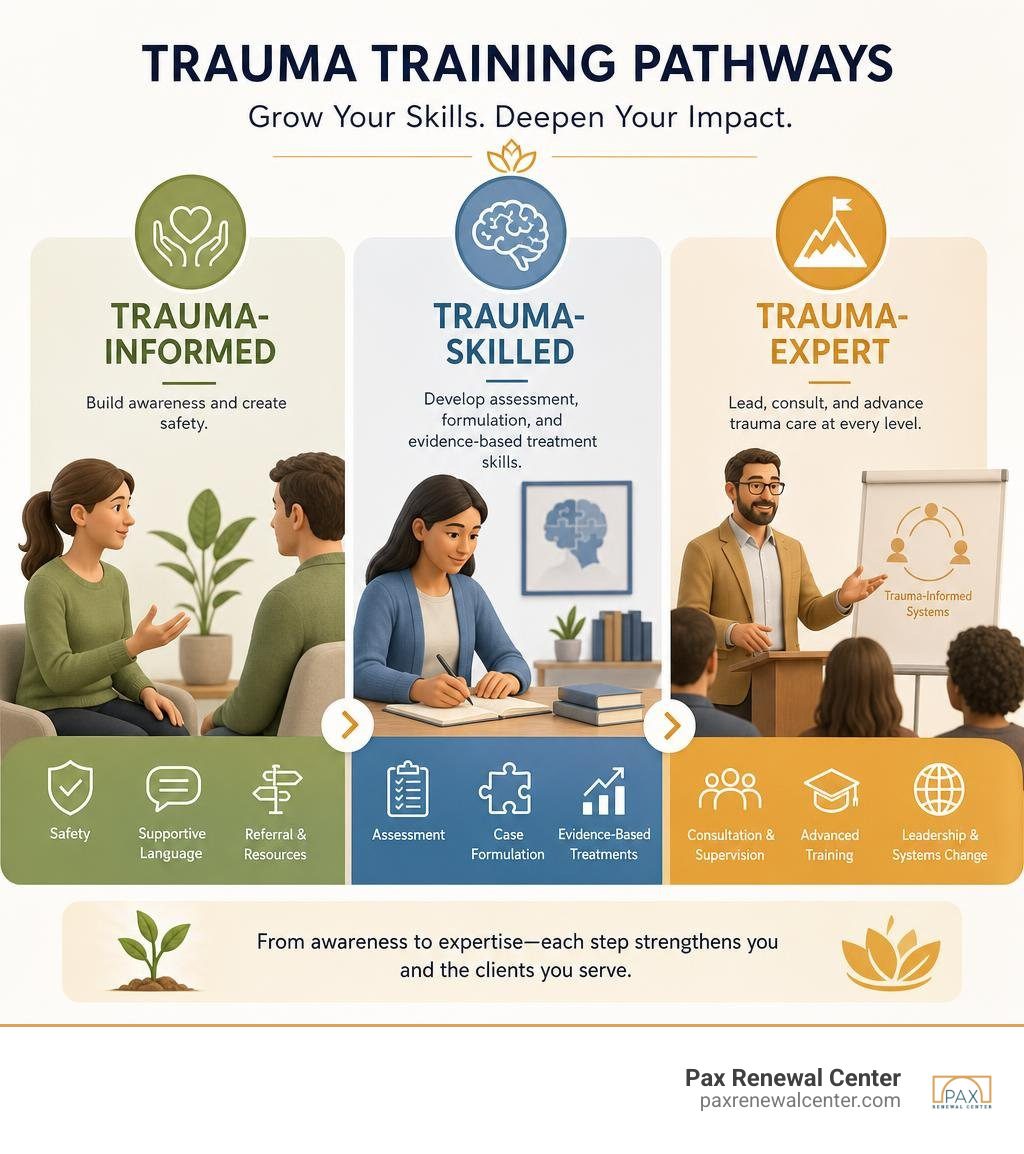
The best trauma training for psychologists combines a solid foundation in trauma science with supervised practice in evidence-based treatment. Start by choosing training that matches your current role:
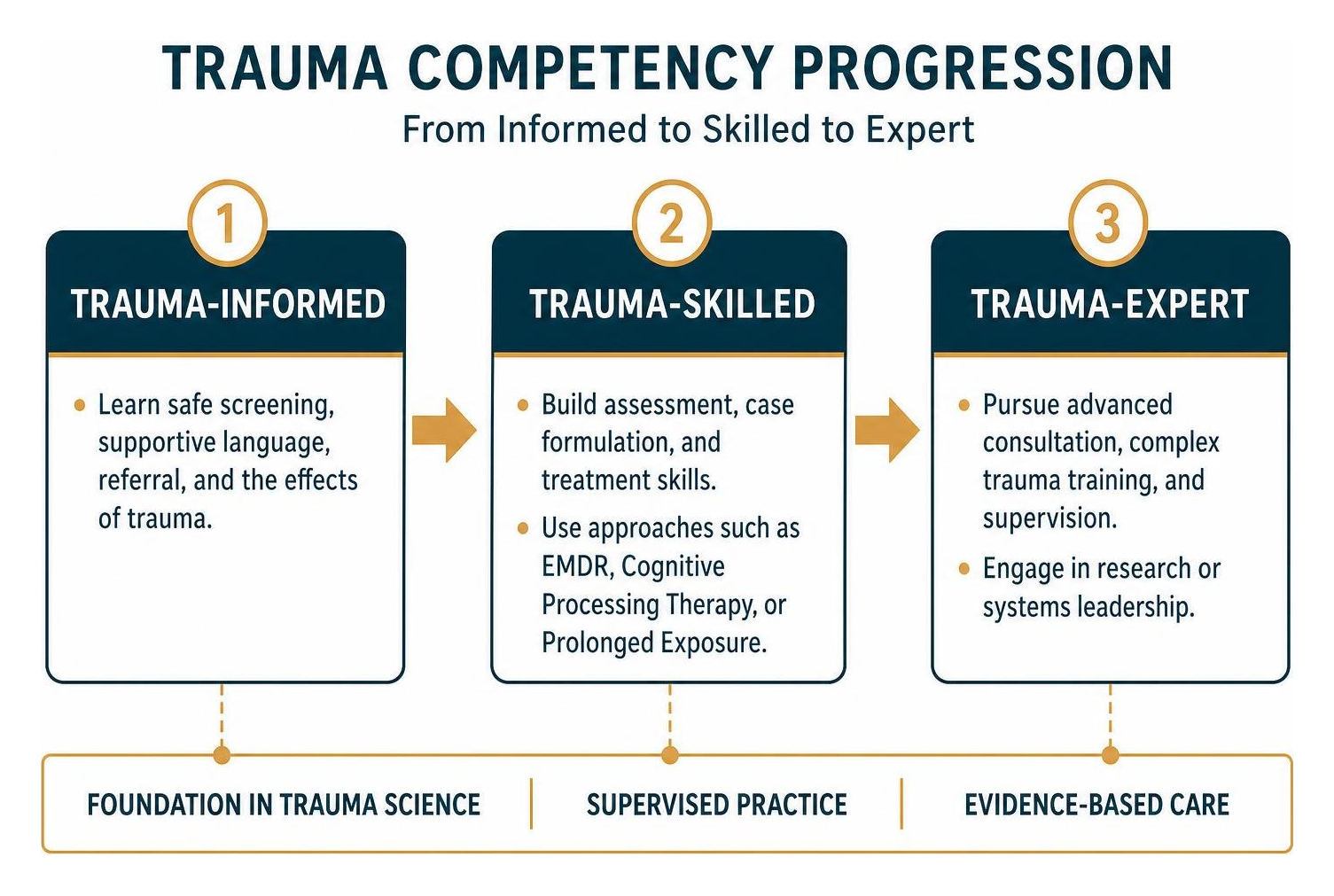
- Trauma-informed: Learn safe screening, supportive language, referral, and the effects of trauma.
- Trauma-skilled: Build assessment, case formulation, and treatment skills in approaches such as EMDR, Cognitive Processing Therapy, or Prolonged Exposure.
- Trauma-expert: Pursue advanced consultation, complex trauma training, supervision, research, or systems leadership.
More than 70% of people experience at least one traumatic event in their lives. Yet many clinicians finish graduate training without enough preparation in trauma assessment or evidence-informed care. The right program helps close that gap while teaching cultural humility, ethical boundaries, and ways to protect against burnout and secondary traumatic stress.
I am Dan Jurek, M.A., LPC-S, LMFT-S, founder and Clinical Director of Pax Renewal Center in Lafayette, Louisiana, with more than 35 years of experience supporting adults, couples, and families facing trauma, grief, anxiety, and relationship distress. My work in trauma-informed care and ongoing professional development informs this guide to trauma training for psychologists and counselors.
Related content about trauma training for psychologists:
The Traumatology Continuum: Mapping Competency Tiers Across Career Stages
Understanding clinical traumatology requires viewing professional competence not as a static, one-time credential, but as a dynamic continuum. In our clinical practice, we see that trauma impacts cognitive, somatic, relational, and spiritual domains. Meeting these complex client needs demands an educational roadmap that spans from foundational training to master-level consultation.
The British Psychological Society provides foundational recommendations for education and training of psychologists when working with psychological trauma, defining a clear three-tiered competency framework:
- Trauma-Informed Awareness (Tier 1): Typically introduced during undergraduate studies or early graduate education. Clinicians learn universal precautions, non-retraumatizing intake protocols, empathetic language, and how early adverse life events disrupt emotional regulation.
- Trauma-Skilled Intervention (Tier 2): Master’s- and doctoral-level practitioners build diagnostic, assessment, and targeted intervention skills. At this tier, clinicians master evidence-based trauma protocols, differential diagnosis, and case formulation.
- Trauma-Expert Consultation (Tier 3): Senior clinicians, supervisors, and clinical directors manage complex, treatment-resistant cases, conduct clinical trials, mentor developing therapists, and shape trauma-informed public health policies.
Frameworks like the New Haven Competencies for Trauma Psychology emphasize developmental traumatology, lifespan assessment, and cultural humility. When evaluating adverse experiences across different cultural backgrounds, clinicians must account for intersectional identity factors, systemic oppression, and historical trauma.
For clinicians looking at becoming a qualified trauma counselor, understanding this continuum helps ensure you select continuing education and clinical training programs that meet your exact stage of professional development.
Core Modalities in Trauma Training for Psychologists
Trauma recovery requires clinical precision and diverse therapeutic tools. Single-incident acute trauma (Type I) and chronic developmental trauma (Type II) require distinct modalities to safely process traumatic memories without overwhelming the client’s nervous system.

Evidence-Based Protocols
- Cognitive Processing Therapy (CPT) & Prolonged Exposure (PE): Gold-standard cognitive-behavioral protocols that target “stuck points,” maladaptive appraisals, and avoidance behaviors common in post-traumatic stress.
- Eye Movement Desensitization and Reprocessing (EMDR): An eight-phase protocol utilizing bilateral stimulation to help the brain reprocess maladaptive memories. Our practice relies heavily on integrative EMDR therapy and accelerated formats like EMDR intensive therapy protocols to resolve distress and restore nervous system regulation.
- NeuroAffective Relational Model (NARM): A psychobiological approach designed specifically for Adverse Childhood Experiences (ACEs) and complex trauma (C-PTSD). NARM focuses on identity distortion, somatic patterns, and relational attachment styles.
- The Tavistock Model: Psychodynamic and psychoanalytic institutions utilize deep relational approaches. Programs such as Complex Trauma: the Tavistock Model combine rigorous academic study with immersive clinical placements, experiential group dynamics, and countertransference tracking.
- Somatic and Emerging Approaches: Modalities that incorporate somatic awareness, nervous system pacing, and emerging psychedelic-assisted psychotherapy integration offer promising avenues for treatment-resistant trauma by supporting deep physiological release.
Modality Comparison
| Modality | Theoretical Framework | Targeted Population | Typical Certification Duration |
|---|---|---|---|
| Cognitive Processing Therapy (CPT) | Cognitive-Behavioral | Single-incident PTSD, combat trauma, adult survivors | 2–4 days workshop + 6 months consultation |
| EMDR Therapy | Adaptive Information Processing (AIP) | Acute trauma, C-PTSD, phobias, panic, grief | 40–50 hours basic training + 10–20 supervision hours |
| NARM | Psychobiological & Relational | Complex developmental trauma, attachment wounds, ACEs | 2 years (multi-module experiential tracks) |
| Tavistock Model (D19) | Psychoanalytic & Multimodal | Severe relational trauma, personality adaptations | 2 years part-time with clinical placement |
| Prolonged Exposure (PE) | Behavioral & Emotional Processing | Classical PTSD, avoidance behaviors | 4 days intensive + weekly case consultation |
Choosing the right modality allows you to provide structured, evidence-based trauma treatment tailored to your clients’ specific psychological and somatic needs.
Specialized Clinical Pathways and Vulnerable Populations
Effective trauma treatment cannot rely on a one-size-fits-all approach. Clinicians frequently encounter vulnerable populations who require specialized, population-specific training:
- Children and Adolescents: Childhood trauma alters developmental trajectories and attachment bonds. Specialized programs, such as the Psychology and Trauma (Child and Adolescent) PG Dip offered through academic partnerships with institutions like Anna Freud, train clinicians to integrate systemic, educational, and neurodevelopmental perspectives. Clinicians can also pursue focused specialized counseling for childhood trauma to address early attachment disruption and behavioral challenges.
- Military Veterans and First Responders: Combat exposure and moral injury require specialized knowledge of military culture, transition stressors, hypervigilance, and family systems. Specialized continuing education courses help clinicians navigate these complex dynamics alongside broader PTSD awareness and clinical intervention.
- Refugees and Displaced Communities: Working with survivors of war, political torture, and displacement requires training in Narrative Exposure Therapy (NET), culturally adapted Psychological First Aid, and working with cross-cultural interpreters.
- Survivors of Intimate Partner Violence and Sexual Abuse: Requires training in safety planning, trauma bonding, dissociation management, and symptom containment.
- Traumatic Grief and Bereavement: Sudden, violent, or ambiguous loss requires specialized intervention beyond basic bereavement counseling. Clinicians can benefit from advanced grief therapy for clinicians to address unresolved traumatic mourning.
Evaluating Program Quality, Accreditation, and Delivery Formats
With the growing demand for trauma training, mental health professionals must carefully vet continuing education programs to ensure clinical rigor, ethical standards, and proper credentialing.

Evaluating Evidence-Based Trauma Training for Psychologists
When selecting formal academic programs or doctoral-level specializations, consider institutional accreditation and theoretical rigor. Comprehensive academic tracks, such as a Clinical Psychology PhD with Major Area of Study in Trauma Psychology, follow the scientist-practitioner Boulder model. These programs balance empirical research with supervised clinical practicums in specialized trauma clinics.
For practicing clinicians, navigating post-licensure courses requires evaluating whether offerings provide genuine clinical utility:
- Accreditation Standards: Verify whether programs offer continuing education credits approved by bodies such as the American Psychological Association (APA), National Board for Certified Counselors (NBCC), or state licensing boards.
- Format Considerations: Reviewing guides on navigating accredited online counselor training helps clinicians choose between asynchronous lectures and interactive virtual cohorts.
- Quality Assurance: Utilizing guides to find approved CEU trainings for practitioners ensures your educational investments fulfill state licensure requirements and advance your real-world skills.
Continuing Education and Advanced Trauma Training for Psychologists
Clinicians seeking post-graduate specialization can pursue structured certifications, such as a Level 7 Postgraduate Diploma in Traumatology, which requires direct clinical hours, multi-modality training, and extensive supervision.
Practitioners can also use curated strategies for identifying quality professional training for therapists to assess:
- Faculty clinical experience and active practice in trauma therapy.
- Opportunities for live, small-group case consultation and experiential role-play.
- Transparent curriculum outlines detailing specific assessment protocols and intervention strategies.
- Clear supervision hours embedded directly into the certification process.
Clinical Supervision, Reflexive Practice, and Vicarious Resilience
Trauma therapy demands significant emotional and psychological presence from the clinician. Bearing witness to extreme suffering, dissociation, and developmental violation carries real professional risks, including secondary traumatic stress, countertransference reactions, and compassion fatigue.
High-quality trauma training emphasizes sustainable clinical practice through three core pillars:
- Separate Clinical Supervision: Trauma-focused supervision must remain distinct from managerial or administrative oversight. Supervised case reviews should focus on countertransference, somatic activations in session, pacing, and therapeutic boundary maintenance.
- Reflexive Practice: Trainees must develop self-awareness regarding their own personal trauma histories, attachment dynamics, privilege, and cultural assumptions.
- Vicarious Resilience and Self-Regulation: Clinicians need reliable strategies for coping with traumatic stress and maintaining somatic balance. Witnessing a client’s recovery can foster profound personal and professional growth—a phenomenon known as vicarious resilience.
Frequently Asked Questions about Clinical Trauma Training
What is the difference between standard PTSD training and complex trauma certification?
Standard PTSD training generally focuses on Type I single-incident trauma (such as a motor vehicle accident or natural disaster) using cognitive-behavioral or exposure protocols. Complex trauma certification targets Type II chronic, repeated developmental trauma (such as ongoing childhood abuse or neglect). Complex trauma training emphasizes affect regulation, structural dissociation, attachment repair, and careful phase-oriented treatment pacing before processing traumatic memories.
How many supervised clinical hours are typically required for trauma specialization?
Supervision requirements depend on the certifying organization and modality. Foundational certifications typically require 10 to 20 hours of case consultation alongside coursework. Comprehensive post-qualification diplomas and specialized certifications often require 30 to 50 documented clinical contact hours with trauma survivors, paired with monthly individual or group supervision over 12 to 24 months.
Can online trauma training provide sufficient experiential skill development?
Yes, provided the program uses a blended or synchronous format. While purely self-paced, asynchronous reading courses build theoretical awareness (Tier 1), acquiring intermediate and expert clinical skills (Tiers 2 and 3) requires interactive elements. Look for virtual programs that feature live video demonstrations, small-group breakout practice, synchronous case presentations, and real-time faculty feedback.
Conclusion
Elevating your clinical skills through advanced trauma training is one of the most impactful investments you can make as a psychologist or mental health counselor. By advancing through structured competency tiers, mastering evidence-based modalities, and prioritizing reflexive supervision, you can guide clients from severe distress toward lasting psychological and relational renewal.
At Pax Renewal Center, our team integrates advanced, evidence-based modalities like EMDR and Emotion-Focused Therapy with compassionate, spiritually grounded care. If you are seeking specialized support for yourself, your relationship, or your family, explore our comprehensive clinical therapy and trauma recovery services to begin your journey toward restoration and peace.