

How to Become a Trauma Counselor: The Essential Roadmap
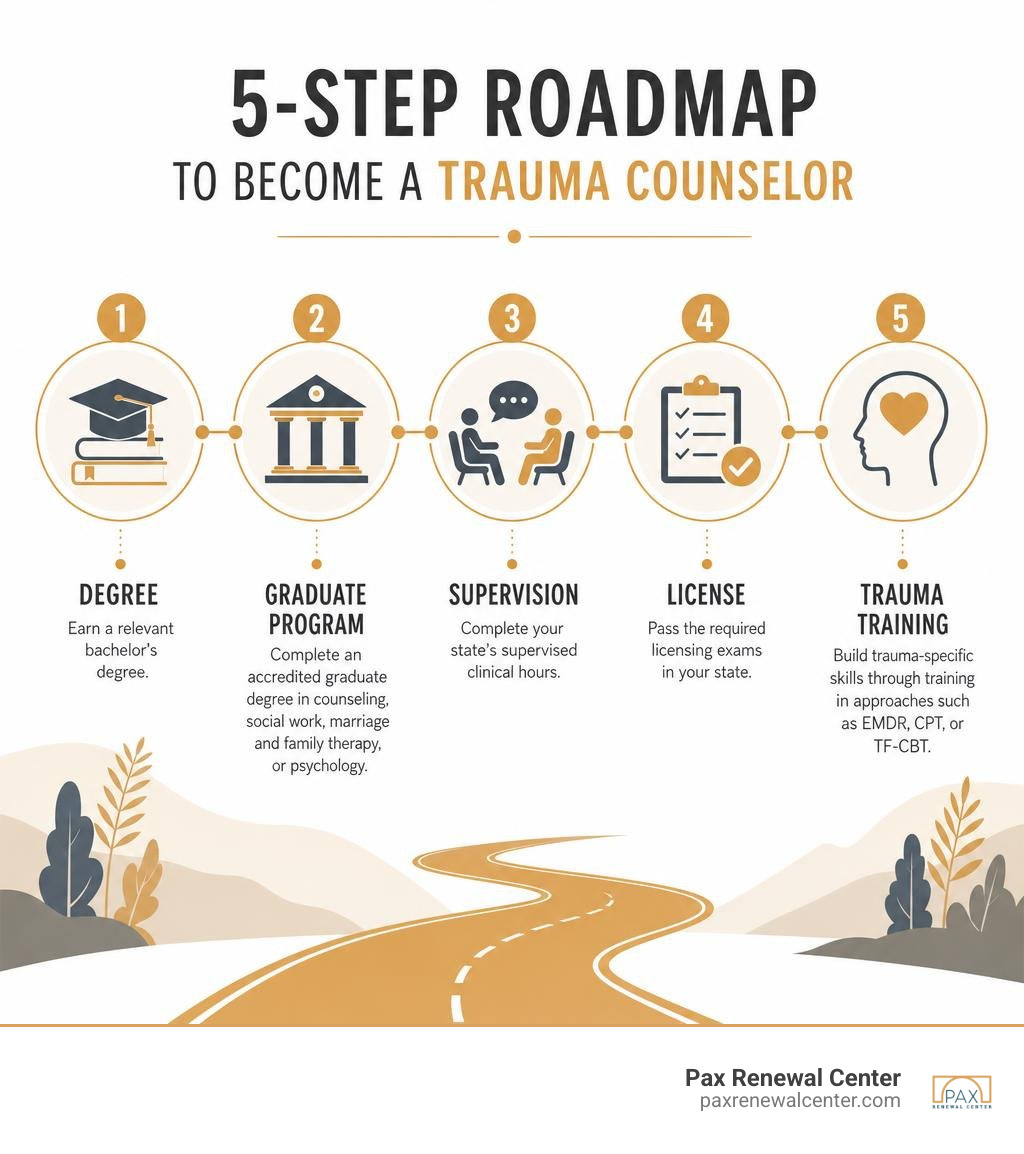
To become a trauma counselor, first earn a relevant bachelor’s degree, then complete an accredited graduate degree in counseling, social work, marriage and family therapy, or psychology. Next, complete your state’s supervised clinical hours, pass the required licensing exams, and build trauma-specific skill through training in approaches such as EMDR, Cognitive Processing Therapy (CPT), or Trauma-Focused CBT (TF-CBT).
Most people take about 7 to 10 years to reach independent clinical practice. Trauma counseling is not a separate state license. Instead, it is a specialty built on credentials such as LPC, LMHC, LCSW, LMFT, psychologist, or psychiatrist.
This work matters. More than 70% of people experience at least one traumatic event in their lives, and the National Center for PTSD estimates that about 8 million U.S. adults have PTSD in a given year. The Bureau of Labor Statistics also projects 19% job growth for substance abuse, behavioral disorder, and mental health counselors between 2023 and 2033.
Trauma counselors help people safely process experiences such as childhood abuse, violence, loss, accidents, combat, betrayal, and relationship trauma. It is meaningful work, but it also calls for strong clinical boundaries, ongoing consultation, and a real plan to prevent burnout and vicarious trauma.
I am Dan Jurek, M.A., LPC-S, LMFT-S, founder and clinical director of Pax Renewal Center in Lafayette, Louisiana, with more than 35 years of counseling experience serving individuals, couples, and families. My work in trauma, relationship counseling, and faith-integrated care has shown me that those who become a trauma counselor need both sound training and the personal support to do this work well over time.
Key terms for become a trauma counselor:
Understanding Trauma Counseling vs. General Mental Health Practice
Trauma counseling differs significantly from general supportive psychotherapy. While standard talk therapy often addresses general adjustment issues, everyday anxiety, or mild depression, specialized trauma care targets profound neurobiological dysregulation caused by overwhelming stressors.
When an individual survives catastrophic events, chronic neglect, or interpersonal abuse, their central nervous system remains locked in autonomic states of fight, flight, freeze, or fawn. Trauma therapists look beneath surface-level symptoms to evaluate how these neurological responses disrupt daily functioning. Clinical practice in this area requires a deep understanding of PTSD awareness, structural dissociation, and the somatic manifestations of distress.
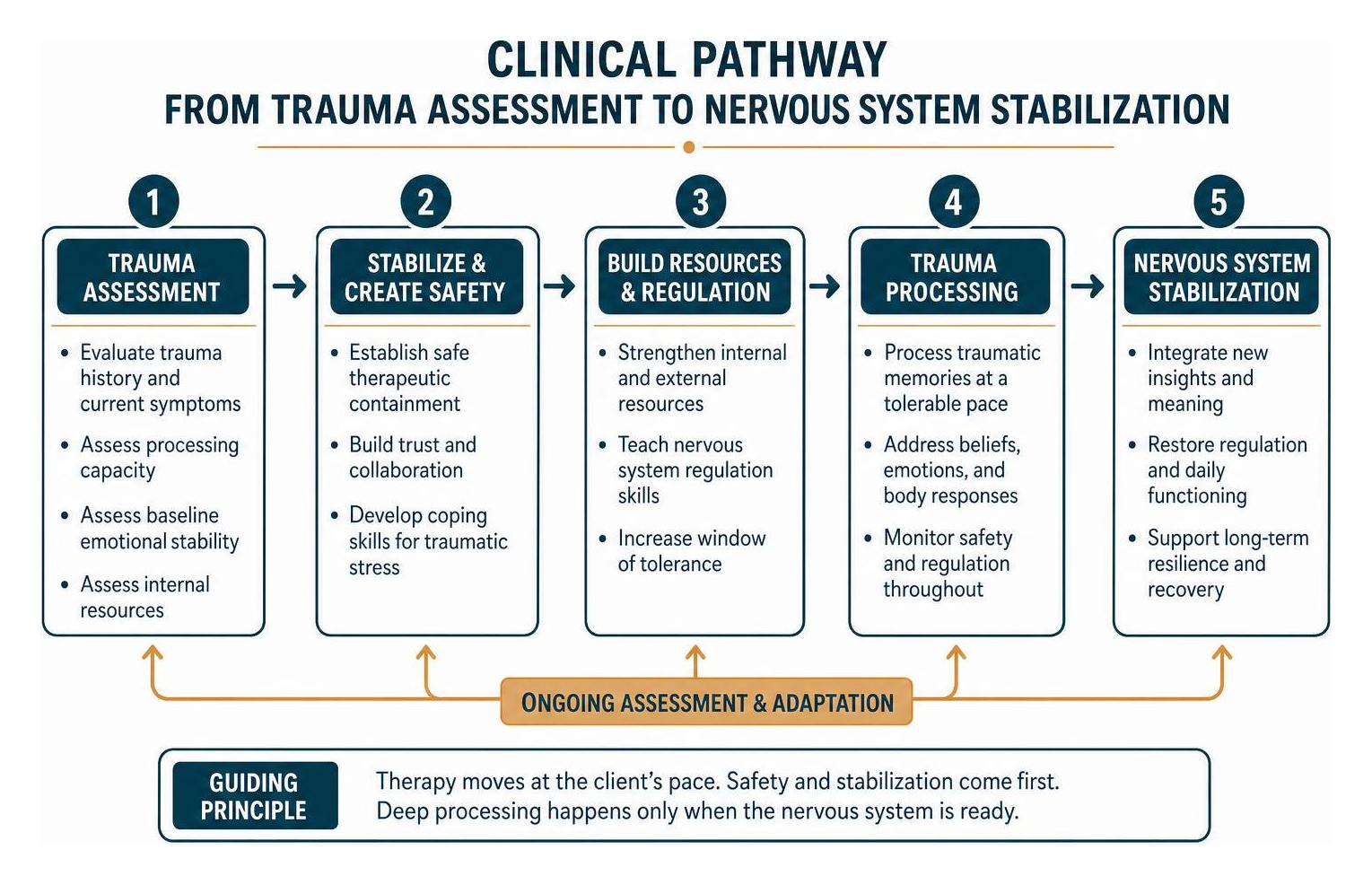
Trauma-informed assessment evaluates a client’s processing capacity, baseline emotional stability, and internal resourcing before deep memory work begins. Rather than rushing into traumatic disclosures—which can trigger severe panic or dissociation—the counselor guides the client through coping with traumatic stress by establishing nervous system stabilization and safe therapeutic containment.
Clinical Distinctions and Scope of Practice
General mental health counseling covers a broad range of life challenges. Trauma counseling, by contrast, focuses on resolving the specific impact of extreme adversity across several distinct clinical presentations:
- Acute Stress Disorder (ASD): Short-term, immediate psychological distress occurring within one month of an event.
- Post-Traumatic Stress Disorder (PTSD): Prolonged distress lasting beyond one month, characterized by intrusive memories, hyperarousal, and avoidance behaviors.
- Complex Post-Traumatic Stress Disorder (C-PTSD): Chronic, repeated, or developmental trauma, frequently requiring specialized counseling for childhood trauma to address early attachment injuries.
- Systemic and Intergenerational Trauma: Cultural, racial, or familial patterns of adversity transmitted across generations.
Trauma specialists must master the concept of the window of tolerance—the optimal physiological arousal zone where a person can process emotional material without tipping into hyperarousal (panic, rage, flashbacks) or hypoarousal (numbness, dissociation). Maintaining clear boundaries, structuring sessions intentionally, and understanding how to navigate relational ruptures are critical competencies that protect client safety throughout care.
Core Evidence-Based Modalities in Trauma Care

Specialized trauma therapists do not rely solely on unstructured conversation. They employ evidence-based protocols designed to help the brain safely reprocess traumatic memories.
The primary evidence-based modalities include:
- Eye Movement Desensitization and Reprocessing (EMDR): An eight-phase protocol utilizing bilateral stimulation (such as eye movements or tactile taps) to help the brain reprocess maladaptive memories. For local clinicians in Acadiana, review our comprehensive EMDR therapy Lafayette guide to learn more about how this modality is applied in clinical practice. For clients requiring accelerated care, EMDR intensive therapy delivers targeted processing over concentrated sessions.
- Trauma-Focused Cognitive Behavioral Therapy (TF-CBT): A components-based model designed for children, adolescents, and their caregivers to resolve emotional and behavioral difficulties related to trauma.
- Cognitive Processing Therapy (CPT): A structured form of cognitive therapy that helps clients evaluate and reframe “stuck points” (unhelpful beliefs regarding safety, trust, power, and control).
- Prolonged Exposure (PE): An exposure therapy protocol that systematically helps clients face trauma-related memories and situations in a controlled, safe environment.
- Somatic Experiencing (SE) & Polyvagal Approaches: Body-oriented interventions that help clients track somatic sensations, discharge trapped survival energy, and regulate the autonomic nervous system.
- Internal Family Systems (IFS): A parts-work framework that helps individuals access core self-leadership and heal wounded, protective emotional aspects.
For clinicians wanting to build broader foundational skills, exploring options through How to Become a Trauma Therapist – CONCEPT Professional Training provides valuable continuing education pathways.
Complete Educational and Licensure Steps to Become a Trauma Counselor
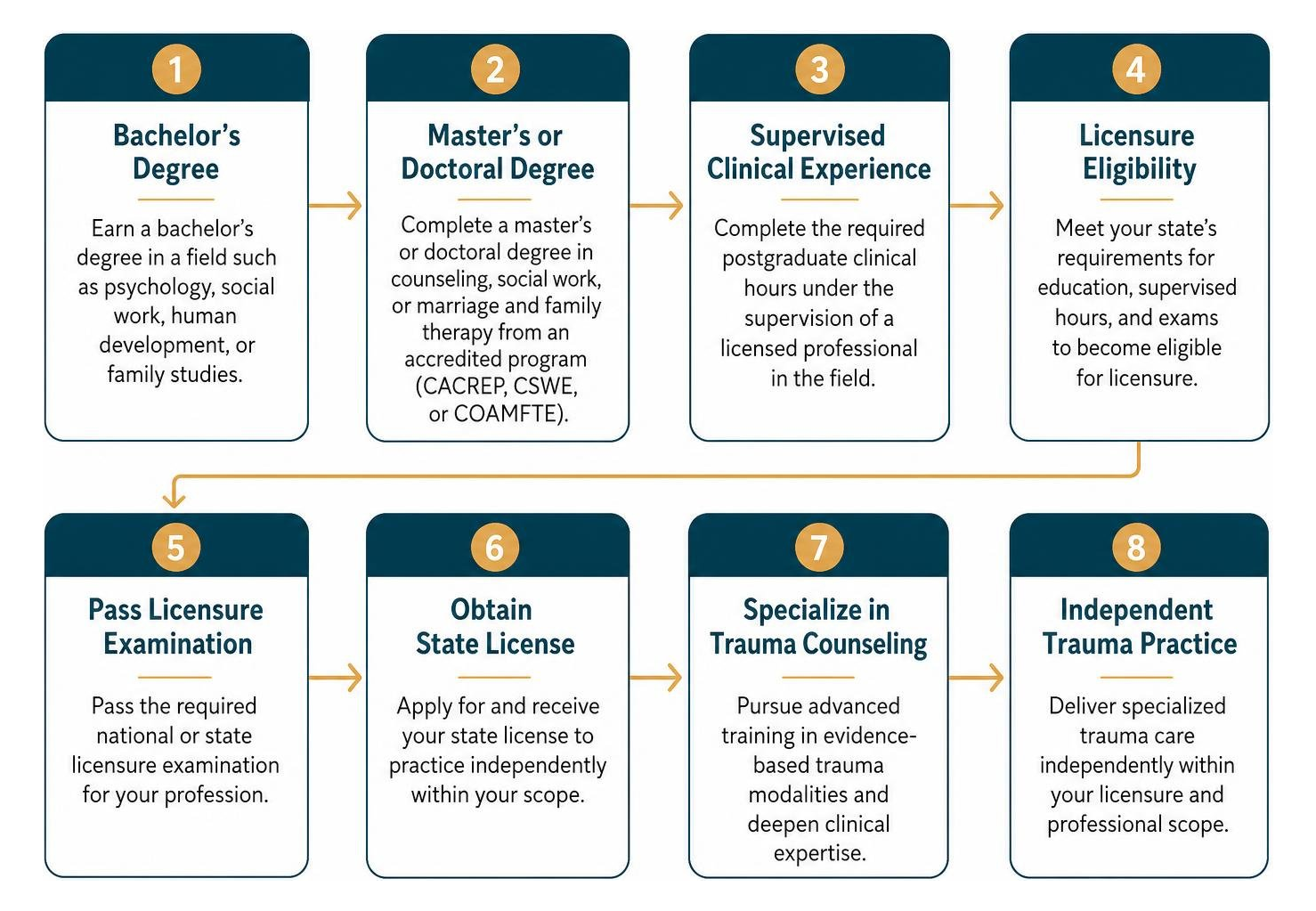
Achieving independent licensure to practice specialized trauma treatment is a multi-step journey that typically requires 7 to 10 years of focused education, supervised clinical training, and postgraduate study.
Essential Degrees and Coursework to Become a Trauma Counselor
The journey begins with an undergraduate degree, commonly in psychology, social work, human development, or family studies. While a specific undergraduate major is rarely mandated by graduate admissions committees, coursework in abnormal psychology, statistics, and developmental biology provides a solid foundation.
Next, you must earn a master’s or doctoral degree from an institution accredited by recognized bodies such as the Council for Accreditation of Counseling and Related Educational Programs (CACREP), the Council on Social Work Education (CSWE), or the Commission on Accreditation for Marriage and Family Therapy Education (COAMFTE).
The primary graduate pathways include:
- Master of Science / Arts in Clinical Mental Health Counseling (CMHC): Prepares graduates for state licensure as a Licensed Professional Counselor (LPC) or Licensed Mental Health Counselor (LMHC).
- Master of Social Work (MSW – Clinical Track): Prepares graduates for clinical social work licensure (LCSW), emphasizing systemic, community, and clinical mental health dimensions.
- Master’s in Marriage and Family Therapy (MFT): Prepares graduates for licensure as a Licensed Marriage and Family Therapist (LMFT), focusing on relational systems, couples dynamics, and attachment.
- Doctorate in Clinical or Counseling Psychology (PsyD / PhD): Prepares graduates for licensed psychologist status, providing advanced training in psychometric testing, assessment, and complex clinical interventions.
During graduate school, prioritize electives covering crisis intervention, the neurobiology of stress, attachment theory, psychopathology, and family systems. Prospective counselors can learn more about degree pathways by visiting How to Become a Trauma Counselor: Degrees & Careers.
Accruing Supervised Clinical Hours and State Licensing

Earning a graduate degree qualifies you to sit for national credentialing exams (such as the National Counselor Examination [NCE] or the National Clinical Mental Health Counseling Examination [NCMHCE]) and obtain a provisional, associate-level clinical license.
To gain full independent licensure, candidates must complete postgraduate supervised clinical practice:
- Total Supervised Hours: Typically ranges between 2,000 and 4,000 hours, depending on specific state board regulations.
- Direct Client Contact: Usually requires 1,000 to 1,500 direct client hours, with a substantial portion spent serving populations affected by crisis, trauma, or behavioral disorders.
- Clinical Supervision: Involves 100 to 200 hours of direct, one-on-one or group supervision under a state-approved board supervisor (such as an LPC-S or LMFT-S).
In Louisiana, the Louisiana Licensed Professional Counselors Board of Examiners (LPCBE) governs the clinical practice of Provisionally Licensed Professional Counselors (PLPCs) and Provisionally Licensed Marriage and Family Therapists (PLMFTs), mandating a minimum of 3,000 post-degree supervised hours over at least two years.
For detailed guidance on credentialing benchmarks across various professional avenues, review How to Become a Trauma Therapist: Steps, Degrees & Certs – Marriage Family Therapist.
Practical Steps to Become a Trauma Counselor with Lived Experience
Many gifted clinicians enter the mental health profession inspired by their own personal healing journeys. Having lived experience with adversity can deepen clinical empathy, foster genuine rapport, and provide authentic insight into the recovery process.
However, treating severe psychological distress when you carry personal wounds presents unique clinical challenges:
- Countertransference Risks: Unresolved personal history can blur therapeutic boundaries, leading to over-identification with a client’s story or unconscious attempts to rescue them.
- Vicarious Retraumatization: Listening to detailed disclosures of abuse or disaster can trigger dormant emotional pain if your own trauma work remains unfinished.
- The Necessity of Personal Therapy: Professional ethics require counselors to engage in their own personal therapy to process emotional vulnerabilities, resolve attachment issues, and maintain self-awareness.
Lived experience serves as a powerful asset only when anchored by rigorous clinical boundaries, extensive self-reflection, and ongoing consultation with experienced peers.
Post-Licensure Certifications, Training, and Salary Outlook
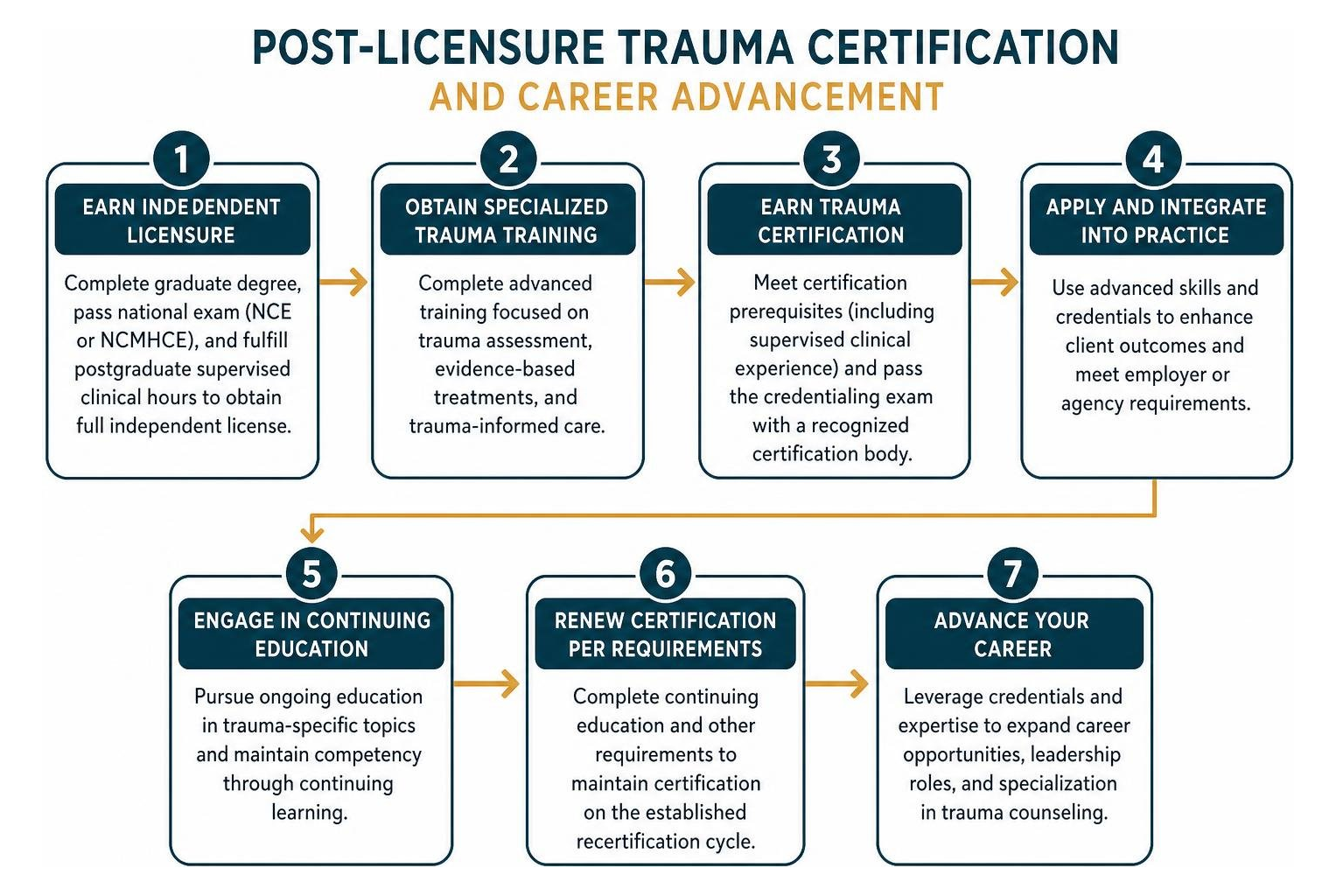
Because trauma counseling is an applied specialization rather than a standalone license, obtaining post-graduate specialty certifications helps clinicians validate their advanced clinical competencies, fulfill agency requirements, and improve client outcomes.
Key Trauma Certifications and Credentials
After securing independent licensure, therapists can pursue several recognized credentials:
| Certification Name | Credentialing Body | Core Prerequisites | Educational & Clinical Requirements | Recertification Cycle |
|---|---|---|---|---|
| Certified Clinical Trauma Professional (CCTP) | Evergreen Certifications | Master’s degree & active, independent state clinical license | Minimum 12 clock hours of approved trauma continuing education | Every 1, 2, or 3 years (6–18 CE hours required) |
| EMDR Certified Therapist | EMDR International Association (EMDRIA) | Independent state mental health license | Completion of EMDRIA-approved basic training, 50+ client hours, 20 hours of consultation | Every 2 years (12 EMDRIA-approved CE hours) |
| Clinical Mental Health Specialist in Trauma | American Mental Health Counselors Association (AMHCA) | Independent license & 3 years independent practice | 90 trauma CE hours, 100 client contact hours, 10 hours specialized supervision | Every 2 years ($50 renewal fee) |
| Trauma-Informed Care Specialist (TIC-CSp) | American Institute of Health Care Professionals (AIHCP) | Professional license or approved degree | Completion of CI 620 & CI 625 courses | Every 4 years (50 CE hours & 500 practice hours) |
To learn more about professional standards from leading organizations, explore the Trauma – American Mental Health Counselors Association portal, investigate the Trauma Informed Care Certification | AIHCP, or consult Clinical Focus: How to Become a Certified Trauma Therapist – Alma. Clinicians seeking alternative continuing education paths can also explore options via Trauma Therapist Certification and the Trauma Therapist Training Course.
Salary Expectations and Career Advancement
The demand for trauma clinicians remains exceptionally high. The mental health field faces a global shortage of approximately 1.18 million trauma-trained professionals, driving competitive compensation across diverse practice settings.
- National Median Earnings: According to the U.S. Bureau of Labor Statistics, the national median annual wage for substance abuse, behavioral disorder, and mental health counselors is $59,190, with the top 10 percent earning over $89,000.
- Trauma Therapist Averages: ZipRecruiter benchmarks indicate that the average specialized trauma therapist earns approximately $76,704 annually.
- Specialty Certification Premium: Certified trauma specialists frequently realize a 35% salary premium ($15,000 to $25,000 above generalist colleagues) due to their specialized skills in handling complex clinical presentations.
Trauma counselors work in diverse settings, including Veterans Affairs (VA) medical centers, community mental health centers, hospital emergency departments, child advocacy centers, domestic violence shelters, university counseling centers, and private practices. Those operating in private practice or specialized group settings maintain substantial control over their caseloads, fee structures, and clinical focus.
Preventing Compassion Fatigue and Vicarious Traumatization
Trauma therapy is deeply rewarding, but it presents real occupational hazards. Hearing detailed narratives of violence, neglect, and suffering on a weekly basis takes a physiological and emotional toll on clinicians.
Key risks include:
- Vicarious Trauma: The gradual shift in a clinician’s worldview, sense of safety, and interpersonal trust resulting from repeated exposure to clients’ traumatic material.
- Compassion Fatigue: Acute physical and emotional exhaustion that diminishes a counselor’s ability to feel empathy.
- Burnout: General systemic exhaustion caused by high administrative burdens, excessive caseloads, and inadequate workplace support.
At Pax Renewal Center, we emphasize that sustainable trauma counseling requires an intentional self-care strategy. Incorporating Finding Peace Through Faith-Based Trauma Therapy principles allows clinicians to ground their clinical work in spiritual resilience and hope. We actively support our team through regular peer consultation, manageable scheduling, and clear boundaries between professional responsibilities and personal life.
Frequently Asked Questions About Trauma Counseling Careers
How long does it take to become fully licensed in trauma counseling?
The full timeline generally spans 7 to 10 years. This includes earning a four-year bachelor’s degree, completing a two-to-three-year master’s program (60 credit hours), and fulfilling two to three years of postgraduate supervised clinical experience (2,000 to 4,000 hours) before gaining independent licensure.
What certifications are best for trauma therapy?
The most widely respected certifications include the Certified Clinical Trauma Professional (CCTP) through Evergreen Certifications, the EMDR Certified Therapist credential through EMDRIA, the TF-CBT Certification, and the Trauma-Informed Care Specialist (TIC-CSp) credential through AIHCP. The best choice depends on whether your target population consists of children, adults, or couples.
Can you practice trauma therapy with an online counseling degree?
Yes, provided the online master’s degree program is regionally accredited and programmatically accredited by recognized bodies such as CACREP, CSWE, or COAMFTE. Online programs require students to complete the exact same in-person clinical practicum and internship hours at local clinical sites as traditional on-campus programs.
Conclusion
Deciding to become a trauma counselor is a meaningful calling. While the academic preparation and clinical supervision require dedicated time and energy, the opportunity to help children, adults, and families recover from deep emotional wounds is deeply fulfilling work.
At Pax Renewal Center in Lafayette, Louisiana, we remain committed to clinical excellence, continuous professional growth, and spiritually grounded healing. If you are a client seeking support or a professional exploring clinical collaboration, we invite you to learn more about our team and comprehensive counseling services. Real healing is possible, and with proper training and support, counselors can guide others out of darkness into lasting peace.