

Understanding EMDR: A Path to Healing From Trauma
EMDR therapy Lafayette offers a proven way to heal from trauma, anxiety, and distressing memories through specialized counseling available in Acadiana. Here’s what you need to know:
Quick Answer: EMDR Therapy Options in Lafayette
- What it is: Eye Movement Desensitization and Reprocessing (EMDR) helps your brain reprocess traumatic memories using bilateral stimulation
- Where to find it: Licensed therapists at Pax Renewal Center and other qualified providers in Lafayette, LA
- Who it helps: Adults, teens, and children dealing with PTSD, anxiety, depression, trauma, grief, and phobias
- How long it takes: Most people see results in 8-12 sessions, though some notice relief sooner
- Cost: Private pay and insurance options available (Blue Cross, United Healthcare, Optum, Vantage)
- Format: In-person sessions at Lafayette locations, some providers offer telehealth
If you’ve experienced trauma that still affects your daily life, EMDR might be the breakthrough you’ve been looking for. Unlike traditional talk therapy where you must recount painful details, EMDR allows your brain to heal naturally while a trained therapist guides the process.
Maybe you struggle with panic attacks that come out of nowhere. Or past experiences keep replaying in your mind. Perhaps childhood wounds still impact your relationships today. After just three EMDR sessions, 84% of participants reported remission of their PTSD diagnosis in research by EMDR founder Francine Shapiro.
I’m Dan Jurek, M.A., LPC-S, LMFT-S, founder and clinical director of Pax Renewal Center in Lafayette, and I’ve spent over 35 years helping individuals and families heal from trauma using evidence-based approaches including EMDR therapy Lafayette residents trust for lasting recovery. Our team integrates faith-based counseling with proven clinical methods to provide the comprehensive healing our community deserves.
What is EMDR and How Does It Heal Trauma?
If you’ve experienced trauma, you know how painful memories can feel stuck on replay. EMDR therapy Lafayette residents trust offers a way to help your brain finally process what it couldn’t at the time.
Eye Movement Desensitization and Reprocessing (EMDR) is a powerful psychotherapy approach developed by Francine Shapiro in 1987. It helps people heal from emotional distress tied to unresolved trauma.
EMDR is based on the Adaptive Information Processing (AIP) model. This model suggests that our brains have a natural system for processing and storing experiences. However, a traumatic event can overwhelm this system, leaving the memory “stuck”—raw, unprocessed, and easily triggered. This is why a certain smell or sound can bring back the full intensity of the original trauma.
During an EMDR therapy Lafayette session, we use bilateral stimulation—such as guided eye movements, alternating sounds, or gentle tapping—while you focus on a distressing memory. This dual attention helps your brain reprocess the stuck memory, reducing its emotional charge. The memory doesn’t disappear, but it loses its power to hurt you. It becomes a past event, not a defining part of your present.
A key benefit is that you don’t have to talk in extensive detail about what happened. Unlike some traditional therapies, EMDR allows your brain to do the healing work naturally while your therapist acts as a guide. This mind-body connection is crucial, as EMDR addresses how trauma is stored both mentally and physically.
To learn more about how we approach healing from difficult experiences, you can find more info about trauma treatment on our site.

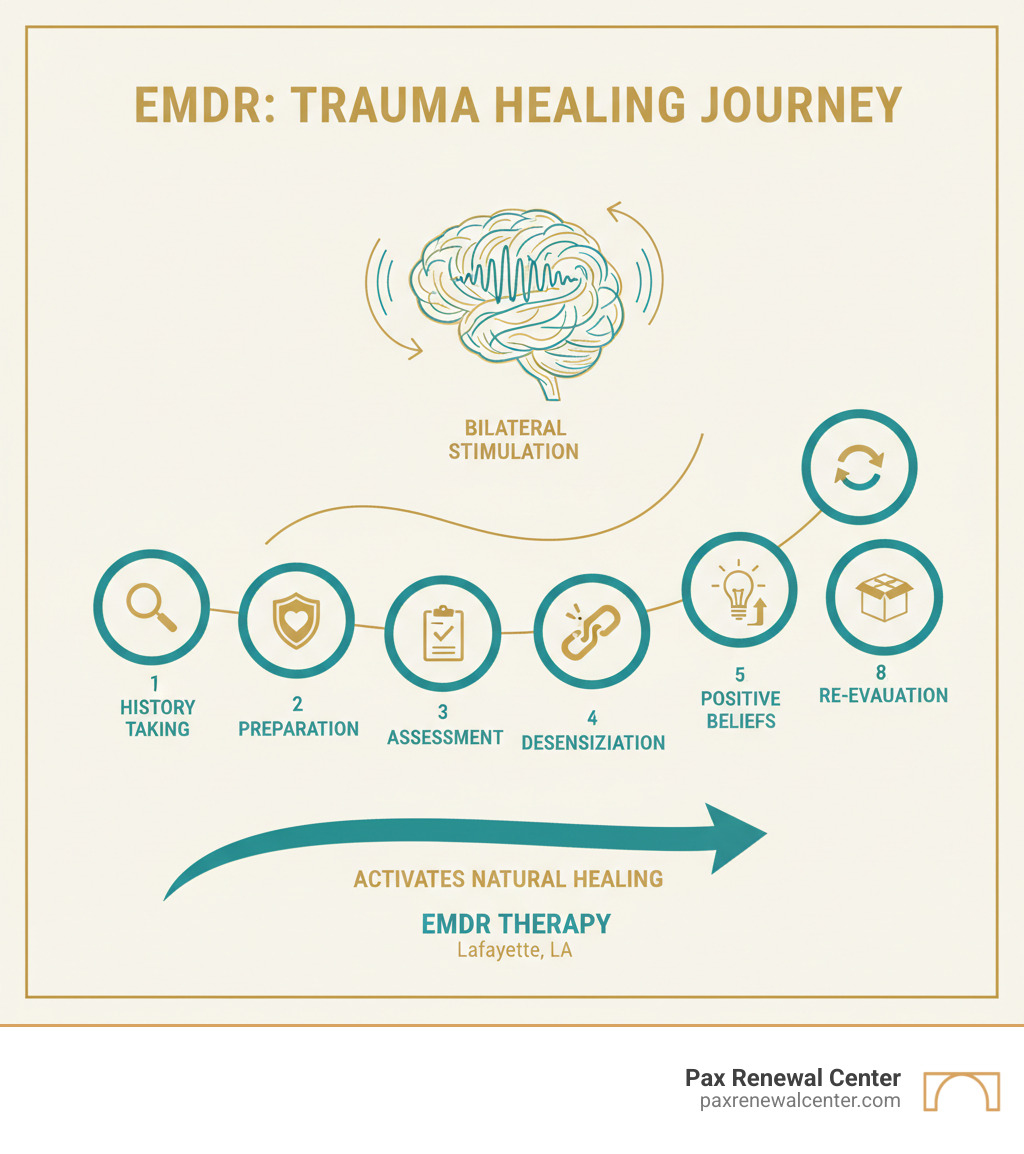
The 8 Phases of EMDR Therapy
EMDR therapy follows a structured, eight-phase approach to ensure your trauma is addressed thoroughly and safely.
- Phase 1: History Taking and Treatment Planning: We get to know your story and identify specific memories to target for reprocessing.
- Phase 2: Preparation: We build a trusting relationship and teach you coping skills to manage emotional discomfort.
- Phase 3: Assessment: We identify the target memory, the negative belief it created, and the desired positive belief.
- Phase 4: Desensitization and Reprocessing: Using bilateral stimulation, we work to reduce the distress associated with the memory.
- Phase 5: Installation: We strengthen the positive belief until it feels genuinely true.
- Phase 6: Body Scan: We check for and release any lingering physical tension related to the memory.
- Phase 7: Closure: We ensure you feel stable and grounded at the end of each session.
- Phase 8: Re-evaluation: At the start of the next session, we check our progress and identify any new targets.
This structured approach ensures you are supported every step of the way.
Conditions Treated by EMDR
While first developed for Post-Traumatic Stress Disorder (PTSD), EMDR is now recognized as effective for a wide range of conditions. For more on how we help with trauma-related conditions, please visit our PTSD Awareness page.
EMDR can significantly reduce symptoms of anxiety, including generalized anxiety, panic attacks, and phobias. Our Anxiety Counseling Complete Guide offers more information. It is also effective for depression, especially when rooted in past unresolved experiences.
Other conditions that benefit from EMDR include:
- Grief and loss
- Childhood trauma
- Chronic pain with an emotional component
- Performance anxiety
- Phobias
- Chemical dependency (by addressing underlying trauma)
These conditions often stem from experiences that overwhelmed the brain’s ability to process information. EMDR helps complete that process, freeing you from the past.
EMDR vs. Traditional Talk Therapy
While both EMDR and traditional talk therapy aim for healing, they use different methods. Talk therapy relies on verbal exploration to gain insight and develop coping strategies over time. It primarily engages your conscious, analytical mind.
EMDR therapy Lafayette practitioners use bilateral stimulation to help the brain reprocess memories directly, without requiring extensive verbal recounting of the trauma. This often accelerates healing, especially for trauma-related issues. EMDR taps into the brain’s natural processing system, similar to what occurs during REM sleep, allowing it to reach deeper places where trauma is stored.
In EMDR, the therapist is a guide for the process, whereas in talk therapy, the therapist is more involved in interpretation and dialogue. Neither approach is “better,” but EMDR’s unique method often provides faster relief for stuck traumatic memories.
The Proven Benefits and Success Rate of EMDR
When you’re dealing with trauma, you need proven results. EMDR therapy Lafayette residents have experienced at Pax Renewal Center is backed by extensive research and consistently demonstrates remarkable benefits.
One of the key benefits of EMDR is its ability to accelerate the healing process. While traditional therapy can take months or years, many people find relief with EMDR much faster. It provides long-term relief by addressing the root of the problem, not just managing symptoms. The memories that once haunted you lose their emotional grip.
A powerful statistic from research by founder Francine Shapiro shows that after just three EMDR sessions, 84% of single-trauma participants no longer had PTSD. While every journey is unique, these numbers reflect the profound potential of this approach.
Beyond symptom relief, EMDR helps you build emotional resilience and improve self-esteem. By reprocessing negative experiences and replacing them with healthier beliefs, you develop a stronger foundation for handling future stress.
For additional support, our A Guide to Coping with Traumatic Stress offers practical strategies to use alongside therapy.

Alleviating Anxiety and Stress
Anxiety, panic attacks, and chronic stress can be exhausting. EMDR is different from other approaches because it targets the underlying memories that keep your nervous system in a state of high alert. By reprocessing these memories, your body gets the message that the danger has passed.
Clients report significant symptom reduction and a feeling of a weight being lifted. The goal is to calm the nervous system at a fundamental level, allowing your body to relax. Triggers that once sent you spiraling begin to lose their power, enabling you to handle situations that were previously overwhelming. For more information, visit our page on Stress and Anxiety.
Success Rate and Research
EMDR is not a fad; it is a thoroughly researched, evidence-based treatment with decades of scientific validation. Major health organizations worldwide, including the World Health Organization and the American Psychiatric Association, recognize EMDR as an effective treatment for trauma.
Research shows high success rates for single-event trauma (like accidents or assaults) and demonstrates that EMDR is also effective for complex trauma (such as childhood abuse or repeated traumatic exposures), though it may require more sessions. The EMDR International Association (EMDRIA) provides extensive documentation of this research, which you can explore at Scientific research on EMDR.
At Pax Renewal Center, the real measure of success is the lives we see transformed right here in Lafayette.
Your Journey with EMDR Therapy in Lafayette: What to Expect
Starting EMDR therapy Lafayette can feel both hopeful and uncertain. At Pax Renewal Center, we’ve guided hundreds of people through this journey and want to clarify what you can expect.
Your path begins with an initial consultation, where we’ll discuss your story and goals to determine if EMDR is the right fit. Once sessions begin, we create a safe and supportive environment. Your therapist acts as a guide through the process, facilitating bilateral stimulation (eye movements, sounds, or taps) while you focus on a difficult memory.
During sessions, you’ll engage in emotional processing. You might experience different feelings, images, or physical sensations as your brain does its healing work. We are there to help you steer these moments safely. Many clients describe it as watching a movie of their memory that gradually loses its emotional power.
After a session, it’s normal to feel tired but relieved. Your brain has done significant work. We always end with grounding techniques to ensure you leave feeling stable. Between sessions, you may notice continued shifts in your thoughts and feelings. For more insight, see our page on What You Can Expect From Psychotherapy: The First Sessions.
How Long Does EMDR Take?
EMDR is generally considered a shorter-term therapy. Most people see significant improvement within 8-12 sessions on average. For a single traumatic event, relief can come in just a few sessions.
The duration varies by individual and the complexity of the trauma. Those with complex trauma from childhood or multiple events may need more time. The goal is not to rush but to achieve real, lasting change at a pace that feels safe for you.
Is EMDR Therapy Suitable for Children and Teens?
Absolutely. Children and teens often respond very well to EMDR, and we adapt techniques for youth to make the process feel natural. This might involve following a moving toy, listening to music with headphones, or holding small vibrating buzzers.
EMDR is effective for childhood trauma of all kinds, including abuse, neglect, loss, accidents, or bullying. We often integrate play therapy with younger children to make the sessions feel less formal. You can learn more at our Counseling for Childhood Trauma page.

Who Should Be Cautious with EMDR?
While powerful, EMDR isn’t the right starting point for everyone. A thorough assessment is essential. We prioritize safety and may recommend stabilization first for individuals in certain situations.
Caution is advised for those:
- In an acute, ongoing trauma situation (e.g., domestic violence).
- Who lack distress tolerance skills to manage strong emotions.
- Experiencing severe dissociation without grounding techniques.
- With active substance dependence or certain medical conditions.
These contraindications are not permanent roadblocks. They indicate a need to build a foundation of safety and coping skills before beginning reprocessing. Your well-being is always our first priority.
Finding a Qualified EMDR Therapist in Lafayette, LA
When you’re ready to heal with EMDR therapy Lafayette residents trust, finding the right therapist is crucial. The practitioner’s skill and training directly impact your safety and the treatment’s effectiveness.
At Pax Renewal Center, our team includes licensed therapists with specialized EMDR training. The gold standard is EMDRIA certification from the EMDR International Association, which requires rigorous training and advanced competency. All qualified therapists should also hold state licensure, such as Licensed Professional Counselor (LPC) or Licensed Marriage and Family Therapist (LMFT).
Our approach integrates clinical excellence with compassionate, faith-based support. We believe healing happens best when you feel truly seen and supported. Learn more about our philosophy in Finding Hope and Empowerment Through Professional Counseling.
How to Find the Right Therapist for You
The right personal fit is as important as qualifications. Look for someone you trust and whose approach resonates with you. You can use therapist directories like the EMDRIA website or Psychology Today to find EMDR therapists in Lafayette. Referrals from doctors or friends can also be valuable. Don’t hesitate to schedule a brief consultation call to ask questions about their experience and approach. Pay attention to how you feel during the conversation—feeling respected and understood is key. Also, consider practical factors like location and format (in-person vs. online), both of which we offer at Pax Renewal Center.
Cost and Insurance for EMDR Therapy in Lafayette
We understand that financial concerns can be a barrier to getting help. The cost of EMDR therapy Lafayette practices charge varies, but we are always transparent about our fees.
Insurance coverage is often available. At Pax Renewal Center, we work with several major providers, including Blue Cross Blue Shield, United Healthcare, UMR, Optum, and Vantage Healthcare. We recommend you call your insurance company to confirm your specific mental health benefits, copay/coinsurance, deductible, and any pre-authorization requirements.
For those using private pay, we offer self-pay options. Under federal law, you have the right to receive a Good Faith Estimate explaining the expected cost of your care before you begin treatment. This protects you from surprise bills. You can learn more at www.cms.gov/nosurprises.
We are committed to making quality mental health care accessible. Please reach out to discuss a financial arrangement that works for your situation.
Frequently Asked Questions about EMDR
Considering EMDR therapy Lafayette for the first time brings up valid questions. Here are clear, honest answers to some common concerns.
What does a typical EMDR session feel like?
In a session, you’ll sit comfortably and recall a specific distressing memory. Your therapist will then guide you through bilateral stimulation (like following a light with your eyes or listening to alternating tones). You are not required to describe the memory in detail; you simply notice the thoughts, feelings, and sensations that arise. Your therapist is there to ensure you feel safe throughout the process. Many people feel tired but relieved afterward, and we always end with grounding techniques to help you feel calm and stable.
Can EMDR be done online?
Yes, virtual EMDR is a highly effective and accessible option. Using secure telehealth platforms, we use digital tools to provide the same bilateral stimulation you’d receive in person, such as an on-screen light bar or alternating sounds through headphones. This allows you to engage in therapy from the comfort and privacy of your own home, offering flexibility for busy schedules. We can discuss whether an in-person or online format is best for you during your consultation.
Does EMDR erase memories?
No, EMDR does not erase memories. Your memory of the event remains, but the therapy changes how it affects you. It helps your brain properly process and file the memory, so it no longer feels like a raw, open wound.
The emotional charge of the memory diminishes significantly. Negative beliefs tied to the event (like “I’m powerless”) are replaced with healthier ones. The memory becomes something that happened in your past, rather than something that controls your present. You can remember it without being re-traumatized by it.
Begin Your Path to Healing in Lafayette
You’ve made it this far, and that alone tells us something important—you’re ready for change. Maybe you’re tired of feeling stuck in the past, or perhaps you’re searching for a way to finally quiet the anxiety that’s been your constant companion. Whatever brought you here, we want you to know this: healing is possible, and you don’t have to do it alone.
EMDR therapy Lafayette offers more than just symptom relief. It provides a genuine pathway to reclaiming your life from the grip of trauma, anxiety, and distressing memories. We’ve witnessed remarkable changes right here in our community—people who once felt defined by their pain now living with freedom, confidence, and renewed hope.
At Pax Renewal Center, we understand that true healing touches every part of who you are. That’s why we integrate proven clinical approaches like EMDR with spiritual guidance rooted in faith. Our compassionate team doesn’t just treat symptoms; we walk alongside you as you refind emotional peace, restore relationships, and nurture your spiritual well-being. This holistic approach honors the complexity of your experience and the fullness of your humanity.
Taking that first step toward healing requires courage, but you don’t need to have it all figured out. Whether you’re dealing with trauma that happened years ago or struggling with anxiety that affects your daily life, EMDR can help your brain open up its natural healing ability. The distressing memories that once controlled you can lose their power, allowing you to move forward into the future you deserve.
We invite you to reach out and find how EMDR therapy can transform your life. Our team is ready to answer your questions, address your concerns, and create a personalized treatment plan that fits your unique needs. To learn more about how we can support your journey toward healing and renewal, please Explore our counseling services.