

Why Play Therapy Lafayette LA Matters for Your Child’s Emotional Health
Play therapy lafayette la offers parents a proven way to help their children process emotions, overcome behavioral challenges, and heal from difficult experiences. If you’re looking for a qualified provider in the Lafayette area, here’s what you need to know:
Finding a Play Therapist in Lafayette, LA:
| What to Look For | Why It Matters |
|---|---|
| Licensed Professional Counselor (LPC) | Ensures proper training and state licensure |
| Registered Play Therapist (RPT or RPT-S) | Specialized certification in play therapy techniques |
| Experience with Your Child’s Age | Play therapy works best for ages 3-12 |
| Faith-Based Options | Aligns therapy with your family’s values |
| Initial Consultation | Ensures a good fit between therapist and child |
Where to Find Providers:
- Pax Renewal Center and other local counseling centers
- Association for Play Therapy (APT) directory
- Referrals from pediatricians or school counselors
- Faith-based counseling centers in Lafayette
When children face anxiety, trauma, behavioral issues, or family transitions, they often lack the words to express what they’re feeling. Play therapy gives them a language they already speak—the language of play. Through toys, art, sandtrays, and storytelling, trained therapists help children work through their struggles in a safe, developmentally appropriate way.
As Gary Landreth said, “Toys are used like words by children, and play is their language.” This guide will help you understand what play therapy is, how it works, and how to find the right provider for your child in Lafayette, Louisiana.
I’m Dan Jurek, M.A., LPC-S, LMFT-S, founder and clinical director of Pax Renewal Center in Lafayette, LA, with over 35 years of experience providing faith-based counseling for children, teens, adults, and families. Our team includes therapists trained in play therapy lafayette la who help children heal from trauma, anxiety, behavioral challenges, and family stress through evidence-based, compassionate care.
Understanding Play Therapy: More Than Just Play
When we talk about play therapy, it’s easy to imagine children simply playing with toys. While that’s certainly part of it, there’s a profound difference between casual play and the intentional, therapeutic process of play therapy. As experts in child and adolescent counseling, we understand that play is not merely a pastime for children; it is their primary mode of communication, learning, and processing the world around them.

What is Play Therapy and How Does It Work?
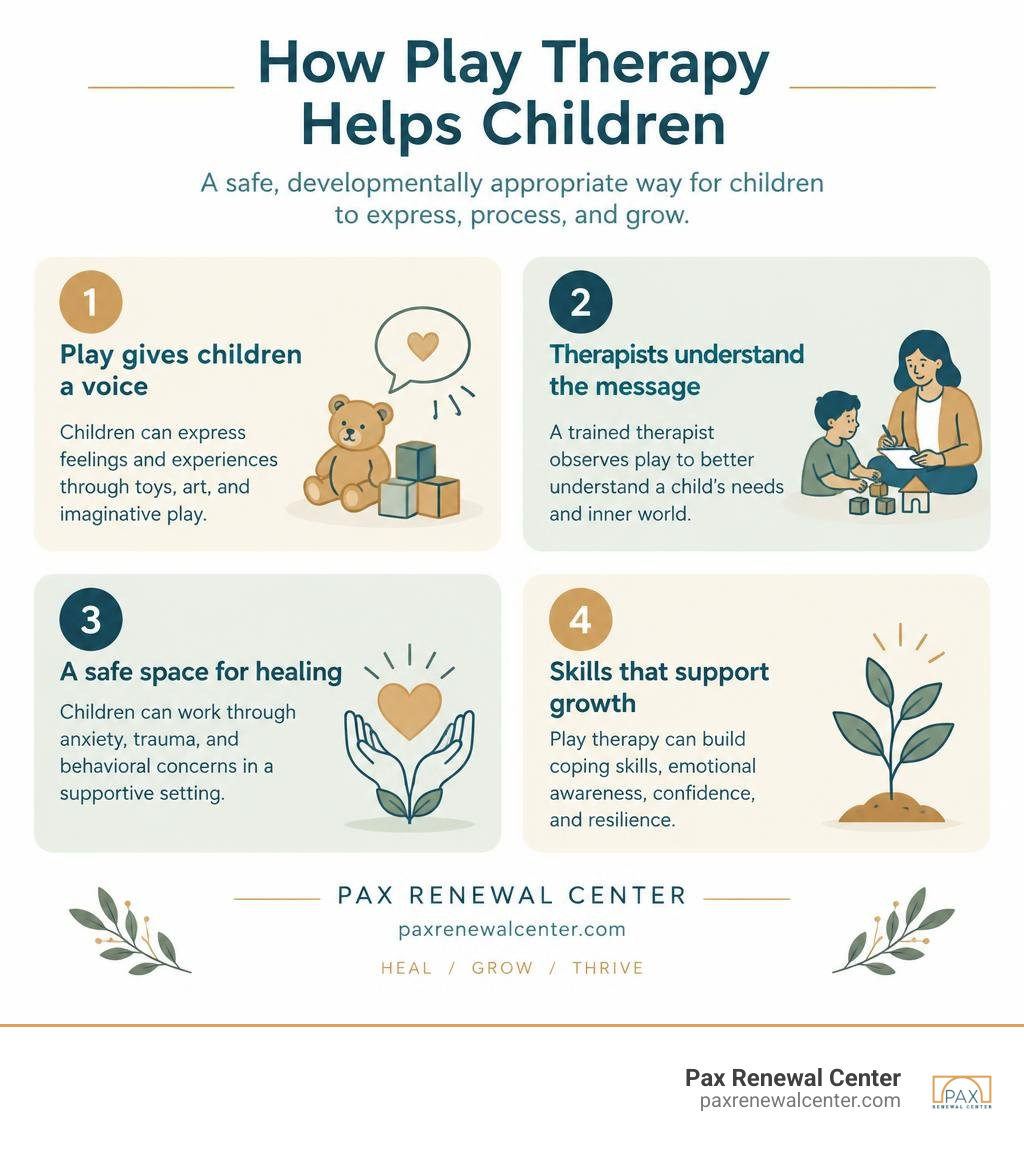
Play therapy is a structured, theoretically based approach that helps children address and resolve their own problems by building on their natural way of learning about themselves and their relationships. Unlike traditional talk therapy, which relies heavily on verbal expression, play therapy lafayette la uses toys, art, storytelling, and games as a means of communication. Children often don’t yet possess the vocabulary or emotional maturity to articulate complex feelings or traumatic experiences. In the safety of a therapeutic playroom, “toys are used like words by children, and play is their language.” This allows them to express thoughts and emotions in a symbolic and meaningful way.
A trained play therapist observes how a child interacts with the play materials, gaining insight into their inner world, relationships, and difficulties. This observation helps us understand the child’s perspective, fears, and struggles. The therapist then uses this understanding to guide the child toward finding more adaptive ways of thinking and behaving. We create a safe, non-judgmental space where children can explore their feelings, practice new skills, and process experiences without the pressure of verbalizing them directly. This developmentally appropriate method is incredibly powerful for healing and growth.
The Powerful Benefits for Your Child’s Development
The benefits of engaging in play therapy lafayette la are extensive and can significantly impact a child’s emotional and behavioral development. We’ve seen how children blossom through this process, developing crucial life skills and a stronger sense of self.
Play therapy helps children:
- Become more responsible for their behaviors and develop more successful strategies for managing challenges.
- Develop new and creative solutions to problems, fostering resilience and adaptability.
- Cultivate respect and acceptance of self and others, building a foundation for healthy relationships.
- Learn to experience and express emotion in healthy ways, rather than internalizing or acting out.
- Develop empathy and respect for the thoughts and feelings of others, enhancing social intelligence.
- Learn new social skills and relational skills with family, improving communication and connection.
- Develop self-efficacy and a better assuredness about their abilities, boosting confidence and self-esteem.
- Process and heal from traumatic experiences, providing a safe outlet for overwhelming emotions.
- Strengthen attachment and improve emotional security, fostering healthier bonds with caregivers.
These benefits extend beyond the therapy room, helping children thrive in school, at home, and in their social interactions. If you’re curious about how our services can support your child’s overall well-being, you can find More info about our counseling services on our website.
Common Approaches and Techniques
Within the field of play therapy, there are various approaches and techniques that a skilled therapist might employ, custom to the unique needs of each child.
- Directive vs. Non-directive Play: Some therapists use a non-directive, child-led approach, allowing the child to freely choose activities and lead the play, with the therapist observing and reflecting. Others use a more directive, therapist-guided approach, introducing specific games or activities to address particular issues. Many integrate both, depending on the child’s needs.
- Sandtray Therapy: This powerful technique involves a sandbox filled with miniature figures and objects. Children create scenes in the sand, symbolically representing their inner world, conflicts, and resolutions.
- Art and Creative Expression: Using drawing, painting, sculpting, and other art forms, children can externalize emotions and process experiences that might be too difficult to express verbally.
- Storytelling and Role-Playing: Children can create stories or act out scenarios with puppets or dolls, allowing them to explore different roles, practice social skills, and process difficult situations in a safe, imaginative space.
- Therapeutic Games: Specially designed games help children develop problem-solving skills, learn to manage emotions, and practice social interactions in a fun and engaging way.
- Integrated Approaches: Many therapists combine play therapy with other evidence-based modalities, such as Cognitive Behavioral Therapy (CBT). This holistic approach ensures that the therapy is comprehensive and effective.
- Cognitive Behavioral Play Therapy (CBPT): This approach integrates the principles of CBT with play, helping children identify and change negative thought patterns and behaviors through play activities. It is particularly helpful for children and adolescents dealing with anxiety.
- Filial Play Therapy: This unique approach involves parents directly in the therapeutic process. It’s a parent training program designed to increase communication and build stronger, healthier relationships between parents and their children.
At Pax Renewal Center, we believe in integrating clinical best practices with spiritual guidance, and this extends to our work with children. Our Faith-Based Cognitive Behavioral Therapy approach can be adapted to support children through play, helping them build coping skills grounded in values that resonate with your family.
A Parent’s Guide to the Play Therapy Process in Lafayette, LA
As parents, we constantly strive to understand and support our children. Sometimes, however, their struggles run deeper than what we can address through everyday parenting. Recognizing when your child might benefit from professional help, understanding what issues play therapy lafayette la can address, and knowing what to expect from the process are crucial steps toward their healing.

Signs Your Child Might Benefit from Therapy
Children communicate distress in many ways, and it’s important for us to be attuned to these signals. If you’re noticing persistent changes in your child’s behavior or emotional state, it might be time to consider play therapy lafayette la.
Here are some key behavioral and emotional changes to watch for:
- Behavioral Indicators:
- Frequent meltdowns or aggression that is unusual for their age.
- Withdrawal from family members or friends.
- Acting out at school or at home, such as increased defiance or opposition.
- Sudden changes in school performance or increased difficulty concentrating.
- Changes in sleep patterns or appetite.
- Regression in developmental milestones (e.g., bedwetting after being potty-trained).
- Emotional Indicators:
- Excessive anxiety, fear, or sadness that seems overwhelming.
- Persistent worries or phobias.
- Low self-esteem or expressions of hopelessness.
- Difficulty coping with everyday stressors or minor setbacks.
- Trouble identifying or expressing emotions, leading to frustration.
- Situational Triggers:
- Experiencing or witnessing a traumatic event (e.g., accident, abuse, significant loss). In such cases, our Counseling for Childhood Trauma can be invaluable.
- Major family changes like divorce, relocation, or the arrival of a new sibling.
- Grief and loss due to the death of a loved one or a pet.
- Bullying, either as a target or a perpetrator.
- Chronic illness or medical procedures.
If your child is exhibiting several of these signs, seeking a consultation with a play therapist in Lafayette, LA, can provide clarity and a path forward.
Common Challenges Addressed by Play Therapy Lafayette LA
Play therapy lafayette la is highly effective in helping children steer a wide range of emotional, behavioral, and developmental challenges. Our therapists, and others in the Lafayette area, are equipped to address these issues using play as their primary tool.
- Anxiety and Depression: Children struggling with anxiety or depression may withdraw, exhibit excessive worry, or have changes in mood. Play therapy provides a safe outlet for these feelings and is effective for children and adolescents across a wide age range.
- ADHD and Behavioral Issues: For children with ADHD, oppositional behavior, or other behavioral concerns, play therapy helps them learn self-regulation, develop successful strategies, and become more responsible for their actions.
- Trauma and PTSD: Play therapy, sometimes using specific techniques like Sandtray Therapy, provides a safe way for children to process and heal from traumatic experiences such as abuse, neglect, or witnessing violence.
- Grief and Loss: Navigating the complexities of grief can be overwhelming for children. Play therapy allows them to express their sadness, confusion, and anger related to loss.
- Family Conflict and Attachment Issues: When family dynamics are strained, or children struggle with attachment, play therapy can strengthen bonds, improve communication, and help children feel more secure. For parents navigating difficult family transitions, our Counseling for Co-Parenting services can complement a child’s play therapy journey.
What to Expect from Your Play Therapy Lafayette LA Sessions
Starting on play therapy can feel like a new adventure for both you and your child. Understanding the structure and what your role might be can help ease any uncertainties.
- Session Length and Frequency: Play therapy sessions typically last for 30 to 45 minutes. They usually occur weekly, providing a consistent and predictable routine for your child to engage in the therapeutic process.
- Duration of Therapy: The total length of therapy varies depending on the child’s individual needs and the issues being addressed. While some children may benefit from a shorter course, play therapy often involves around 20 sessions on average. However, it’s always custom to the child’s progress and specific circumstances.
- The Parent’s Role: Your involvement is key to your child’s success. While you won’t typically be in the playroom during your child’s individual sessions (to allow them full freedom of expression), parent consultations are a vital component. These sessions allow us to discuss your child’s progress, share insights, and strategize ways you can support your child at home. Some therapists specialize in Filial Play Therapy, a parent training program that empowers you to use play-based techniques to strengthen your relationship with your child. For a more comprehensive understanding of how to support your child’s development, explore our Parenting Counseling Complete Guide.
How to Find a Qualified Play Therapist in Lafayette, LA
Finding the right play therapist for your child is a significant step toward their well-being. It’s important to look for specific qualifications and to consider the therapeutic fit. In Lafayette, LA, there are a number of dedicated professionals who specialize in this area.
Key Qualifications to Look For
When searching for a play therapist, we recommend focusing on these credentials and qualities:
- Professional Licensure: Ensure the therapist is a Licensed Professional Counselor (LPC) in Louisiana. This confirms they have met the state’s requirements for education, supervised experience, and ethical practice.
- Specialized Credentials: Look for therapists who have specialized training in play therapy.
- Registered Play Therapist (RPT): This credential from the Association for Play Therapy (APT) signifies extensive education, supervised play therapy experience, and adherence to professional standards. Some therapists may also be under supervision to become an RPT.
- Registered Play Therapist-Supervisor (RPT-S): This advanced credential indicates that the therapist is not only an RPT but also qualified to supervise other counselors in their play therapy training.
- Relevant Experience: Consider therapists who have experience working with your child’s specific age group (play therapy is generally for ages 3-11, but many adapt techniques for teens) and the particular issues your child is facing, such as anxiety or behavioral challenges.
- Therapeutic Fit: This is paramount. The relationship between your child and the therapist is crucial for success. An initial consultation allows you to assess the therapist’s approach, personality, and how well they might connect with your child.
Where to Search for Providers
Lafayette, LA, offers several avenues for finding qualified play therapists:
- Pax Renewal Center Website: We have therapists trained in play therapy and offer comprehensive child and teen counseling services custom to your family’s needs.
- Association for Play Therapy (APT) Directory: The Association for Play Therapy (APT) website provides a searchable directory of Registered Play Therapists by location, which can be an excellent resource for finding qualified professionals in Lafayette, LA.
- Referrals: Your pediatrician, school counselors, or other trusted professionals in your child’s life can often provide valuable referrals to local play therapists they trust.
- Faith-Based Centers: If aligning therapy with your family’s spiritual values is important, look for faith-based counseling centers in Lafayette. Pax Renewal Center is dedicated to providing professional, compassionate care integrated with spiritual guidance rooted in Catholic and Christian values. We believe in holistic healing that addresses emotional, mental, and spiritual well-being. You can learn more about our approach through our Lafayette, LA Christian Counseling Guide.
Frequently Asked Questions about Play Therapy
We understand that parents often have many questions when considering therapy for their children. Here are answers to some of the most common inquiries about play therapy lafayette la.
How much does play therapy cost?
The cost of play therapy sessions can vary among providers in Lafayette, LA. While we cannot provide specific pricing, it’s common for individual sessions to have a set fee. Many therapists work with insurance providers. For example, some Lafayette therapists are in-network with Blue Cross Blue Shield (BCBS) and Aetna, and many can electronically file claims on your behalf. We recommend inquiring about fees, accepted insurance plans (including whether they accept out-of-network benefits), and payment options during your initial consultation. Payments, including co-pays, are generally expected at the time of service.
Is play therapy effective for children?
Yes, play therapy is an evidence-based approach that has been shown to be highly effective for children. It builds on the natural way children learn and helps them address and resolve their own problems. Through play, children develop crucial coping skills, build resilience, and achieve optimal emotional and social development. The Association for Play Therapy defines it as a systematic use of a theoretical model to establish an interpersonal process where trained therapists use the therapeutic powers of play to help clients prevent or resolve psychosocial difficulties and achieve optimal growth and development. We have seen countless children thrive and overcome significant challenges through this powerful modality.
Can play therapy be done online?
While traditional play therapy is often conducted in person within a dedicated playroom, advancements in technology have made teletherapy for children a viable option for some. Many therapists, including some in Lafayette, LA, are certified to offer online sessions. Virtual play therapy techniques adapt traditional methods to a digital format, using interactive games, digital art, and virtual sandtrays. These online sessions require a secure, HIPAA-compliant platform to ensure privacy and effectiveness. If in-person sessions are not feasible, inquire with potential therapists about their teletherapy options and the requirements for online participation.
Conclusion
Play therapy lafayette la is a powerful and effective tool for helping children steer life’s challenges, process difficult emotions, and develop healthy coping mechanisms. It recognizes that play is a child’s natural language, providing a safe and developmentally appropriate space for healing and growth. From addressing anxiety and trauma to improving social skills and family relationships, the benefits of play therapy are profound and long-lasting.
Finding the right, qualified play therapist in Lafayette, LA, is a crucial step in this journey. By looking for proper licensure, specialized RPT credentials, and a good therapeutic fit, you can ensure your child receives the compassionate and expert care they deserve.
At Pax Renewal Center, we are committed to helping individuals, couples, and families experience emotional healing and relational restoration. Our team, including therapists trained in play therapy, is here to support your child’s well-being with evidence-based, faith-aligned approaches. We encourage you to take the next step towards your child’s flourishing. Contact us to learn more about our child and teen counseling services and how we can support your family in Lafayette, LA.