

Start Training to Become a Therapist: The Essential Roadmap
Training to become a therapist usually means earning a relevant bachelor’s degree, completing a licensure-focused master’s program, gaining supervised clinical experience, passing required exams, and applying for a state license. For most Louisiana therapists, the full path takes about 5 to 8 years, depending on the degree track, program pace, and supervised-hour requirements.
A simple starting plan:
- Choose a path such as professional counseling, clinical social work, or marriage and family therapy.
- Enroll in an accredited program that meets Louisiana licensure rules.
- Complete practicum, internship, and post-graduate supervision – often around 3,000 hours.
- Pass the required national and state licensing exams.
- Keep learning through supervision, ethics training, and continuing education.
This work matters. As of August 2024, more than 122 million Americans lived in areas with a shortage of mental health professionals. Well-trained therapists can help individuals, couples, and families work through anxiety, trauma, grief, conflict, and major life changes with care and sound clinical judgment.
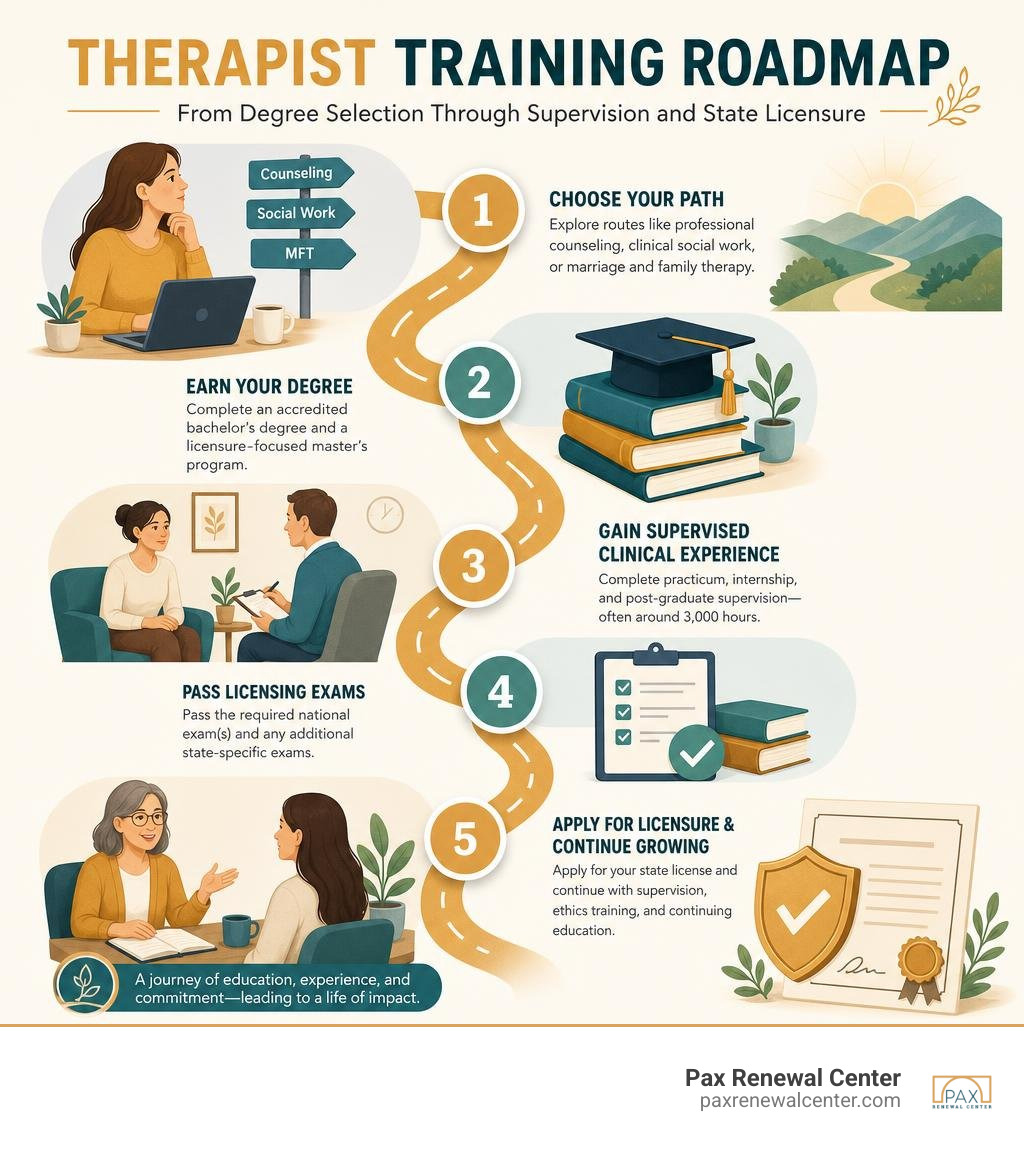
Simple guide to training to become a therapist:
Understanding Therapist Career Pathways and Professional Roles
Stepping into the mental health profession requires understanding how different credentials define your daily clinical scope. While the public often uses terms like “therapist,” “counselor,” and “psychologist” interchangeably, each role represents a unique educational track, philosophical approach, and regulatory scope of practice.
In our clinical work, we collaborate with clinicians from various disciplines. Some focus on systemic family interactions, others emphasize environmental and social systems, while medical colleagues manage psychotropic medications. Selecting the right path early prevents unnecessary coursework and aligns your education with your desired day-to-day practice.
| Professional Role | Minimum Degree | Primary Focus & Modalities | Typical Work Settings |
|---|---|---|---|
| Licensed Professional Counselor (LPC) | Master’s (MS/MA) | Individual psychotherapy, cognitive and emotional wellness, symptom management | Private practice, outpatient clinics, community mental health |
| Licensed Marriage & Family Therapist (LMFT) | Master’s (MS/MA) | Relational dynamics, systemic family therapy, couples and marital repair | Private practice, family counseling clinics, community agencies |
| Licensed Clinical Social Worker (LCSW) | Master’s (MSW) | Psychotherapy, community advocacy, social justice, resource navigation | Hospitals, social agencies, private practice, crisis centers |
| Clinical Psychologist | Doctorate (PhD/PsyD) | Formal psychological testing, diagnostic evaluations, complex psychotherapy | Inpatient facilities, specialized assessment centers, universities, private practice |
| Psychiatric Nurse Practitioner (PMHNP) | Master’s/Doctorate (MSN/DNP) | Psychiatric evaluation, psychopharmacology (medication management), brief therapy | Hospitals, outpatient psychiatric clinics, integrative medical centers |
Master’s-Level Clinicians vs. Doctoral Psychologists
A common point of confusion for prospective students is whether they must earn a doctoral degree to practice psychotherapy. In truth, the vast majority of outpatient therapy is delivered by master’s-level practitioners, including Licensed Professional Counselors (LPCs), Licensed Marriage and Family Therapists (LMFTs), and Licensed Clinical Social Workers (LCSWs).
Master’s programs generally require 60 graduate credit hours and 2 to 3 years of study, focusing almost exclusively on direct clinical intervention, case conceptualization, and counseling techniques.
In contrast, earning a doctoral degree (a PhD or PsyD) entails 5 to 7 years of post-undergraduate study, including formal dissertation research, advanced statistical coursework, and a year-long pre-doctoral internship. As outlined in this guide on How to Become a Psychologist: Complete Career Path (2026), doctoral psychologists are uniquely trained to administer, score, and interpret standardized psychological assessment batteries—such as comprehensive IQ tests, projective assessments, and neuropsychological batteries—which fall outside the standard master’s-level scope of practice.
If your primary calling is to sit with clients, guide couples through distress, and support emotional healing, a master’s-level license offers a direct, highly effective, and financially sustainable path without requiring a doctoral dissertation.
Differences Between Counselors, Psychotherapists, and Therapists
The titles used across the behavioral health field can differ significantly depending on the clinical context and geographical location. In the United States, “counselor” and “therapist” are frequently used as umbrella terms for master’s-level licensed professionals who evaluate and treat emotional, mental, and behavioral challenges.
A counselor often focuses on targeted symptom relief, psychoeducation, and behavioral coping strategies to help clients overcome acute life transitions, workplace stress, or situational depression. A psychotherapist frequently engages in deeper exploration of unconscious patterns, early childhood attachments, and enduring personality dynamics.
In international contexts, such as the UK, “counsellor” and “psychotherapist” represent distinct training tiers regulated by organizations like the BACP or UKCP, with psychotherapists completing higher clinical hour thresholds. To unpack these variations and educational terminology further, review our breakdown where Accredited Online Training for Counsellors Terms Demystified explains what these designations mean for modern distance and hybrid learners.
Core Phases of Clinical Training to Become a Therapist
Becoming a licensed mental health professional follows a structured sequence designed to build clinical competence, ethical maturity, and diagnostic skill.

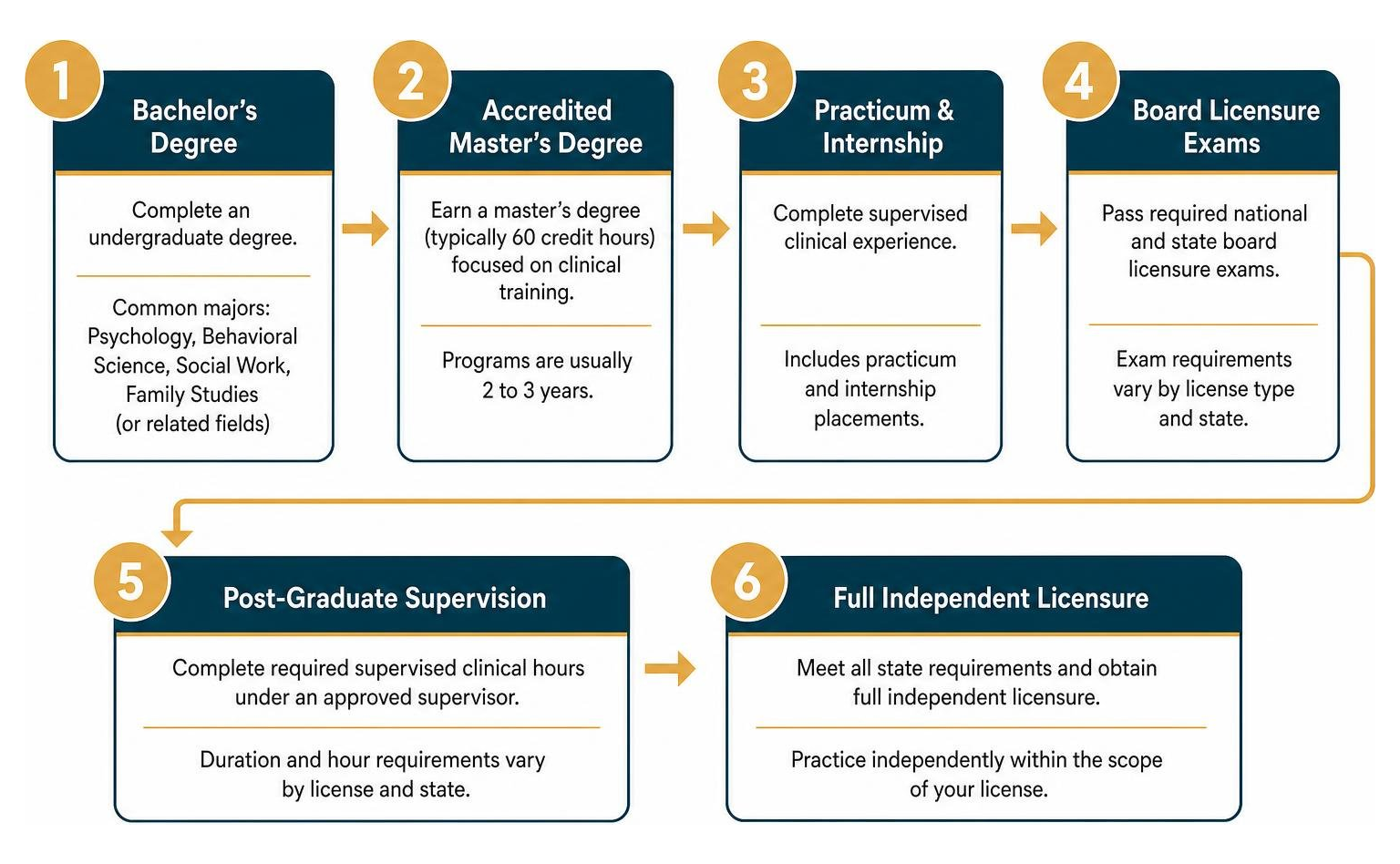
Choosing the Right Degree Track: Master’s vs. Doctoral Training to Become a Therapist
Your journey begins during your undergraduate years. While an undergraduate major in psychology, behavioral science, social work, or family studies is common, it is rarely mandatory. Master’s admissions committees welcome students from diverse backgrounds—including education, philosophy, and business—provided they have completed foundational coursework in human development, abnormal psychology, and research methods.
When selecting a graduate program, programmatic accreditation is paramount:
- CACREP (Council for Accreditation of Counseling and Related Educational Programs) for clinical mental health and professional counseling.
- COAMFTE (Commission on Accreditation for Marriage and Family Therapy Education) for marriage and family therapy.
- CSWE (Council on Social Work Education) for clinical social work.
Enrolling in an accredited program ensures that your curriculum meets state standards. If you plan to practice in Louisiana, review the specific degree and credit requirements in How to Become a Licensed Counselor (LPC) in Louisiana to confirm your course selections satisfy the state licensing board from day one.
Supervised Practicum, Internship, and Post-Graduate Residency
Graduate school combines academic study with immersive clinical application. Before graduation, students complete:
- Practicum: A preliminary clinical placement (typically 100 hours, with at least 40 direct client contact hours) involving direct observation, basic intake assessments, and foundational micro-skills.
- Internship: An advanced, intensive placement (typically 600 hours, with at least 240 direct client hours) where student interns carry active caseloads under faculty and on-site clinical supervision.
Following graduation, new clinicians enter post-graduate residency as provisionally licensed practitioners (such as a Provisional Licensed Professional Counselor, or PLPC). In Louisiana, reaching full, independent LPC licensure requires completing 3,000 post-graduate supervised hours.
This residency typically spans a minimum of two years and involves at least 1,900 direct client contact hours, accompanied by regular individual and group supervision from a board-certified supervisor. To understand how structured mentorship shapes emerging clinicians during this phase, read our guidance on Supervision Success in the Bayou State: Best LPC Supervisors in Louisiana.
Navigating State Licensure Exams and Jurisprudence Requirements
To earn full licensure, provisional clinicians must demonstrate clinical judgment and legal fluency by passing standardized national examinations:
- National Counselor Examination (NCE): Assesses foundational knowledge across eight core CACREP areas, including human growth, ethics, counseling theories, and group work.
- National Clinical Mental Health Counseling Examination (NCMHCE): Evaluates clinical problem-solving, case conceptualization, and diagnostic abilities through clinical case simulations.
- Jurisprudence Examination: A state-specific assessment ensuring thorough familiarity with local mental health statutes, duty-to-warn requirements, mandatory reporting mandates, and client record-keeping laws.
Candidates must also pass state and federal criminal background checks, submit official transcripts, and provide verified logs of supervision. When you are ready to submit your formal credentials, you can Begin The Application Process through the Louisiana LPC Board of Examiners portal.
Specialized Modalities, Continuing Education, and Advanced Certifications
Graduate school teaches foundational clinical skills, but advanced therapeutic effectiveness requires post-graduate specialization in evidence-based modalities.

Evidence-Based Clinical Modalities: CBT, EMDR, and Grief Counseling
Modern clinical practice relies on targeted, evidence-based treatments to address complex clinical presentations:
- Cognitive Behavioral Therapy (CBT): A structured approach that helps clients identify cognitive distortions and modify maladaptive core beliefs. Clinicians can discover more about integrating these frameworks in Unlock Cognitive Behavioral Therapy: A Clinician’s Journey.
- Eye Movement Desensitization and Reprocessing (EMDR): An evidence-based trauma protocol that uses bilateral stimulation to help clients reprocess traumatic memories and reduce distress. For those called to trauma recovery, explore The Ultimate Guide to Becoming a Trauma Counselor.
- Advanced Grief Protocols: Working through complicated bereavement, disenfranchised loss, and traumatic grief requires specialized interventions beyond basic supportive counseling. Deepen your clinical interventions by reading Beyond Bereavement: Advanced Grief Therapy for Clinicians.
Advanced Post-Graduate and International Clinical Frameworks
Therapists often expand their professional horizons through specialized post-graduate programs. In the UK, structured pathways like the PGDip Evidence-Based Psychological Treatment (High Intensity) – University of Reading, 2026/27 prepare clinicians for NHS Talking Therapies services, combining rigorous classroom instruction with extensive clinical practice.
For clinicians drawn to deep psychoanalytic models, specialized institutes offer advanced post-licensure studies. Programs such as the Psychoanalytic Training Programs NYC | NPAP involve extensive coursework, hundreds of hours of personal psychoanalysis, and rigorous supervised clinical casework. These diverse models underscore that clinical development is an ongoing, lifelong journey.
Program Timelines, Accelerated Pathways, and Career Sustainability
Balancing the time commitment, educational investment, and emotional energy required for clinical practice demands realistic planning.
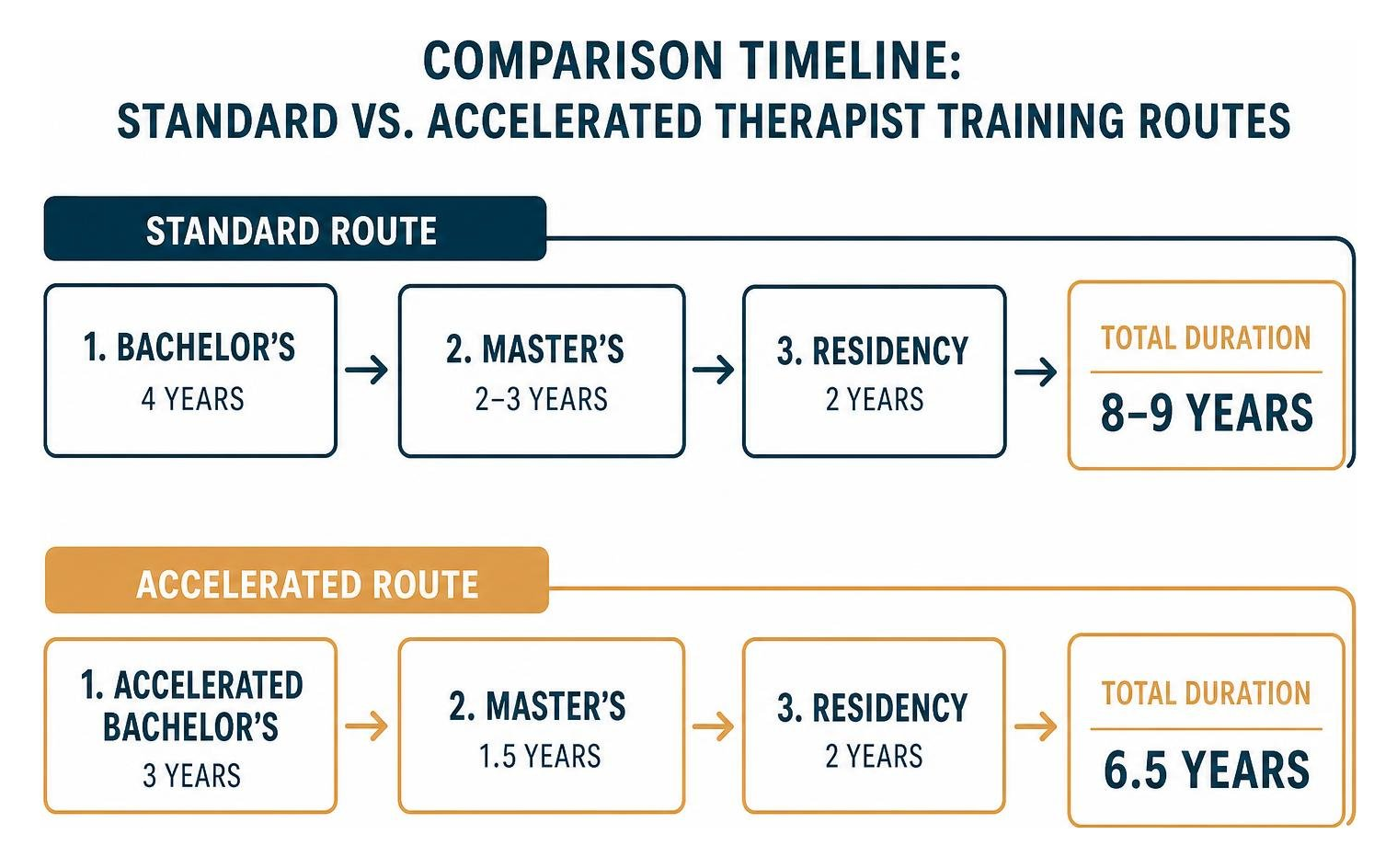
Accelerated Options and Fast-Track Training to Become a Therapist
While the traditional educational route takes 6 to 8 years from entering college to completing post-graduate residency, accelerated pathways can shorten this timeline:
- Dual-Degree Programs (3+2 or 4+1 Tracks): Enable undergraduates to complete foundational graduate credits during their senior year, earning both a bachelor’s and master’s degree in five years total.
- Year-Round Accelerated Master’s: Intensive, continuous enrollment models that allow students to finish a 60-credit clinical mental health master’s in 18 to 24 months.
- Concurrent Post-Graduate Residency: Maximizing client contact hours and weekly supervision sessions immediately upon graduation to complete the required 3,000 hours in the minimum two-year window.
Managing Burnout, Vicarious Trauma, and Long-Term Professional Development
Providing psychotherapy is emotionally demanding. Bearing witness to trauma, severe grief, and relationship distress exposes clinicians to the risks of vicarious traumatization, emotional exhaustion, and burnout.
Sustainable clinical practice requires:
- Personal Psychotherapy: Engaging in our own therapy builds self-awareness, resolves personal blind spots, and prevents countertransference from interfering with client care.
- Consistent Peer Consultation: Meeting regularly with trusted colleagues to discuss difficult cases, navigate ethical dilemmas, and receive emotional support.
- Intentional Boundaries: Maintaining clear separation between professional responsibilities and personal life, including managing reasonable caseload sizes.
- Engaging Continuing Education: Regularly refreshing your skills through professional development. Find verified workshops and maintain your license using A Practical Guide to Approved CEU Trainings for Counselors.
Frequently Asked Questions About Therapist Training
How long does it typically take to become a licensed therapist?
The full timeline generally spans 5 to 8 years:
- Undergraduate Degree: 4 years (or 3 years via accelerated credit options).
- Master’s Degree: 2 to 3 years of graduate study, including clinical practicum and internship.
- Post-Graduate Supervision: 2 to 3 years to accumulate the required 3,000 supervised clinical hours while practicing as a provisionally licensed clinician.
Can you practice therapy or counseling without a master’s degree?
No. Independent clinical psychotherapy requires a master’s or doctoral degree and an active state license (such as an LPC, LMFT, LCSW, or licensed psychologist).
However, individuals with a bachelor’s degree can gain valuable experience in supporting roles, such as behavioral health technicians, case managers, intake coordinators, peer support specialists, or certified addiction counselors (in jurisdictions that permit non-master’s addiction credentials under medical or clinical supervision).
What are the main costs associated with therapist training and licensure?
Budgeting for therapist training involves several major categories:
- Graduate Tuition: Program fees for 60-credit accredited master’s programs.
- Clinical Supervision: Weekly post-graduate individual and group supervision fees if working at an agency or practice that does not provide supervision internally.
- Testing and Licensing Fees: Registration costs for the NCE or NCMHCE exams, state board application fees, and mandatory background check fees.
- Personal Therapy & Books: Personal counseling sessions and clinical training materials.
- Professional Insurance & CEUs: Annual professional liability insurance and ongoing continuing education credits required for license renewal.
Conclusion
Training to become a licensed therapist requires dedication, intellectual rigor, and emotional maturity. From completing an accredited graduate program to accumulating 3,000 hours of supervised clinical experience, each milestone prepares you to sit with clients in their most vulnerable moments and guide them toward healing.
Whether your goal is to help couples restore broken trust, guide individuals through trauma, or support families facing painful transitions, this field offers an opportunity to make a lasting difference in your community. If you are seeking compassionate clinical care, personal therapy during your training, or professional guidance, explore how our team supports healing through Pax Renewal Center counseling services.