

How to Find Effective Teen Anxiety Disorder Treatment
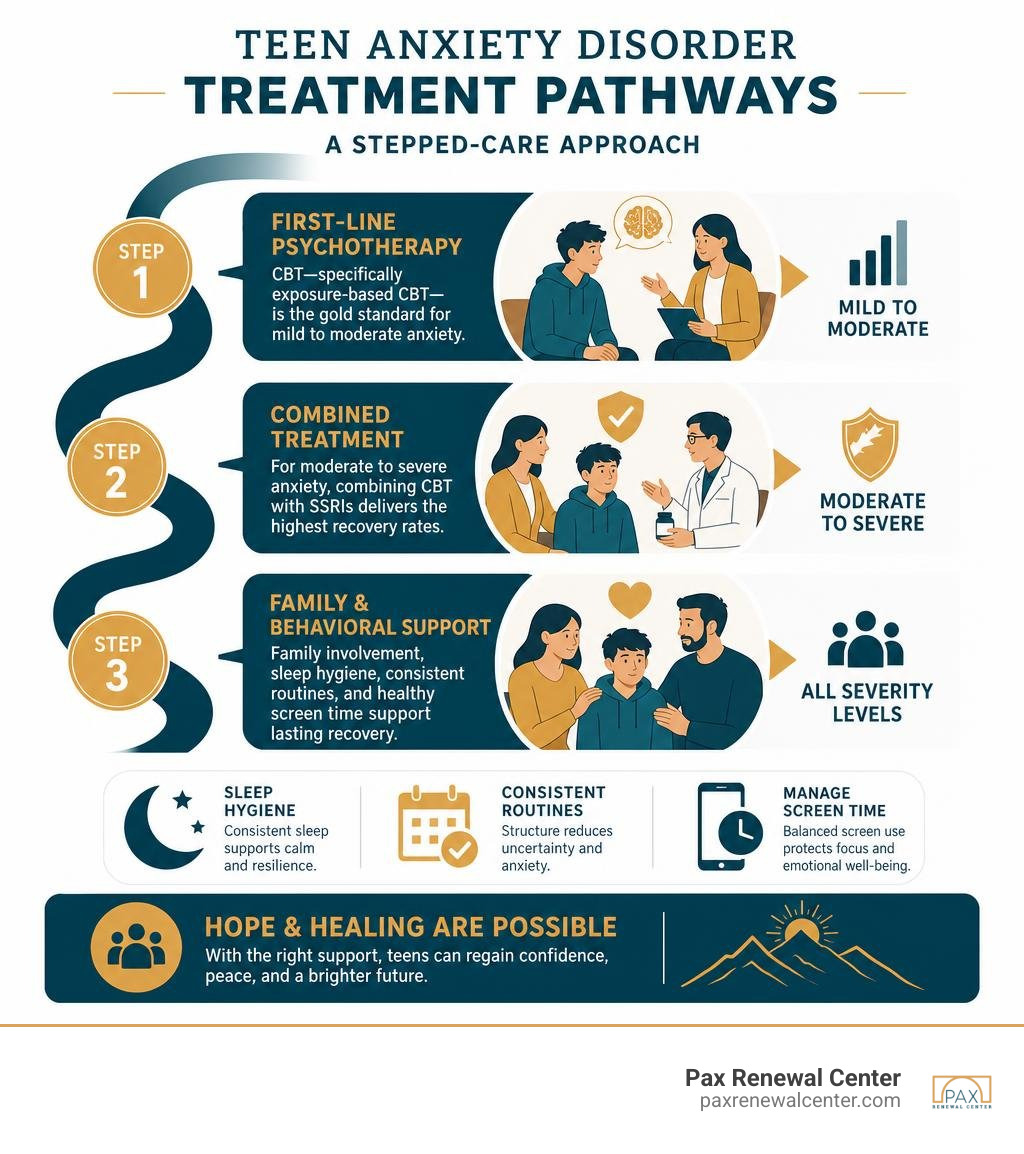
The most effective teen anxiety disorder treatment uses a stepped-care approach matched to the severity of your child’s symptoms:
- First-Line Psychotherapy: Cognitive Behavioral Therapy (CBT)—specifically exposure-based CBT—is the gold-standard psychological treatment for mild to moderate anxiety.
- Combined Treatment: For moderate to severe anxiety, pairing CBT with Selective Serotonin Reuptake Inhibitors (SSRIs) produces the highest recovery rates, helping roughly 81% of teens achieve significant symptom relief.
- Family & Behavioral Support: Integrating parents into therapy to reduce anxiety accommodation, establishing consistent sleep hygiene, and managing screen time provides essential nervous system stability.
Anxiety is now the most common mental health condition among youth, impacting nearly 1 in 3 adolescents (32%). Yet, nearly 80% of teens with treatable anxiety never receive professional care. While everyday stress comes and goes around tests or friendships, an anxiety disorder causes lasting physical tension, avoidance, and emotional distress that disrupts school and home life.
I’m Dan Jurek, M.A., LPC-S, LMFT-S, founder and clinical director of Pax Renewal Center, with over 35 years of experience helping families navigate teen anxiety disorder treatment through science-backed methods and compassionate, faith-sensitive care. In this guide, we will explore the warning signs, compare therapy and medication options, and outline practical steps to help your adolescent regain peace and confidence.
Common teen anxiety disorder treatment vocab:
- anxiety disorder test for teens
- teen anxiety disorder
- what is generalized anxiety disorder in children and teens
Understanding Adolescent Anxiety: Types, Symptoms, and Assessment
Adolescence is a season of rapid neurological, social, and emotional change. When the natural pressures of school, peer dynamics, and future planning intersect with a sensitized nervous system, stress can easily shift from normal motivation into clinical impairment.
Recognizing the distinction between transient worries and chronic anxiety begins with observing how persistent the distress is and how significantly it interferes with daily functioning. When assessing young people, clinicians rely on multi-informant assessments—gathering insights from both the teen and the parents—because adolescents often keep internal distress hidden while outwardly showing irritability or physical fatigue.
If you are beginning to notice these signs at home, exploring The Easiest Way to Assess Teen Anxiety Symptoms can help you evaluate what your child is experiencing across behavioral, physical, and cognitive domains.

Common Types of Adolescent Anxiety Disorders
Anxiety manifests in several distinct patterns in teens. Identifying the specific profile allows us to customize therapy effectively:
- Generalized Anxiety Disorder (GAD): Marked by excessive, uncontrollable worry about multiple everyday areas, including grades, family safety, health, and punctuality. To understand this pattern more deeply, read A Quick Start Guide to Generalized Anxiety Disorder in Teens.
- Social Anxiety Disorder: An intense, persistent fear of negative evaluation, embarrassment, or judgment in social or performance settings. Teens may avoid speaking in class, eating in public cafeterias, or attending gatherings.
- Panic Disorder: Characterized by recurrent, unexpected panic attacks—abrupt surges of intense fear that peak within 10 to 30 minutes, accompanied by pounding heart rates, dizziness, shortness of breath, and a fear of losing control.
- Specific Phobias: Extreme, irrational fears of specific objects or situations (e.g., medical procedures, vomiting, heights, animals) that lead to active avoidance.
- Separation Anxiety Disorder: While normative in early childhood, severe distress when anticipating separation from attachment figures in adolescence can disrupt sleep and school attendance.
For a broader overview of these diagnostic profiles, our guide on Teen Anxiety Disorder provides helpful context for parents navigating these distinct presentations.
Distinguishing Normal Teen Stress from Clinical Disorders
Every teenager feels nervous before a driver’s test, an athletic tournament, or a big presentation. Normal stress is temporary, situational, and often helps sharpen focus. In contrast, an anxiety disorder is characterized by disproportionate, chronic distress that persists for six months or longer and leads to functional avoidance.
When anxiety escalates, teens rarely walk into the kitchen and say, “I am experiencing autonomic nervous system dysregulation.” Instead, it shows up as meltdowns over minor homework assignments, morning stomachaches, or irritability. Understanding that these behaviors stem from fear rather than defiance is essential, as detailed in our article on Why Your Teen Is Not Just Being Dramatic.
Professional Screening Tools and Diagnostic Procedures
The U.S. Preventive Services Task Force (USPSTF) recommends routine anxiety screening for all youth aged 8 to 18. In professional clinical settings, we utilize validated, standardized tools to measure symptom frequency and severity:
- SCARED (Screen for Child Anxiety Related Disorders): A 41-item instrument (with validated 5-item short forms) completed by both youth and parents to screen for GAD, social anxiety, separation anxiety, and panic.
- SCAS (Spence Children’s Anxiety Scale): Evaluates specific subscales of anxiety with high sensitivity across youth and parent reports.
- GAD-7 (Generalized Anxiety Disorder 7-item Scale): Rapidly screens for core worry patterns and symptom intensity in older teens.
Diagnostic procedures also include a clinical interview and medical differential evaluations. Primary care physicians often evaluate thyroid function, cardiovascular indicators, and medication interactions to rule out physical causes before confirming a diagnosis. For clinical practitioners seeking deeper diagnostic criteria, the Clinical Practice Guideline for the Assessment and Treatment of Children and Adolescents With Anxiety Disorders provides a structured assessment framework.
Evidence-Based Approaches to Teen Anxiety Disorder Treatment

Treating teen anxiety successfully requires moving beyond well-meaning advice like “just relax” and instead providing concrete cognitive, emotional, and physiological tools. Effective treatment utilizes a biopsychosocial framework—addressing the brain’s alarm system, thought patterns, family dynamics, and emotional foundations together.
For a comprehensive breakdown of clinical counseling methods, our Anxiety Counseling Complete Guide outlines how structured therapy helps adolescents rebuild self-confidence and master emotional self-regulation.
First-Line Modalities in Teen Anxiety Disorder Treatment
The primary psychological foundation for adolescent anxiety is Cognitive Behavioral Therapy (CBT), especially when delivered with Exposure and Response Prevention (ERP) and systematic desensitization.

CBT works through specific, structured interventions:
- Psychoeducation: Helping the teen understand that anxiety is a false alarm triggered by the amygdala.
- Cognitive Restructuring: Teaching teens to identify automatic negative thoughts (catastrophizing, all-or-nothing thinking) and replace them with grounded, objective assessments.
- Systematic Desensitization (Exposure): Avoidance reinforces fear. Through gradual, hierarchical exposure, teens face feared situations in small, manageable steps without relying on escape behaviors. Over time, the brain learns that the anticipated catastrophe does not happen, extinguishing the fear response.
For younger adolescents, structured protocols like the Coping Cat program translate these concepts into engaging exercises. Parents can explore practical ways to support this work through A Practical Guide to Anxiety Therapy for Kids. Furthermore, large-scale clinical trials published in peer-reviewed medical journals confirm the Effectiveness of Transdiagnostic Cognitive-Behavioral Psychotherapy Compared With Management as Usual for Youth With Common Mental Health Problems: A Randomized Clinical Trial – PMC, demonstrating a 73.1% response rate when modular CBT protocols are applied in youth mental health care.
Advanced Psychotherapies and Digital Interventions
Beyond standard CBT, several modern therapeutic modalities offer valuable relief for persistent or complex anxiety:
- Metacognitive Therapy (MCT): Rather than challenging the content of a specific worry, MCT focuses on how teens relate to their thoughts. It addresses “Type 2 worry” (worrying about worrying, or believing thoughts are dangerous and uncontrollable) using detached mindfulness. Recent clinical studies demonstrate substantial symptom recovery using this approach; see the research on Applying metacognitive therapy for generalized anxiety disorder to adolescents: results from an open trial with 3- and 6-months follow-up.
- Transdiagnostic Rational Emotive Behavior Therapy (REBT): Targets core irrational demands, catastrophizing, and frustration intolerance. Modern digital delivery models make evidence-based interventions accessible to families facing transportation barriers or clinic waitlists. Peer-reviewed trials highlight the success of a Transdiagnostic Internet-delivered intervention for children and adolescents with anxiety and depressive disorders: a randomized controlled trial – PMC, showing significant symptom remission through structured online modules.
- Trauma-Informed Therapy & EMDR: When teen anxiety is rooted in adverse life events, bullying, or developmental trauma, Eye Movement Desensitization and Reprocessing (EMDR) helps the brain reprocess traumatic memories, lowering autonomic nervous system reactivity.
Systemic Family Therapy and Faith-Integrated Counseling
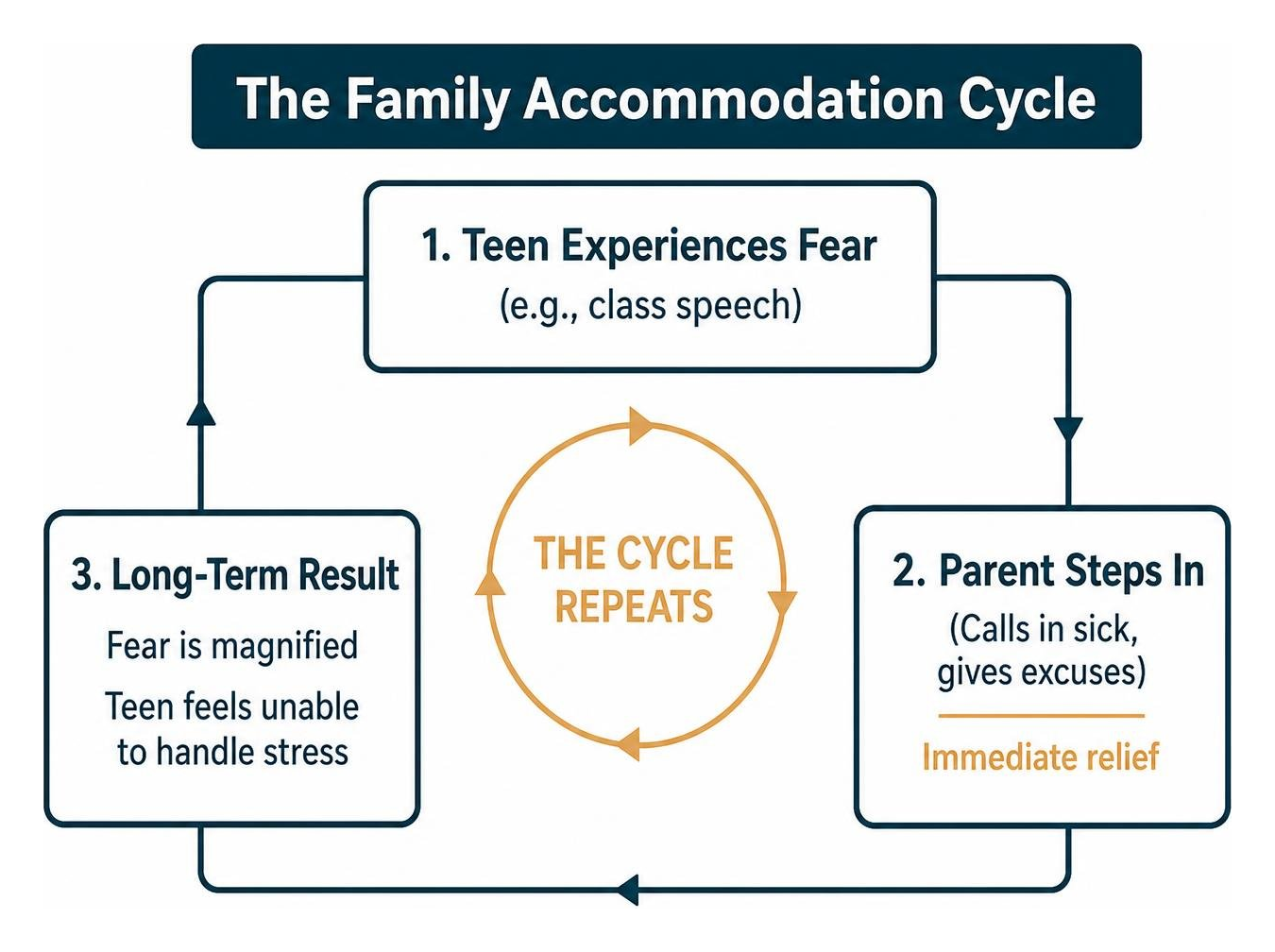
Anxiety does not occur in isolation—it impacts, and is impacted by, the family system. When a teenager is in distress, parents naturally step in to rescue, protect, or accommodate the fear, which can unintentionally maintain the anxiety cycle.
Integrating family therapy alongside individual counseling significantly enhances outcomes. Clinical research into integrative models confirms that family involvement produces superior improvements in emotional health and self-concept, as demonstrated in MPNFS-based integrative psychological intervention for adolescents with anxiety disorders: effects on anxiety, self-concept, parenting style, family intimacy, and social support.
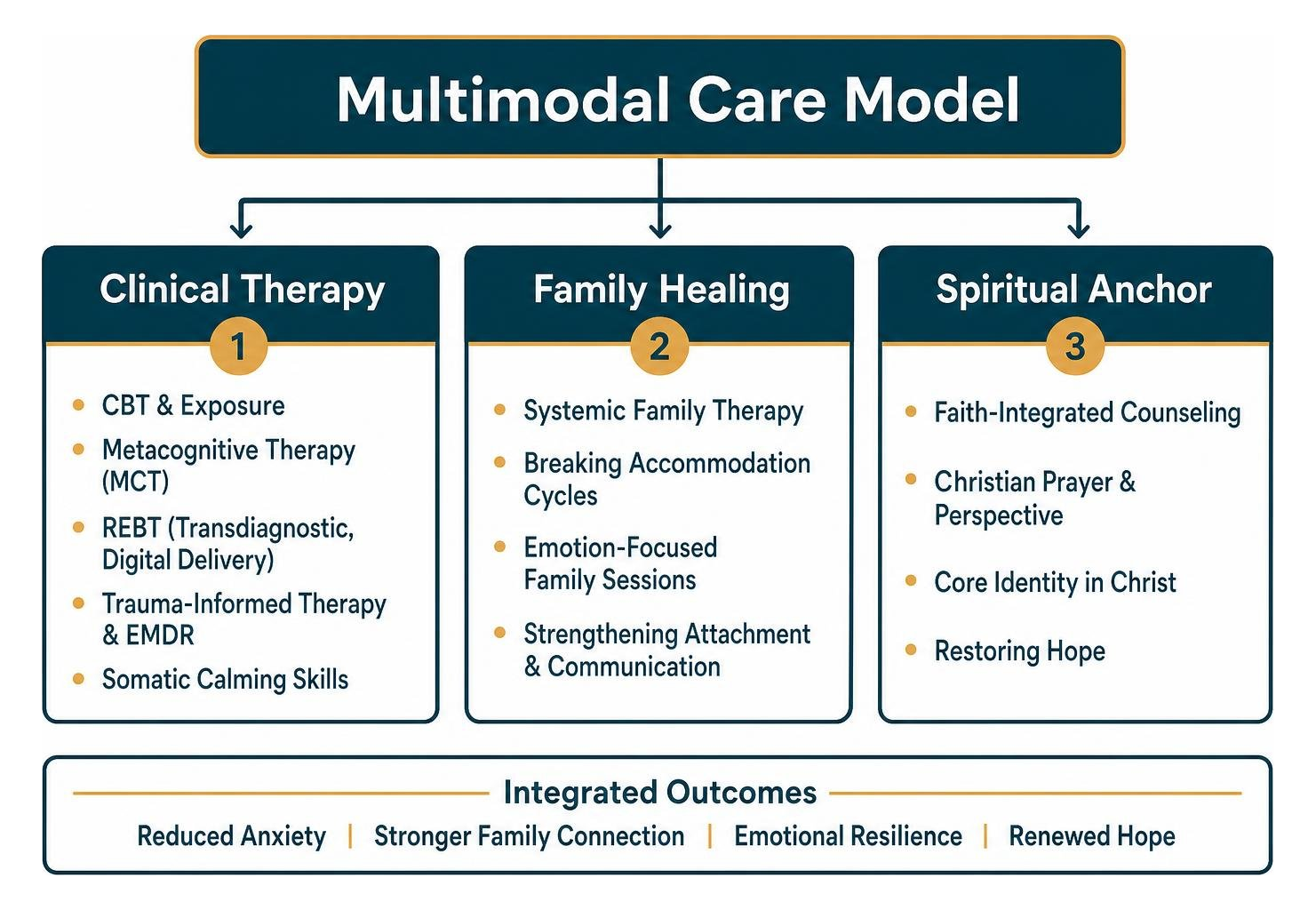
At Pax Renewal Center in Lafayette, Louisiana, we believe true healing addresses mind, body, and spirit. For families seeking a faith-aligned approach, we weave clinical best practices (CBT, EMDR, Gottman Method principles) together with Christian values. This allows teens to explore their fears within the comforting truth of God’s love, cultivating lasting peace and emotional resilience.
To learn more about our faith-grounded clinical framework, explore our Christian Counseling for Teens Guide and our overview of Faith-Based Therapy Programs for Teens.
Comparing Psychotherapy, Pharmacotherapy, and Combined Treatment

When deciding on a treatment plan, parents often ask whether therapy alone is enough or if prescription medication should be considered. Understanding the clinical evidence helps families make informed, confident choices.
Evaluating CBT vs. Medication Outcomes
Decades of pediatric research, including the landmark Child/Adolescent Anxiety Multimodal Study (CAMS), have evaluated the efficacy of psychotherapy, medication, and combined treatment in youth:
| Treatment Modality | Clinical Response Rate | Primary Benefits | Key Considerations |
|---|---|---|---|
| Exposure-Based CBT Alone | ~60% (NNT = 3) | Teaches lifelong coping skills; directly targets avoidance; zero physiological side effects. | Requires 12–20 weeks of active engagement and homework practice. |
| SSRI Medication Alone (e.g., Sertraline) | ~55% (NNT = 3) | Directly balances serotonergic pathways; rapidly reduces high autonomic arousal. | Potential mild side effects; does not independently teach cognitive coping strategies. |
| Combined CBT + SSRI | ~81% (NNT = 2) | Highest clinical response rate; medication lowers distress so the teen can fully participate in CBT. | Requires coordination between therapist and prescribing medical provider. |
| Placebo / Waitlist | ~24% – 31% | Natural symptom fluctuations. | Leaves roughly 70–75% of teens untreated, risking chronic illness. |
Note: Number Needed to Treat (NNT) reflects how many patients need to receive the treatment for one additional patient to achieve clinical remission compared to control. Lower numbers indicate higher effectiveness.
Determining the Need for Medication in Teen Anxiety Disorder Treatment
Medication is rarely the first step for mild anxiety, but it is a valuable, evidence-based tool when symptoms are moderate to severe. Clinicians consider pharmacotherapy when:
- The teen’s anxiety is so overwhelming that they cannot engage in exposure therapy or process cognitive tools.
- Severe functional impairment is present (e.g., prolonged school refusal, total social isolation, severe panic attacks).
- Comorbid moderate-to-severe depression is present alongside the anxiety disorder. For strategies addressing overlapping depressive symptoms, refer to Dealing with Depression Supportive Strategies Against Adolescent Depression.
- The adolescent has shown limited improvement after an adequate course (12–16 weeks) of structured, exposure-based CBT.
First-line medications for pediatric anxiety are Selective Serotonin Reuptake Inhibitors (SSRIs) such as sertraline, fluoxetine, and escitalopram. Serotonin-Norepinephrine Reuptake Inhibitors (SNRIs) are also utilized; duloxetine is currently FDA-approved for generalized anxiety disorder in youth aged 7 to 17.
Potential Side Effects and Safety Protocols
Pediatric psychopharmacology requires close collaboration between parents and prescribing physicians:
- Common, Transient Side Effects: Mild stomach discomfort, headaches, dry mouth, or minor sleep changes often resolve within the first two weeks as the body adjusts.
- Pediatric Behavioral Activation: Occurring in roughly 20% to 50% of youth, this presents as transient motor restlessness, fidgeting, or impulsivity early in treatment. It is managed by adjusting the dosage or titrating more gradually.
- FDA Monitoring Guidelines: The FDA boxed warning highlights the necessity of monitoring for emerging agitation, mood shifts, or suicidal thoughts when starting or adjusting antidepressants. Standard protocols include weekly check-ins during the first month, bi-weekly visits in the second month, and regular reviews thereafter.
- Treatment Duration: When medication is effective, guidelines recommend maintaining treatment for at least one full year of symptom stability before discussing a gradual, supervised taper—typically during a low-stress window such as summer break.
Supportive Care, Lifestyle Strategies, and Long-Term Outlook
Clinical therapy and medical care work best when supported by healthy habits at home. Parents play a central role in helping teenagers regulate their nervous systems and maintain lasting recovery.
At-Home Self-Care and Somatic Regulation Tools
When a teenager enters a state of high anxiety, the logical prefrontal cortex goes offline while the autonomic nervous system takes over. Teaching somatic regulation tools helps teens calm physical tension so they can think clearly:
- The 4-7-8 Breathing Technique: Inhale quietly through the nose for 4 seconds, hold the breath for 7 seconds, and exhale completely through the mouth for 8 seconds. Repeating this cycle four times stimulates the vagus nerve and activates the parasympathetic relaxation response.
- Consistent Sleep Hygiene: Sleep deprivation significantly amplifies amygdala reactivity. Establish a consistent sleep schedule and implement a “digital sunset”—turning off screens at least one hour before bed and charging phones outside the bedroom.
- Predictable Daily Routines: Using visual planners or calendars provides a sense of control and reduces daily anticipatory stress.
- Nutritional Balance & Physical Activity: Limiting excessive caffeine and energy drinks prevents stimulant-induced jitters that mimic panic, while daily cardiovascular movement helps burn off excess adrenaline.
Parental Coaching and Reducing Anxiety Accommodation
When a teen is anxious, parents naturally want to remove the discomfort. However, excessive family accommodation—such as writing excuse notes for avoided classes, answering repetitive reassurance questions, or ordering food on their behalf—inadvertently reinforces the idea that the situation is dangerous and that the teen is incapable of coping.
Instead of accommodating fear, parents can practice supportive validation with gentle boundaries:
- Validate the Emotion: “I can see how overwhelming this presentation feels right now.”
- Express Confidence: “I know you feel nervous, but I also know you have the strength to take this one step at a time.”
- Encourage Small Steps: Support the teen in completing a manageable portion of the task rather than avoiding it entirely.
Treatment Duration, Prognosis, and When to Seek Immediate Help
A standard course of exposure-based CBT typically spans 12 to 20 weekly sessions. Long-term studies (such as the CAMELS trial) emphasize that anxiety management is an ongoing journey: while many teens achieve remission, up to 48% may experience periodic symptom flare-ups during major life transitions (e.g., starting high school or leaving for college). Scheduling periodic “booster sessions” helps reinforce coping skills before stress escalates.
If you are a family in Acadiana seeking professional, compassionate guidance, our Teen Counseling Lafayette LA Guide details our local outpatient therapy options.
When to Seek Immediate Crisis Support: If your teenager expresses explicit suicidal ideation, engages in self-harm, exhibits severe depressive withdrawal, or displays unmanageable aggression, seek professional intervention immediately:
- National Suicide & Crisis Lifeline: Call or text 988 (Available 24/7, free, and confidential)
- The Crisis Text Line: Text HOME to 741741
- Emergency Care: Visit your nearest hospital emergency room or contact local emergency services.
Frequently Asked Questions About Teen Anxiety Disorder Treatment
What is the most effective first-line treatment for teen anxiety?
Cognitive Behavioral Therapy (CBT)—specifically protocols incorporating Exposure and Response Prevention (ERP)—is universally recognized as the gold-standard, first-line psychological intervention for mild to moderate adolescent anxiety disorders. It helps teens identify cognitive distortions and systematically face feared situations to rewire the brain’s alarm circuitry.
When should parents consider medication for an anxious teenager?
Medication (primarily SSRIs like sertraline or escitalopram, or SNRIs like duloxetine) should be considered when anxiety causes severe functional impairment (such as prolonged school refusal or debilitating panic), when co-occurring depression is present, or when an adolescent has not responded adequately to psychotherapy alone. A combined approach of CBT and medication yields an 81% response rate.
How long does it take for teen anxiety therapy to work?
Most structured CBT programs last between 12 and 20 weeks. Teens often begin learning somatic calming and cognitive awareness tools within the first 3 to 4 weeks, with noticeable behavioral improvements and reduced avoidance occurring by weeks 8 through 12 as exposure exercises take effect.
Conclusion
Adolescent anxiety can feel overwhelming for both teens and their parents, but it is one of the most treatable mental health conditions. By combining evidence-based therapies like CBT and EMDR with supportive family habits, lifestyle adjustments, and thoughtful medical care when indicated, young people can move past debilitating fear and step into a grounded, hopeful future.
At Pax Renewal Center in Lafayette, Louisiana, our team is dedicated to walking alongside your family with clinical excellence and Christ-centered compassion. Whether your adolescent is struggling with social worries, chronic panic, or academic stress, we are here to help restore balance and joy to your home.
Ready to take the next step? We invite you to explore compassionate adolescent and family therapy services and connect with our experienced counseling team today.