
When the Foundation Cracks: What You Need to Know About Rebuilding Trust After Emotional Disconnection
Rebuilding trust after emotional disconnection is possible, but it takes more than an apology and time. It requires consistent action, emotional safety, and often professional support.
Here’s what actually works:
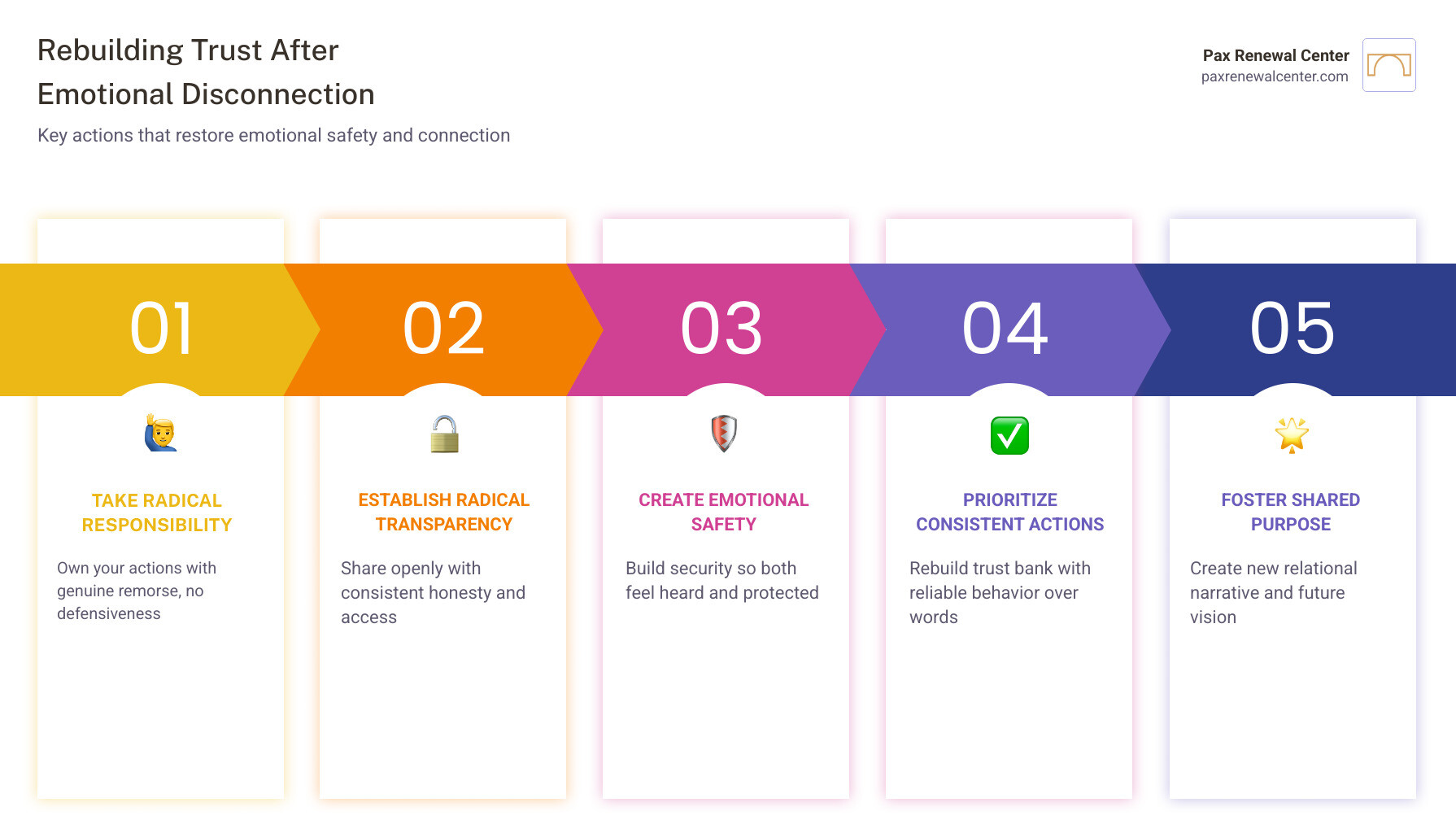
- Take full responsibility — without defensiveness or minimizing
- Establish radical transparency — consistent, honest communication and behavior
- Create emotional safety — so both partners feel heard and protected
- Use proven therapy methods — such as Emotionally Focused Therapy (EFT) or the Gottman Method
- Practice self-care and forgiveness — for yourself and your partner
- Make meaningful mindset shifts — not just surface-level fixes
- Build a shared purpose — a new relational identity moving forward
Trust is the quiet foundation beneath every healthy relationship. When it breaks, whether through betrayal, emotional neglect, or years of slow disconnection, the damage goes deeper than hurt feelings. Research shows that broken trust activates the brain’s threat response, flooding the body with cortisol and leaving both partners stuck in cycles of fear, distance, and pain. Meanwhile, people with strong, trusting relationships are measurably healthier, less depressed, less anxious, and more likely to thrive long-term.
The hard truth? Most couples don’t seek help until they’ve spent years compounding misunderstandings. By then, the emotional distance can feel permanent, but it rarely is.
I’m Dan Jurek, M.A., LPC-S, LMFT-S, founder and clinical director of Pax Renewal Center in Lafayette, Louisiana, and with over 35 years of clinical experience specializing in faith-based marriage counseling, I’ve guided hundreds of couples through the exact process of rebuilding trust after emotional disconnection, including those on the very edge of divorce. In the steps ahead, I’ll walk you through what the research, neuroscience, and real clinical work actually show about how healing happens.
Understanding Emotional Disconnection vs. Normal Conflict
Every couple argues. In fact, healthy conflict can actually bring people closer if handled with respect. However, there is a massive difference between a disagreement over the dishes and the hollow, heavy silence of emotional disconnection.
Normal conflict usually has a “resolution point.” You argue, you express your needs, and you eventually find a way back to each other. Rebuilding trust is a different beast because the “emotional glue” has dissolved. This often manifests as marital drift, where two people live parallel lives under the same roof. You might be roommates, co-parents, or business partners, but you are no longer “soul partners.”

Identifying the Signs of Lost Safety
When emotional safety is lost, your nervous system enters a state of hypervigilance. You might find yourself “scanning” your partner’s tone of voice for signs of rejection or dishonesty. Common signs include:
- Emotional Withdrawal: Choosing silence over sharing because it feels “safer” than being misunderstood.
- Stilted Conversations: Talking only about logistics (kids, bills, schedules) while avoiding deeper feelings.
- The “Roommate Syndrome”: A lack of physical and emotional intimacy that leaves you feeling lonely even when sitting right next to them.
If you recognize these patterns, it may be time to start your healing journey with our professional counseling services to prevent further erosion.
Common Causes of Relational Rupture
Disconnection rarely happens overnight. It is often the result of “micro-ruptures”, small moments where one partner reached out, and the other didn’t respond. Over time, these build into a marital drift that feels insurmountable. Major causes include:
- Emotional Affairs: Seeking validation, excitement, or understanding from someone outside the marriage.
- Broken Promises: A pattern of saying “I’ll change” or “I’ll be there” without following through.
- Chronic Instability: Financial stress, addiction, or unresolved trauma that keeps the relationship in a state of chaos.
As we often say at Pax Renewal Center, It Ain’t Easy, But It’s Worth It: Finding Greater Satisfaction in Your Marriage requires facing these root causes head-on.
The Science of Betrayal: How Disconnection Impacts the Brain
To understand why rebuilding trust is so difficult, we have to look at the brain. Betrayal is not just a “sad feeling”; it is a physiological trauma.
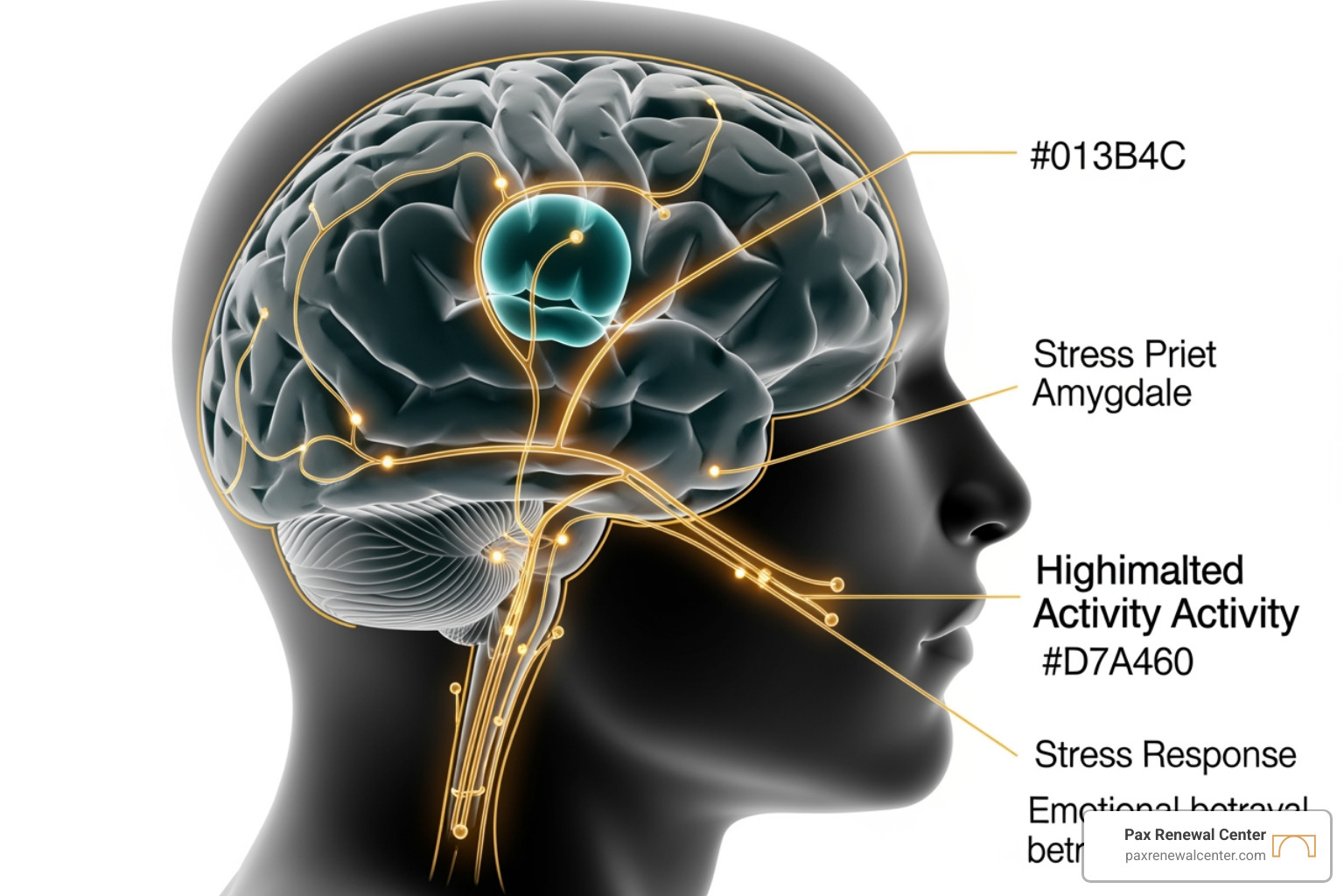
When trust is shattered, the amygdala, the brain’s alarm system, goes into overdrive: this releases cortisol, the stress hormone. High levels of cortisol are associated with fatigue, “brain fog,” weight gain, and even a weakened immune system. Conversely, when we feel safe and connected, our brains release oxytocin, the “bonding hormone” that promotes happiness and reduces stress.
The Threat-Safety Paradox
This creates what psychologists call a “threat-safety paradox.” The person who was supposed to be your primary source of safety (your partner) has become the source of your greatest threat. This leads to “push-pull dynamics,” where the betrayed partner desperately wants closeness but pulls away the moment it feels vulnerable. This isn’t manipulation; it’s a survival response. Achieving emotional satisfaction in marriage requires retraining the nervous system to feel safe again.
Why Words Fail, and Actions Succeed
After a major trust breach, words lose their value. The nervous system has learned that “I love you” can coexist with “I’m lying to you.” This is why behavioral repair is the only way forward. You cannot talk your way out of a problem you behaved your way into. Consistent, predictable actions are the “currency” that refills the trust bank account. We discuss this in depth in our Gottman Marriage Counseling Complete Guide.
Rebuilding Trust After Emotional Disconnection: The 7-Step Path to Healing
Healing is a process, not an event. At Pax Renewal Center in Lafayette, LA, we use a structured approach to help couples navigate this journey.
Step 1: Taking Radical Responsibility
The partner who caused the disconnection must own their actions completely. This means no “buts.” Saying “I’m sorry I did that, but you were being cold” is not an apology; it’s a defense. Radical responsibility involves genuine remorse and a willingness to sit with the partner’s pain without trying to fix it or shut it down. If you are on the brink of divorce, this is the first and most vital step.
Step 2: Establishing Safety and Boundaries
Trust cannot grow in the dark. Radical transparency is required. This might mean shared passwords, “check-ins” throughout the day, or being completely open about finances. These aren’t meant to be “punishments,” but rather “scaffolding” to support the relationship while the foundation is rebuilt. We also focus on maintaining healthy boundaries to ensure that both partners feel protected. This often includes learning how to build strong online relationships that don’t compromise the marriage.
Step 3: Prioritizing Consistent Action Over Words
Reliability is the antidote to betrayal. If you say you will be home at 6:00 PM, be there at 5:55 PM. These small “micro-wins” prove that you are predictable and dependable. Over months and years, these actions signal to the partner’s amygdala that the “threat” has passed.
Step 4: Navigating the Rebuilding Trust After Emotional Disconnection Process with EFT
At Pax Renewal Center, we specialize in Emotionally Focused Therapy (EFT). EFT focuses on attachment needs. It helps couples move away from “who did what” and toward “how do we feel safe with each other?” By identifying the underlying fears of abandonment or rejection, we can create secure bonds that are stronger than the original connection. Many couples find our Creating Connection Marriage Retreat to be a powerful catalyst for this work.
Step 5: Practicing Forgiveness and Self-Care
The betrayed partner must also engage in deep self-care. Research shows that journaling about your story can significantly reduce stress and help process pain. Self-compassion is key, reminding yourself that “my nervous system is doing its best” can reduce the shame associated with triggers.
Step 6: Mastering the 6 Shifts for Lasting Change
To prevent future disconnection, couples must make six key behavioral shifts:
- Self-Awareness: Understanding your own triggers and fears.
- Emotional Alignment: Learning to meet your partner’s specific emotional needs.
- Conflict Mastery: Interrupting destructive patterns before they escalate.
- Needs Fulfillment: Being proactive about meeting each other’s needs so no one looks elsewhere.
- Detaching from Past Wrongs: Choosing to move forward rather than using the past as a weapon.
- Shared Purpose: Working toward a common goal.
For couples needing a jumpstart, our Marriage Intensives provide a deep dive into these shifts.
Step 7: Rebuilding Trust After Emotional Disconnection Through Shared Purpose
Finally, you must build a “New Marriage.” The old one is gone. Rebuilding involves creating a new narrative, one where you are a team with a shared future vision. This prevents “parallel lives” and ensures that as you move forward, you are moving in the same direction.
When is Restoration Possible? Knowing When to Stay or Go
Not every relationship can, or should, be saved. Understanding the difference between a “rough patch” and a toxic pattern is essential.
| Signs of Hope | Signs of Toxic Patterns |
|---|---|
| Both partners take responsibility | Continued deception or “trickle-truth” |
| Willingness to attend therapy (EFT/Gottman) | Refusal to seek professional help |
| Consistent behavioral change over time | Apologies followed by the same behavior |
| Empathy for the partner’s pain | Blame-shifting and defensiveness |
| Shared desire for a new future | One partner is “checked out” |
If you are unsure where you stand, our Discernment Counseling Ultimate Guide can help you gain clarity on whether to move toward restoration or a healthy ending.
The Role of Professional Guidance
Rebuilding trust after emotional disconnection is rarely a “DIY” project. An impartial perspective from a trained therapist can help identify root causes that you might be too close to see. At Pax Renewal Center in Lafayette, Louisiana, we provide a structured, safe environment to unpack these complex dynamics. Whether you are on the brink of divorce or just feeling the first signs of drift, we invite you to start your healing journey with our professional counseling services.
Frequently Asked Questions about Rebuilding Trust
How long does it take to rebuild trust after a major betrayal?
There is no fixed timeline. While some couples see progress in a few months, deep repair often takes one to two years of consistent effort. The key is not “how fast” but “how consistent.”
Can a relationship recover from an emotional affair?
Yes. In many ways, emotional affairs are harder to heal because they involve the “theft” of non-physical intimacy. However, through EFT, radical transparency, and accountability, many couples find that their relationship becomes even more honest and resilient than before.
Why do I still feel anxious even after my partner apologizes?
This is your nervous system doing its job. Your amygdala is still scanning for danger because “words” don’t equal “safety.” This “emotional logic gap” only closes after months of consistent, safe actions that retrain your brain to relax.
Conclusion: Your Journey Toward Relational Renewal
Rebuilding trust after emotional disconnection is one of the hardest things a couple will ever do, but it is also one of the most rewarding. It is a journey of spiritual renewal, emotional healing, and profound personal growth. At Pax Renewal Center, we believe that no relationship is beyond the reach of grace and professional skill.
Whether you are looking for marriage counseling in Lafayette, LA, or seeking the support of our online community through the Skool platform, we are here to walk with you. You don’t have to navigate this fog alone.
Start your healing journey with our professional counseling services today and take the first step toward the restoration your heart and your marriage deserve.