

Why Couple Counseling Can Strengthen Your Relationship
Couple counseling can help you and your partner break painful patterns before they become permanent. It is useful when you feel distant, repeat the same argument, struggle to rebuild trust, disagree about money or parenting, or face a major change such as an empty nest, retirement, or caregiving.
A qualified counselor helps both partners:
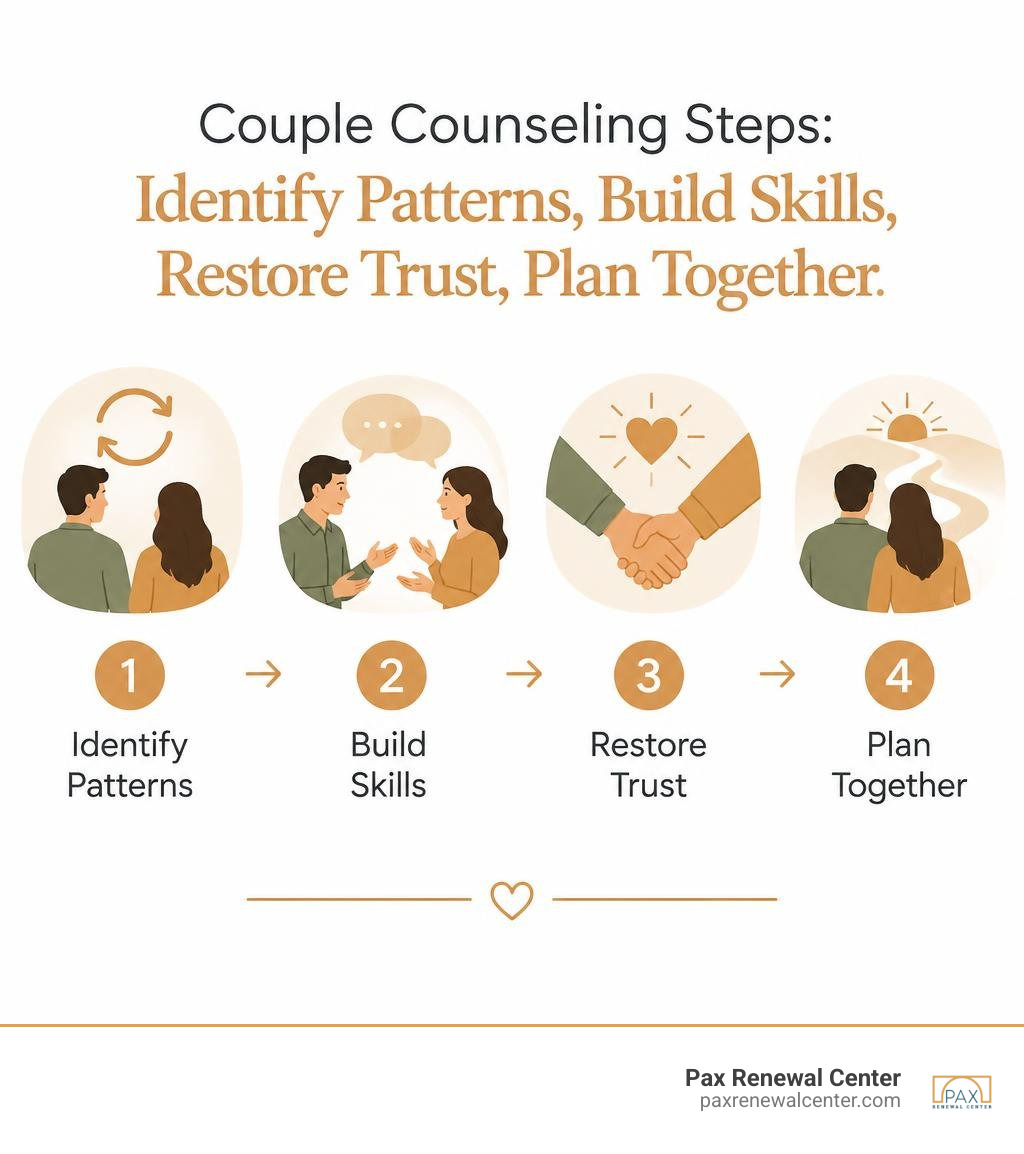
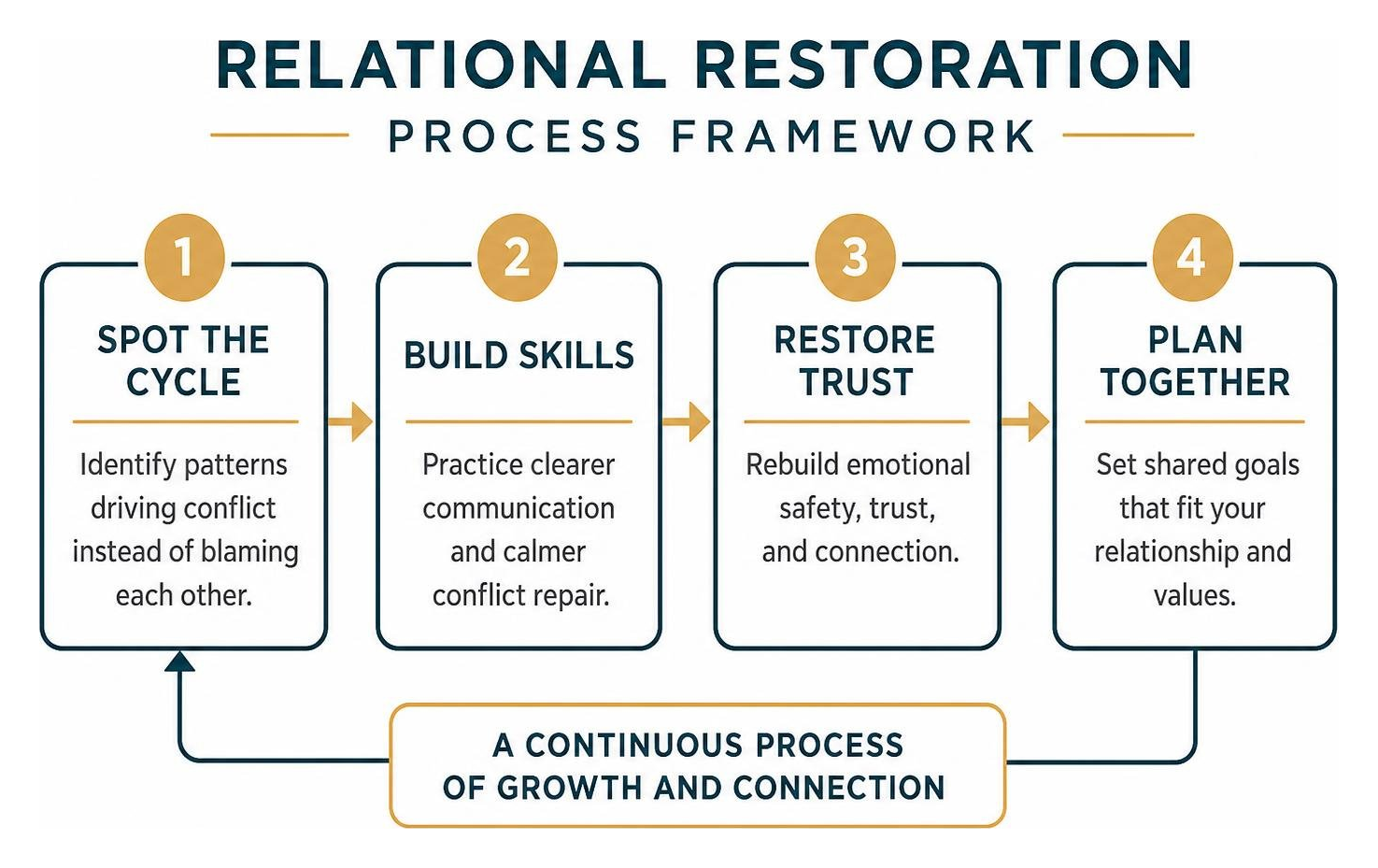
- Spot the cycle driving conflict instead of blaming each other.
- Practice clearer communication and calmer conflict repair.
- Rebuild emotional safety, trust, and connection.
- Set shared goals that fit your relationship and values.
You do not have to be on the verge of separation to benefit. Research published in Family Process in 2022 found that people who receive couples therapy tend to fare better by the end of treatment than 70% to 80% of people who do not receive therapy. For many couples, counseling is practical relationship maintenance: a structured place to learn skills, reconnect, and handle stress as a team.
For Christian and Catholic couples, faith-based counseling can also make room for shared spiritual values alongside evidence-based approaches such as Emotionally Focused Therapy and the Gottman Method.
I am Dan Jurek, M.A., LPC-S, LMFT-S, founder and clinical director of Pax Renewal Center in Lafayette, Louisiana, with more than 35 years of clinical experience in couple counseling, marriage therapy, and faith-integrated care. As a certified Discernment Counseling provider, I help couples strengthen their bond, clarify difficult decisions, and find a path forward with compassion and practical tools.
Couple counseling vocab explained:
7 Ways Professional Couple Counseling Revitalizes Partnerships
Modern life puts unique pressures on relationships. Between demanding careers, parenting responsibilities, digital distractions, and external stressors, emotional drift happens quietly. Left unaddressed, small irritations solidify into chronic resentment.
Professional couple counseling offers a structured, clinical setting designed to de-escalate friction, resolve deep-seated pain points, and equip partners with lifelong relational skills. Whether addressing a sudden crisis or seeking proactive maintenance, evidence-based therapy shifts relationships from mere survival mode into active, enduring connection.
1. Breaking Destructive Communication Loops
When couples enter our office, one of the most common statements we hear is: “We keep having the exact same fight.” Whether the catalyst is household chores, work hours, or parenting styles, the underlying issue is rarely the topic itself. Instead, it is the unproductive loop of interaction: one partner pursues with criticism, while the other retreats into defensiveness or stonewalling.
Counseling interrupts these repetitive cycles. We help partners identify their automatic defense mechanisms, slow down heated conversations, and replace accusatory language with constructive “I-statements.” By learning active listening and emotional de-escalation, couples learn to address sensitive topics without triggering an emotional shutdown. For partners with chaotic work schedules or physical distance, using virtual communication repair strategies provides the exact framework needed to realign dialogue from the comfort of home.
2. Healing from Infidelity and Rebuilding Relational Trust
Few experiences cause as much relational trauma as betrayal. Infidelity shakes the very foundation of security, leaving the betrayed partner grappling with hypervigilance and grief, while the unfaithful partner may struggle with guilt, defensiveness, or impatience.
Infidelity is not limited to younger couples. Demographic data reveals that women in their 60s experience self-admitted infidelity rates around 16%, while men in their 70s report rates near 26%. Navigating betrayal at any stage of life requires structured clinical guidance.
In counseling, healing from an affair follows a careful, staged approach:
- Establishing absolute transparency and safety protocols
- Processing the emotional impact and trauma without minimizing the injury
- Uncovering pre-existing relational vulnerabilities while maintaining clear accountability
- Gradually rebuilding intentional connection and verifiable trust
With dedicated clinical support, couples can move beyond the shadow of betrayal toward a relationship that is far more honest and resilient than before.
3. Resolving Financial Disputes and Value Disconnects
Money is rarely just about math; it is deeply tied to security, freedom, control, and early childhood narratives. When one partner is an anxious saver and the other is a spontaneous spender, financial discussions easily morph into character attacks.
Professional counseling helps couples uncover their unique “money stories.” Instead of battling over individual line items, partners learn to examine what financial stability means to each of them. We guide couples in setting shared budgetary goals, creating mutual transparency protocols, and establishing ground rules for major expenditures. Aligning on core financial values reduces everyday stress and transforms money management into a collaborative partnership.
4. Navigating Empty Nesting, Retirement, and Caregiving Transitions
Relational dynamics shift dramatically during major life transitions. When adult children leave the home, partners often find themselves staring across the dinner table at someone who feels like a stranger. Similarly, the transition into retirement can disrupt long-established routines, creating unexpected friction around space, purpose, and domestic roles.
These stages often coincide with new health realities. Demographics show that when an individual turns 65, they have nearly a 70% chance of needing long-term care or support in their remaining years. Furthermore, in approximately 15% of couples, one partner acts as a caregiver for the other.
Counseling provides crucial support during these seasons:
- Grieving the loss of old identities and embracing new relational roles
- Preventing burnout and resentment in spousal caregiving situations
- Reigniting marital intimacy after decades of child-centered focus
- Formulating shared life goals for the retirement years
5. Restoring Intimacy Through Virtual Couple Counseling

Therapy is no longer confined to traditional office visits. Modern telehealth platforms provide flexible, evidence-based support directly to busy professionals, parents with young children, and couples managing long-distance commitments.
Through our comprehensive guide to online couples therapy, we help partners utilize digital platforms to develop emotional attunement, complete guided connection exercises, and build healthy habits in their real-world environment. Online therapy eliminates travel stress, allowing partners to focus entirely on relational growth.
6. Integrating Faith Foundations and Shared Spiritual Values
For couples rooted in faith, relational health and spiritual well-being are inseparable. At Pax Renewal Center, we seamlessly integrate proven psychological interventions with Christian and Catholic principles when requested by the couple.
Spiritual integration honors biblical principles of grace, forgiveness, commitment, and mutual sacrificial love. Incorporating shared prayer, scripture, and theological insights alongside evidence-based behavioral tools allows couples to address relational struggles within the framework of their deepest moral convictions. This dual approach provides profound grounding during difficult seasons.
7. Establishing Premarital Foundations and Long-Term Alignment
Preventive care is the most effective way to build an enduring marriage. Couples counseling is not merely a remedy for distressed partnerships; it is an invaluable tool for engaged and dating couples seeking to build a solid foundation before marriage.
Through structured evidence-based premarital counseling, couples explore crucial topics that often go unaddressed during the excitement of wedding planning, such as:
- Family-of-origin traditions and boundary expectations with in-laws
- Long-term career aspirations, relocation desires, and financial philosophies
- Parenting philosophies, disciplinary strategies, and spiritual upbringing
- Conflict resolution frameworks and intimacy expectations
Addressing these dynamics proactively ensures couples enter marriage equipped with practical communication skills and realistic expectations.
Core Therapeutic Modalities and What to Expect in Sessions

Starting therapy can feel intimidating, but understanding the clinical process brings clarity and peace of mind. A standard therapeutic journey begins with an intake phase: an initial joint assessment followed by individual breakout sessions, allowing the therapist to fully understand each partner’s history and perspective.
Most couples engage in 8 to 16 weekly sessions focused on targeted goals, skill building, and guided practice. Depending on a couple’s unique needs, established therapeutic frameworks are tailored to achieve lasting results.
| Modality | Primary Focus | Best Suited For | Typical Outcomes |
|---|---|---|---|
| Emotionally Focused Therapy (EFT) | Attachment styles and emotional bonds | Couples stuck in chronic conflict or emotional withdrawal | Secure emotional attachment; approx. 75% long-term success rate |
| Gottman Method | Communication skills, friendship, and conflict management | Couples needing structured tools for dialogue and intimacy | Reduced stonewalling/criticism, stronger shared meaning |
| Discernment Counseling | Decision-making for couples leaning toward divorce | Mixed-agenda couples (one leaning out, one leaning in) | Clarity on whether to commit to 6 months of therapy or separate |
Evidence-Based Frameworks: EFT and Gottman Method
Clinical research consistently supports two leading modalities for relationship restoration: Emotionally Focused Therapy (EFT) and the Gottman Method.
EFT views relational distress through the lens of attachment theory. When partners fight, they are often asking an underlying question: “Are you there for me? Do I matter to you?” EFT helps partners express these vulnerable, underlying fears instead of lashing out in anger. Research indicates that EFT achieves long-term improvements for approximately 75% of couples, with benefits sustained for years.
Complementing this, the structured Gottman marital framework provides measurable assessments and concrete interventions to eliminate the “Four Horsemen” of relationship breakdown: criticism, contempt, defensiveness, and stonewalling. Together, these frameworks offer both emotional depth and practical behavioral strategies.
Clarifying Relational Commitment: Discernment and Intensive Programs
When one spouse is ready to end the marriage while the other desperately wants to save it, standard marriage counseling can feel frustrating and unproductive. This dynamic requires a specialized approach.
Using our focused discernment counseling protocol, we offer short-term (1 to 5 sessions) clarity work. The goal is not to immediately fix the marriage, but to help both individuals make an intentional decision: stay the course, move toward separation, or commit to six months of intensive therapy with divorce off the table.
For couples in high distress who need rapid intervention, our immersive marriage intensives condense months of therapy into focused, multi-day retreat formats for deep emotional repair.
Who Benefits Most from Proactive Couple Counseling?
Every couple, regardless of their relationship stage, can benefit from professional guidance. Healthy relationships are not built on effortless compatibility; they require continuous care and intentional effort.
We work with:
- Dating and Engaged Couples seeking to resolve differences and set healthy boundaries before marriage.
- Cohabitating Partners learning to balance domestic responsibilities and long-term commitments.
- Long-Term Married Couples seeking to rekindle romance after years of “roommate syndrome.”
- Couples Facing Crises such as infidelity, sudden health diagnoses, or career disruptions.
If you are located in southwest Louisiana, seeking couples counseling in Lafayette LA connects you with local, licensed clinicians who understand your community and values.
How to Select the Right Counselor and Session Format
Choosing a therapist is an important decision. To ensure the best clinical outcome, keep the following considerations in mind:
- Therapist Neutrality: A competent couples therapist never takes sides, acts as a judge, or designates a “villain.” The client is the relationship itself. The therapist’s role is to evaluate interaction patterns and guide both partners toward healthier dynamics.
- Clinical Specialization: Look for clinicians specifically trained in evidence-based couples modalities such as EFT, Gottman, or Discernment Counseling rather than generalist providers.
- Format Flexibility: Decide whether your schedule and comfort level are best served by in-person office visits or secure telehealth sessions.
- Financial and Insurance Navigation: Review our practical guide to online couples counseling with insurance to understand reimbursement options, out-of-network benefits, and payment structures.
Frequently Asked Questions About Relationship Counseling
How do we know if our relationship needs therapy if we are not in crisis?
You do not need to be in crisis to seek therapy. Common signs that indicate counseling would be helpful include feeling like roommates, avoiding sensitive topics out of fear of starting an argument, repeating the same unresolved disagreements, or feeling a general loss of emotional warmth and connection. Seeking guidance early prevents minor rifts from developing into entrenched marital distress.
Will our therapist take sides or assign blame during sessions?
No. Ethical, professional couples therapists maintain strict clinical neutrality. Rather than identifying who is “right” or “wrong,” the therapist focuses on the unproductive dance between both partners. Sessions provide a safe, non-judgmental environment where each person’s perspective is heard and validated while working toward mutual accountability.
What is the difference between couples therapy and marriage counseling?
While the terms are often used interchangeably, marriage counseling focuses specifically on legally married partners navigating marital roles, parenting dynamics, or divorce prevention. Couples therapy is a broader term that encompasses dating, engaged, cohabitating, and long-distance partners addressing communication, attachment injuries, or relational growth at any stage of commitment.
Conclusion
A healthy, thriving relationship does not happen by accident—it is built through intentional effort, humility, and the courage to seek help when needed. Whether you are navigating communication hurdles, recovering from betrayal, adjusting to major life transitions, or simply looking to rekindle emotional closeness, professional support can transform your relationship.
At Pax Renewal Center in Lafayette, Louisiana, our experienced clinicians combine evidence-based practices like EFT and Gottman methods with faith-aligned guidance to help you find renewed hope and lasting connection.
If you are looking for accessible, expert-led guidance and an encouraging peer network, join our interactive couples mastermind community to start your journey toward a stronger partnership today.