
1. Zero Financial Cost and Total Accessibility with Online Group Therapy Free Options
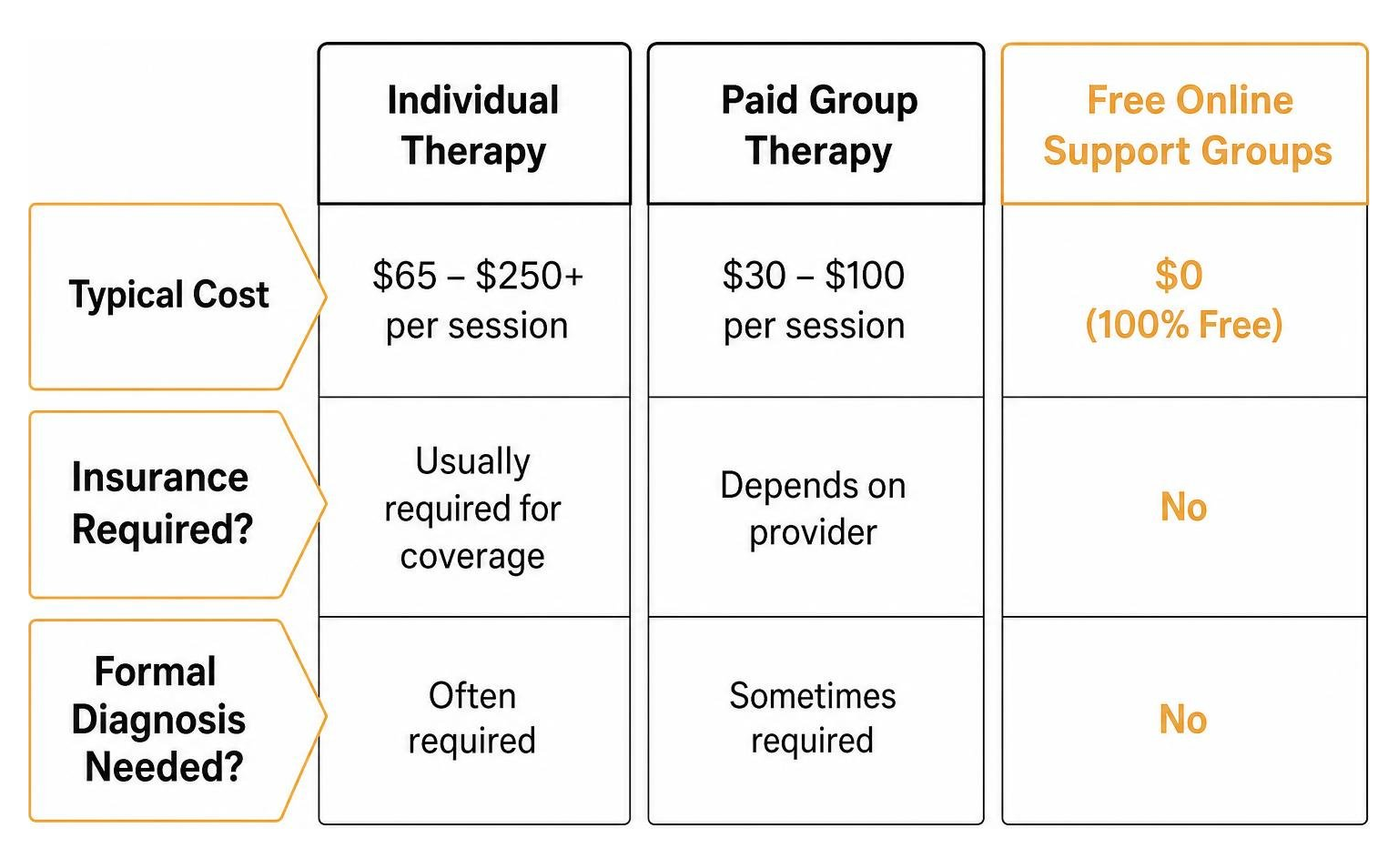
The financial burden of mental health care is one of the most significant barriers individuals face today. Without insurance coverage, individual therapy sessions often range from $65 to over $250 per session. While traditional group therapy is generally more affordable — often about half the cost of individual visits — costs can still pile up quickly for those on a tight budget.
Choosing online group therapy free options completely removes this financial friction. These virtual communities are funded by non-profit organizations, grants, or voluntary donations, ensuring that essential emotional support remains available to everyone regardless of income.
| Service Type | Typical Cost | Insurance Required? | Formal Diagnosis Needed? |
|---|---|---|---|
| Individual Therapy | $65 – $250+ per session | Usually required for coverage | Often required |
| Paid Group Therapy | $30 – $100 per session | Depends on provider | Sometimes required |
| Free Online Support Groups | $0 (100% Free) | No | No |
How Online Group Therapy Free Platforms Protect Your Wallet and Privacy
Beyond saving money, free virtual support spaces eliminate administrative hurdles. Traditional clinical care often requires detailed intake paperwork, credit card files, and insurance approvals. In contrast, free virtual communities prioritize open access:
- No Insurance Demands: You do not need to verify coverage, manage copays, or navigate out-of-network claims.
- No Official Diagnosis Required: You do not need a formal clinical diagnosis of major depressive disorder or generalized anxiety disorder to participate.
- Total Privacy with Pseudonyms: Most platforms allow you to join using a display pseudonym or first name only, keeping your personal identity private.
Peer Facilitators vs Licensed Clinicians in Group Settings
As you explore free virtual support options, it helps to understand who is leading the session:
- Trained Peer Facilitators: Many nationwide platforms, such as HeyPeers or NAMI Louisiana, host sessions led by certified peer support specialists. These hosts have lived experience with mental health challenges and complete structured training to keep meetings safe, welcoming, and non-judgmental.
- Licensed Clinicians and Experts: Other programs, including community workshops and free psychoeducational series, feature sessions facilitated by licensed mental health professionals. These meetings often focus on delivering practical coping tools, nervous-system education, and evidence-based skills like Acceptance and Commitment Therapy (ACT).
2. Diverse Topics Tailored to Your Specific Struggles

Mental health issues are rarely one-size-fits-all. A major advantage of digital support networks is their ability to host specialized groups for highly specific life experiences. Whether you are dealing with daily anxiety or navigating a major life transition, there is likely a virtual room filled with people who understand exactly what you are experiencing.
Specialized Niche Communities for Focused Healing
National advocacy platforms like the Anxiety and Depression Association of America (ADAA) host peer-to-peer support communities with over 100,000 subscribers across 174 countries. These communities offer focused spaces for:
- Depression & Anxiety Recovery: Solution-focused strategy groups helping members build daily self-care routines. (For example, 97% of peers in the LiveWell program report feeling more hopeful about managing their depression after attending strategy sessions.)
- Grief and Bereavement Support: Dedicated spaces to process loss, offering compassionate environments for individuals navigating the complex emotions of bereavement.
- Trauma & PTSD Recovery: Safe spaces for survivors to discuss grounding strategies without fear of judgment.
- Life Transitions & Job Loss: Groups designed to restore personal routine, resilience, and confidence during career shifts or life stress.
- Student & Campus Resources: University initiatives, such as LSUE Student Affairs Support Groups, connecting younger adults with targeted mental health support.
Flexible Drop-in Sessions vs Structured Cohorts
Free online groups generally operate under two practical formats:
- Flexible Drop-in Sessions: Open-entry groups where you can join whenever your schedule permits. There is no long-term commitment, making them ideal for quick encouragement during high-stress weeks.
- Structured Closed Cohorts: Fixed-length programs (typically 6 to 8 weeks) where the same group of participants meets consistently. This model builds trust, shared vocabulary, and deeper peer connections over time.
3. Safe, Anonymous, and Highly Confidential Environments
Joining a new mental health group can feel intimidating, but virtual platforms take intentional measures to protect your emotional and digital safety.
What to Expect During Your First Virtual Meeting

When you enter a virtual group session, you remain in complete control of your experience:
- Video Is Optional: On platforms like KindnessRX, you are welcome to keep your camera turned off if you feel hesitant or overwhelmed. (If your camera is off, facilitators may simply ask you to state your first name verbally to verify you are a real person.)
- No Pressure to Speak: You are never forced to share your story. Passive listening is a valid and respected way to participate, allowing you to absorb coping tools until you feel ready to share.
- Clear Ground Rules: Facilitators set boundaries at the beginning of each session—emphasizing mutual respect, non-directive listening, and strict privacy.
Ensuring Safe Online Group Therapy Free Communities and Privacy
Reputable platforms safeguard their communities through clear moderation standards:
- Strict Confidentiality Standards: Non-profit networks like Totem Peer Support maintain zero-tolerance policies for sharing participant information outside the meeting room, utilizing encrypted video platforms to keep discussions secure.
- Active Community Moderation: Trained hosts step in if someone offers unwanted medical advice or disrupts the meeting, ensuring the space remains encouraging and safe.
- Local Advocacy Chapters: Community-focused chapters, including NAMI Acadiana, ensure that regional virtual spaces uphold compassionate standards.
4. Shared Lived Experience and Breaking Social Isolation
Isolation feeds mental health challenges like depression and anxiety. When you isolate, it is easy to assume that no one else feels the same way. Connecting with a group breaks that cycle.
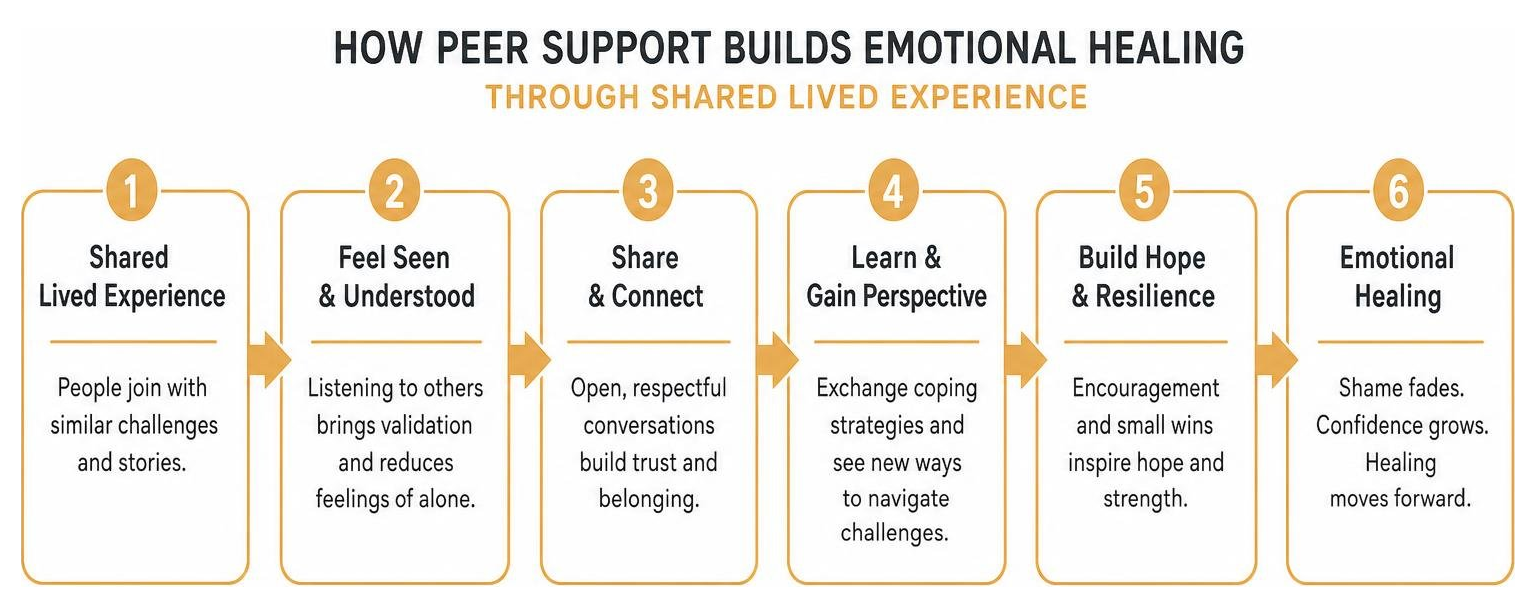
Listening to others who are walking similar paths provides immediate validation. Rather than receiving clinical analysis, you experience true peer empathy—learning how others handle difficult days, manage setbacks, and celebrate small victories.
This shared experience helps replace shame with hope. To explore more about building meaningful connections in digital settings, read our guide on Finding Your People in an Online Therapy Group.
5. Seamlessly Complements Individual Therapy and Crisis Care
It is crucial to understand that online group therapy free support groups are non-clinical peer resources — not a complete replacement for licensed mental health care.
Support Groups vs Professional Clinical Therapy
While peer support groups offer empathy, encouragement, and coping ideas, they do not provide clinical diagnoses, structured psychotherapy, or medical advice.
Free support groups work best as a complement to one-on-one professional counseling. For example, working with a professional through Virtual Christian Therapy allows you to process deep-seated trauma, marriage challenges, or clinical anxiety, while attending a weekly peer group gives you ongoing, low-barrier community support between sessions.
Crisis Management Resources and Safety Protocols
Free support groups are not designed for acute psychiatric emergencies. If you or someone you know is experiencing a mental health crisis, immediate help is available:
- 988 Suicide & Crisis Lifeline: Call or text 988 (Available 24/7, free, and confidential across the US).
- Crisis Text Line: Text HOME to 741741 to connect with a crisis counselor.
- Emergency Care: Call 911 or visit your nearest hospital emergency room.
Frequently Asked Questions About Free Online Support Groups
Are free online support groups a complete replacement for clinical care?
No. Free support groups provide valuable peer encouragement and practical coping tools, but they are non-clinical. They do not replace individual psychotherapy, psychiatric medication, or clinical treatment plans provided by licensed mental health professionals.
Do I need to use my real name, turn on my camera, or share insurance?
In almost all free online support groups, no. You can join using a display pseudonym, keep your camera turned off, and attend without submitting insurance or medical history.
What should I do if I experience a crisis outside group hours?
Support groups do not offer emergency medical or crisis coverage. If you feel unsafe or need immediate assistance, call or text the 988 Suicide & Crisis Lifeline immediately, or reach out to local emergency services.
Experience Professional Healing with Pax Renewal Center
Free online support groups offer an incredible, accessible entry point for relief, self-care, and community connection. But when you are ready to dig deeper, heal core relationship patterns, or work through clinical anxiety, trauma, or grief, professional guidance makes all the difference.
At Pax Renewal Center, based in Lafayette, Louisiana, our team of highly qualified, faith-based therapists offers compassionate care grounded in clinical excellence and spiritual values. Led by Dan Jurek, M.A., LPC-S, LMFT-S, we specialize in:
- Marriage & Couples Counseling: Including affair recovery, discernment counseling, and expert-led online community support.
- Individual Therapy: Evidence-based care for depression, anxiety, trauma, grief, and life transitions utilizing EMDR, CBT, and EFT.
- Child & Adolescent Therapy: Compassionate youth counseling and play therapy.
Whether you prefer in-person sessions in Lafayette or convenient virtual care across Louisiana, we are here to support your journey toward emotional healing and spiritual renewal. Explore our complete range of Pax Renewal Center Counseling Services today to take your next step toward lasting wholeness.