
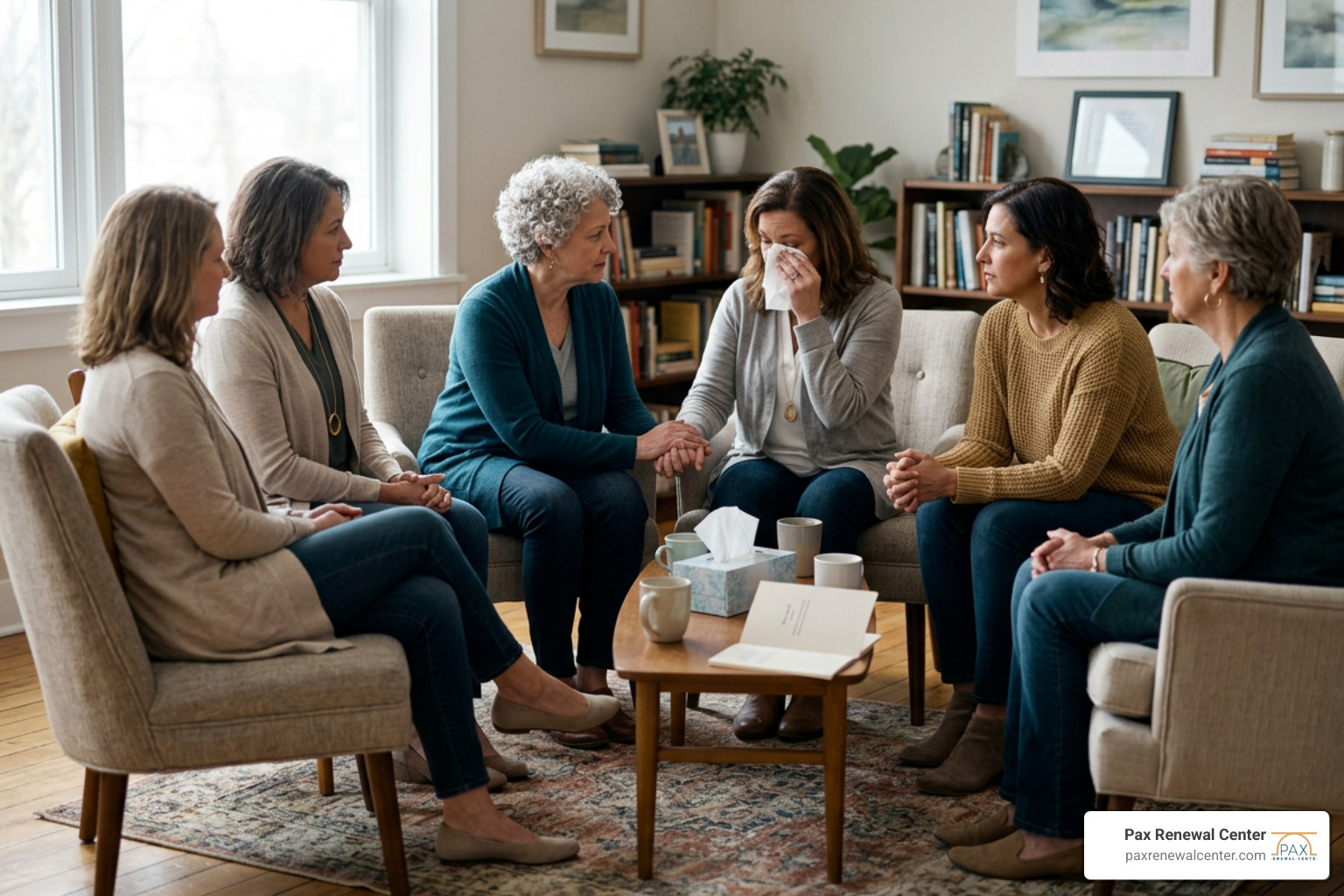
You Don’t Have to Grieve Alone: A Guide to Widow Support Communities
If you are looking for a grief support group for widows, here are the most trusted types of communities available right now:
| Type of Group | Format | Best For |
|---|---|---|
| Peer-led widow communities | Online or in-person | Shared lived experience, low barrier to entry |
| Professionally facilitated groups | Structured, closed sessions | Guided processing with clinical support |
| Faith-based widow ministries | Retreats and local chapters | Spiritual healing alongside grief work |
| Specialized widow groups | Online or hybrid | Young widows, military widows, suicide loss |
| Social and wellness communities | Events, webinars, meetups | Rebuilding identity and finding joy again |
Losing a spouse is one of the most painful experiences a person can face. The grief is not just emotional — it touches every part of life. Identity. Routine. Finances. Faith. Even the ability to think clearly.
And yet, millions of women navigate this loss largely on their own — not because support doesn’t exist, but because they don’t know where to look or aren’t sure they’re ready.
The good news: community helps. Research and decades of clinical experience consistently show that connecting with others who truly understand your loss can accelerate healing in ways that solo grieving simply cannot.
Over 1 million people have found comfort through structured grief support programs. Organizations like Modern Widows Club have grown from small living-room gatherings into nationwide movements — because the need is real, and the connection matters.
I’m Dan Jurek, M.A., LPC-S, LMFT-S, founder and clinical director of Pax Renewal Center in Lafayette, Louisiana, and over my 35 years of clinical experience I have walked alongside many individuals facing profound loss, including those searching for the right grief support group for widows to begin their healing journey. In this guide, I’ll break down everything you need to know to find the right community — whether you’re one week out from loss or several years into it.
Quick grief support group for widows terms:
Understanding the Journey: Emotional Challenges and the Power of Shared Loss
The loss of a spouse is not a single event; it is a profound disruption that ripples across every area of your life. When a husband passes away, a widow is forced to navigate a complex web of primary and secondary losses.
First comes the immediate emotional devastation of losing a life partner. This is often followed by secondary losses that can feel just as destabilizing: changes in your financial situation, shifts in social circles, the sudden sole responsibility of maintaining a household, and a deep identity crisis. You are no longer part of a “we”; you must suddenly figure out who “I” am.
This transition frequently triggers intense feelings of loneliness, anger, and even guilt. Many widows experience regrets over unsaid words or decisions made during their spouse’s final days.
Without a safe space to voice these heavy emotions, the weight can become overwhelming. This is why finding a dedicated community is so vital. When you join a support network, you begin to see that your feelings are a normal part of the human response to deep loss.
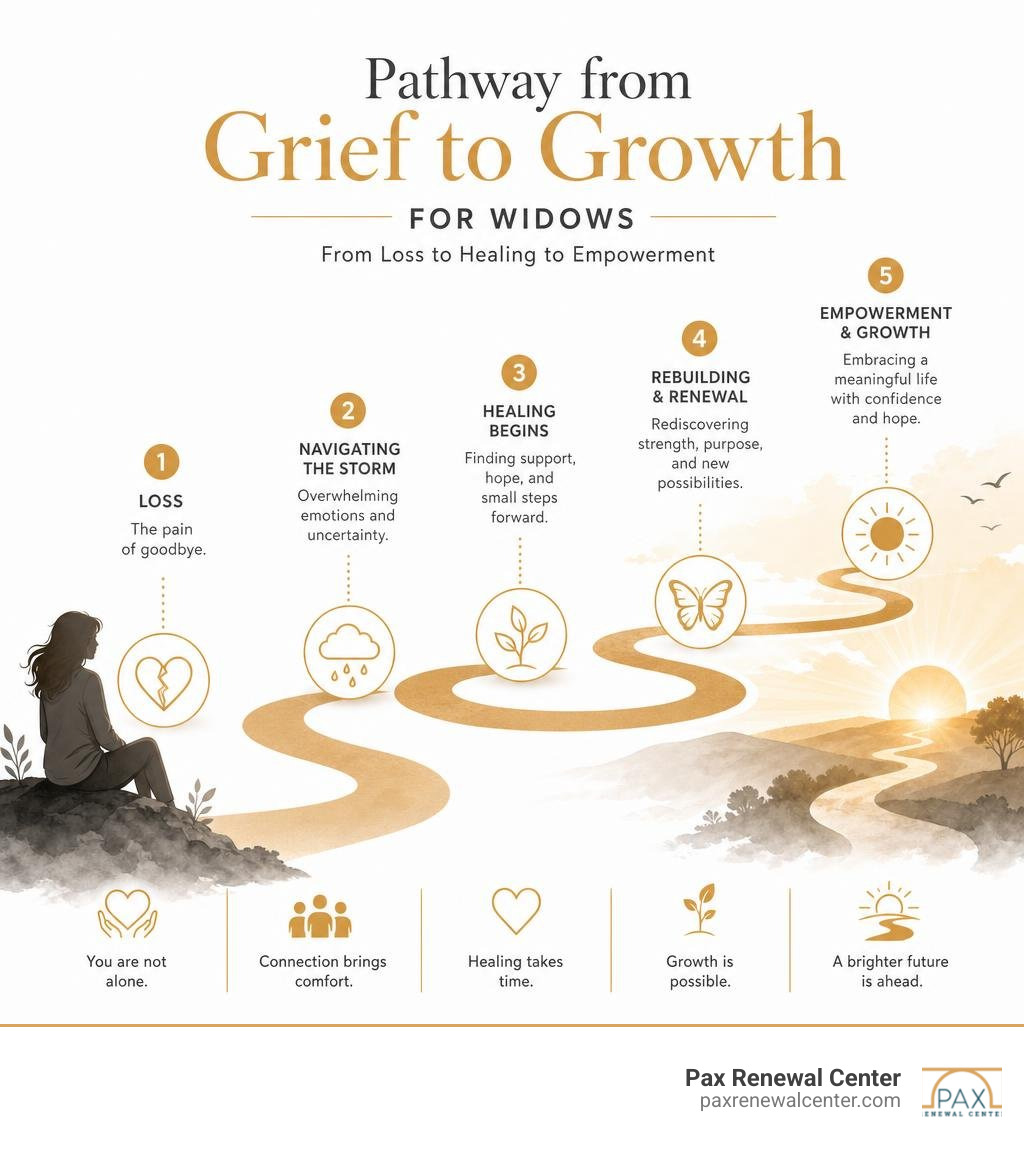
Over time, this shared processing can pave the way for post-traumatic growth—a stage where, while still honoring your spouse’s memory, you begin to discover a renewed sense of strength, resilience, and personal purpose. For more on this transition, read our guide on How to Navigate Life After Loss with a Spouse Grief Support Group.
The Unique Emotional Landscape of Widowhood
One of the least understood aspects of losing a spouse is what many call “grief brain.” Grief is not merely an intellectual or emotional concept; it physically impacts the brain. Widows often report experiencing:
- Extreme confusion and difficulty making basic decisions.
- Pervasive forgetfulness (such as losing keys or forgetting appointments).
- A short temper, sudden mood swings, or feelings of despair.
- Physical symptoms like sleep disturbances, exhaustion, and chronic stress.
In a society that often suffers from “grief illiteracy”—where well-meaning friends expect you to “move on” or “replace the loss” within a few weeks—having a space where you can express these feelings without judgment is crucial.
A specialized support group understands that healing has no neat timeline. It provides practical coping strategies to help you manage the physical and cognitive toll of mourning. If you are looking for local clinical guidance to navigate these changes, our Grief Counseling Lafayette Complete Guide offers deep insights into professional therapeutic care.
Moving from Grief to Personal Growth
True healing does not mean forgetting; it means learning how to carry your love for your spouse into a new chapter of life. This requires rebuilding your identity, establishing new traditions, and allowing yourself the grace of self-discovery.
In a dedicated widows’ group, women often share how they managed the first holiday season alone, when they decided to take off their wedding rings, or how they handled the daunting task of sorting through their husband’s belongings.
By listening to others who have walked this path, you gain the confidence to make these decisions on your own timeline. You begin to realize that while you had no choice in becoming a widow, you do have a choice in how you live the rest of your life. Through peer encouragement and structured guidance, you can move from a state of survival to one of empowerment and hope.
Choosing the Right Grief Support Group for Widows
Not all support groups are structured the same way, and finding the right fit depends on your personal needs, your location, and where you are in your grief journey.
Generally, support groups fall into two main categories: peer-led and professionally facilitated. Additionally, some are open, “drop-in” style meetings, while others are “closed” groups that require registration and run for a set number of weeks.
| Feature | Peer-Led Support Groups | Professionally Led Support Groups |
|---|---|---|
| Facilitator | Fellow widows with lived experience | Licensed therapists, social workers, or counselors |
| Primary Focus | Shared experiences, social connection, peer encouragement | Structured processing, clinical coping tools, psychoeducation |
| Structure | Often open format, drop-in style, or ongoing monthly meetings | Typically closed, 8-to-13-week structured curriculum |
| Atmosphere | Informal, relaxed, community-focused | Professional, confidential, therapeutically guided |
| Best For | Long-term connection, finding friends, practical daily tips | Early-stage grief, complex trauma, focused emotional processing |
Benefits of a Dedicated Grief Support Group for Widows
While general bereavement groups (which include individuals grieving the loss of parents, children, or friends) are highly valuable, there is a unique power in a widows-only group.
In a general group, you may find yourself comforting someone who has lost an elderly parent, which, while painful, carries a very different set of life disruptions than losing a spouse.
In a gender-specific, widows-only space, you don’t have to explain why you feel lonely in a room full of people or why managing the household finances feels terrifying. The shared lived experience of the women around you creates an instant, unspoken bond.
For those looking to integrate their healing with their spiritual life, combining peer support with specialized counseling can be incredibly grounding. Discover how faith can play a role in this journey through Finding Comfort in Faith-Based Grief Therapy and Spiritual Guidance.
Virtual vs. In-Person Formats
In our modern era, widows are no longer limited to the support groups meeting in their immediate neighborhood. Virtual support networks and digital communities have opened up incredible avenues for connection, especially for those with limited mobility, health concerns, or busy schedules.
- In-Person Groups: Offer the comfort of physical presence, face-to-face conversations, and local community building. They are ideal for widows looking to build local friendships.
- Virtual Groups & Zoom Meetings: Provide unmatched accessibility. You can join a meeting from the comfort of your living room, which is especially helpful on days when the physical toll of grief makes leaving the house feel impossible.
- National Movements: Digital platforms hosted by organizations like the Modern Widows Club or weekly virtual topics and chats hosted by the Widow Support Group Meetings & Events Online & In Person – W Connection allow you to connect with thousands of widows across the country, sharing resources, webinars, and expert-led workshops.
Specialized Support, Timing, and What to Expect

If you are considering joining a group, you might wonder: When is the right time?
Many clinical professionals recommend waiting about 6 to 7 weeks after your loss before attending your first structured support group session. In the immediate aftermath of a spouse’s death, your mind and body are often in a state of shock. You need time to process the initial reality of the loss before you are ready to listen to and digest the experiences of others. However, if you feel drawn to seek community sooner, there is no “wrong” time to reach out.
When you attend a typical structured meeting, here is what you can generally expect:
- A Welcoming, Low-Pressure Opening: You will never be forced to share more than you are comfortable with. Many widows attend their first few meetings simply to listen.
- Educational Content: Many structured groups begin with a short video or presentation on a specific aspect of grief, such as managing loneliness, navigating family dynamics, or dealing with anxiety.
- Group Discussion: Facilitators will open the floor for members to share their thoughts on the weekly topic or discuss current challenges they are facing.
- Practical Take-Home Tools: You will often receive a participant manual, journal prompts, or exercises to help you process your emotions throughout the week.
Specialized Groups for Young Widows and Specific Losses
Grief is not one-size-fits-all, and certain circumstances require highly specialized peer networks.
For example, young widows face a distinct set of challenges, such as raising school-aged children alone, navigating careers while grieving, or facing decades of life without their partner. Specialized spaces like those focusing on Young Widows — Dr. Linda Shanti offer a reprieve from a culture that often assumes widowhood only happens in later life.
Similarly, widows who have lost a spouse to suicide, military service, or first-responder duties benefit from communities tailored to these unique experiences. Organizations like Never Alone Widows offer dedicated retreats and local chapters specifically for military and first-responder widows, as well as mothers raising young children.
For those dealing with the deep trauma that often accompanies sudden or tragic loss, integrating clinical support with peer connection is vital. Learn more about specialized healing pathways through Finding Peace After Pain with Christian Trauma Support Groups.
How to Find a Reputable Grief Support Group for Widows Near You
If you live in the Lafayette, Louisiana area, there are several reputable local resources and directories you can utilize to find a comforting community:
- GriefShare Groups: You can search for active, local faith-based support groups in your neighborhood using the directory of Groups in Lafayette, Louisiana .
- Hospice Acadiana: The local community benefits greatly from The Center for Loss and Transition , which offers compassionate bereavement care and support resources.
- Church-Sponsored Programs: Local faith communities provide excellent support networks. You can explore the Grief Resources – Diocese of Lafayette for local bereavement groups and spiritual care.
- Professional Counseling Centers: At Pax Renewal Center, we specialize in walking with individuals through life transitions, marriage counseling, and deep grief. To understand how professional therapy can complement a support group, read our Grief Counseling Lafayette LA Guide.
Frequently Asked Questions
How much do grief support groups for widows typically cost?
Many grief support groups are highly accessible. Peer-led community groups, church-sponsored ministries, and local hospice-led bereavement circles are frequently offered free of charge.
Structured programs that utilize a specific curriculum (such as GriefShare or clinical 8-week closed groups) may charge a small, one-time registration fee to cover the cost of participant manuals and workbooks. Many organizations and counseling centers also offer scholarships or financial assistance so that cost is never a barrier to receiving the support you deserve.
What are the red flags to watch out for in a support group?
While most support groups are safe, healthy spaces, it is important to evaluate any group you join. Watch out for these red flags:
- Unsolicited Advice-Giving: A healthy group focuses on active, compassionate listening. If members or facilitators constantly try to “fix” your grief or tell you what you “should” be doing, it can hinder your natural healing process.
- Lack of Confidentiality: What is shared in the group must stay in the group. A lack of clear boundaries regarding privacy is a major red flag.
- Pressure to Share: You should always have the right to pass or simply listen. You should never feel forced to speak or cry.
- Clinical Mismatch: If you are experiencing complex trauma, severe depression, or prolonged clinical anxiety, a peer-led group may not provide the level of care you need. In these cases, working with a licensed professional is essential. You can find qualified clinical support by searching for Grief Therapists Near Me.
What tools and resources can I use alongside a support group?
To support your healing journey between group meetings, we highly recommend utilizing a variety of supplemental tools:
- Grief Journals and Workbooks: Writing down your thoughts, anger, and memories can help you track your emotional progress and process complex feelings.
- Webinars and Podcasts: Listening to educational podcasts about life after loss can provide comfort during quiet hours at home.
- Social Connection Groups: Communities like Widows Who Wine – PAM BAKER focus on the transition from surviving to thriving, helping widows find laughter, friendship, and new social outlets.
- Adventure and Healing Retreats: Immersive experiences, such as those organized by Wings of a Widow | Grief Support & Healing for Widows , combine nature walks, therapeutic movement, and sisterhood to help you rebuild your confidence and physical well-being.
Conclusion

Grief is a long, winding road, but you do not have to walk it in isolation. Joining a grief support group for widows can be the first step toward finding a community that carries you when your own strength feels depleted. Whether you choose a peer-led social circle, a structured weekly program, or virtual meetings, the connection you build with other women who truly understand your pain is irreplaceable.
At Pax Renewal Center in Lafayette, Louisiana, we are committed to helping you find emotional healing, relational restoration, and spiritual renewal. Our team of compassionate, faith-based therapists integrates clinical best practices—including EMDR, Cognitive Behavioral Therapy (CBT), and Emotionally Focused Therapy (EFT)—with professional guidance rooted in Christian values.
We are here to support you through every stage of your grief journey, offering both individual therapy and affordable virtual community programs. When you are ready to take the next step toward hope and growth, we invite you to Schedule a consultation for professional grief support with us today.