

Find an Online DBT Group That Fits Your Needs
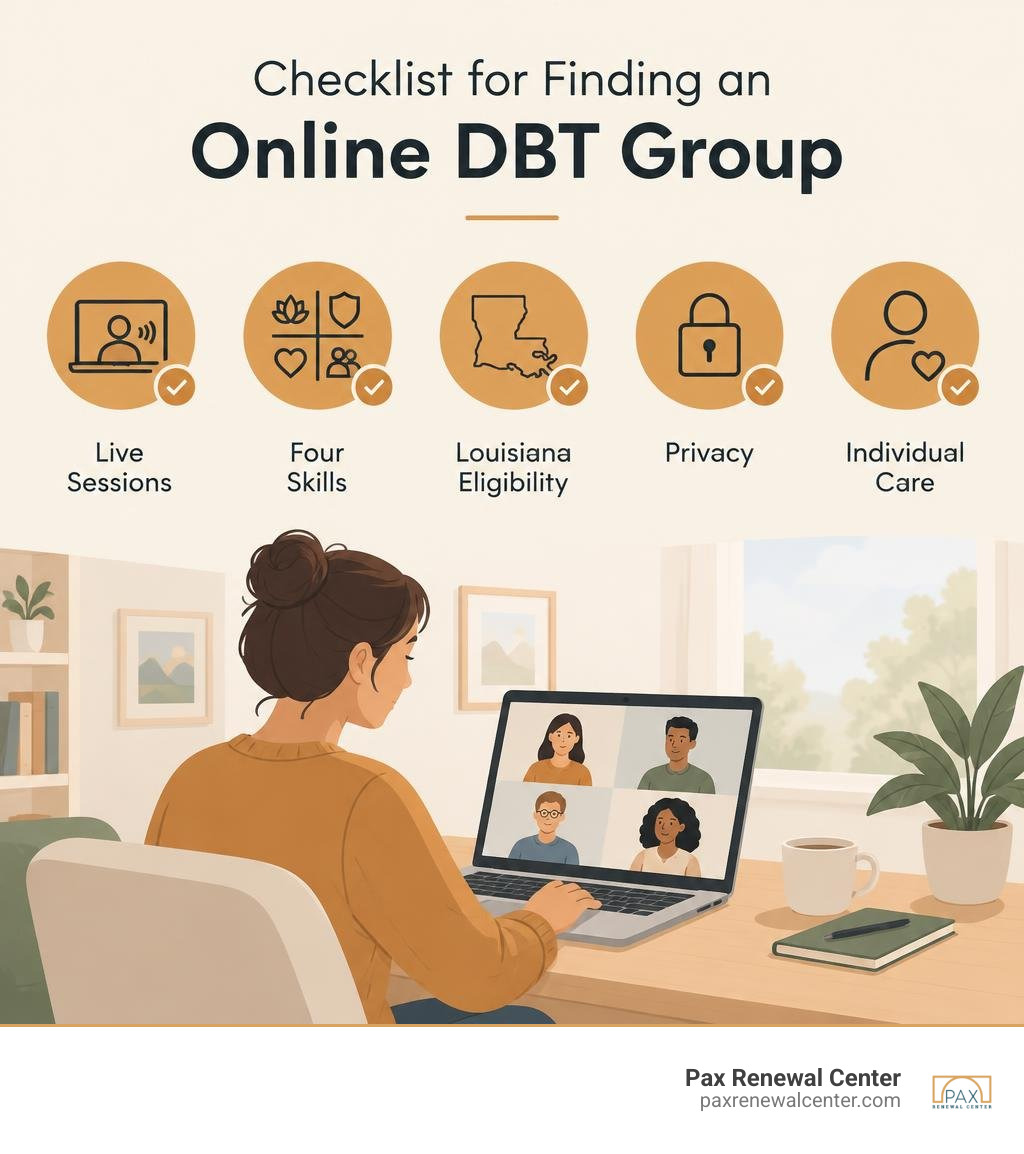
To find DBT group therapy online, look for a live skills group led by a licensed clinician. Ask whether it teaches all four DBT skills: mindfulness, distress tolerance, emotion regulation, and interpersonal effectiveness. Before joining, confirm that the clinician can serve clients in Louisiana, ask how the group protects privacy, and check whether you need individual therapy alongside it.
An online DBT group is usually more like a class with practice than an open-ended support group. You learn a skill, try it between meetings, and return to discuss what worked. That structure can help when strong emotions or relationship stress make it hard to know what to do next.
I’m Dan Jurek, M.A., LPC-S, LMFT-S, founder and clinical director of Pax Renewal Center in Lafayette, with over 35 years of experience helping people work through emotional and relationship challenges. While my background does not establish that I lead a DBT group therapy online program, it shapes the practical questions in this guide to help you choose appropriate care.
Dbt group therapy online terms explained:
How DBT Group Therapy Online Works and What to Expect
Dialectical Behavior Therapy (DBT) is an evidence-based therapeutic model originally developed by Dr. Marsha Linehan. At its core, DBT balances two seemingly opposite concepts: acceptance (validating your current emotional reality) and change (learning actionable behavioral tools to build a healthier life).
When delivered via telehealth, online DBT group therapy functions primarily as an interactive learning laboratory rather than a traditional open-processing circle. Instead of spending the entire session venting about weekly stressors, participants log into a secure video conferencing room to receive structured psychoeducation, observe clinical demonstrations of coping strategies, and practice real-time emotional regulation techniques.
A cornerstone of any comprehensive DBT curriculum is the daily tracking system known as a diary card. Participants use these sheets between virtual meetings to monitor emotional triggers, rate urge intensity, and record which behavioral skills they implemented. During group time, these cards help structure discussions, ensuring everyone stays focused on practical skill acquisition and accountability.
Structure of a Live Virtual Skills Session
Virtual DBT sessions are intentionally predictable. This structured environment creates emotional safety, allowing members to engage without fear of unexpected confrontations.
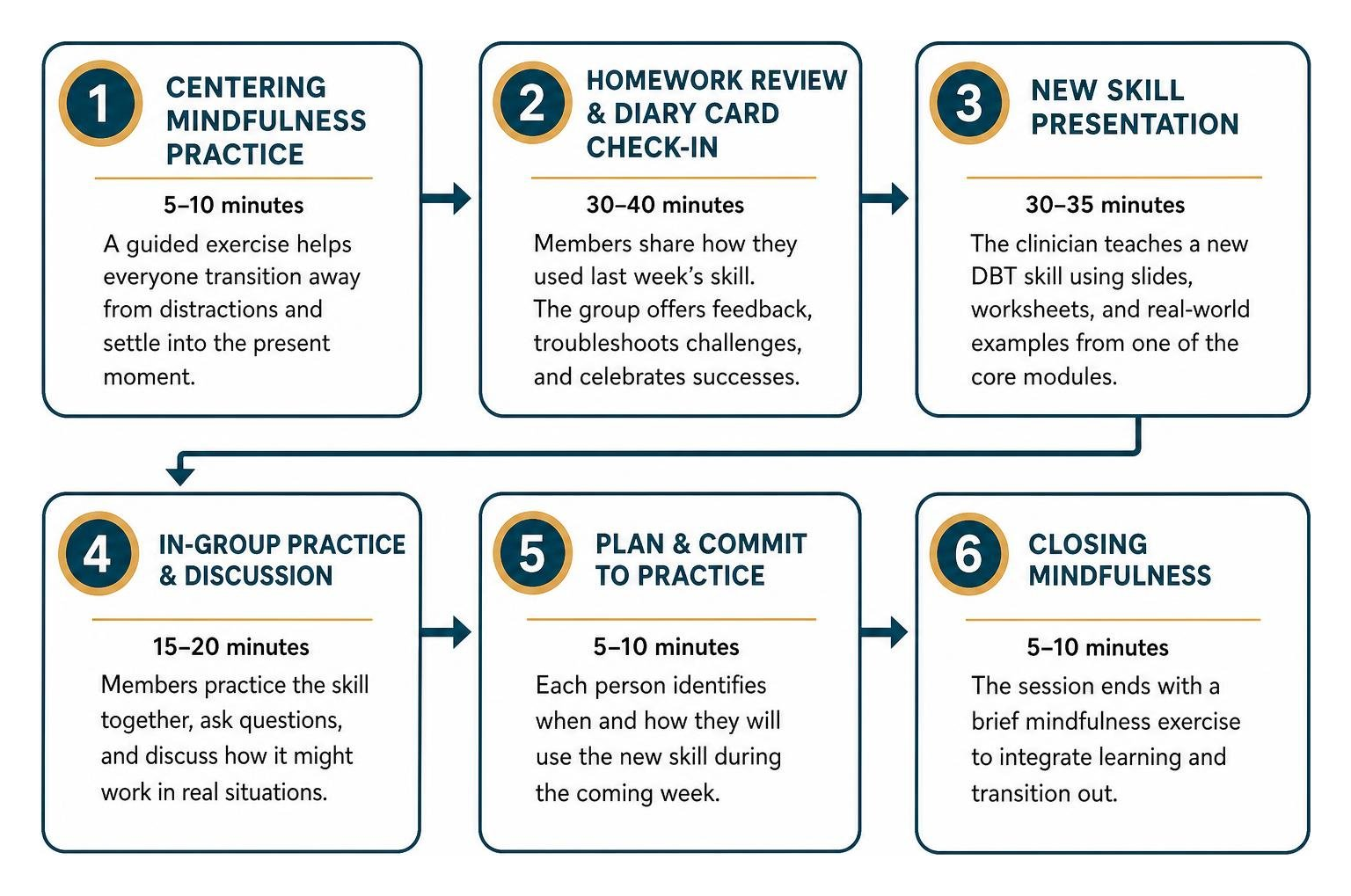
A standard 60- to 90-minute live online skills meeting follows a clear agenda:
- Centering Mindfulness Practice (5–10 minutes): The session opens with a guided exercise—such as focused breathing or sensory grounding—to help everyone transition away from external distractions and settle into the present moment.
- Homework Review & Diary Card Check-In (30–40 minutes): Group members share how they applied the previous week’s tool in real life. Facilitators offer constructive feedback, troubleshoot obstacles, and celebrate practical victories.
- New Skill Presentation (30–35 minutes): The clinician introduces a new technique from one of the core DBT modules using digital slides, illustrative worksheets, and real-world examples.
- Active Discussion & Homework Assignment (5–10 minutes): Participants clarify questions and receive a specific, actionable practice assignment to complete before the next meeting.
If you are new to virtual group environments, exploring the reasons why you will love free online group therapy can help ease initial hesitations about connecting through a screen.
Core Skills Taught in DBT Group Therapy Online
Comprehensive DBT groups cycle through four foundational skill modules designed to address different aspects of emotional and relational life:
- Core Mindfulness: The foundation of all DBT skills. Mindfulness teaches you how to observe, describe, and participate in your experiences non-judgmentally, remaining grounded in the “Wise Mind” rather than reacting purely out of intense emotion.
- Distress Tolerance: Practical crisis survival strategies designed to help you endure painful situations without making them worse. Skills include the TIPP protocol (Temperature, Intense exercise, Paced breathing, Paired muscle relaxation), self-soothing, and radical acceptance.
- Emotion Regulation: Tools to help you identify, understand, and modulate overwhelming feelings before they lead to destructive behaviors. Members learn how to name primary emotions, reduce emotional vulnerability, and act opposite to harmful emotional urges.
- Interpersonal Effectiveness: Communication techniques to help you set healthy boundaries, express needs assertively, navigate conflict, and maintain self-respect while preserving vital relationships.
Who Benefits Most from Online Dialectical Behavior Therapy Groups
DBT has been utilized by over 5,000,000 people across 87 countries. While developed originally for severe emotional instability, decades of clinical research have expanded its application to anyone who feels easily overwhelmed by life’s demands.
Connecting with others who face similar emotional hurdles reduces isolation. If you have ever felt alone in your struggles, finding your people in an online therapy group provides validation and communal encouragement that individual sessions alone cannot replicate.
Clinical Conditions and Emotional Dysregulation
Online DBT skills groups provide clinical support for a wide range of mental health challenges, including:
- Borderline Personality Disorder (BPD): DBT remains the gold standard treatment for BPD, dramatically reducing impulsivity, fears of abandonment, and identity struggles.
- Depression and Mood Disorders: Members learn to disrupt depressive spirals, counter emotional numbness, and build routines that foster hope.
- Anxiety Disorders and Panic: Grounding and distress tolerance tools help calm a hyperactive nervous system and reduce catastrophic thinking.
- Post-Traumatic Stress (PTSD) & Complex Trauma: DBT stabilizes intense affective responses, giving trauma survivors the emotional stability needed for deeper healing.
- Impulse Control, ADHD, and Eating Disorders: Structured behavioral plans help interrupt cycles of bingeing, emotional spending, or reactive outbursts.
Those looking for specialized support in Louisiana can review local clinical options through the Dialectical Behavior (DBT) Support Groups in Louisiana directory on Psychology Today.
Online vs In-Person DBT: Effectiveness and Research
A common question among prospective clients is whether virtual DBT delivers the same results as traditional clinic visits. There have been 15 significant trials of DBT to date demonstrating robust effectiveness in reducing self-harm, boosting treatment adherence, shortening total time in treatment, and preventing acute hospitalizations.
Research published in the Journal of Consulting and Clinical Psychology confirmed that telehealth DBT is just as effective as in-person delivery for individuals with BPD, showing significant reductions in suicidal ideation and self-injurious behavior. Furthermore, studies highlighted in the Journal of Medical Internet Research demonstrated that virtual DBT skills training successfully reduces symptoms of depression, generalized anxiety, and perceived stress.
Online delivery also eliminates transportation hurdles, making consistent attendance much easier to sustain over several months.
Comparing Online DBT Group Options: Formats, Costs, and Logistics
Online DBT groups are offered across several structural formats to accommodate varying levels of clinical need.
| Feature | Standard Weekly Skills Group | Comprehensive Online DBT Program | Virtual Intensive Outpatient (IOP) |
|---|---|---|---|
| Meeting Frequency | 1 session per week | 1 group + 1 individual session weekly | 3 group sessions weekly + individual care |
| Session Length | 60 to 90 minutes | 50 min (individual) + 90 min (group) | 2 to 3 hours per meeting day |
| Clinical Intensity | Mild to Moderate support | Moderate to High support | High / Acute support needs |
| Phone Coaching | Generally not included | 24/7 or daytime skills coaching | 24/7 on-call skills coaching |
| Primary Focus | Didactic skill learning | Full behavioral transformation | Rapid crisis stabilization |
How to Choose the Right DBT Group Therapy Online Program
When evaluating potential programs, prioritize clinical integrity and safety:
- Facilitator Credentials: Ensure the group is led by a licensed mental health professional (LPC, LMFT, LCSW, or Clinical Psychologist) with formal training in DBT protocols.
- Comprehensive Framework: Verify that the program systematically covers all four DBT modules rather than offering fragmented tips.
- Group Size Limits: Optimal learning occurs in groups capped between 6 and 12 participants, ensuring adequate time for individual questions.
- Individual Therapy Coordination: Reliable skills programs require or strongly encourage concurrent individual counseling to help you process personal trauma and tailor skills to your daily life.
Session Costs, Duration, and Insurance Coverage

Financial arrangements for virtual DBT groups vary depending on the provider network, clinical structure, and licensure level.
- Insurance Coverage: Many commercial health insurance plans, as well as Medicare and Medicaid, provide telehealth benefits covering group therapy codes when delivered by an in-network, licensed clinician. Always verify your specific behavioral health outpatient benefits before enrolling.
- Self-Pay and Sliding Scale: Private clinics often provide self-pay options or sliding-scale fees based on household income.
- Program Timelines: Standard adult DBT curricula typically require 16 to 24 weeks to cycle through all four modules once. Adolescent tracks often extend to 30 or 32 weeks to accommodate multi-family participation and slower pacing.
Frequently Asked Questions About Online DBT Groups
Can I learn DBT skills on my own without joining a group?
Self-help workbooks can provide a helpful introduction to DBT concepts, but reading about a skill is very different from executing it under stress. A live group provides immediate accountability, real-time feedback from a trained clinician, and the opportunity to watch peers navigate similar emotional roadblocks.
How long does an online DBT skills training program take to complete?
In a clinical setting, learning the complete DBT skillset thoroughly typically takes about six months. Many programs recommend completing two full cycles (approximately one full year) to ensure skills become automatic behavioral habits during crises.
What equipment and privacy measures do I need for virtual sessions?
To participate safely and effectively in telehealth group therapy, you need:
- A private, enclosed room where household members cannot hear group discussions.
- A computer, tablet, or smartphone equipped with a functioning webcam and microphone.
- Headphones to ensure other members’ confidential disclosures remain private.
- A stable, high-speed internet connection capable of uninterrupted video streaming.
Finding Emotional Balance and Relational Healing
Mastering emotional regulation is a transformative journey. Learning to pause, ground yourself, and respond intentionally rather than react impulsively brings peace not only to your internal world but also to your marriage, family, and spiritual walk.
At Pax Renewal Center in Lafayette, Louisiana, our team is committed to walking alongside individuals, couples, and families as they navigate life’s heaviest emotional storms. We combine evidence-based clinical practices—including Cognitive Behavioral Therapy (CBT), Emotionally Focused Therapy (EFT), the Gottman Method, and EMDR—with compassionate, faith-informed guidance.
Whether you need individual counseling to untangle anxiety or trauma, marriage therapy to rebuild trust, or specialized adolescent care, we are here to support your recovery. Explore Pax Renewal Center’s therapy services to discover how professional, holistic counseling can help you restore emotional balance and renew your most cherished relationships.