

When Your Marriage Is Ending: What Divorce Counseling Can Do for You
Divorce counseling is professional therapy that helps individuals, couples, and families navigate the emotional and practical challenges of separation — before, during, or after divorce.
Here is a quick overview of what it covers:
- Who it’s for: Individuals going through divorce, couples separating (even amicably), and families with children
- What it helps with: Grief, anxiety, co-parenting, communication, identity rebuilding, and closure
- When to start: At any stage — whether you’re still deciding, mid-divorce, or already separated
- Types available: Individual therapy, couples sessions, discernment counseling, family counseling, and online options
- How long it takes: Most people begin feeling relief within 3–4 sessions; deeper healing typically unfolds over several months
Divorce is consistently ranked as one of life’s most stressful experiences. Research shows that people going through divorce report higher rates of depression, anxiety, and social isolation than the general population. The pain is real — and it doesn’t follow a neat timeline.
But here’s what’s also true: healing is possible. With the right support, many people come through divorce with greater self-awareness, stronger boundaries, and a clearer sense of who they are and what they want.
Whether you’re trying to make a final decision about your marriage, navigating a separation with children involved, or rebuilding your life after divorce, counseling gives you a structured, safe space to do that work.
I’m Dan Jurek, M.A., LPC-S, LMFT-S — founder and clinical director of Pax Renewal Center in Lafayette, Louisiana — and with over 35 years of clinical experience specializing in divorce counseling, discernment counseling, and faith-integrated relational therapy, I’ve guided hundreds of individuals and couples through this exact process. In this guide, I’ll walk you through everything you need to know to find the right support for where you are right now.
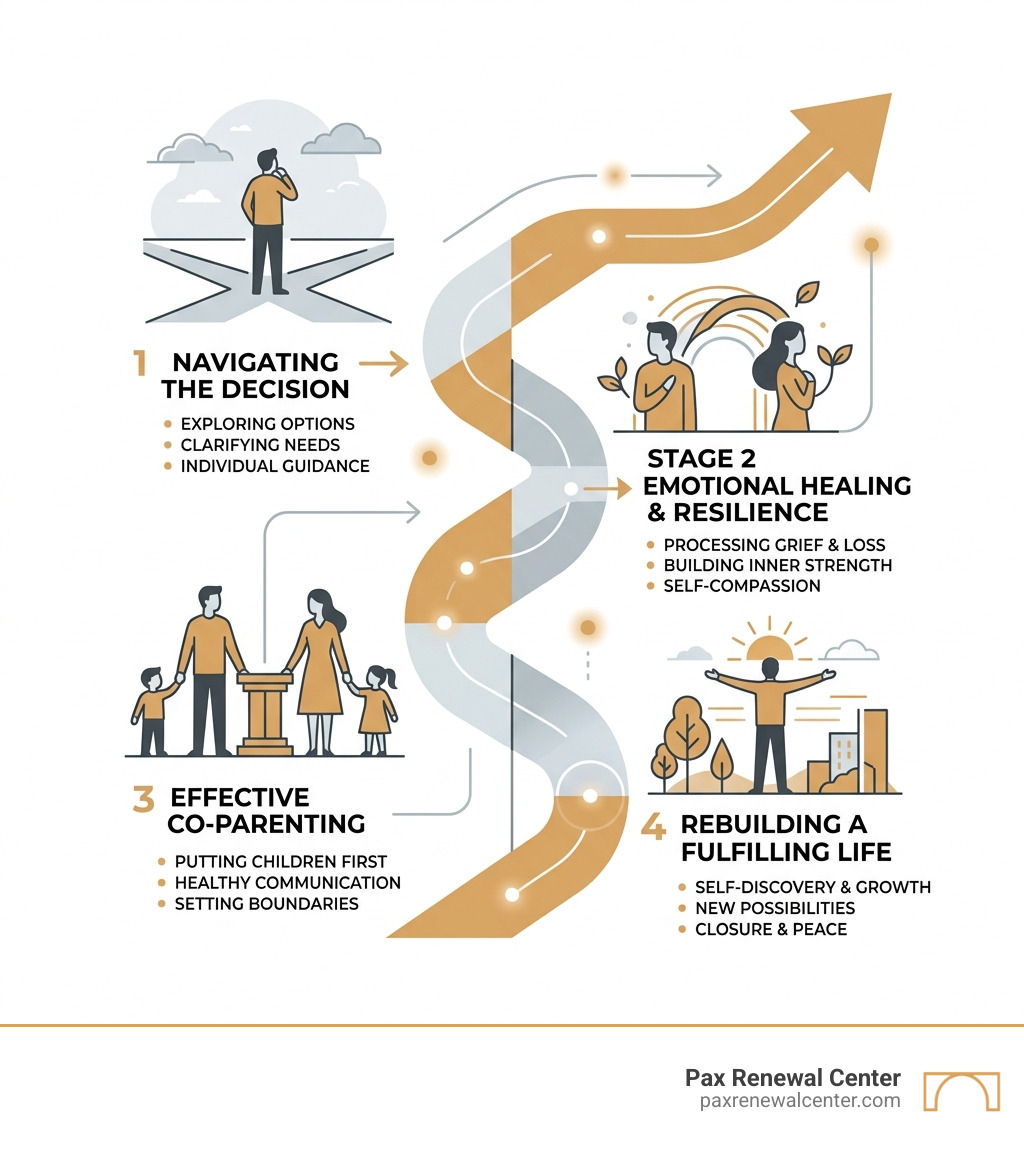
Understanding Divorce Counseling and Its Core Benefits
One of the most common questions we hear at our Lafayette clinic is: “Isn’t this just marriage counseling?” The answer is a resounding no. While both involve a therapist and a relationship, their goals are polar opposites. Traditional marriage counseling aims to repair the bond and keep the couple together. In contrast, divorce counseling focuses on “ending well.”
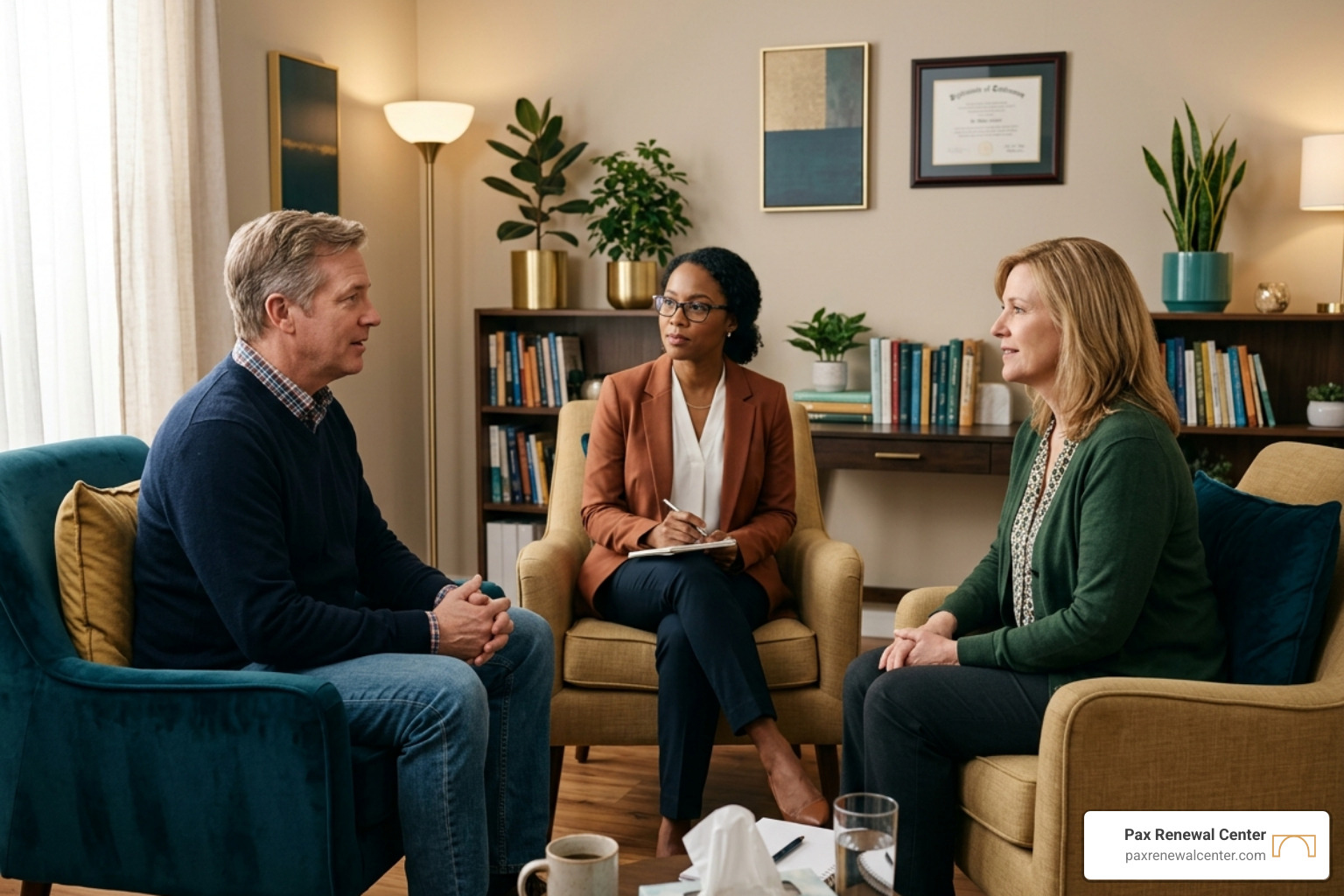
When we work with couples or individuals in this capacity, our primary objective is conflict resolution and emotional regulation. We aren’t trying to fix the past; we are trying to secure the future. This involves developing crucial communication skills so that logistical discussions—like asset division or scheduling—don’t devolve into shouting matches.
The benefits of Counselling For Divorce/ are both emotional and practical. By working with a professional, you can:
- Reduce Trauma: Minimize the long-term psychological impact on yourself and your children.
- Improve Clarity: Move from a “fight-or-flight” reactive state to a rational, decision-making state.
- Foster Personal Growth: Use the transition as a catalyst for self-discovery rather than a mark of failure.
- Achieve Closure: Establish a unified narrative of why the relationship ended, which is essential for moving forward.
For those in our local community, seeking professional support right here in Lafayette provides a localized system that understands the cultural and spiritual values of Louisiana families.
Traditional Marriage Counseling vs. Divorce Counseling
| Feature | Marriage Counseling | Divorce Counseling |
|---|---|---|
| Primary Goal | Reconciliation and repair | Amicable separation and healing |
| Focus | Improving the marital bond | Building individual resilience and co-parenting |
| Outcome | Staying together | Moving apart with dignity |
| Vulnerability | High (required for intimacy) | Moderate (focused on boundaries) |
Navigating the Emotional Stages of Divorce
Divorce is a form of bereavement. You aren’t just losing a partner; you are losing a lifestyle, a co-pilot, and the future you imagined. Because of this, the healing process often mirrors the five stages of grief.
- Denial: “This isn’t actually happening. We’ll find a way to fix it tomorrow.”
- Anger: Resentment toward your spouse, yourself, or the situation. This is often where high-conflict legal battles begin.
- Bargaining: “If I change X, maybe they will stay.”
- Depression: The heavy realization of the loss. It is common to feel social isolation and profound sadness here.
- Acceptance: Not necessarily “liking” the divorce, but acknowledging it as the new reality and preparing to live your life.
At Pax Renewal Center, we help you through Divorce Counseling 101 Navigating The Emotional Rollercoaster/ by providing tools for stress management and self-compassion. It’s important to remember that these stages aren’t linear. You might feel acceptance on Tuesday and be back in anger by Thursday.
We also recognize the significance of Divorce Month/, a period in early spring (often March) when filings tend to spike. This timing often follows the stress of the holidays, and understanding this trend can help you realize you aren’t alone in your struggle. Counseling provides the “hidden grief” support that society often forgets to offer divorcees, unlike those who lose a spouse to death.
Discernment Counseling: For Couples on the Brink
Sometimes, couples come to us not quite ready for divorce, but definitely not ready for traditional therapy. This is the “mixed-agenda” couple: one person wants out (the leaning-out spouse), and the other wants to save the marriage (the leaning-in spouse).
In these cases, we recommend Discernment Counseling Ultimate Guide/. This is a short-term intervention (typically 1 to 5 sessions) designed specifically to help you decide which path to take. Unlike traditional therapy, it doesn’t require a commitment to “work on the marriage.” Instead, it asks you to work on the decision.
During this process, we explore three potential paths:
- Path One: Moving toward divorce.
- Path Two: Maintaining the status quo (staying as you are).
- Path Three: A six-month commitment to intensive couples therapy with divorce “off the table” for that period.
We often encourage couples to take a Discernment Quiz/ to gauge their current feelings. For those in high-conflict situations, Marriage Intensives/ can provide a concentrated environment to resolve ambivalence and find clarity quickly. More than half of couples who engage in discernment counseling actually choose to transition into couples therapy after gaining a new perspective.
Practical Strategies for Families and Co-Parenting
If you have children, your role as spouses may be ending, but your role as a parenting team is permanent. Research consistently shows that it isn’t the divorce itself that harms children—it is the unmanaged conflict between parents.
Our goal in divorce counseling for families is to create a child-centered transition. This includes:
- Establishing a Unified Narrative: Telling the children about the divorce together, ensuring they know they are not to blame.
- Setting Communication Boundaries: Learning to speak about logistics without bringing up past marital hurts.
- Shielding Children from Conflict: Keeping kids out of the middle and avoiding “loyalty binds” where they feel they must choose a side.
By addressing financial stressors and logistical planning in a neutral office, you prevent those tensions from spilling over into the home. For more resources on this transition, you can explore our tag/divorce/ section for articles on healthy separation.
Effective Techniques Used in Divorce Counseling
To help our clients in Lafayette heal, we utilize several evidence-based clinical tools. We don’t just “talk”; we provide actionable skills.
- Cognitive Behavioral Therapy (CBT): We help you identify dysfunctional thought patterns (e.g., “I am a failure because my marriage ended”) and replace them with healthier, more realistic perspectives.
- Emotionally Focused Therapy (EFT): Used to de-escalate high-conflict interactions and understand the underlying emotional needs driving the anger.
- The Gottman Method: Provides practical “Sound Relationship House” tools to manage conflict and maintain respect during the separation process.
- Narrative Therapy: Helps you re-author your life story, viewing the divorce as a chapter of growth rather than the end of the book.
Our team at Pax Renewal Center is highly trained in these methods to ensure you receive the most effective support during your transition.
Evidence-Based Methods in Divorce Counseling
In cases where the marriage was marked by trauma or infidelity, we often incorporate specialized trauma-informed techniques or EMDR (Eye Movement Desensitization and Reprocessing).
EMDR for Trauma: Divorce can be a traumatic event, especially if it involves betrayal. EMDR helps “clear” the emotional charge of painful memories, allowing you to discuss the divorce without being triggered into a panic attack or rage.
Forgiveness as a Process: We teach that forgiveness isn’t about excusing the other person’s behavior; it’s about releasing the “debt” so you can be free. This is a vital step in building resilience and preparing for future healthy relationships.
Finding the Right Support for Divorce Counseling
Finding the right fit is essential. Whether you prefer in-person sessions at our Lafayette office or the flexibility of online therapy, the key is finding a therapist who specializes in relational transitions.
- Online Therapy: Research has shown that online counseling is just as effective as in-person for emotional regulation and communication. We also offer an online community support for couples via the Skool platform for those seeking expert-led guidance at a different pace.
- Qualifications: Look for therapists with “LMFT” (Licensed Marriage and Family Therapist) or “LPC” (Licensed Professional Counselor) credentials who have specific training in Discernment Quiz/Done With Marriage/.
- Group Therapy: Sometimes, healing among peers who “get it” is the best medicine. Support groups provide a safe space to process the social stigma of divorce.
Frequently Asked Questions about Divorce Counseling
How long does the divorce counseling process typically take?
Most clients begin to feel a sense of relief and “emotional stabilization” within 3 to 4 sessions. However, significant healing and the establishment of new routines typically take 3 to 6 months of consistent work.
Can counseling help if my spouse refuses to participate?
Absolutely. Individual divorce counseling is incredibly effective. You cannot control your ex-spouse’s behavior, but you can control your reaction to it. Individual therapy focuses on your coping skills, your emotional healing, and your strategies for co-parenting effectively even with a difficult partner. If you’re wondering Faq Items/What If My Spouse Wants A Divorce And Doesnt Want Marriage Help/, individual work is often the most empowering step you can take.
When is divorce counseling not appropriate for a couple?
Joint counseling is not appropriate in situations involving active domestic violence, severe substance abuse, or significant power imbalances where one partner feels unsafe speaking freely. In these cases, individual therapy is the priority to ensure safety and personal stability.
Conclusion
At Pax Renewal Center, we believe that while divorce is a painful end, it can also be a courageous beginning. Our team in Lafayette, Louisiana, is dedicated to providing faith-based healing and relational restoration. We integrate clinical excellence with spiritual renewal to help you navigate this transition with your dignity and mental health intact.
You don’t have to walk this path alone. When you are ready to start your journey toward healing, professional support is available.
Ready to find clarity and peace? Schedule a consultation for divorce counseling with our team today and take the first step toward your new chapter.