

Why Men’s Mental Health Deserves Our Urgent Attention
Men’s mental health is a critical but often overlooked issue affecting millions of men, their families, and communities. Despite facing unique challenges, men are significantly less likely to seek help for mental health struggles.
Key Facts About Men’s Mental Health:
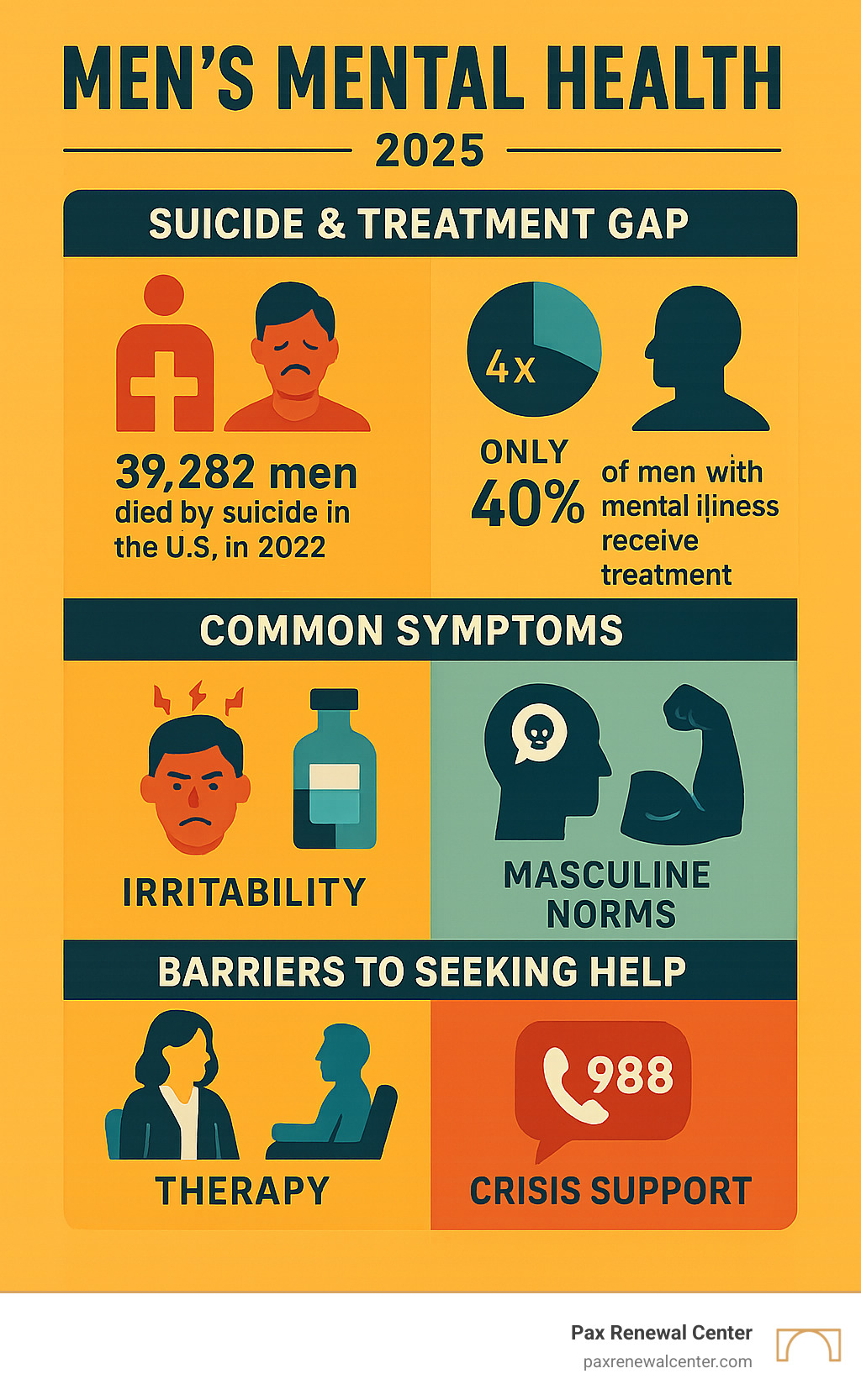
- 39,282 men died by suicide in the U.S. in 2022 – nearly 80% of all suicides
- Men are 4 times more likely to die by suicide than women
- Only 40% of men with mental illness receive treatment vs. 52% of women
- Over 6 million men suffer from depression annually, with many cases going undiagnosed
- 1 in 10 men experience depression or anxiety, but less than half get treatment
While men are diagnosed with mental health conditions at slightly lower rates than women (12.5% vs. 13.5%), they face dramatically higher rates of suicide and substance abuse. This reveals a troubling reality: men aren’t experiencing fewer mental health challenges – they’re just less likely to get the help they need.
Traditional masculine norms often discourage emotional expression and help-seeking behavior. Men frequently mask depression and anxiety through anger, aggression, or risky behaviors rather than seeking support.
The good news? With proper awareness, support, and faith-integrated care, men can overcome these barriers and find healing.
What You’ll Learn
This comprehensive guide explores the scope of men’s mental health challenges, examines revealing statistics, identifies barriers preventing men from seeking help, and provides practical solutions for supporting men’s emotional well-being.
Why Men’s Mental Health Matters: The Silent Crisis
Men’s mental health represents one of our most urgent yet overlooked public health crises. While men are diagnosed with mental health conditions at slightly lower rates than women, they’re four times more likely to die by suicide. This isn’t because men experience fewer struggles – it’s because they’re suffering in silence.
The epidemiology reveals troubling patterns across all age groups. Men over 65 face suicide rates six times higher than women their age. Among younger men aged 25-34, suicide rates have jumped by 34% since 2010. These aren’t just numbers – they’re fathers, sons, brothers, and friends whose pain went unrecognized.
Male depression often looks different – showing up as aggression, substance abuse, and risky behavior rather than the sadness we typically associate with mental health struggles. This creates a dangerous illusion that men are doing fine when they’re actually struggling.
The ripple effects touch everyone. When fathers battle untreated depression or anxiety, their families feel the strain. Children witness unhealthy coping patterns. Marriages suffer under the weight of unspoken pain.
Men’s Mental Health by the Numbers
Nearly 1 in 5 men live with some type of mental health condition. 6.2% of men experienced a major depressive episode in the past year, yet many never received help. More than 3 million U.S. men have panic disorder, agoraphobia, or another phobia.
The treatment gap is staggering. Only 40% of men with reported mental illness received mental health services in 2021. This means 6 out of 10 men who need help aren’t getting it.
Scientific research on suicide disparities confirms what we see in communities: men die by suicide at dramatically higher rates than women across all age groups.
Men develop substance use disorders at 1.5 to 2.3 times the rate of women, often using alcohol or drugs to self-medicate underlying depression, anxiety, or trauma.
The Cost to Families, Workplaces, and Communities
Untreated mental health issues extend far beyond the individual. Families bear tremendous burdens when fathers and partners battle mental health challenges alone. Workplace productivity suffers when men attempt to manage depression, anxiety, or trauma without proper support.
The spiritual cost is equally significant. Many men find their relationship with God strained during mental health struggles, feeling distant from their faith community or believing their struggles indicate a lack of faith.
Understanding these costs helps us recognize that investing in men’s mental health isn’t just compassionate – it’s essential for building stronger families, workplaces, and communities.
Common Disorders & Unique Symptoms in Men
When it comes to men’s mental health, the challenge isn’t just that men experience mental health conditions differently – it’s that these differences often go unrecognized.
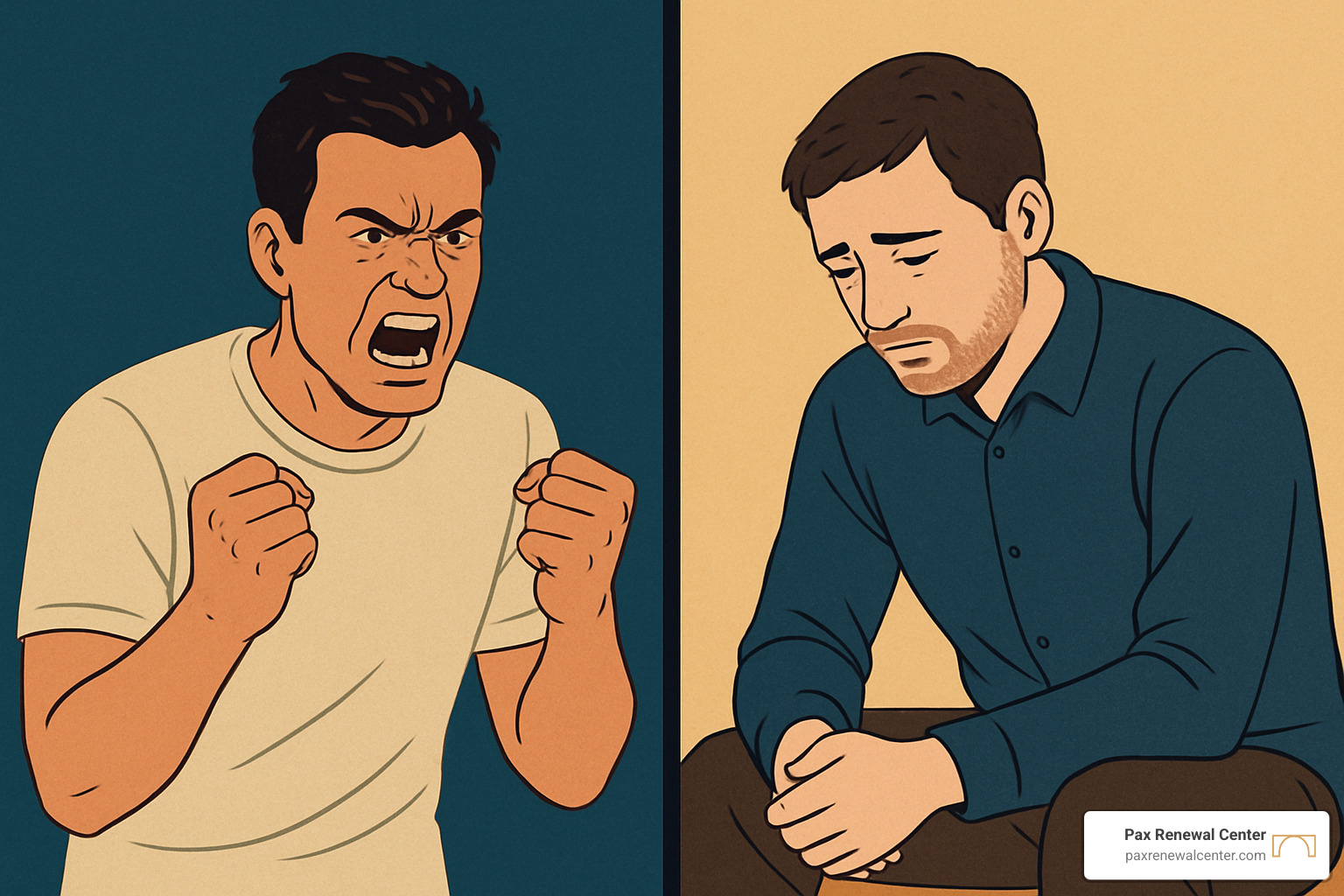
Depression in men rarely looks like the classic image of someone crying or expressing hopelessness. Instead, it shows up as irritability, anger, or risky behaviors. Men with depression often throw themselves into workaholism, drinking, or impulsive decisions while experiencing the same fatigue and loss of interest as women.
Anxiety disorders in men frequently hide behind physical complaints – headaches, stomach problems, or muscle tension. Some men become obsessive about work or exercise, using these activities to avoid confronting anxious thoughts.
For men dealing with PTSD and trauma, symptoms often include hypervigilance, emotional numbing, and difficulty connecting with family members. ADHD in adult men can create job instability and relationship conflicts that look like character flaws rather than a treatable condition.
Substance use disorders frequently develop as men attempt to self-medicate underlying depression, anxiety, or trauma.
Warning Signs of Men’s Mental Health Distress
Irritability is perhaps the most common early warning sign. When a typically even-tempered man starts having outsized reactions to minor frustrations, it’s often a signal that something deeper is happening emotionally.
Sleep changes are another crucial indicator – either inability to fall asleep or sleeping excessively as escape. Isolation in men often looks like emotional withdrawal while continuing usual activities. Self-medication through alcohol, drugs, or other addictive behaviors is unfortunately common.
Men’s Mental Health Across Cultures and Life Stages
Cultural backgrounds significantly influence how men view masculinity and emotional expression. Young men often struggle with career and relationship pressures. Middle-aged men face career peaks alongside family responsibilities and physical changes. Older men deal with retirement, health decline, and loss of social connections.
Veterans face additional challenges related to military service and civilian transition. LGBTQ+ men may experience stressors related to identity and discrimination. Men in rural areas face practical barriers and greater stigma. Socioeconomic factors also play significant roles in access to care and treatment outcomes.
Barriers to Care: Masculinity, Stigma & Systemic Gaps
The path to mental health care for men is often blocked by cultural expectations, personal beliefs, and system failures that keep men suffering in silence.
Traditional masculinity creates the “man box” – rigid rules about how men should behave. Inside this box, real men don’t cry, don’t ask for help, and don’t admit emotional struggles. This pressure makes seeking men’s mental health care feel like personal failure.
The healthcare system often fails men in surprising ways. Many diagnostic tools were developed based on how women experience depression and anxiety. When men show up with anger instead of sadness, symptoms can be missed by well-meaning providers.
Access challenges compound the problem. Many communities lack mental health professionals. Insurance barriers, high costs, and scheduling conflicts during work hours make treatment feel impossible.
Breaking the Armor of Stigma
Changing attitudes starts with honest conversations and visible role models. When respected community men share their struggles and recovery stories, it gives other men permission to seek help.
Open dialogue within families and faith communities breaks down walls of shame. Media campaigns that speak directly to men help normalize help-seeking behavior – taking care of mental health is as important as physical health.
When the System Falls Short
Provider shortages hit men particularly hard because they’re already reluctant to seek help. Over 156 million Americans live in Health Professional Shortage Areas. Insurance issues create additional frustration with high deductibles and limited coverage.
Scientific research on male depression shows the healthcare system must adapt to better serve men through provider training, flexible scheduling, and integrating services into comfortable settings.
Cultural competence matters tremendously. Men need providers who understand masculine culture while helping them see that getting help is part of being a good husband, father, and community member.
Holistic Strategies & Resources to Support Men’s Well-Being
When it comes to men’s mental health, there’s no one-size-fits-all solution. At Pax Renewal Center, we’ve found that combining proven therapeutic approaches with faith-based support creates the strongest foundation for lasting recovery.
Cognitive Behavioral Therapy (CBT) provides practical tools men appreciate. It helps identify thoughts that are dragging them down and learn concrete strategies to change thinking and actions. For trauma or PTSD, EMDR helps process traumatic memories to reduce their emotional impact.
Exercise deserves special mention as it’s often where men are most willing to start. Research shows regular physical activity can be as effective as medication for mild to moderate depression. Nutrition and sleep create the biological foundation for emotional stability.
For men of faith, prayer and mindfulness practices offer powerful tools for managing anxiety and depression. Scripture reflection provides wisdom and comfort. Peer support groups and digital tools provide accessible support that fits busy schedules.

Professional Help That Resonates With Men
At Pax Renewal Center, we understand men prefer therapy that feels practical and goal-oriented. Emotionally Focused Therapy (EFT) shows men how understanding emotions can strengthen relationships. The Gottman Method provides research-based relationship tools men can implement immediately.
Teletherapy has opened doors for men who might never walk into a traditional counseling office, offering flexibility and comfort.
More info about services we offer at Pax Renewal Center, designed specifically to feel comfortable and effective for men.
Self-Care & Faith-Integrated Practices
Self-care for men focuses on activities that restore energy and provide accomplishment or connection. Gratitude practice rewires the brain to notice positive aspects of life. Scripture reflection connects men to hope and purpose. Community service provides meaning while focusing beyond personal problems. Leisure activities provide crucial stress relief and personal fulfillment.
How Friends, Families & Communities Can Help
When someone you care about is struggling with men’s mental health challenges, your support can make a tremendous difference. Sometimes the most powerful thing you can do is simply show up and let them know they’re not alone.
The ALEC model provides a practical framework: Ask open-ended questions, Listen with full attention, Encourage professional support as strength, and Check-in regularly. The “R U OK?” approach emphasizes genuine connection and authentic care.
Active listening becomes especially important when supporting men who may share struggles through work stress or relationship conflicts rather than direct emotional expression. Safety planning becomes crucial if you notice warning signs of suicide or self-harm.
Starting the Conversation
Timing and setting matter tremendously. Choose private moments without interruptions. Open-ended questions work better than yes-or-no inquiries. Try “How are you handling everything?” instead of “Are you okay?”
Validation plays a crucial role. Many men need to hear their struggles are real and understandable. Follow-up conversations show ongoing care through simple texts or check-ins.
More info about therapy and healing can help you discuss professional support encouragingly.
Guiding Men to Professional Support
Encouraging professional help requires sensitivity. Frame therapy as skill-building or performance improvement – like working with a personal trainer or business coach.
Screening tools available online provide non-threatening self-assessment. The 988 Suicide & Crisis Lifeline provides immediate support. Clergy referrals work well for men who value faith. Local counselors specializing in men’s issues understand masculine culture while challenging harmful aspects of traditional masculinity.
Frequently Asked Questions about Men’s Mental Health
Why are men less likely to seek help?
Barriers preventing men from seeking help for men’s mental health issues run deep in culture and personal experiences. From childhood, many men receive messages that they should be strong and independent. These traditional masculine norms create an impossible choice: maintain identity as a man or admit needing help.
Many men don’t recognize their experiences as mental health issues. When depression shows up as anger instead of sadness, it’s easy to dismiss as just being “stressed out.” The healthcare system hasn’t always made it easy either, with many tools developed with women’s experiences in mind.
What symptoms should men watch for?
Men’s mental health symptoms often look different from expectations. Men experience depression as irritability, anger, or aggression rather than sadness. Physical changes like persistent fatigue, headaches, or sleep pattern changes are common early signs.
Behavioral shifts include increased drinking, withdrawing from relationships, or taking unusual risks. Emotional symptoms might include feeling hopeless, being overly critical, or difficulty concentrating. The key is recognizing when symptoms persist for weeks and interfere with work, relationships, or daily functioning.
Where can men find immediate crisis support?
If you’re having thoughts of suicide or self-harm, immediate help is available. The 988 Suicide & Crisis Lifeline connects you with trained counselors 24/7. The Crisis Text Line is available by texting HOME to 741741. In immediate danger situations, call 911.
For ongoing support, your primary care doctor can provide referrals. Many employers offer Employee Assistance Programs with confidential counseling. Community mental health centers offer sliding scale services, and online therapy platforms provide accessible care.
At Pax Renewal Center, we specialize in creating comfortable environments for men seeking help, integrating clinical expertise with spiritual support through both in-person and virtual options.
Conclusion
The journey through understanding men’s mental health brings us to a powerful truth: seeking help isn’t about giving up strength – it’s about building new tools to handle life’s challenges. Men are four times more likely to die by suicide, yet significantly less likely to seek life-saving help.
The numbers tell a sobering story, but within these statistics lies tremendous hope. When men receive care that truly understands them – therapy that honors their values and integrates their faith – change happens.
At Pax Renewal Center in Lafayette, Louisiana, I’ve walked alongside countless men as they’ve finded that emotional health and spiritual strength go hand in hand. Through Emotionally Focused Therapy, EMDR, and CBT, we’ve seen men reclaim their lives and relationships.
The path forward isn’t about abandoning strength – it’s about expanding your definition to include emotional wisdom, relational skills, and the courage to ask for help. Just as you wouldn’t ignore a broken bone, your mental and emotional well-being deserve that same attention.
If you’re a man reading this and recognizing yourself in these pages, know that you’re not alone and you’re not broken. The struggles you’re facing don’t define your worth or future. Help is available, and recovery is not only possible but probable with the right support.
If you’re concerned about a man in your life, your care and gentle encouragement can be the catalyst that saves a life. Sometimes all it takes is one person saying, “I see you struggling, and I’m here to help you find support.”
With compassionate, professional care that honors both psychological needs and faith, you can learn not just to survive but to truly thrive in every area of life.
More info about counseling options at Pax Renewal Center, where we understand that seeking help takes courage, and we’re honored to walk alongside you as you find the healing and hope that God has in store for your life.
Your story isn’t over. The best chapters might just be waiting to be written.