

Finding Hope and Healing in the Digital Age
Faith-based therapy online has transformed how Christians and Catholics access mental health support, offering the same clinical excellence as traditional therapy while honoring your spiritual beliefs and values. Here are the top options available today:
Best Online Faith-Based Therapy Services:
- Licensed teletherapy platforms – Professional counselors who integrate prayer, scripture, and evidence-based techniques
- Local practice virtual care – Your trusted therapist offering secure video sessions
- Peer support apps – 24/7 faith-centered crisis chat and prayer support
- Group programs – Affordable community-based healing with expert guidance
- Self-help resources – Bible-based tools, worksheets, and spiritual exercises
20.78% of adults struggle with mental illness. That’s over 50 million Americans seeking hope and healing. Yet many Christians face barriers accessing care that aligns with their faith values.
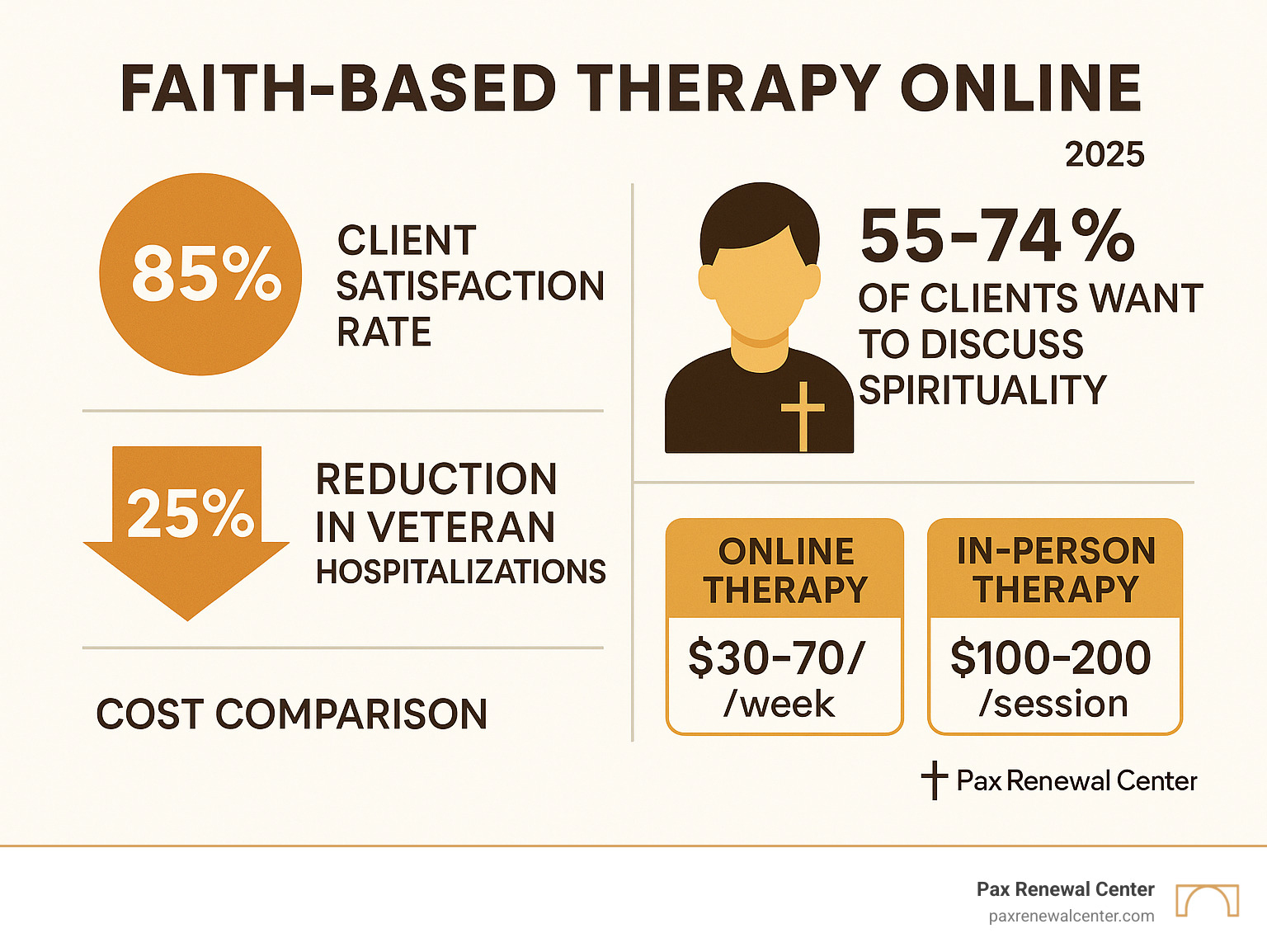
Online therapy has proven equally effective as face-to-face treatment for depression, anxiety, panic disorder, and PTSD. For veterans, online video conferencing reduced psychiatric hospitalizations by 25%. The average cost ranges from $30 to $70 per week, making professional support more accessible than ever.
The spiritual component matters deeply. Research shows that 55-74% of therapy clients want to discuss religious and spiritual issues in their sessions. Faith-based therapy online removes geographical barriers, reduces stigma, and connects you with counselors who understand your worldview.
Whether you’re struggling with anxiety, working through marriage challenges, or seeking trauma healing, digital platforms now offer the same confidential, HIPAA-compliant care you’d receive in an office – improved by the comfort of your own sacred space.
I’m Dan Jurek, M.A., LPC-S, LMFT-S, founder of Pax Renewal Center in Lafayette, Louisiana, with over 35 years of clinical experience integrating Catholic values with proven therapeutic methods. My expertise in faith-based therapy online has helped countless individuals and couples find healing through secure virtual platforms that honor both clinical excellence and spiritual growth.
Why Choose Faith-Based Therapy Online in 2024
The mental health landscape has transformed dramatically, and faith-based therapy online represents one of the most significant breakthroughs for Christian families seeking healing. 20.78% of adults struggle with mental illness, that’s over 50 million Americans who need support that honors both their psychological wellbeing and spiritual values.
The convenience factor changes everything. Online sessions eliminate the stress of commuting, waiting rooms, and rigid scheduling. You can meet with your counselor from your kitchen table after the kids are in bed, or during your lunch break at work.
Flexible scheduling meets you where you are. Many platforms offer evening and weekend appointments, same-day availability, and even crisis chat support when you’re struggling at 2 AM. This accessibility proves especially valuable for shift workers, busy parents, or anyone whose schedule doesn’t fit the typical 9-to-5 therapy model.
Your privacy remains completely protected through HIPAA-compliant security measures. Modern teletherapy platforms use encrypted video technology that exceeds medical privacy standards.
The research is overwhelmingly positive. Extensive studies confirm that online therapy delivers equivalent outcomes to traditional face-to-face sessions for major depression, anxiety disorders, and trauma. For veterans specifically, online video conferencing reduced psychiatric-related hospitalizations by an impressive 25%.
Stigma melts away when you can receive support privately. Many Christians hesitate to seek mental health care due to concerns about judgment from their faith community. Online therapy eliminates worries about being seen entering a counselor’s office.
Rural communities gain unprecedented access. If you live in a small town where finding a licensed therapist who shares your faith values feels impossible, online platforms connect you with qualified Christian counselors nationwide.
Scientific research on religious CBT demonstrates that religiously-integrated cognitive behavioral therapy often produces faster symptom improvement for religious clients compared to secular approaches.
Key Benefits Over In-Person Care
Cost savings make professional therapy accessible to more families. Online sessions typically cost significantly less than traditional office visits. Without overhead expenses for office space, parking fees, and commute time, both therapists and clients save money.
True accessibility removes physical barriers that prevent people from getting help. Whether you’re mobility-limited, caring for young children, dealing with transportation challenges, or simply living in a remote area, online therapy brings professional support directly to you.
Faster matching connects you with the right therapist in days rather than weeks. Online platforms use sophisticated algorithms to match you with therapists based on your specific needs, faith tradition, and therapeutic preferences.
Crisis chat availability provides immediate support when you need it most. Many faith-based platforms offer 24/7 peer support chat, prayer lines, and crisis intervention.
What Happens During a Faith-Based Online Session?
Secure video sessions form the foundation of most online therapy experiences. Using HIPAA-compliant platforms, you’ll connect with your therapist through encrypted video calls that feel remarkably similar to in-person meetings.
Multiple communication options accommodate different preferences and needs. While video sessions are most common, many platforms offer phone calls for those with limited internet bandwidth or privacy concerns. Some also provide secure messaging for ongoing support between sessions.
Prayer integration happens naturally when appropriate. Your therapist may open or close sessions with prayer if you’re comfortable with this approach. Some clients find it helpful to pray silently during difficult moments in therapy.
Scripture exploration weaves biblical wisdom into clinical techniques. Your therapist might reference relevant passages, assign scripture meditation as homework, or help you explore how biblical principles apply to your current struggles.
Evidence-based techniques form the clinical foundation. Whether using Cognitive Behavioral Therapy (CBT), Eye Movement Desensitization and Reprocessing (EMDR), or Emotionally Focused Therapy (EFT), your therapist combines proven methods with spiritual insights.
Journaling assignments extend healing between sessions. Many therapists assign reflective writing, gratitude exercises, or scripture meditation journals.
| Comparison | In-Person | Online | Hybrid |
|---|---|---|---|
| Convenience | Requires travel time | Access from anywhere | Best of both worlds |
| Cost | Higher (office overhead) | Lower (no overhead) | Moderate |
| Privacy | Waiting room exposure | Complete home privacy | Flexible options |
| Emergency Response | Immediate local help | Requires local coordination | Immediate when in-person |
| Technology Requirements | None | Reliable internet needed | Flexible based on format |
| Therapeutic Alliance | Face-to-face connection | Strong via video | Strongest combination |
Common Issues Addressed with Faith-Based Therapy Online
Anxiety disorders respond well to online faith-based treatment. Whether you’re dealing with generalized anxiety, panic attacks, or social anxiety, therapists can teach you breathing techniques, cognitive restructuring, and spiritual grounding exercises.
Depression often improves through the combination of clinical intervention and spiritual support. Online therapy allows you to access help even when leaving the house feels overwhelming.
Marriage conflict benefits significantly from online couples therapy. Both partners can attend sessions from home, eliminating scheduling conflicts and transportation barriers. The Gottman Method and Emotionally Focused Therapy translate effectively to online formats.
Trauma and PTSD can be effectively treated through secure online platforms. EMDR therapy, in particular, adapts well to virtual sessions. Many trauma survivors feel safer processing difficult memories from their chosen safe space.
Addiction recovery finds strong support through online faith-based programs. Whether struggling with substance abuse, pornography, gambling, or other compulsive behaviors, online therapy provides discreet access to specialized treatment.
Spiritual Tools + Evidence-Based Techniques
Lectio divina – the ancient practice of divine reading – can be beautifully integrated into online therapy sessions. Your therapist might guide you through slowly reading and meditating on scripture passages relevant to your struggles.
Guided prayer during sessions can deepen the therapeutic experience. Some clients find it helpful when their therapist leads them in prayer for wisdom, healing, or strength.
Forgiveness work combines psychological healing with spiritual growth. Whether forgiving others who have hurt you or learning to forgive yourself, online therapists can guide you through evidence-based forgiveness interventions improved by Christian principles.
Mindfulness practices rooted in Christian contemplative traditions help manage anxiety and depression. Unlike secular mindfulness, Christian mindfulness focuses on God’s presence, creation, and promises.
Scientific research on spirituality & mental health demonstrates that spiritual practices can significantly improve mental health outcomes, reduce anxiety and depression, and provide a sense of purpose and community connection.
Choosing the Right Faith-Based Therapist Online
Licensure verification should be your first priority. Look for therapists with proper state licensing – LPC (Licensed Professional Counselor), LCSW (Licensed Clinical Social Worker), LMFT (Licensed Marriage and Family Therapist), or similar credentials. Online platforms should clearly display these qualifications.
Statement of Faith alignment ensures spiritual compatibility. Many faith-based therapists provide detailed statements about their beliefs, theological perspectives, and approach to integrating faith with therapy. Look for therapists whose beliefs align with your own denominational background.
Clinical modalities matter for effective treatment. Seek therapists trained in evidence-based approaches like Cognitive Behavioral Therapy (CBT), Eye Movement Desensitization and Reprocessing (EMDR), Emotionally Focused Therapy (EFT), or Dialectical Behavior Therapy (DBT).
Years of experience indicate competence and wisdom. Look for therapists with at least 3-5 years of experience and specific training in religious integration.
Insurance versus self-pay options affect accessibility. The average cost ranges from $30 to $70 per week for online sessions, significantly less than traditional in-person therapy. Many platforms offer sliding-scale fees based on income.
Free peer chat options provide additional support. While not a replacement for professional therapy, many platforms offer free 24/7 peer support chat with trained volunteers.
More info about counseling expectations can help you prepare for your first session and understand what to expect from the therapeutic process.
Red Flags and Limitations
Suicidal crisis situations require immediate in-person intervention. While online therapists can provide excellent support for suicidal ideation, active suicidal plans or attempts need immediate local emergency response.
Psychosis or severe mental illness may require in-person psychiatric care. While online therapy can supplement treatment for serious mental health conditions, active psychosis or severe bipolar episodes often need immediate medical intervention.
Poor internet connectivity can disrupt therapeutic progress. Reliable internet is essential for effective online therapy. Frequent disconnections, poor audio quality, or video lag can interfere with the therapeutic relationship.
Out-of-state licensing limitations restrict therapist options. Therapists can only provide services to clients in states where they hold active licenses.
Best Delivery Paths for Online Faith-Based Counseling
Finding the right path for your faith-based therapy online journey depends on your specific needs, comfort level with technology, and the type of support you’re seeking. Today’s digital landscape offers multiple ways to access professional help that honors your faith.
Licensed teletherapy platforms represent the gold standard for online mental health care. These comprehensive services connect you with fully licensed therapists who specialize in faith integration. Most platforms begin with a detailed matching process that considers your faith background, therapeutic needs, and personal preferences.
Once matched, you’ll typically have live video sessions lasting 45-50 minutes, just like traditional therapy appointments. Between sessions, many platforms offer unlimited messaging with your therapist. This feature proves invaluable when you have insights to share or need prayer during difficult moments.
Licensed Teletherapy Platforms (Faith-Based Therapy Online)
When choosing a licensed platform for faith-based therapy online, you’re investing in professional-grade mental health care. These services employ master’s and doctoral-level therapists who hold active state licenses and specialized training in faith integration.
The intake process typically involves comprehensive questionnaires about your mental health history, spiritual background, and therapeutic goals. This information helps create an accurate match between you and a therapist who understands your worldview.
Secure video technology forms the backbone of these services. HIPAA-compliant platforms use medical-grade encryption to protect your privacy while enabling natural, face-to-face therapeutic conversations.
Local Practice Virtual Care – Pax Renewal Center
At Pax Renewal Center, we’ve found that faith-based therapy online can be just as transformative as our in-person sessions. Our virtual care maintains the same warmth, clinical excellence, and spiritual integration that defines our Lafayette practice.
Catholic integration flows naturally through our online sessions. Our therapists understand Catholic teachings on human dignity, family life, and moral development, weaving these perspectives into therapeutic work whether we’re meeting in person or through video.
Our clinical specialties adapt beautifully to online formats. Emotionally Focused Therapy helps couples rebuild intimacy through secure video sessions. The Gottman Method’s research-based interventions translate seamlessly to online delivery. EMDR trauma therapy can be conducted safely and effectively through video platforms.
Louisiana-licensed therapists on our team bring local understanding to virtual sessions. We know the culture, community resources, and regional considerations that can improve your therapeutic experience.
We use secure Zoom sessions with HIPAA-compliant technology and end-to-end encryption. This ensures your privacy while delivering the same high-quality therapeutic services you’d receive in our Lafayette office.
Peer & Self-Guided Support Options
While professional therapy forms the foundation of mental health care, peer support and self-guided resources can provide valuable supplemental support. These options work best alongside professional treatment rather than as replacements for it.
24/7 prayer chat services offer immediate spiritual comfort during crisis moments. Trained volunteers provide empathetic listening, prayer, and spiritual guidance when you need encouragement most.
Bible reading apps and digital devotionals complement your therapeutic work beautifully. Many apps offer guided scripture reading, meditation exercises, and spiritual reflection tools that reinforce insights from your therapy sessions.
Important caution about unlicensed services: While peer support offers valuable encouragement, it’s not a substitute for professional therapy when dealing with serious mental health concerns. Always verify credentials and understand the limitations of any support service you use.
Frequently Asked Questions about Faith-Based Therapy Online
Is faith-based online counseling as effective as in-person?
Research consistently shows online therapy works just as well as traditional face-to-face sessions for most mental health struggles. Studies prove that online treatment delivers equivalent outcomes for major depression, anxiety disorders, panic disorder, and PTSD.
Religious clients often experience faster initial improvement when working with therapists who share their spiritual values. This benefit carries over beautifully to online formats because that spiritual understanding and connection remain strong through video sessions.
Veterans participating in online therapy saw a 25% reduction in psychiatric hospitalizations. Many clients actually report feeling more comfortable discussing deeply personal and spiritual matters from their own home environment, which can make therapy even more effective.
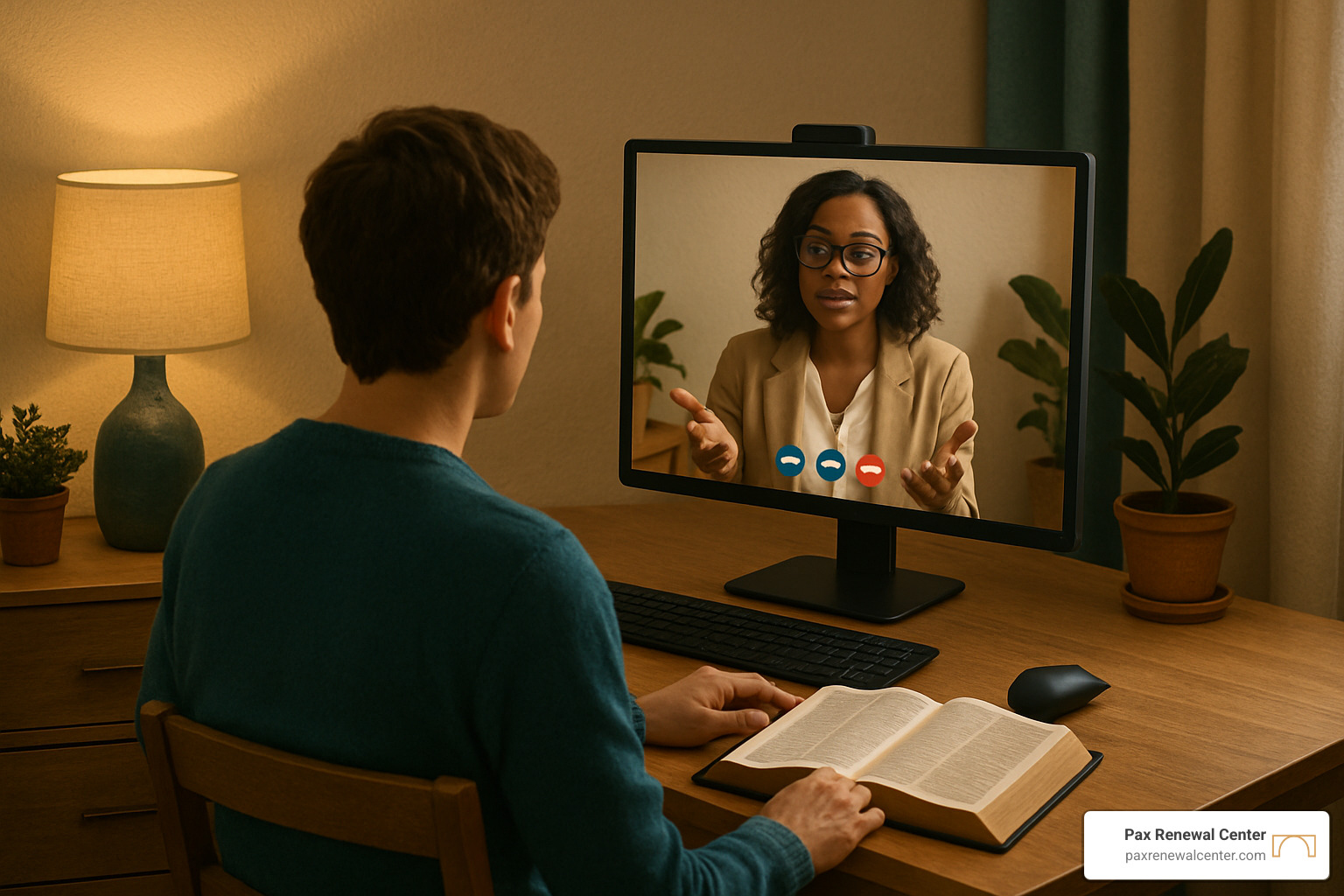
At Pax Renewal Center, clients connecting with us virtually often open up more quickly because they’re in their sacred space – maybe with their Bible nearby or their favorite prayer corner visible.
How is my privacy protected on virtual platforms?
HIPAA compliance forms the foundation of online therapy privacy protection, using the same strict standards required for all medical services. End-to-end encryption protects your video sessions with technology that’s often more secure than regular phone calls.
Reputable platforms use encrypted video technology, secure data storage, and strict access controls. Your session content is protected by federal law, and platforms invest heavily in cybersecurity to maintain that trust.
Many platforms offer anonymous options if you prefer an extra layer of privacy. You can often use a username instead of your real name, and some services allow payment without providing identifying information.
At Pax Renewal Center, we use HIPAA-compliant video technology with end-to-end encryption, ensuring your privacy while delivering the same quality care you’d receive in our Lafayette office.
What does a typical session cost and is it covered by insurance?
Online faith-based therapy typically costs significantly less than traditional in-person sessions, making professional therapy accessible to many people who couldn’t previously afford it. Insurance coverage varies by platform and provider. Some online therapy services accept insurance directly, while others require you to pay out-of-pocket and submit receipts for reimbursement.
Many faith-based therapists offer sliding-scale fees because they recognize that healing should be available regardless of financial circumstances. HSA and FSA funds can typically be used for online therapy expenses, making it more affordable for those with health savings accounts.
Financial assistance programs are available through many platforms and individual therapists. At Pax Renewal Center, we believe in making quality counseling accessible and work with clients to find solutions that fit their budget.
Conclusion
The journey toward healing doesn’t have to wait for the perfect moment or ideal circumstances. Faith-based therapy online has revolutionized mental health care by bringing professional, spiritually-integrated support directly to your home, removing the barriers that once kept so many from finding help.
Hope is within reach right now. Whether you’re wrestling with anxiety, feeling overwhelmed by depression, navigating marriage challenges, or working through past trauma, you don’t have to face these struggles alone. The combination of clinical expertise and spiritual wisdom that honors your faith values is available at your fingertips.
What makes this moment in history so remarkable is how technology has made holistic mind-body-spirit healing accessible to everyone. No longer do you need to choose between therapists who understand clinical methods and those who share your spiritual values.
Your mental health matters deeply to God – and it should matter to you too. The shame and stigma that once surrounded seeking help are giving way to understanding that caring for your emotional and mental well-being is an act of stewardship, not weakness.
At Pax Renewal Center, we’ve witnessed countless individuals and families experience change through our online services. The same compassionate care, clinical excellence, and spiritual integration we provide in our Lafayette, Louisiana office translates beautifully to secure video sessions.
Don’t wait another day to begin your journey toward restoration. The research is clear, the technology is proven, and the support is ready. Your story of healing can start today, from the comfort of your own sacred space, with professionals who understand both your clinical needs and your spiritual heart.
More info about our services and how we can support your journey toward healing and renewal.