

Why Professional Training for Therapists Is the Foundation of Clinical Excellence
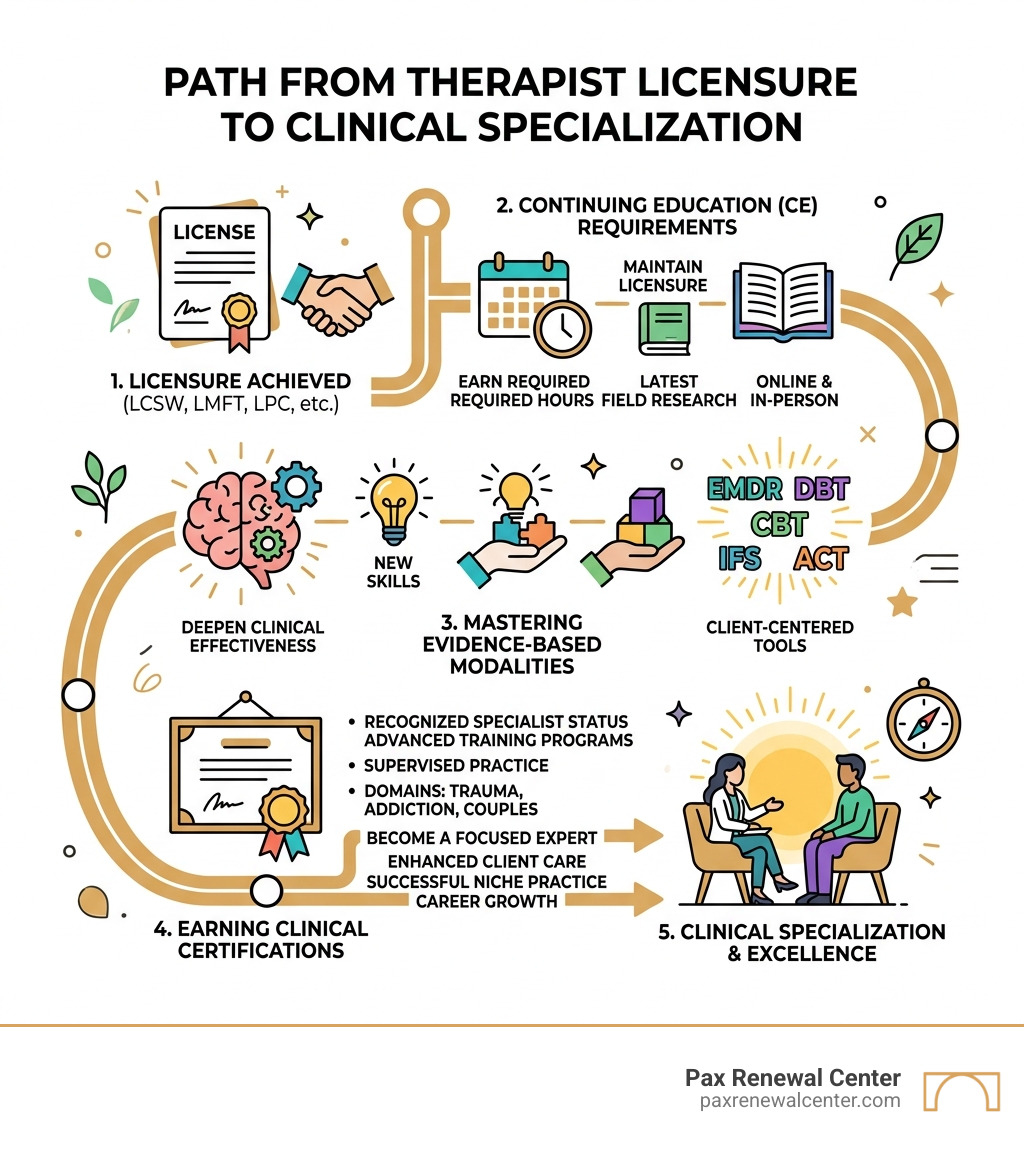
Professional training for therapists is the ongoing process of building clinical skills beyond your initial license — through continuing education (CE), certifications, and specialized programs that make you more effective with the clients who need you most.
Here are the most effective ways to find it:
- Explore accredited online learning portals (ACA, Psychotherapy Academy, PESI)
- Master evidence-based modalities like EMDR, DBT, ACT, and IFS through certified programs
- Use video-based learning featuring real therapy sessions with master clinicians
- Attend in-person retreats and intensive workshops for hands-on, immersive skill-building
- Prepare for licensure exams (LCSW, LMSW, MFT) with targeted exam prep systems
Staying current is not optional. The clients sitting across from you — dealing with trauma, relationship breakdown, anxiety, or grief — deserve a therapist who keeps growing. The good news? High-quality training is more accessible than ever, in more formats than ever.
I’m Dan Jurek, M.A., LPC-S, LMFT-S, founder and clinical director of Pax Renewal Center in Lafayette, Louisiana, and with over 35 years of clinical experience pursuing professional training for therapists across modalities like EFT, the Gottman Method, EMDR, and faith-integrated care, I know how the right training transforms both your practice and your clients’ lives. Let’s walk through the five most effective ways to find training that fits where you are — and where you want to go.
1. Explore Accredited Online Learning Portals

In the modern era of mental health, professional training for therapists has moved far beyond dusty textbooks and expensive weekend flights. Online learning portals have revolutionized how we earn continuing education (CE) credits. These platforms offer a “one-stop-shop” for maintaining licensure while expanding your clinical toolkit.
When we look for online training, the first thing we check is accreditation. For those of us practicing in Lafayette, LA, and across the state, ensuring a provider has approval from major bodies like the NBCC (National Board for Certified Counselors), APA (American Psychological Association), or ASWB (Association of Social Work Boards) is vital. These organizations set the gold standard for what constitutes high-quality education.
Online portals typically offer several formats:
- On-Demand Workshops: Perfect for the busy clinician who needs to pause a lecture to take a client call.
- Live Webinars: Great for those who enjoy real-time interaction and want to ask the presenter questions.
- Self-Paced Modules: These often include reading materials, videos, and quizzes to ensure you’ve actually absorbed the content.
Before you dive into your first session, it’s helpful to understand What You Can Expect From Psychotherapy The First Sessions—not just for your clients, but so you can model that same professional structure in your own learning journey.
Benefits of Online Professional Training for Therapists
The sheer flexibility of online portals cannot be overstated. Major organizations like the American Counseling Association (ACA) provide a Learning Portal where members can often access featured courses for free or at a significantly reduced rate. These courses cover everything from workplace violence and grief to the intersection of mental and metabolic health.
Platforms like Psychotherapy Academy and PESI take it a step further by offering “Training Pathways.” These are bundled courses that take you from a foundational understanding to mastery in a specific area, such as DBT or ACT. Many of these portals offer 24/7 access, meaning you can learn in your pajamas at 10:00 PM if that’s when your brain is sharpest.
| Feature | Self-Paced Courses | Live Webinars |
|---|---|---|
| Flexibility | Highest (Learn anytime) | Moderate (Scheduled time) |
| Interaction | Low (Discussion boards) | High (Live Q&A) |
| Resources | Downloadable PDFs/Videos | Slide decks and live links |
| CE Credit | Upon quiz completion | Upon attendance verification |
2. Master Evidence-Based Modalities Through Professional Training for Therapists
In our practice at Pax Renewal Center, we believe that combining clinical best practices with a faith-based perspective offers the most holistic path to healing. To do this effectively, we constantly engage in professional training for therapists that focuses on evidence-based modalities.
If you want to move beyond general counseling and become a specialist, you need to dive deep into specific frameworks. Some of the most in-demand modalities today include:
- EMDR (Eye Movement Desensitization and Reprocessing): A powerhouse for trauma treatment.
- DBT (Dialectical Behavior Therapy): Essential for emotional regulation and borderline personality traits.
- ACT (Acceptance and Commitment Therapy): A “third-wave” approach that helps clients move toward their values.
- IFS (Internal Family Systems): A transformative “parts work” model that helps clients heal internal conflicts.
For those looking to specialize in the complex landscape of trauma, programs like Janina Fisher’s Complex Trauma Certification Training (CCTP/CCTP-II): A 4-Month Online Intensive provide the neurobiological framework needed to treat the “un-treatable” cases.
Specialized Professional Training for Therapists in Trauma
Trauma doesn’t just live in the mind; it lives in the body. This is why specialized training often incorporates somatic interventions and Polyvagal Theory. Understanding how the nervous system responds to threat—and how to help a client return to a state of safety—is the hallmark of a master clinician.
Certifications like the CCTP (Certified Clinical Trauma Professional) or CCTP-II aren’t just letters after your name. They represent a commitment to understanding the neurobiological legacy of trauma. We often recommend looking into institutes that specialize in the “body-up” approach, such as the Sensorimotor Psychotherapy Institute …because the body knows.. This type of training teaches us to track somatic cues—like a client’s posture or breathing—as a gateway to healing deep-seated attachment wounds.
3. Utilize Video-Based Learning and Live Clinical Demonstrations
There is an old saying in our field: “You can’t learn surgery from a book.” The same is true for therapy. While theory is important, watching a master therapist navigate a “rupture” in the therapeutic alliance or handle a highly resistant client is invaluable.
Some platforms now offer over 1,100 hours of video content featuring unscripted, real-world therapy sessions. This isn’t “role-play” with bad acting; it’s real people, real moments, and real learning. Research shows that 85% of members who use these video-based tools report a significant improvement in their clinical confidence.
Why is this so effective?
- Modeling: You see how experts like Irvin Yalom or Janina Fisher use their voice, silence, and body language.
- Nuance: You witness the subtle shifts in a client’s affect that a textbook simply can’t describe.
- Application: You can see exactly how to implement a specific technique, like the “EFIT Tango” or a “Cognitive Interweave” in EMDR.
As you expand your skills, you might find yourself explaining the nuances of your work to others. It’s helpful to be able to answer Faq Items/Whats The Difference Between Coaching And Therapy with the confidence that comes from seeing high-level clinical work in action.
4. Attend Immersive In-Person Retreats and Intensive Workshops
While online learning is convenient, nothing replaces the energy of an in-person intensive. These retreats often combine professional training for therapists with much-needed self-care. In our busy lives in Lafayette, taking a few days to step away and immerse ourselves in a specific topic—like the Gottman Method for couples or advanced trauma processing—can prevent burnout and reignite our passion for the work.
In-person workshops offer unique benefits that digital formats sometimes lack:
- Hands-On Practice: You get to practice techniques in real-time with peers and receive immediate feedback from instructors.
- Live Consultations: Many intensives allow you to bring your own difficult cases to a master clinician for a “deep dive” consultation.
- Networking: Building a community of like-minded professionals is one of the best ways to grow your practice and find reliable referral partners.
For those ready to take their trauma work to the next level, programs like the Advanced Trauma Treatment Certification Program often offer these immersive experiences. These programs are designed to help you stand out as a specialist, ensuring that when clients look for help with their “darkest moments,” they find a clinician with the depth of training required to guide them through.
5. Prepare for Licensure with Targeted Exam Prep Systems
Before you can pursue advanced certifications, you have to pass the boards. Whether you are aiming for your LCSW, LMSW, or MFT license, the exam process can be incredibly daunting. Many therapists struggle not because they lack clinical knowledge, but because they haven’t mastered the specific “clinical reasoning” required by the exams.
The most successful prep systems don’t just ask you to memorize facts; they teach you how to think like the test-makers. Top-tier programs have helped over 100,000 therapists pass their exams by focusing on:
- Study Smart Philosophy: Focusing on the essential content that is most likely to be tested rather than trying to relearn everything from grad school.
- Anxiety Management: Providing strategies to stay calm and focused during the grueling hours of the exam.
- Test-Taking Strategies: Learning how to identify “distractor” answers and choose the most clinically sound option.
No prep program can “guarantee” a pass, but a structured system based on the neuroscience of learning can significantly tilt the odds in your favor. Once you’ve cleared this hurdle, specialized professional training for therapists truly opens up.
Frequently Asked Questions about Therapist Training
How do I verify if a CE provider is approved by my state board?
In Louisiana, you should always check with the LPC Board or the State Board of Social Work Examiners. Most reputable national providers (like ACA or PESI) will list their approvals clearly on the course page. Look for specific language mentioning NBCC, ASWB, or APA approval, as these are generally accepted by our state boards.
What are the most in-demand certifications for mental health professionals today?
Currently, certifications in trauma (CCTP/CCTP-II), EMDR, and specialized couples work (Gottman/EFT) are in high demand. As the field moves toward neuro-informed care, certifications that include somatic or polyvagal components are also becoming increasingly valuable.
Are there affordable or free CE options available for new therapists?
Yes! Many professional organizations like the ACA offer free monthly CEs to members. Additionally, platforms like The Knowledge Tree often provide free mini-courses. If you are part of a group practice, check if they offer “lunch and learns” or have a shared library of training videos.
Conclusion
The journey of professional training for therapists is a lifelong commitment to clinical mastery. Whether you are just starting your exam prep or you are a seasoned clinician in Lafayette looking to integrate the latest EMDR protocols with your faith-aligned practice, the resources available today are vast and varied.
At Pax Renewal Center, we know that the best therapists are those who never stop being students. By staying grounded in evidence-based modalities and integrating them with spiritually-sound care, we can offer our clients the “curative secure base” they need to find true healing.
If you are a therapist looking for a community of professionals dedicated to this level of excellence—or if you are a client looking for a specialist who truly understands the “craft” of therapy—we invite you to Discover our professional counseling services. Together, we can work toward emotional healing, relational restoration, and spiritual renewal.