

Why Teen Depression Is More Than “Just a Phase”
Teen depression is a serious medical condition, not a personality quirk, a bad attitude, or a phase your child will simply grow out of.
Quick answer: Key signs of teen depression to look for:
- Persistent sadness, emptiness, or hopelessness lasting more than two weeks
- Irritability, anger, or frustration (not just classic sadness)
- Withdrawing from friends, family, or activities they used to love
- Dropping grades or loss of motivation at school
- Changes in sleep, appetite, or energy levels
- Expressions of worthlessness or thoughts of self-harm
If several of these have been present for two weeks or more, it’s time to take action — not wait it out.
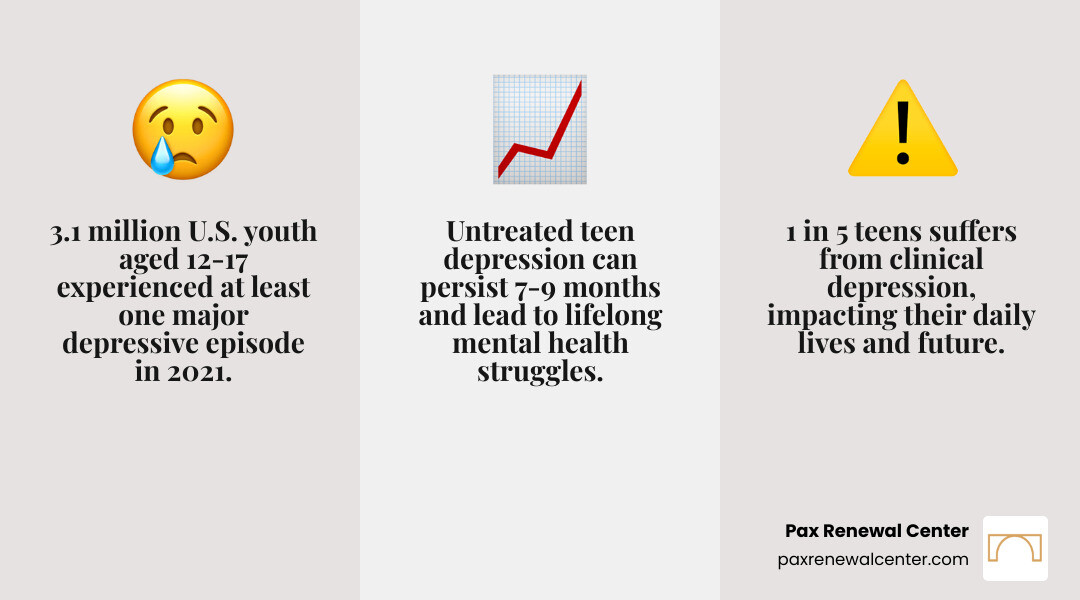
Being a teenager has never been easy. But what many parents in Lafayette and across Louisiana are seeing right now goes well beyond normal growing pains. As many as one in five teens experiences clinical depression, and 78% of young people ages 11–17 who took a standard depression screening scored positive for moderate to severe depression.
That’s not moodiness. That’s a mental health crisis hiding in plain sight.
The hard part? Teen depression doesn’t always look like sadness. It often shows up as anger, withdrawal, or what can look like laziness or attitude. That’s why so many parents miss it — or worse, blame themselves or their teen for it.
I’m Dan Jurek, M.A., LPC-S, LMFT-S, founder and clinical director of Pax Renewal Center in Lafayette, Louisiana, and over my 35+ years of clinical experience, I’ve worked with many families navigating teen depression and its impact on the entire family system. In this guide, I’ll walk you through exactly how to identify what’s really going on with your teen and what to do next.
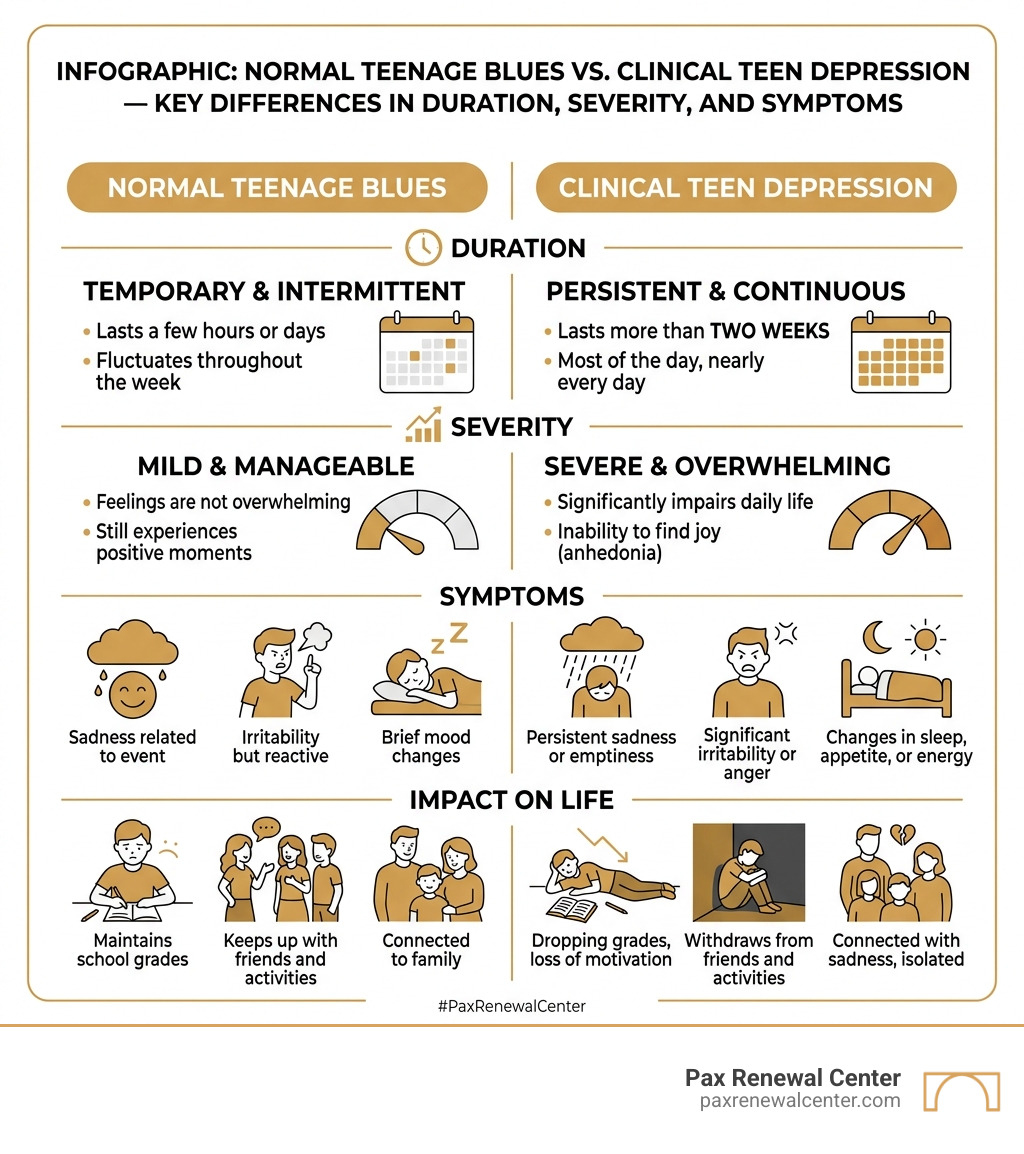
Understanding teen depression vs. Normal Moodiness
It is 2026, and the world our teenagers navigate is vastly different from the one we grew up in. A challenge we face as parents is distinguishing between “normal” adolescent behavior and a clinical diagnosis.
Adolescence is naturally a time of upheaval. Hormone changes are shifting, and the brain biology of a teen is under construction. It is normal for a teenager to feel “down in the dumps” occasionally or to have a bad day after a breakup or a failed test. However, Teen Depression: More Than Just Moodiness – NIMH points out that clinical depression is a persistent medical illness.
The “two-week rule” is a vital benchmark. While a moody teen might be grumpy for a few days, a teen struggling with teen depression experiences symptoms that last for at least two weeks and interfere with their ability to function. In our practice at Pax Renewal Center, we often see that while “blues” are reactive to specific events, clinical depression is an all-encompassing cloud that doesn’t lift even when things are going well.

Recognizing the Emotional and Behavioral Signs
If you feel like your teen has become a stranger, you aren’t alone. Depression in adolescents often manifests as a “mask.” They aren’t necessarily crying in their room; they might be snapping at you over dinner or spending twelve hours a day staring at a screen.
At Pax Renewal Center, we emphasize Dealing With Depression Supportive Strategies Against Adolescent Depression because understanding the “why” behind the behavior is the first step toward healing.
Emotional Symptoms of teen depression
While adults often describe depression as a profound sadness, teens are more likely to exhibit:
- Irritability and Anger: This is the most common “hidden” symptom. They may have a “short fuse” or be frequently hostile.
- Feelings of Worthlessness: You might hear them say things like, “I’m stupid,” or “Nobody likes me anyway.”
- Loss of Interest: They stop caring about the sports, hobbies, or friendships that used to define them.
- Hopelessness: A sense that the future is bleak and nothing will ever get better.
According to the Teen depression – Mayo Clinic overview, these emotional shifts are often tied to a teen’s developing sense of self and their extreme sensitivity to peer rejection.
Behavioral and Physical Changes
Depression doesn’t just stay in the mind; it shows up in the body. We often see a crossover between depression and Teen Anxiety Disorder, where the physical toll becomes undeniable.
- Social Withdrawal: They aren’t just “wanting privacy”; they are isolating themselves from everyone, including close friends.
- Academic Decline: A sudden drop in grades or a “don’t care” attitude toward schoolwork is a major red flag.
- Sleep Disruptions: This could mean insomnia or, conversely, sleeping all day and still feeling exhausted (fatigue).
- Changes in Eating: Significant weight loss or gain, or a sudden lack of interest in food.

Common Causes and Risk Factors
Why does this happen? It’s rarely just one thing. Teen depression is usually a “perfect storm” of biological, environmental, and psychological factors.
- Brain Chemistry and Hormones: Neurotransmitters like serotonin and dopamine, which regulate mood, can become imbalanced.
- Genetics: If there is a family history of depression or anxiety, a teen is at a higher biological risk.
- Trauma and Life Events: Early childhood trauma, the loss of a loved one, or even the “chronic stress” of modern life can trigger an episode.
- Bullying and Social Media: In 2026, the pressure of social media is relentless. Upward social comparison—constantly seeing “perfect” lives online—can lead to deep-seated feelings of inadequacy.
- Learned Helplessness: As noted by the Teen depression – Mayo Clinic, some teens develop a pattern of negative thinking where they feel they have no control over their problems.
How to Support and Seek Treatment for teen depression
If you suspect your teen is struggling, your first instinct might be to “fix” it or lecture them. Instead, we recommend a more compassionate approach. Our Teen Counseling Lafayette La Guide highlights the importance of creating a safe harbor at home.
- Active Listening: When they do talk, listen without judging or offering immediate solutions. Just validate their feelings.
- Use “I” Statements: Instead of “You’re always so grumpy,” try “I’ve noticed you seem really down lately, and I’m concerned because I love you.”
- Promote Routine: Stability in sleep and meal times can provide a much-needed anchor for a chaotic mind.
Effective Treatment Options for teen depression
Depression is highly treatable. At Pax Renewal Center, we utilize a multimodal approach:
- Cognitive Behavioral Therapy (CBT): This helps teens identify the “lies” their depression tells them and replace them with healthier thought patterns.
- Interpersonal Therapy (IPT): This focuses on improving relationships and communication skills.
- Medication: In some cases, antidepressants are necessary to balance brain chemistry. These should always be monitored closely by a professional.
- Faith-Based Support: For many families in Lafayette, integrating spiritual renewal is a key part of the journey. We offer Faith Based Therapy Programs For Teens that combine clinical excellence with Christian values.
When to Seek Emergency Help
If your teen mentions self-harm or suicide, treat it as a medical emergency. Do not worry about “overreacting.”
- The 988 Lifeline: You can call or text 988 at any time for immediate crisis support.
- Louisiana 988 Helpline: Localized support is available through the Louisiana 988 Helpline.
- Emergency Signs: Giving away possessions, saying goodbye, or a sudden, unexplained “calm” after a long period of depression are critical warning signs.
Debunking Common Myths About Adolescent Mental Health
There is still a lot of stigma surrounding teen depression. Let’s clear up some of the most damaging myths we hear in our Lafayette office.
| Myth | Fact |
|---|---|
| “They’re just being dramatic/lazy.” | Depression affects energy and motivation at a biological level. It’s not a choice. |
| “It’s just a phase they’ll grow out of.” | Untreated depression can last 7–9 months and lead to lifelong struggles. |
| “They have a great life; they have no reason to be sad.” | Depression is a biological illness. You can have “everything” and still have a chemical imbalance. |
| “Talking about suicide will give them the idea.” | Asking directly about suicide actually reduces risk by providing an opening for help. |
Frequently Asked Questions about Teen Depression
How is teen depression diagnosed by professionals?
Diagnosis usually begins with a physical exam by a pediatrician to rule out other issues (like thyroid problems). Following this, a mental health professional performs a psychological evaluation. We look at the DSM-5 criteria, school performance, social habits, and the duration of symptoms to create a comprehensive picture of the teen’s health.
What are the complications of untreated depression?
Untreated teen depression can lead to devastating consequences, including substance misuse, academic failure, social isolation, and, most tragically, suicide. It can also stunt emotional development, making it harder for the teen to transition into a healthy adulthood.
How can parents help prevent the onset of depression?
While you can’t control genetics, you can build resilience. Encourage healthy sleep habits, limit social media use, and foster a home environment where emotions are discussed openly and without shame. Early intervention is the best prevention; seeking help at the first sign of trouble can prevent a mild episode from becoming a major crisis.
Finding Hope and Healing in Lafayette, LA
At Pax Renewal Center, we know that watching your child suffer is one of the hardest things a parent can endure. But you don’t have to carry this burden alone. Our team, led by Dan Jurek, is dedicated to providing the Lafayette community with professional, faith-based care that works.
We specialize in integrating clinical best practices like EMDR for trauma, CBT, and play therapy for younger adolescents with spiritual guidance rooted in Christian values. Whether you are looking for individual teen counseling or a family-based approach to restoration, we are here to help.
We also offer an innovative way to access support through our Skool platform, providing expert-led guidance in an affordable online community format.
If you’re ready to help your teen move from “just surviving” to truly thriving, we invite you to take the first step.
Healing is possible. Your teen is not “just being dramatic”—they are struggling, and with the right support, they can find their way back to the light. Reach out to us at Pax Renewal Center today to begin the journey of emotional and spiritual renewal.