
Why Divorce Counseling Support Can Transform Your Journey
Divorce counseling helps individuals and couples steer the emotional challenges of separation through professional guidance, communication skills training, and healing-focused therapy.
Key benefits of divorce counseling include:
- Emotional processing – Working through grief, anger, guilt and fear in a safe space
- Communication improvement – Learning healthy conflict resolution and boundary setting
- Co-parenting support – Developing child-centered plans that protect children’s wellbeing
- Decision clarity – Discernment counseling helps mixed-agenda couples gain confidence about their marriage’s future
- Post-divorce healing – Individual therapy to rebuild self-worth and prepare for new relationships
Going through a divorce feels like riding an emotional rollercoaster. One day you might feel relief and hope for the future. The next day brings crushing sadness, anger, or fear about what lies ahead.
You’re not alone in this struggle.
Research shows that about half of all first marriages in the United States end in divorce, affecting over 1,000,000 children each year. The process triggers intense emotions like grief, anger, guilt, and sadness – similar to mourning a death.
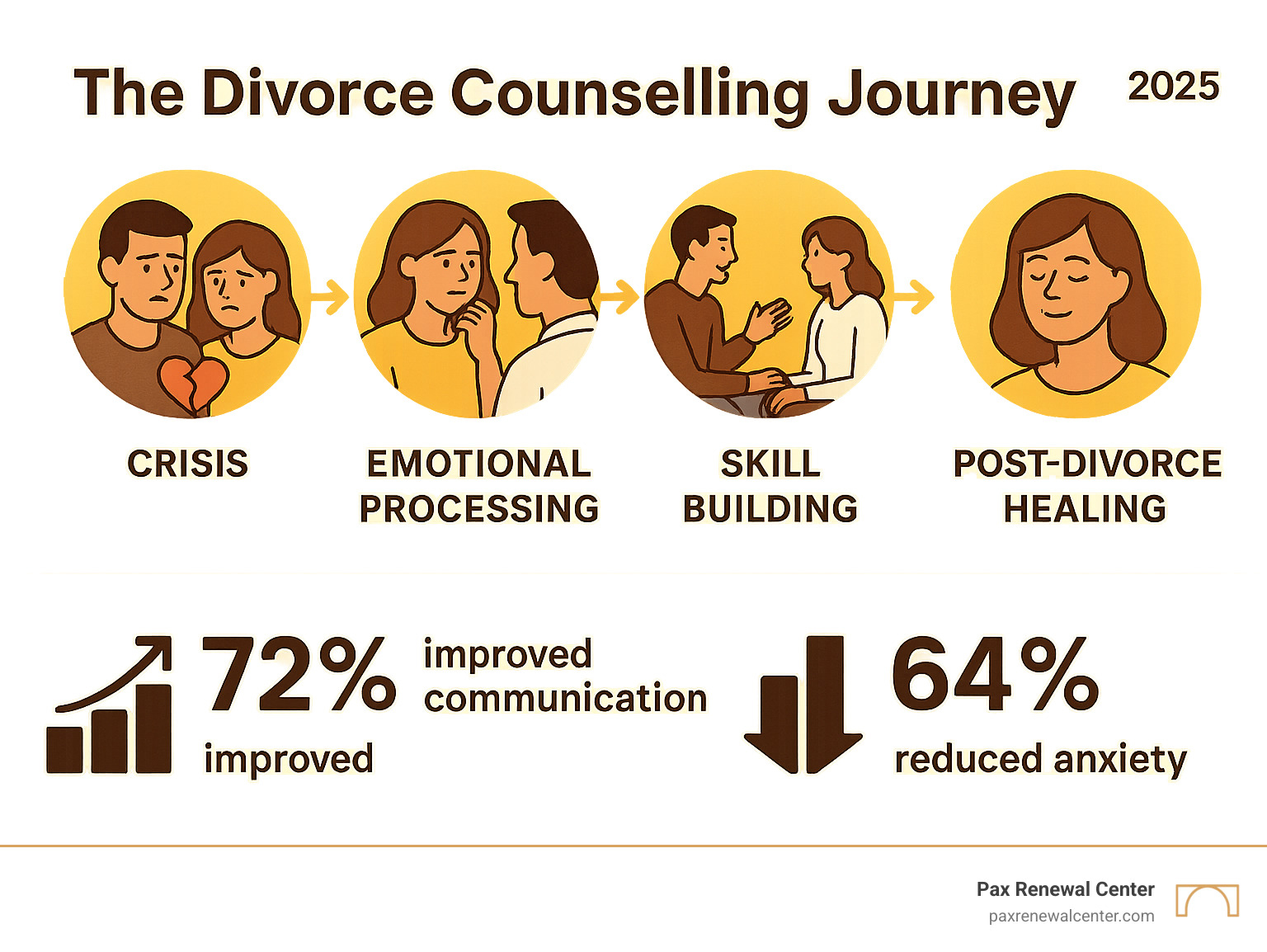
But here’s what many people don’t realize: professional counseling can make this journey significantly easier. Studies demonstrate that divorce counseling reduces anxiety, improves communication between ex-partners, and leads to more cooperative co-parenting relationships.
Whether you’re still deciding about your marriage, in the middle of divorce proceedings, or rebuilding your life afterward, the right therapeutic support can provide hope and practical tools for healing.
I’m Dan Jurek, M.A., LPC-S, LMFT-S, and I’ve spent over 35 years helping individuals and couples steer relationship challenges, including counseling divorce situations with both compassion and clinical expertise. As one of the few therapists in Louisiana certified in Discernment Counseling, I’ve guided countless people through this difficult but transformative process toward emotional renewal and stronger faith.
Why This Guide Matters
This comprehensive guide addresses the full scope of divorce counseling – from understanding what it is and how it works, to finding the right therapist and supporting your children through the process. Our approach at Pax Renewal Center integrates evidence-based therapeutic methods with faith-aligned care, recognizing that healing involves both emotional and spiritual dimensions.
You’ll learn practical strategies for managing the emotional rollercoaster, improving communication with your ex-partner, and creating stability for your children. Most importantly, you’ll find that with the right support, this challenging chapter can become a pathway to personal growth, stronger relationships, and renewed hope.
Divorce Counseling Basics: What, Why & How
When people hear “divorce counseling,” they often wonder what exactly this means and how it differs from other types of support. Let me clear up the confusion.
Divorce counseling is not the same as trying to save your marriage or working out legal details. It’s a specialized form of therapy designed to help you steer one of life’s most challenging transitions with grace, dignity, and emotional health intact.
Think of it this way: mediation focuses on dividing assets and creating custody agreements – the practical, legal stuff. Marriage counseling aims to repair and strengthen your relationship to keep you together. Divorce counseling, on the other hand, accepts that your marriage is ending and helps you get through it in the healthiest way possible.
This support applies whether you’re separated (living apart but still legally married) or moving through an actual divorce. The goal isn’t to change your mind about ending the marriage. Instead, we help you transition through this major life change while protecting your emotional wellbeing and minimizing harm to everyone involved, especially your children.
At Pax Renewal Center, we draw from several proven therapeutic approaches. Cognitive Behavioral Therapy (CBT) helps you identify and change negative thought patterns that can spiral during this stressful time. Emotionally Focused Therapy (EFT) addresses your attachment needs and helps regulate intense emotions. The Gottman Method teaches practical communication skills and conflict resolution – crucial when you still need to interact with your ex-partner. For those dealing with betrayal trauma, EMDR can process these experiences so they don’t continue causing pain.
One question we hear frequently is whether divorce counseling works better in person or online. The truth is, both can be highly effective, depending on your situation.
| Method | Benefits | Best For |
|---|---|---|
| In-Person | Face-to-face connection, full body language reading | High-conflict situations, trauma processing |
| Online Video | Convenient, comfortable home environment | Busy schedules, geographic barriers |
| Phone | Accessible, reduces travel barriers | Initial consultations, follow-up sessions |
Research actually shows that online**** counseling can be particularly effective. Many people report feeling safer and more comfortable sharing difficult emotions from their own home.
Three Core Pillars of Support
Effective divorce counseling builds on three essential foundations.
The first pillar is emotional processing. Divorce doesn’t just end a legal contract, it triggers grief similar to losing someone to death. You might cycle through denial, anger, bargaining, depression, and eventually acceptance. But divorce emotions are often more complex. You might feel guilt, shame, relief, and fear, sometimes all in the same day. We help you work through these feelings without judgment.
The second pillar focuses on communication skills. Even after divorce, you’ll likely need to interact with your ex-partner, especially if you have children together. We teach practical techniques like active listening, boundary setting, and “repair attempts” – strategies to de-escalate conflicts before they explode.
The third pillar involves co-parenting planning when children are part of the equation. This goes beyond just creating a custody schedule. We help you develop a truly child-centered approach that puts your kids’ needs first and helps you present a united front on important decisions.
Discernment Sessions for Mixed-Agenda Couples
More info about discernment counseling
Sometimes couples come to us when one person wants to work on the marriage while the other is leaning toward divorce. This creates what we call a “mixed-agenda” situation, and it requires a specialized approach called discernment counseling.
Discernment counseling isn’t traditional couples therapy. Instead, it’s a brief intervention, typically just one to five sessions, designed to help couples gain clarity and confidence about their decision. Think of it as hitting the pause button on your relationship to really examine what’s happening and what you want.
The research on this approach is quite encouraging. Scientific research on discernment counseling shows that 82% of participants said their partner had initiated the divorce decision, yet after completing discernment sessions, 64% described their post-divorce relationship as cooperative.
Participants consistently report three key benefits: achieving clarity and honesty about their relationship’s future, appreciation for having a structured way to work through their ambivalence, and improved cooperation after divorce when children were involved.
The discernment process offers three clear paths forward. You can choose to maintain the status quo, move forward with divorce with greater confidence, or commit to six months of intensive couples therapy to give your marriage one more genuine attempt.
What makes discernment counseling so valuable is that it helps couples make more informed decisions. And when divorce does occur after discernment work, it typically leads to more amicable separations and healthier co-parenting relationships.
Divorce Counseling: Facing the Emotional Rollercoaster

If your divorce feels like an emotional rollercoaster, you’re in good company. Grief, anger, guilt and anxiety can appear, and disappear, within the same hour. Research with more than 2,000 adults confirms that separation sharply increases rates of anxiety and depression, often disrupting work, parenting and faith.
Common Emotional Waves
- Grief over lost dreams and future plans
- Anger or resentment about broken promises
- Guilt, shame or a sense of failure
- Fear about finances, single-parenting or finding love again
- Unexpected relief or hope, followed by guilt for feeling better
Financial strain magnifies these emotions, so counseling always addresses practical concerns alongside feelings. Self-care—sleep, exercise, balanced nutrition, prayer and mindfulness, keeps you grounded while you process big changes.
Divorce Counseling for Emotional Healing
At Pax Renewal Center we view many divorce experiences as trauma. Betrayal, sudden loss of an attachment figure and the chaos of re-organising life can leave lasting wounds. Evidence-based tools help:
- EMDR to re-process painful memories so they no longer hijack you.
- Forgiveness exercises to release resentment (without excusing hurtful behaviour).
- Positive-psychology worksheets that identify personal strengths and map next steps.
Because we integrate faith, we also explore how God’s unchanging love meets you in suffering and how crisis can deepen spiritual life.
Counseling for Conflict & Communication
Learning to interact calmly with an ex-partner protects your mental health and, if you have children, their wellbeing. Key skills we teach include:
- Setting clear boundaries: separating feelings from actions.
- Practicing active listening: reflecting what you hear before responding.
- Using quick repair attempts to stop small disagreements from exploding.
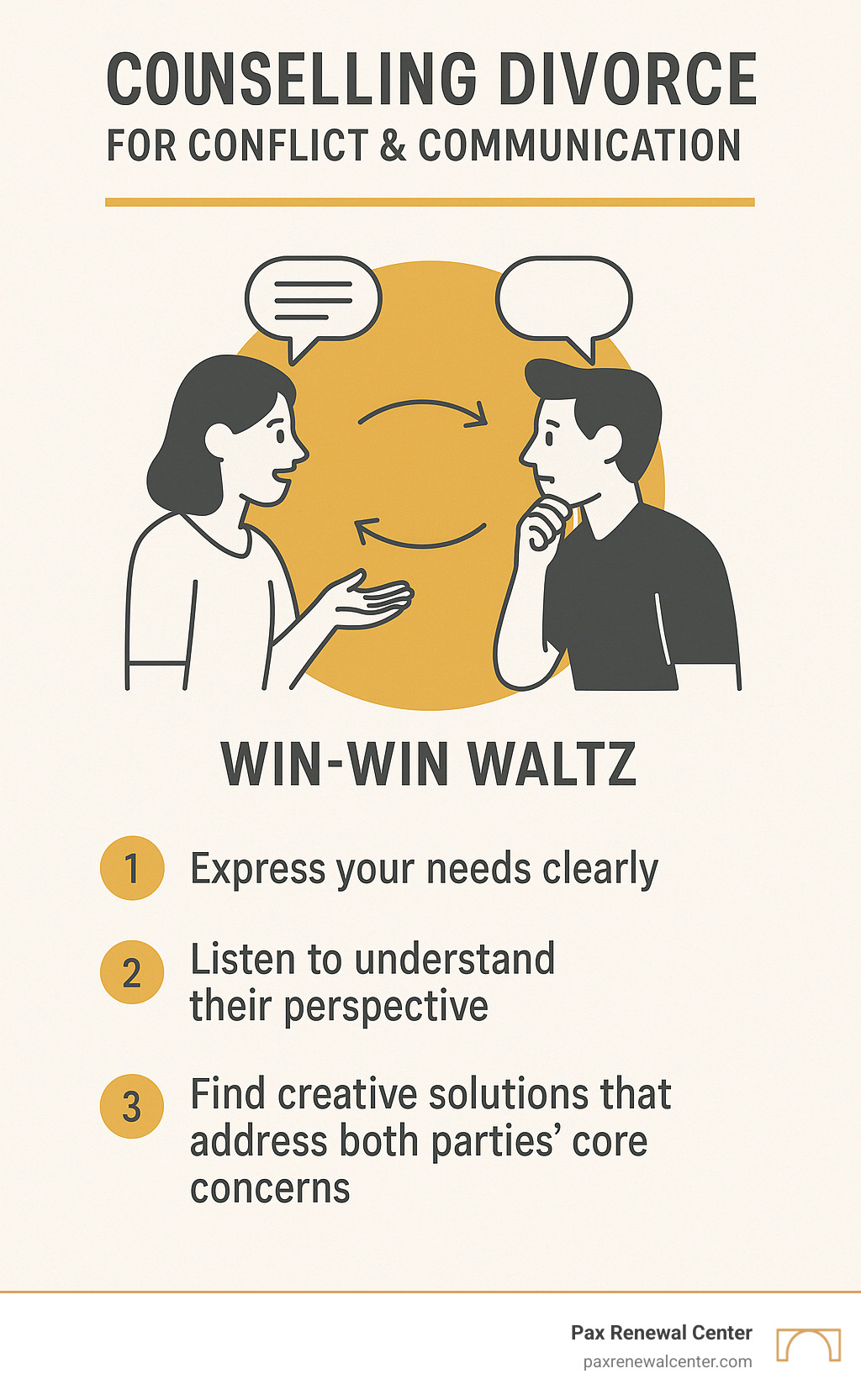
The Win-Win Waltz turns adversaries into collaborators by focusing on solutions that serve both parties, especially the children. Clients who master these skills report 64 % more cooperative post-divorce relationships, less stress and healthier kids.
Remember: the aim isn’t to become best friends with your former spouse. It’s to create a respectful, business-like partnership so everyone, especially you, can move forward with peace.
Children & Teens: Programs, Groups & One-to-One Help
When parents go through divorce, children often become the silent casualties of this family upheaval. They didn’t choose this situation, yet they’re forced to steer confusing emotions, divided loyalties, and major life changes that can feel overwhelming.
The statistics tell a sobering story: at least 1,000,000 children experience their parents’ divorce each year in the United States. Research shows that elementary school-aged children typically struggle the most during this transition, though teens face their own unique challenges around identity and future relationships.
Children experiencing parental divorce often show signs of distress through changes in academic performance, behavioral regression, sleep disturbances, or withdrawal from friends and activities. Some develop physical complaints without medical cause, while others become excessively worried about their parents or what will happen next.
Here’s the encouraging news: specialized programs make a real difference. Studies demonstrate that structured support significantly improves how children adjust to their new family situation. Court-connected programs for children experiencing parental separation have grown substantially because they work. Most programs show measurable benefits in children’s emotional wellbeing and coping skills.
At Pax Renewal Center, we offer comprehensive support through educational programs that help children understand what’s happening, therapeutic emotional support to process their feelings, and peer support that connects them with other kids facing similar challenges. We also provide skills-teaching programs that help children learn healthy coping strategies and clinical therapy for those needing more intensive intervention.
The beauty of divorce counseling for children lies in how it helps them develop resilience rather than just surviving the experience. Through play therapy for younger children and specialized teen counseling, we address age-appropriate concerns while building emotional strength.
Choosing Between Group and Individual Support
The question many parents ask is whether their child would benefit more from group support or individual counseling. The answer often depends on your child’s personality, specific needs, and current emotional state.
Group programs offer powerful benefits that individual therapy simply can’t provide. When children connect with peers going through similar experiences, they find they’re not alone. This peer support helps normalize their feelings and reactions, showing them that other kids also feel sad, angry, or confused about their parents’ divorce.
Our group programs also provide a safe space for children to practice communication and social skills with others who understand their situation. From a practical standpoint, group support is more accessible for many families while still providing professional guidance.
Research on programs like “Children of Divorce Intervention Program” found that participants reported significantly lower anxiety and fewer negative self-attitudes compared to children who didn’t receive support. The “Rollercoasters” program showed remarkable results, 85% of parents reported improvements in at least one area: communication, emotional expression, behavior, or self-esteem.
Individual counseling becomes the better choice when children show signs of depression or anxiety, have witnessed domestic violence, struggle with intense loyalty conflicts between parents, or have pre-existing mental health concerns that need specialized attention.
At Pax Renewal Center, we often combine both approaches based on each child’s unique needs. A child might benefit from individual play therapy to work through specific trauma while also participating in a peer support group to build social connections and normalize their experience.
Co-Parenting Counseling for Kids’ Sake

The most powerful gift divorcing parents can give their children is learning to co-parent effectively. Co-parenting counseling focuses entirely on the children’s wellbeing rather than the adults’ relationship issues, creating a foundation for cooperative parenting despite the marriage ending.
Our approach often involves parallel sessions, working with parents separately and together to develop truly child-centered plans. Research consistently shows that programs achieve better results when both parents participate, even if they initially attend separate sessions due to high conflict.
Effective co-parenting requires a fundamental shift in thinking. Instead of focusing on what went wrong in the marriage, parents learn to operate like business partners with a shared goal: raising healthy, well-adjusted children. This means keeping children completely out of adult conflicts and decisions, maintaining consistent rules across both households, and supporting the children’s relationship with both parents.
Practical co-parenting strategies include developing business-like communication methods through email, text, or specialized co-parenting apps. Parents learn to schedule regular check-ins about their children’s wellbeing, share important information about school and activities, and present a united front on major decisions while respecting each other’s parenting time.
When disagreements arise, parents who’ve completed co-parenting programs know how to seek mediation rather than involving the children in adult conflicts. They understand that their children’s emotional security depends on seeing their parents treat each other with basic respect and cooperation.
The research is compelling: children whose divorced parents maintain cooperative relationships experience significantly better outcomes in academic performance, social relationships, and emotional adjustment. The investment in co-parenting counseling truly pays dividends in children’s long-term wellbeing.
Finding the Right Counselor & Starting the Process
Finding the right**** divorce counseling support starts with choosing a therapist who truly understands the unique challenges you’re facing. Not every counselor has specialized training in divorce and separation issues, and the connection you feel with your therapist can make all the difference in your healing journey.
When searching for a divorce counselor, you’ll want to look for essential credentials like a Licensed Professional Counselor (LPC), Licensed Marriage and Family Therapist (LMFT), or Licensed Clinical Social Worker (LCSW). More importantly, seek out therapists with specialized training in divorce and separation counseling who have experience with your specific concerns.
Faith compatibility becomes especially important during this vulnerable time. At Pax Renewal Center, we understand that many people want their counseling to align with their Christian values while still receiving professional, evidence-based treatment.
Watch out for certain red flags that signal a poor fit. Avoid therapists who seem to take sides or blame one partner unfairly. Be cautious of counselors who promise quick fixes or guaranteed outcomes. Run from practitioners who push their personal agenda about divorce or seem uncomfortable with your faith values.
The choice between online versus local counseling depends on your situation. Online counseling offers incredible convenience and accessibility, with research showing it can be just as effective as in-person therapy for many divorce-related issues. However, high-conflict situations or intensive trauma processing may benefit from face-to-face interaction.
For Lafayette, Louisiana residents, having local resources provides unique advantages. Local therapists understand state laws, know the local courts and mediators, and can coordinate with other professionals in your support network.
If you’re still unsure about your marriage’s future, consider taking our discernment quiz to gain clarity about your feelings and options. More info about discernment quiz
What to Expect at Intake
Your first counseling session involves a comprehensive look at your unique situation, relationship history, and personal goals. Think of this intake process as your therapist getting to know the full story so they can provide the most helpful support possible.
During intake, you’ll discuss your relationship history, how you met your spouse, your marriage timeline, and any previous counseling experiences. Your counselor will want to understand your current situation, including separation status, living arrangements, and where you are in any legal proceedings.
If you have children, expect detailed questions about their ages, adjustment levels, and custody arrangements. Your therapist needs this information to help protect your kids throughout this transition. They’ll also ask about your support systems, family, friends, faith community, and other professionals who are helping you.
Mental health history matters too. Your counselor will ask about previous therapy, medications, or trauma experiences that might affect your current situation. Don’t worry – this information helps them provide better care, not judge you.
Most importantly, you’ll discuss your goals and expectations for counseling. What do you hope to accomplish? Are you seeking emotional healing, better communication with your ex, or co-parenting support? Clear goals help guide your therapy sessions.
Confidentiality takes on special importance during divorce situations. Your counselor will carefully explain what information can and cannot be shared, particularly if they’re working with both spouses or if court proceedings are involved.
Session frequency typically starts with weekly meetings but adjusts based on your needs and progress. Some people benefit from more intensive sessions during crisis periods, while others prefer consistent weekly support over several months.
Questions to Ask Before You Begin
Choosing a divorce counselor is like interviewing someone for an important job – because it is. You’re looking for the best fit to guide you through one of life’s most challenging transitions. Don’t hesitate to ask direct questions about their approach, experience, and methods.
Ask about their therapeutic approach: “What methods do you use for divorce counseling situations? How do you integrate faith into the counseling process? What’s your philosophy about divorce and separation?” These questions reveal whether their style matches your needs and values.
Inquire about their experience and training: “How many divorce cases have you handled? What additional training do you have in this specialized area? Do you work with high-conflict situations?” Experience matters when you’re dealing with complex emotions and family dynamics.
Don’t forget to ask about measuring progress: “How do you track improvement in divorce counseling? What does successful counseling look like for your clients? How long do people typically work with you?” Understanding their approach to outcomes helps set realistic expectations.
Cover the practical details too: “What are your policies about communication between sessions? How do you handle emergency situations? What happens if legal issues arise during counseling?” These answers reveal their professionalism and availability when you need support most.
You’re interviewing potential counselors to find the best match for your situation. The right therapeutic relationship can transform your divorce experience from merely surviving to actually growing stronger through the process. Trust your instincts. You’ll know when you’ve found someone who truly understands your journey and can guide you toward healing and renewed hope.
Conclusion
When you’re facing divorce, it can feel like your world is falling apart. The dreams you shared, the future you planned together, the stability you thought you had, everything seems uncertain. But here’s what I want you to know after three decades of walking alongside people through this journey: this painful chapter doesn’t have to be the end of your story.
Divorce counseling isn’t just about surviving the process, it’s about finding that you can actually grow stronger through it. I’ve watched countless individuals transform their divorce experience from devastating loss into an opportunity for genuine renewal and deeper faith.
The tools we’ve covered in this guide, emotional processing, improved communication skills, and child-centered co-parenting, aren’t just therapeutic concepts. They’re practical lifelines that can help you steer this storm with dignity and grace. When you have professional support, the emotional rollercoaster becomes more manageable. The conflicts with your ex-partner can actually decrease. Your children can emerge more resilient.
At Pax Renewal Center, we’ve seen it happen over and over again. The mom who thought she’d never stop crying finds herself laughing with her kids again. The dad who felt like a failure finds new strengths he never knew he had. The couple trapped in bitter conflict learns to co-parent with respect and cooperation.
Your faith doesn’t have to be another casualty of divorce. In fact, many people find that working through this crisis with a counselor who understands both clinical best practices and spiritual healing leads to a deeper, more authentic relationship with God. Sometimes it’s in our brokenness that we find how much we’re truly loved.
Whether you’re still wrestling with the decision to divorce, right in the thick of legal proceedings, or trying to rebuild your life afterward, you don’t have to face this alone. Professional support can make all the difference between barely surviving and actually thriving on the other side.
The path forward starts with a single step – reaching out for help. It’s not about having all the answers or feeling ready. It’s about being brave enough to say, “I need support, and I’m willing to do the work to heal.”
More info about our divorce-support services
At Pax Renewal Center, we’re here to walk alongside you with the same compassion we’d offer our own family members. Because that’s what you are to us – not just another client, but someone precious who deserves hope, healing, and a future filled with possibility.
Your story isn’t over. In fact, some of the most beautiful chapters might still be waiting to be written.